English
 Türkçe

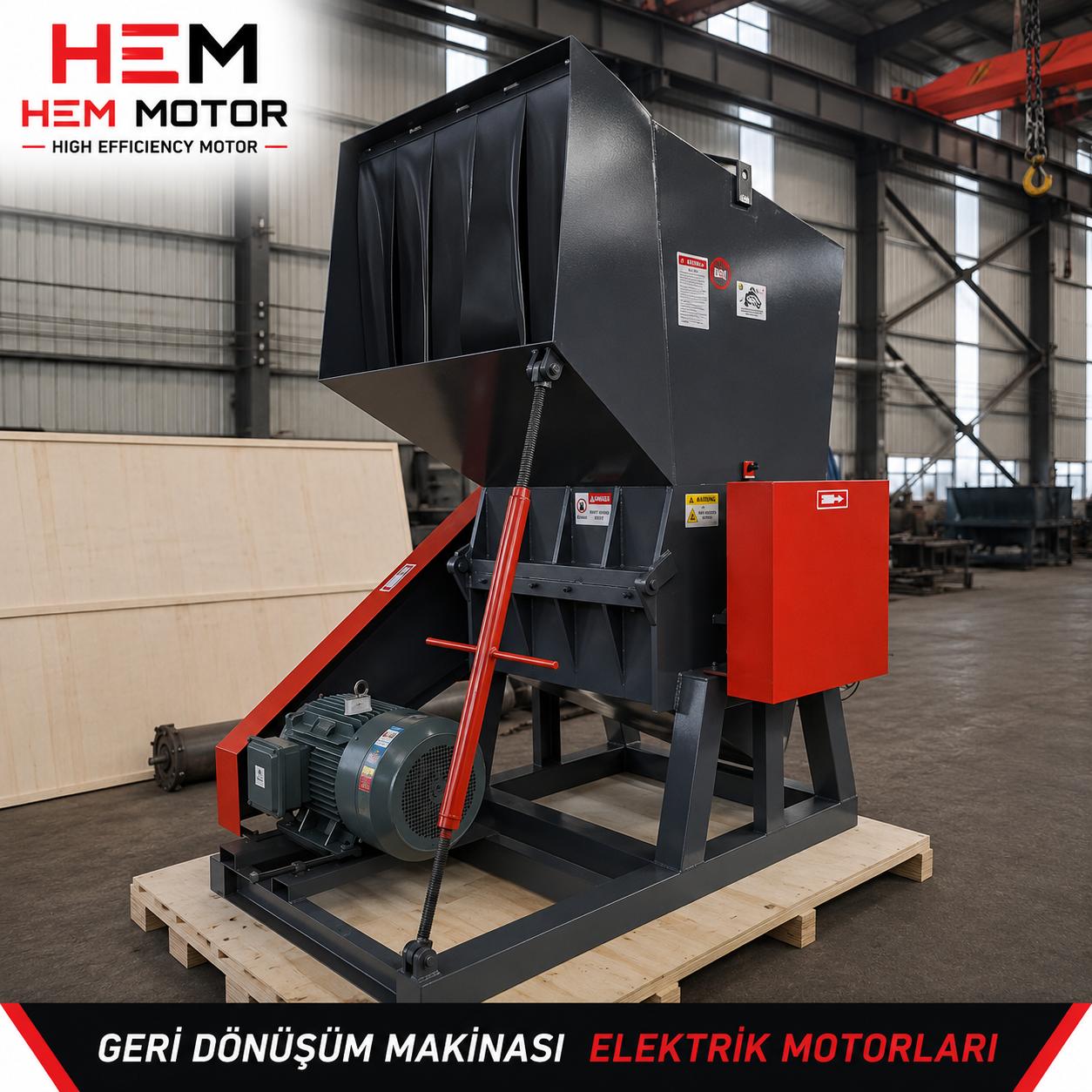

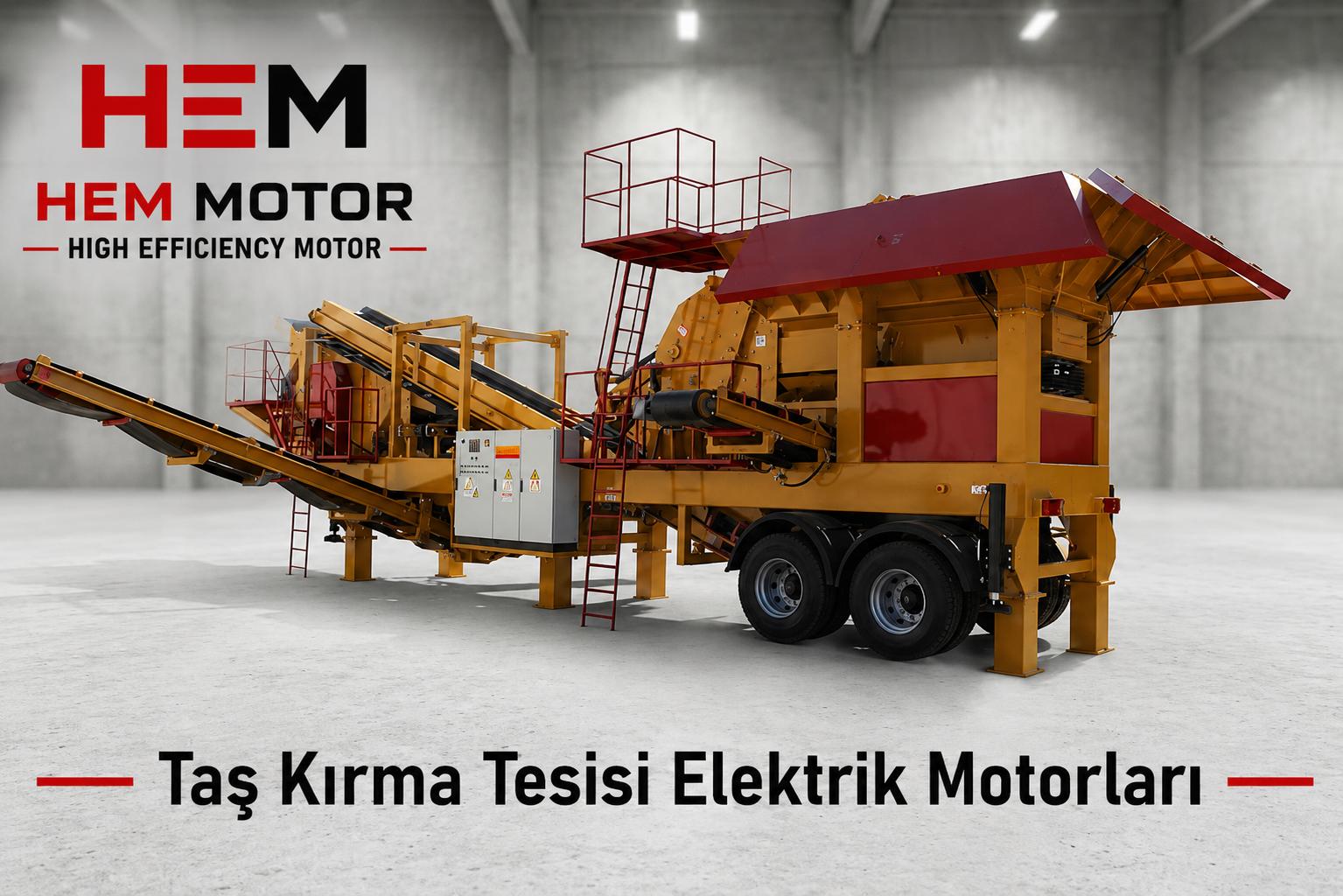
In quarries, aggregate plants, port terminals and large stockyards, piling bulk material in an orderly way is a critical part of modern logistics. One of the central pieces of equipment for this task is the radial stacker, that is, an inclined stockpile conveyor that piles bulk material over a wide area by sweeping an arc. At the heart of this conveyor is a drive motor that produces high torque and withstands dusty and demanding open-site conditions. A wrongly selected motor fails to achieve a loaded start on the inclined belt, is damaged by dust, or overheats in continuous duty. In this article, HEM Motor examines the importance of the incline angle in radial stacker conveyor drive motor selection, the starting method, dust protection and determining the correct power for continuous duty, with a fully technical perspective.
What Is a Radial Stacker and How Does It Work?
A radial stacker is a stockpile conveyor that can rotate horizontally around a pivot point and also has a belt inclined upward. The belt discharges bulk material (sand, gravel, coal, aggregate, ore, etc.) from the end of the belt to form a pile. As the conveyor rotates around the pivot, this pile sweeps an arc and spreads over a wide area, thus creating an orderly, voluminous stockyard instead of a buildup at a single point.
This working principle brings special challenges to the motor. The belt continuously carries material uphill because it is inclined, is exposed to dust and weather in the open site, and most often runs uninterrupted for hours. Therefore, the drive motor must be selected to meet these three challenges at once.
- Inclined conveying: The motor carries the additional load created by the incline as well as the weight of the material.
- Loaded start: The belt may stop while full; restarting requires high starting torque.
- Dusty open site: Dust and humidity stress the motor's protection class and bearing structure.
- Continuous duty: Long-term uninterrupted operation in S1 duty type.
Incline Angle: The Most Critical Factor Determining Power
The single most critical factor determining the power of a radial stacker drive motor is the belt incline angle. On a horizontal conveyor the motor spends power only to convey the material and overcome friction, whereas on an inclined conveyor the motor must also lift the weight of the material uphill. This lifting component grows rapidly as the incline angle increases.
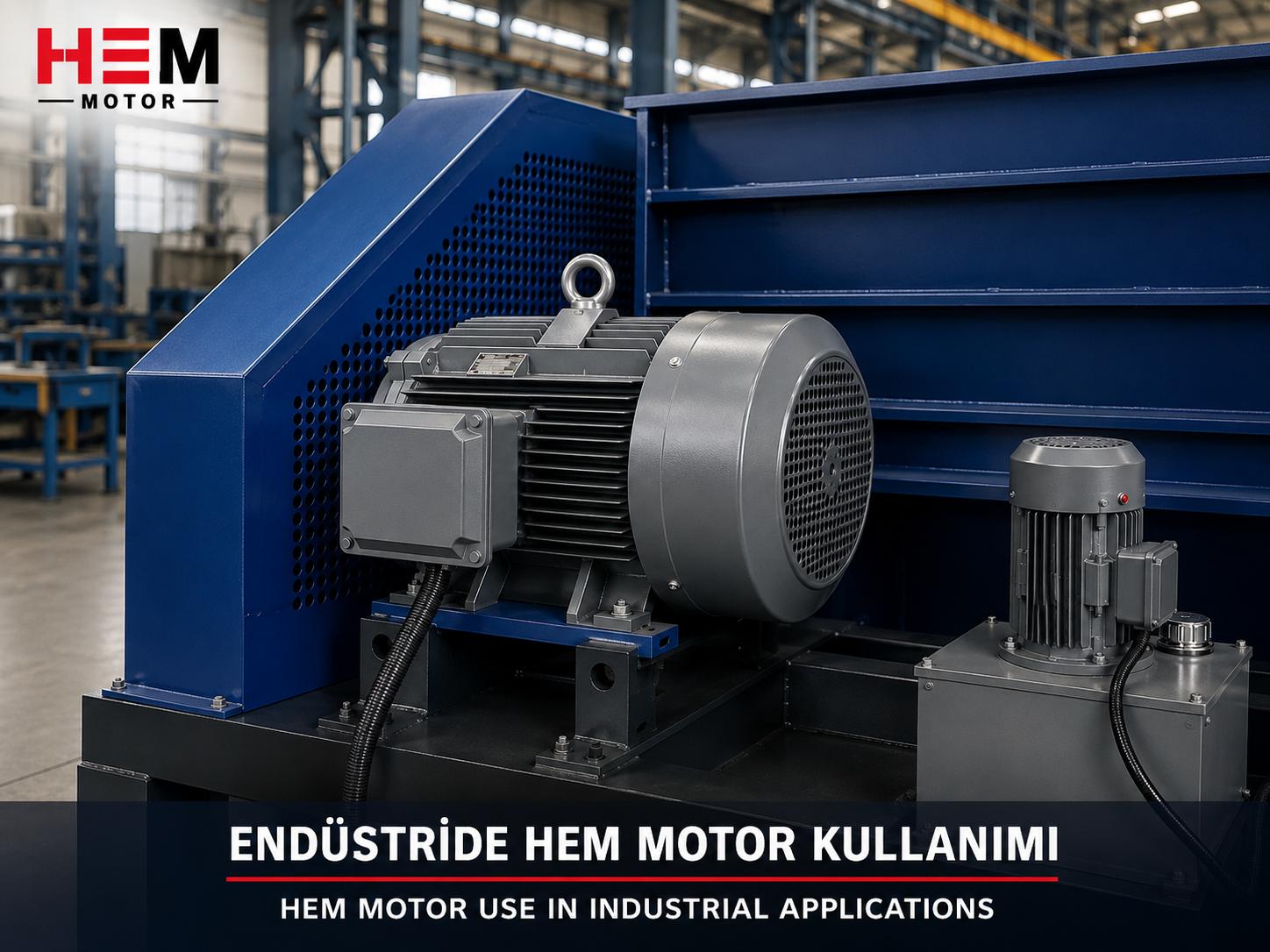
As the incline angle increases, the required motor power increases markedly. At the same material flow rate, a steeper belt requires much more power, because the uphill component of the material's weight grows. Therefore, when calculating motor power, the belt incline angle, material flow rate (tons/hour), belt length and friction coefficient must be evaluated together.
Another important consequence of the incline angle is rollback. When an inclined belt stops, the weight of the material on it tries to push the belt back. Therefore, inclined stacker conveyors often require a mechanism that prevents reverse motion (backstop) or a braked motor. To evaluate the inertia carried by the belt and the starting torque, our motor inertia GD2/WR2 starting article is a useful resource.
Starting: Loaded Start Demands High Torque
In radial stacker conveyors, the most demanding moment is restarting after the belt has stopped while full. A loaded start requires a starting torque well above the motor's rated torque, because the motor must overcome both the inertia of the stationary material and the constant resistance created by the incline.
In this case, direct-on-line (DOL) starting is often unsuitable. DOL draws very high current at start-up and applies a sudden mechanical shock to the belt; this shock wears both the belt and the transmission elements. Instead, controlled starting methods are preferred:
- Softstarter: Gradually increases the starting torque and current, reducing the mechanical shock applied to the belt. It is an economical and effective solution for stacker conveyors running at constant speed.
- Variable frequency drive (VFD): Provides both a smooth, controlled start and the ability to adjust speed throughout operation. It is advantageous in applications requiring variable flow or precise loading.
In VFD-driven motors, regenerative braking or backstop measures should also be considered for the rollback of the inclined belt. For the selection criteria of feeder and dosing applications in conveyor drives, our crusher aggregate belt weigher feeder drive motor article is a relevant resource.
Dust Protection and Reinforced Bearings
Radial stackers, by definition, operate in open, dusty and often humid sites. These conditions directly determine the motor's protection class (IP) and bearing structure. Dust entering the motor damages the winding insulation and bearings; humidity causes corrosion and electrical leakage.
Therefore, at least IP55 and above protection class is essential in a dusty open site. In environments with heavier dust and washdown needs, higher protection levels such as IP65 or IP66 should be considered. In addition:
- Reinforced bearings: Reinforced bearings are needed to withstand the loads created by the inclined belt and transmission system.
- Cast-iron frame: Provides mechanical strength, vibration damping and protection against external impacts.
- Special sealing: Seal and labyrinth sealing that prevents dust and humidity from entering the bearing area is important.
- Space heater: Useful in humid sites to prevent condensation in the stopped motor.
We covered protection upgrade details in dusty and wet environments comprehensively in our IE3 motor IP65/IP66 protection upgrade dusty wet environment article.
Continuous Duty and IE3/IE4 Cast-Iron Motors
Radial stacker conveyors mostly run in S1 continuous duty type, that is, uninterrupted for long periods. In a continuously running drive, the motor's efficiency directly determines the annual energy cost. Therefore, IE3 or IE4 efficiency class cast-iron frame motors are an ideal choice for this application.
- IE3/IE4 high efficiency: Permanently lowers the energy bill in continuous duty.
- Cast-iron frame: Withstands open-site conditions and mechanical loads.
- S1 continuous duty: Designed for long-term uninterrupted operation.
- Fast supply from stock: Standard configurations respond quickly to emergency and planned needs.
HEM Motor offers our S1 continuous-duty IE3 and IE4 cast-iron frame motors with high protection class and reinforced bearing options suited to radial stacker and similar inclined conveyor drives, with fast delivery from stock. We can determine together the correct power and protection selection according to your application's incline angle, flow rate and site conditions, and you can reach all our motor solutions from our homepage.
Frequently Asked Questions
Should I select a radial stacker motor like a horizontal conveyor?
No. On a horizontal conveyor the motor spends power only to convey the material and overcome friction, whereas on an inclined radial stacker the motor must also lift the weight of the material uphill. As the incline angle increases, the required power increases markedly. Therefore, a radial stacker motor must be selected by calculating the incline angle, flow rate and belt length together.
Which protection class is sufficient in a dusty site?
At least IP55 protection class is recommended in a dusty open site. In environments with heavier dust, washdown or high humidity, higher levels such as IP65 or IP66 should be preferred. In addition to the protection class, reinforced bearings, appropriate sealing and, in humid sites, a space heater that prevents condensation should also be considered.
Should I prefer a softstarter or a VFD for an inclined stacker?
If the belt will run at constant speed and only a smooth start is needed, a softstarter is an economical and effective solution. If variable flow, precise loading or operation at different speeds is required, a variable frequency drive is more suitable. In both cases, a backstop or braked-motor measure should be taken to prevent the rollback of the inclined belt.