English
 Türkçe


Summary (TL;DR)
- A roller screen (disc screen) is the ideal screening solution for sticky, wet and clayey feed where vibrating decks blind and clog; each drive shaft demands low speed and high torque.
- A base motor alone is not enough for correct drive; a 4- or 6-pole motor + reducer combination lowers output speed to the tens-of-rpm range while multiplying torque.
- Because of the sticky, loaded start, high starting torque, IP55/IP65 protection for the dusty-wet site, a cast iron body for heavy duty and an S1 continuous-duty design are essential.
- The number of shafts and the screen width determine total power and pole selection; the motor is planned around an independent-drive or common-drive layout.
- As a manufacturer and supplier, HEM Motor offers cast iron IP55 crushing-screening motors from 0.25 to 355 kW plus matching reducers from stock, minimising downtime.
In crushing and screening plants the screening step is usually handled by vibrating screens. However, when the feed material is sticky, wet, clayey or muddy, vibrating screen surfaces quickly blind, the apertures clog, and screening efficiency collapses. This is exactly where the roller screen (disc screen, rotating bar screen) comes in. Discs or bars mounted on rows of parallel rotating shafts both convey and screen the material; by breaking up sticky material and continuously self-cleaning, they prevent clogging. The price of this mechanical advantage is on the drive side: every shaft requires a drive system that produces high torque at low speed. This article walks step by step through how to correctly select a roller screen drive motor, the reducer combination, and the right protection for site conditions.
What Is a Roller Screen and Why Is It Preferred for Sticky Feed?
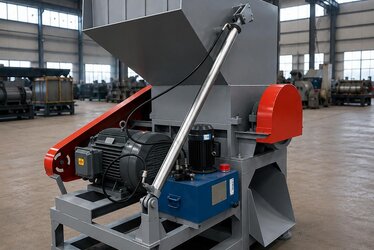
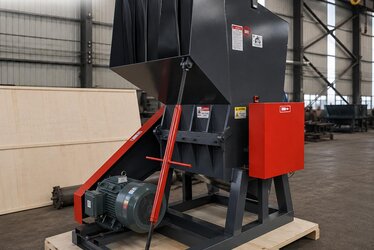
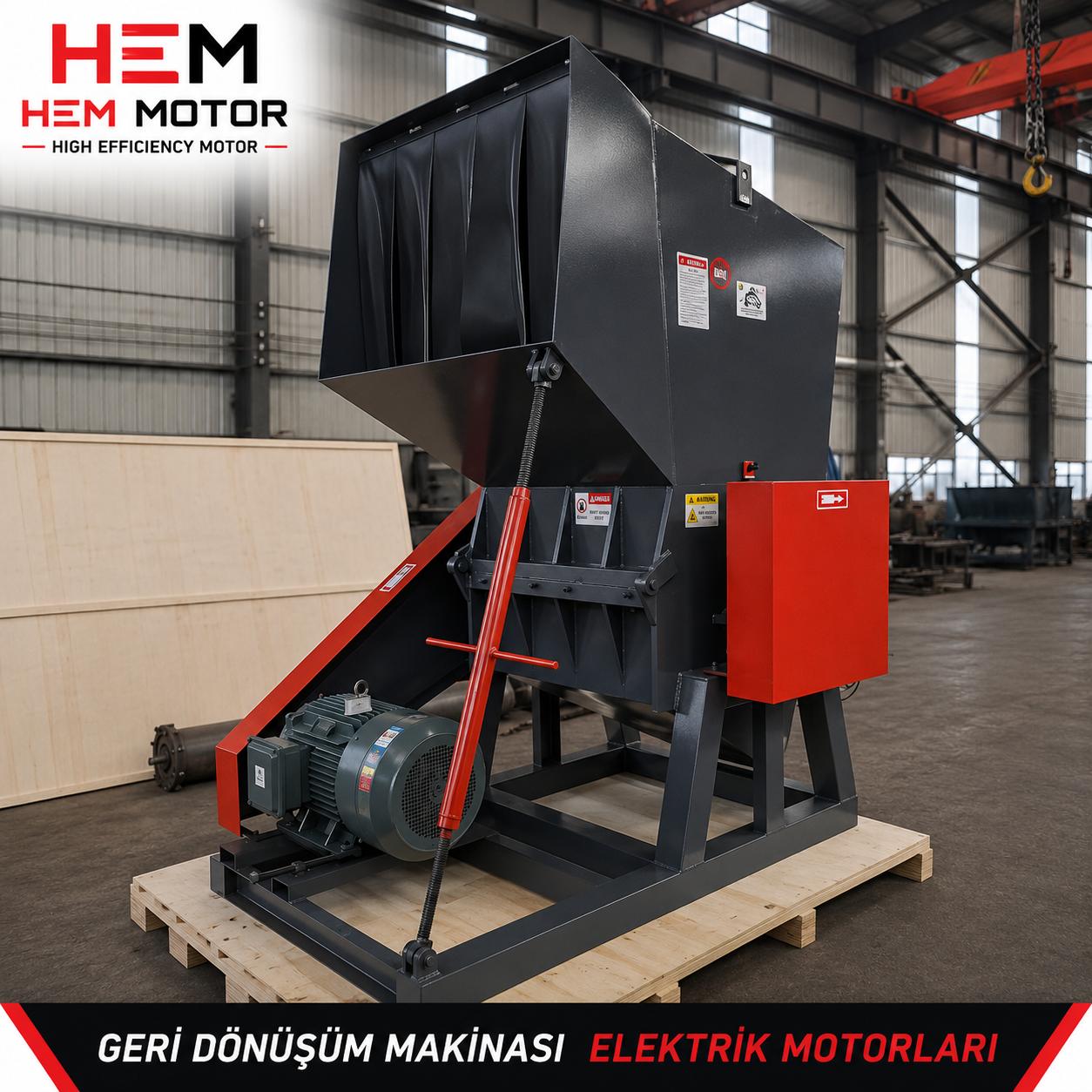
A roller screen is a screening machine made of many parallel rotating shafts and rows of discs or bars fitted onto those shafts. As the shafts turn, small particles fall through the gaps between the discs (undersize), while coarse pieces are carried forward by the discs and separated as oversize. The discs interleave with each other in a continuous self-cleaning motion, so even when clayey and wet material sticks to the surface, the apertures stay open.
Vibrating screens are highly efficient with dry, free-flowing material, but as moisture and clay content rise, material bridges over the screen wire, the apertures close (blinding), and the screen effectively stops working. The roller screen overcomes this with its mechanical design:
- Sticky and wet feed: the interleaving discs continuously tear the material apart, preventing it from forming a film.
- Clayey ore and soil-laden aggregate: the gap between shafts is adjusted to obtain the desired cut size.
- Scalping: separating coarse and earthy material before the crusher reduces the crusher load.
- Recycling and waste sorting: it runs without clogging on mixed, wet and heterogeneous feed.
To evaluate it together with the other drive points on the screening line, our guide on screen and feeder motor selection in crushing-screening plants offers a holistic view.
Why Low Speed, High Torque?
Roller screen shafts turn slowly to gently convey and screen the material; typical output speeds are in the tens of rpm. Yet sticky, loaded material creates serious resistance on the shaft, particularly at start. In a plant where the shafts must restart from rest under a heap of material, the motor and drive system must produce high starting torque. Otherwise the motor cannot accelerate, draws excessive current, and the thermal protection trips.
These two requirements — low speed and high torque — are a combination that a standard electric motor cannot meet on its own. A 4-pole motor runs at about 1500 rpm and a 6-pole at about 1000 rpm, whereas the shaft only needs tens of rpm. The element that bridges this gap is the reducer. The motor runs at high speed, the reducer lowers that speed while raising torque in the same proportion. The shaft thus turns both slowly and powerfully.
The Relationship Between Torque and Speed
The core function of a reducer is to lower speed and increase torque. While a motor produces constant power, the output speed drops by the reduction ratio and the output torque (excluding losses) rises by the same ratio. For example, a high-ratio helical-bevel reducer cuts the motor speed to a fraction while multiplying torque. In applications like roller screens that demand low speed and high torque, this principle is decisive.
Selecting the Reducer + Motor Combination
Two main reducer families stand out for roller screen drive, and the choice depends on shaft position, required torque and mounting geometry.
Helical-Bevel Gear Reducers
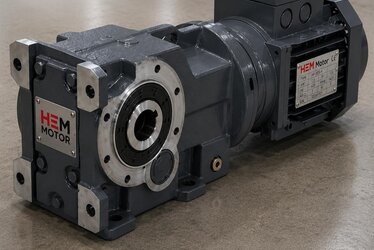
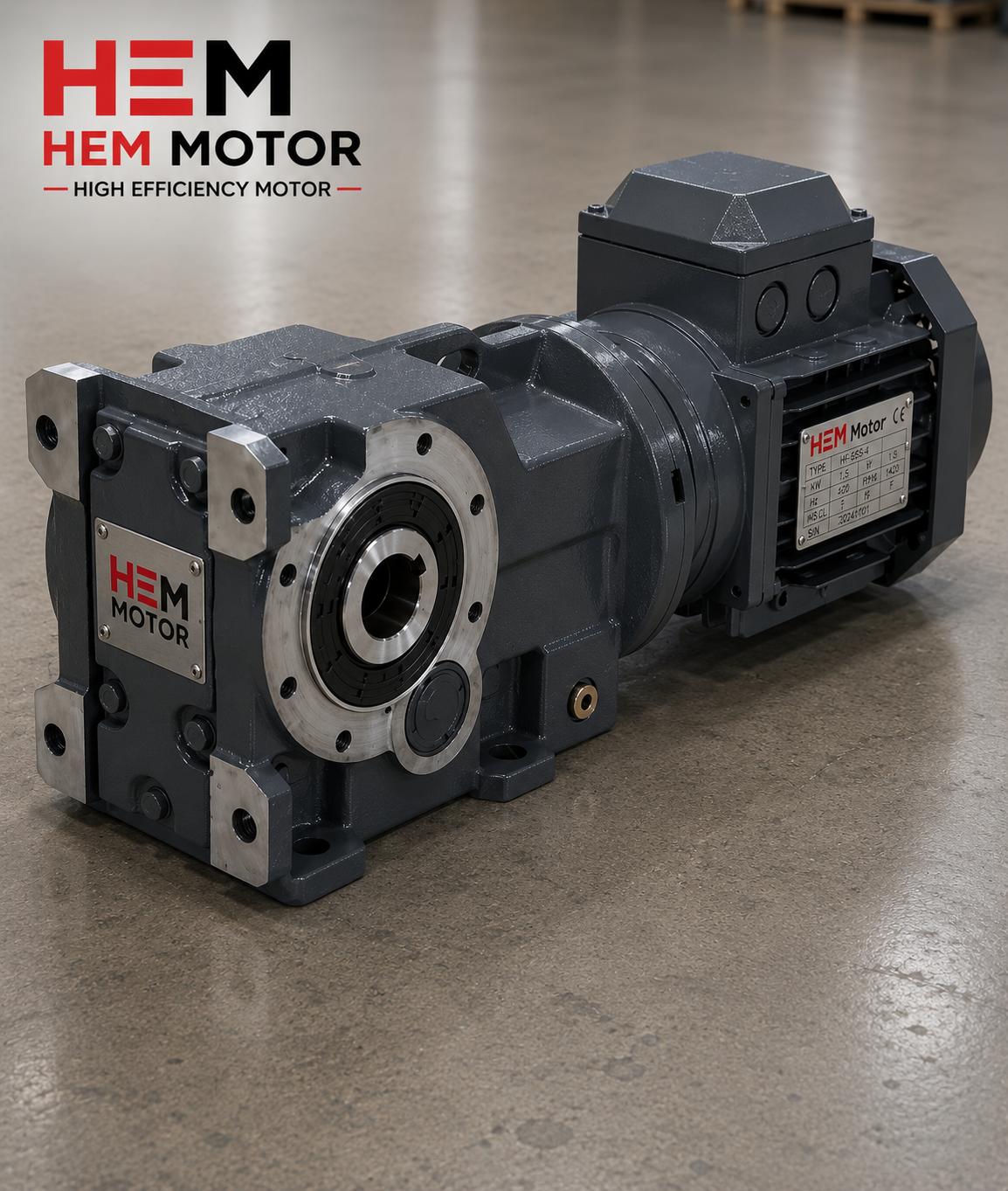
With an output shaft at 90 degrees to the motor axis, helical-bevel gear reducers are preferred for heavy-duty screening drive thanks to high efficiency and high torque capacity. The high-speed motor motion is reduced through helical and bevel gears while the output torque increases markedly. A suitable housing size can be selected across a wide power range, from small shafts to large main drives. You can find detailed information about the structure and application fit of these reducers on our helical-bevel gear reducers product page.
Worm Gear Reducers
With their compact build, single-stage high reduction ratio and self-locking feature, worm gear reducers are a practical solution for small and medium-power shaft drives. They couple directly to IEC-standard, B5 or B14 flange electric motors. They are frequently preferred on roller screen shafts that need a low-speed, simple and economical drive.
In both cases the motor is mounted to the reducer input via an IEC flange connection. So the motor's frame size, shaft diameter and flange dimension must match the selected reducer exactly. Supplying the motor and reducer as a matched package eliminates the risk of on-site mismatch and delay.
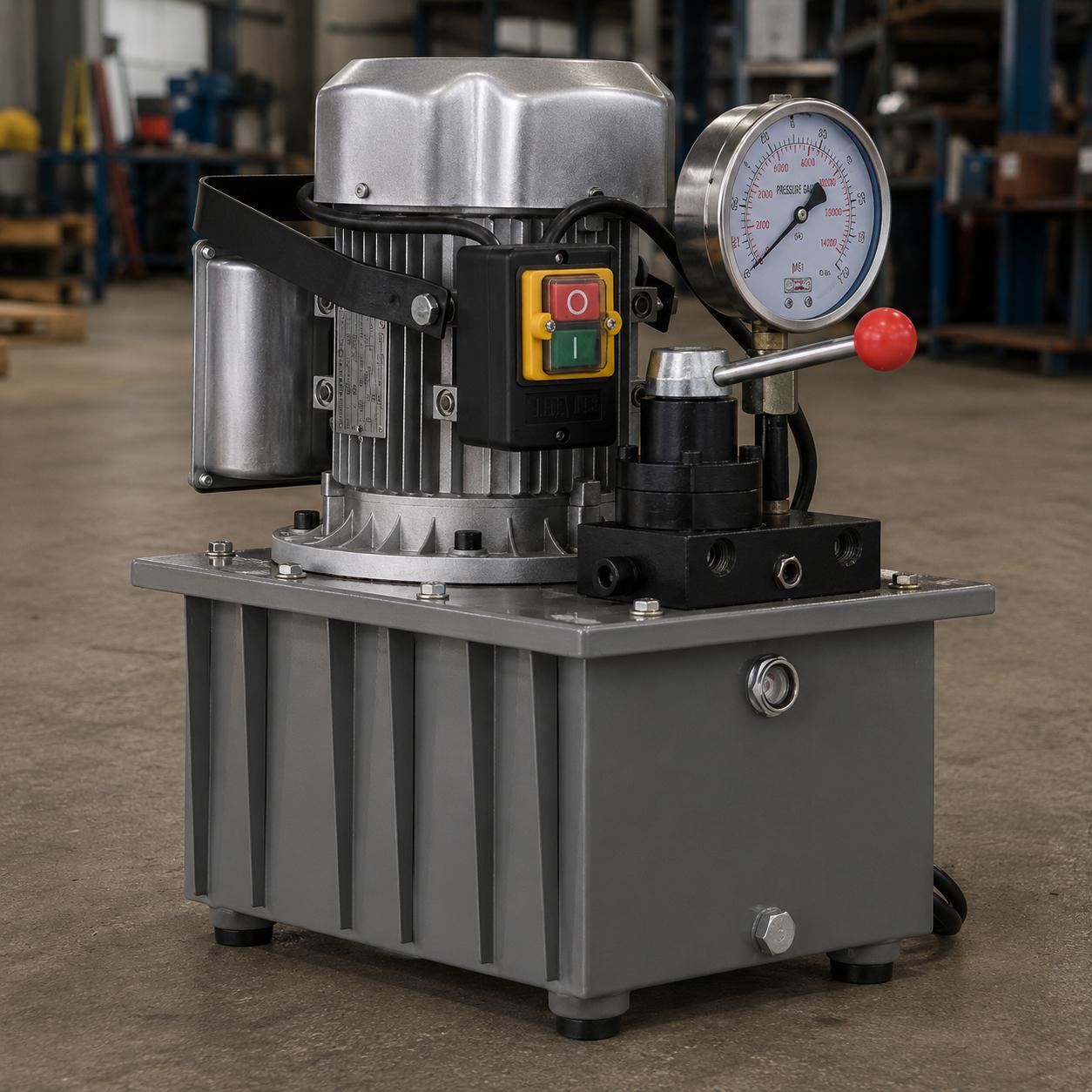
Base Motor Selection: Poles, Power and Duty Type
The choice of the base motor connected to the reducer input directly determines the reliability of the screening system.
Pole Count and Speed
In roller screen drives, 4-pole (1500 rpm) motors are usually standard; since the reducer already lowers the speed substantially, a high motor speed is unnecessary. In heavy applications that call for extra torque density or a lower input speed, 6-pole (1000 rpm) motors can be preferred. High-speed 2-pole motors are not meaningful in this application.
Power (kW) and Number of Shafts
Total power demand is set by the screen width, the number of shafts, the feed rate, and the stickiness-moisture degree of the material. Wider screens and more shafts require higher total power. The drive architecture can be built in two ways:
- Independent drive: each shaft or shaft group has its own motor-reducer set, easing maintenance and load distribution.
- Common drive: a single powerful motor-reducer turns several shafts via chain or gear transmission; fewer motors, more centralised maintenance.
In both approaches, oversizing the motor causes efficiency loss at low load, while undersizing leads to constant overload and overheating. Because sticky feed creates high load fluctuations, leaving a reasonable power margin is the right approach.
Duty Type (S1) and Thermal Protection
Screening plants mostly run uninterrupted throughout a shift, so the motor must be S1 continuous-duty rated. Against the variable load and possible jams caused by sticky material, thermal protection (PTC/PT100) that monitors winding temperature protects the winding from burning out. In a sudden jam, the thermal relay and motor protection circuit breaker stop the motor safely.
Protection for Dusty and Wet Sites: IP55/IP65 and Cast Iron
By its nature, a roller screen works in an environment that is simultaneously wet/muddy and dusty. This is a demanding combination from the standpoint of motor protection.
- IP55: standard industrial protection against dust ingress and water jets from any direction; the minimum requirement for most sites.
- IP65/IP66: a dust-tight protection upgrade is advised in positions with high dust and water-jet risk.
- Class F insulation: provides endurance to high winding temperature and a thermal margin.
- Cast iron body: offers mechanical durability under impact, vibration and heavy-duty conditions.
- Reinforced bearings: provide long life under continuous load and vibration; when needed, an anti-condensation heater prevents moisture.
To examine dust-tightness selection for site conditions in depth, our article on dust-tightness and IP65/IP66 protection in crusher motors is a useful resource. For similarities with the drive of rotating screening drums in wet environments, our article on trommel rotating screening-washing drum drive motor selection can also be reviewed.
Compatibility with the Feeder and the Whole Plant
A roller screen does not work alone in the plant; there is a feeder in front of it and conveyors and crushers behind it. When selecting the screening drive, the regularity of the feed rate, the balanced distribution of material onto the screen, and the smooth discharge of undersize and oversize products must all be considered. For the drive requirements on the feed vibration and dosing side, our article on crusher feeder and bunker vibration motor selection offers complementary information. For the heavy-duty motor needs of all these drive points, our stone crushing and screening plant electric motors product family holds suitable power and protection options.
Supply from Stock and the Right Quote
In screening plants, the failure of one drive motor stops the entire line and causes serious production loss. Sourcing the right motor and reducer quickly is therefore critical. As a manufacturer and supplier, HEM Motor keeps cast iron motors in the most-requested power, speed and protection class for crushing-screening plants in stock, and offers a complete drive solution together with matching reducers. To pin down the motor-reducer package suited to your shaft count, screen width and feed character, align the equivalent frame and flange type, and get a fast quote, simply share your requirements. Contact us for current electric motor prices and stock status.
Frequently Asked Questions
Why is a geared motor required for roller screen drive?
Roller screen shafts must turn at very low speed (tens of rpm) and with high torque, whereas a standard electric motor runs at about 1000–1500 rpm. To bridge this large speed gap and raise torque, a reducer is added to the motor output. The reducer lowers speed while increasing torque in the same proportion, so the shaft turns both slowly and powerfully.
Which protection class is suitable for sticky and wet feed?
A roller screen works in an environment that is simultaneously wet/muddy and dusty. So IP55 is the minimum standard; in positions with high dust and water-jet risk, an IP65/IP66 upgrade is advised. A cast iron body for heavy duty, Class F insulation for high-temperature endurance, and an anti-condensation heater against condensation in an idle motor should be preferred.
Is a separate motor per shaft better, or a common drive with a single motor?
Both are valid architectures. With independent drive, each shaft has its own motor-reducer set; load distribution and maintenance are easier, and a single set's failure does not stop the whole screen. With common drive, a single powerful motor-reducer turns several shafts via chain or gear transmission, giving more centralised maintenance with fewer motors. The choice depends on screen width, shaft count and your maintenance strategy.