English
 Türkçe

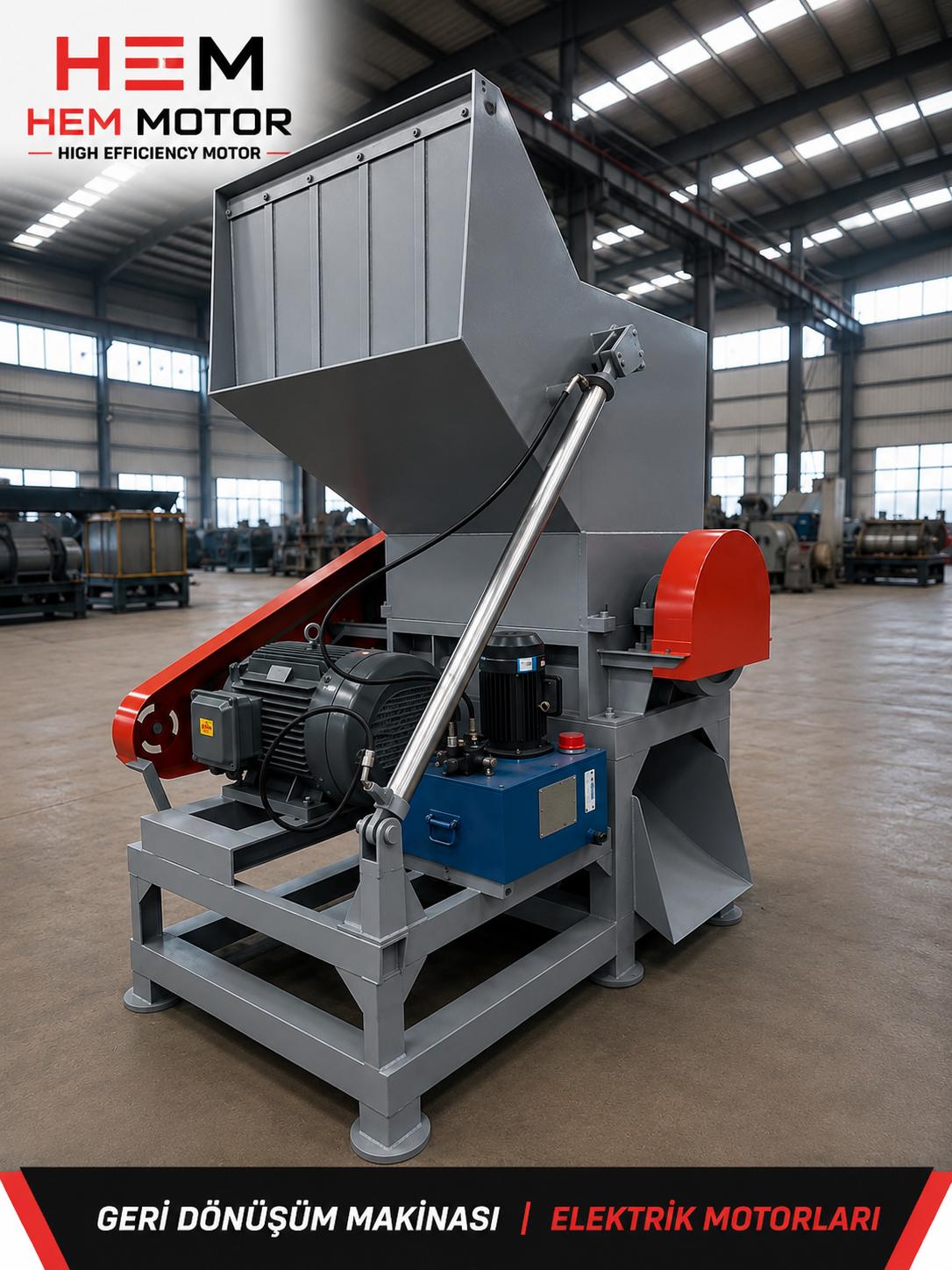

In crusher, aggregate and mining plants, bucket elevators that lift material vertically are among the most critical and most heavily loaded pieces of equipment on the line. The electric motor that drives this machine cannot be selected like an ordinary fan or pump motor, because loaded buckets create a high mass of inertia, the line tends to fall back when power is cut, and the system is very often forced to start under full load. In this article we cover bucket elevator drive motor selection under three core headings: high inertia, backstop and starting torque. When the right motor, the right starting method and the right safety devices come together, the elevator runs both safely and reliably for years.
At HEM Motor we supply cast iron, high-starting-torque heavy-duty motors from stock for demanding applications. Below we explain every parameter you should check when selecting a bucket elevator motor from an engineering point of view.
Load Character and High Inertia in Bucket Elevators
A bucket elevator works by buckets mounted on an endless belt or chain picking up material at the bottom and discharging it at the top. While the plant runs, all of these buckets may be full. Full buckets, together with the belt/chain mass and the drive pulley, create a high rotating mass inertia (J). Inertia directly determines the energy the motor must spend to bring the load from standstill to operating speed.
Why Does High Inertia Stress the Motor?
The greater the inertia, the longer the motor takes to accelerate the load to speed. An asynchronous motor draws a current many times its rated value throughout starting. As the start lengthens, the heat built up in the windings rises and approaches the thermal protection limit. If the start time exceeds the motor's allowed hot/cold start time, the motor trips on overload or the winding eventually burns out.
- Start time check: Start time should be calculated from total inertia and accelerating torque and compared with the time allowed by the motor manufacturer.
- Thermal capability: For high-inertia loads, a heavy-duty motor specifically rated for long starts should be chosen.
- Starts per hour: If the elevator stops and starts frequently, the motor's permitted number of starts per hour must be observed.
Backstop and Safety
The most dangerous scenario for a bucket elevator is a power loss while the loaded line is running. The moment the motor stops, the weight of the full buckets begins to spin the system rapidly backwards, that is, downwards. This runback piles material at the elevator boot, can break the belt/chain, overloads the gearbox and creates a serious safety risk for the operator.
For this reason a backstop is a mandatory safety element on bucket elevators. The backstop allows the system to rotate only in the forward direction and mechanically locks the reverse rotation when power is lost. The backstop is mounted either on the gearbox or on the motor shaft end. When selecting the motor, where the backstop will be fitted, the shaft-end (DE/NDE) configuration and the direction of rotation must be clarified from the start.
Starting Torque and the Right Starting Method
A bucket elevator is very often forced to start under full load. This requires the motor to produce a high starting torque (locked rotor / starting torque) from the very first moment. The most common mistake here is to rely on star-delta starting just to reduce current.
Why Star-Delta Can Be Risky
In the star connection the motor produces roughly one third of the torque it would in delta. On a full elevator this low torque may not be enough to lift the system in star; the motor fails to pick up, and at the transition to delta a large current and torque shock occurs. That is why star-delta is not ideal for elevators that start fully loaded.
Soft Starter and VFD: The Safer Solution
- Soft starter: Reduces the current shock and mechanical shock by raising voltage in a controlled way; the ramp time can be tuned to the load.
- Variable frequency drive (VFD): Provides high starting torque at low current and adjusts speed to demand. For a high-inertia bucket elevator, the VFD is generally the safest starting method.
- Direct-on-line (DOL): May be considered only at small powers and low inertia; not recommended on large elevators due to mechanical shock.
Correct Motor Frame and Efficiency Class
In the dusty, vibrating, continuously running mining environment, the motor frame matters at least as much as the drive. The following features stand out in this application:
- Cast iron frame: Provides high rigidity, resistance to mechanical shock and vibration damping.
- IP55 and above protection: Prevents dust and moisture from reaching the winding; higher IP is preferred in very dirty environments.
- F/H insulation class: Leaves a thermal margin for the heating of long starts and continuous load.
- IE3/IE4 efficiency class: Visibly lowers energy cost on a continuously running elevator.
Selection Steps: A Quick Checklist
- Required power is calculated from throughput (t/h), height and material density.
- Starting torque and system inertia required for a full start are determined.
- A thermally safe start time and the number of starts per hour are verified.
- Backstop location, direction of rotation and shaft-end configuration are clarified.
- Soft and torque-rich starting via soft starter or VFD is planned.
- Frame type, IP protection and efficiency class are chosen for the field conditions.
Combining all of these steps into a single supply plan optimises both the initial investment and the running cost. To plan the right motor and its accessories together, you can visit the HEM Motor homepage.
Frequently Asked Questions
Is a backstop mandatory on a bucket elevator motor?
Yes. When power is cut on a full elevator the system runs back; the backstop mechanically prevents this reverse rotation and protects both the equipment and the operator. For this reason a backstop is practically mandatory on heavy-duty bucket elevators.
Is star-delta enough for a full start?
Usually not. In star the torque drops to about one third and may not lift the loaded line. On high-inertia elevators that start fully loaded, a soft starter or VFD is a safer and mechanically less stressful solution.
Which efficiency class should I choose?
On continuously running elevators IE3 is the legal floor and IE4 is the choice that lowers energy cost. On a drive-fed (VFD) system an IE4 motor can pay for itself quickly through annual energy savings. We can plan the right efficiency class together with you.