English
 Türkçe

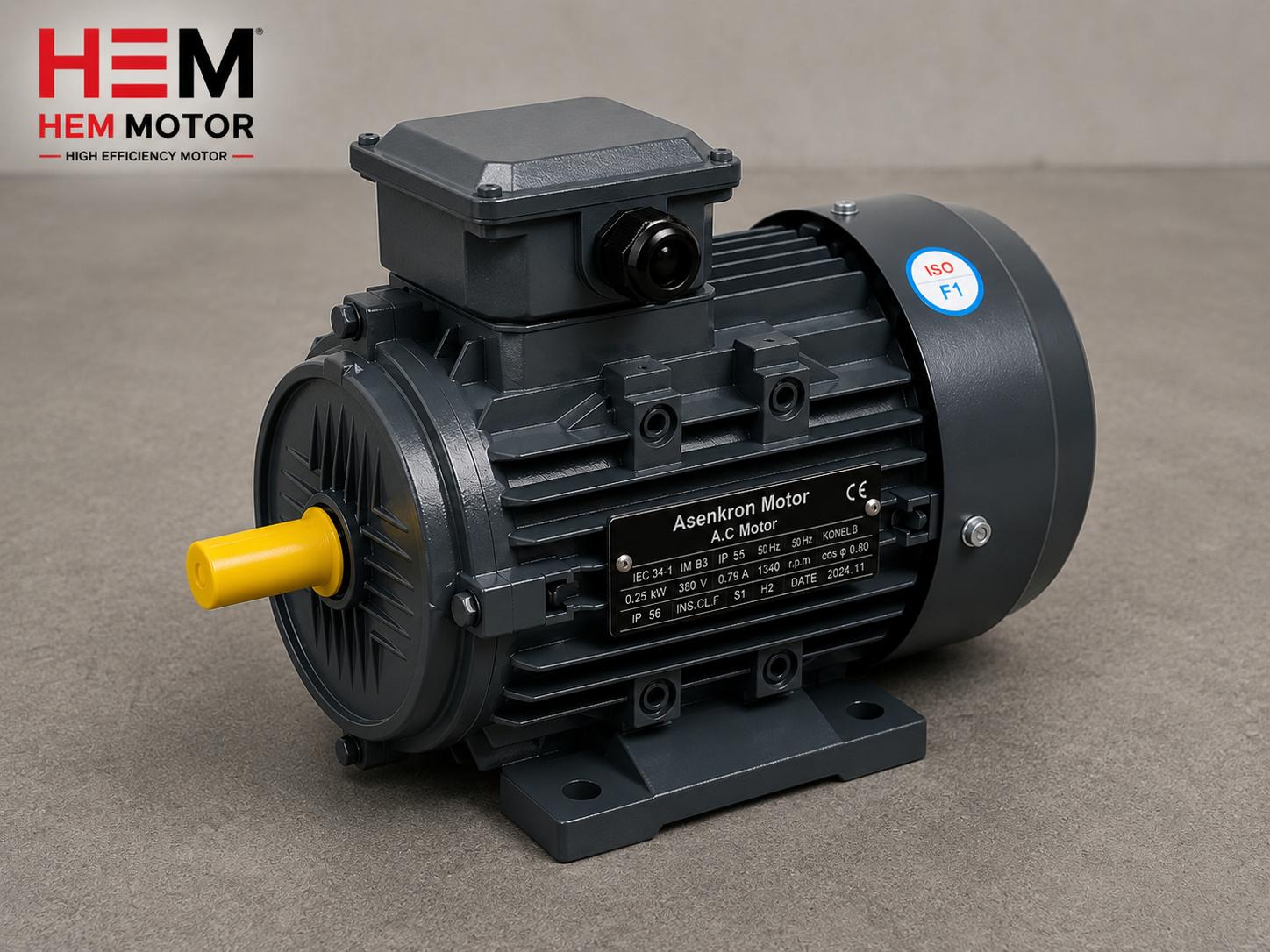

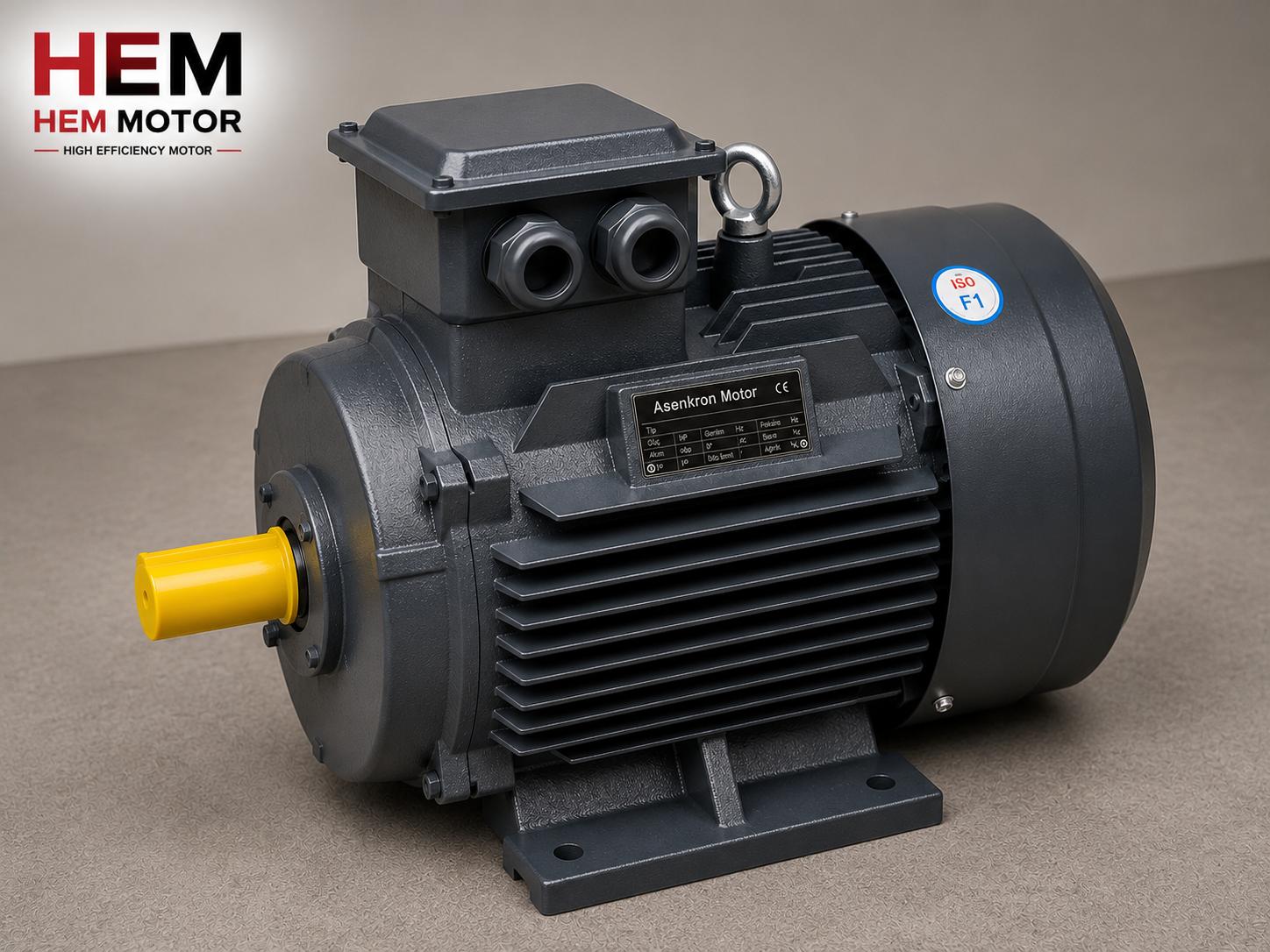
In very dusty environments such as cement, mining, lime, coal and recycling plants, the weakest point of an electric motor is often the cooling system. The fan and fan cowl at the back of a standard motor draw in the fine dust in the air; over time this dust accumulates between the fins, cuts off the air flow and overheats the motor. This is exactly where IC418 non-ventilated cooling — the TENV frame — stands out as a solution that eliminates the clogging problem at its root.
In this article we cover the concept of the cast-iron non-ventilated motor, how the IC418 cooling method works, and in which environments it is the right choice. In very dusty and dirty environments, selecting a clog-free frame both extends the motor's life and significantly reduces maintenance frequency. You can review our durable industrial motor families through the homepage.
IC418 is a cooling-method code defined according to the IEC 60034-6 standard. In this code the motor has no fan of its own; cooling is achieved by natural heat dissipation from the frame surface and by the movement of the surrounding air. Because there is no fan, there is also no region where dust can be drawn in and clog.
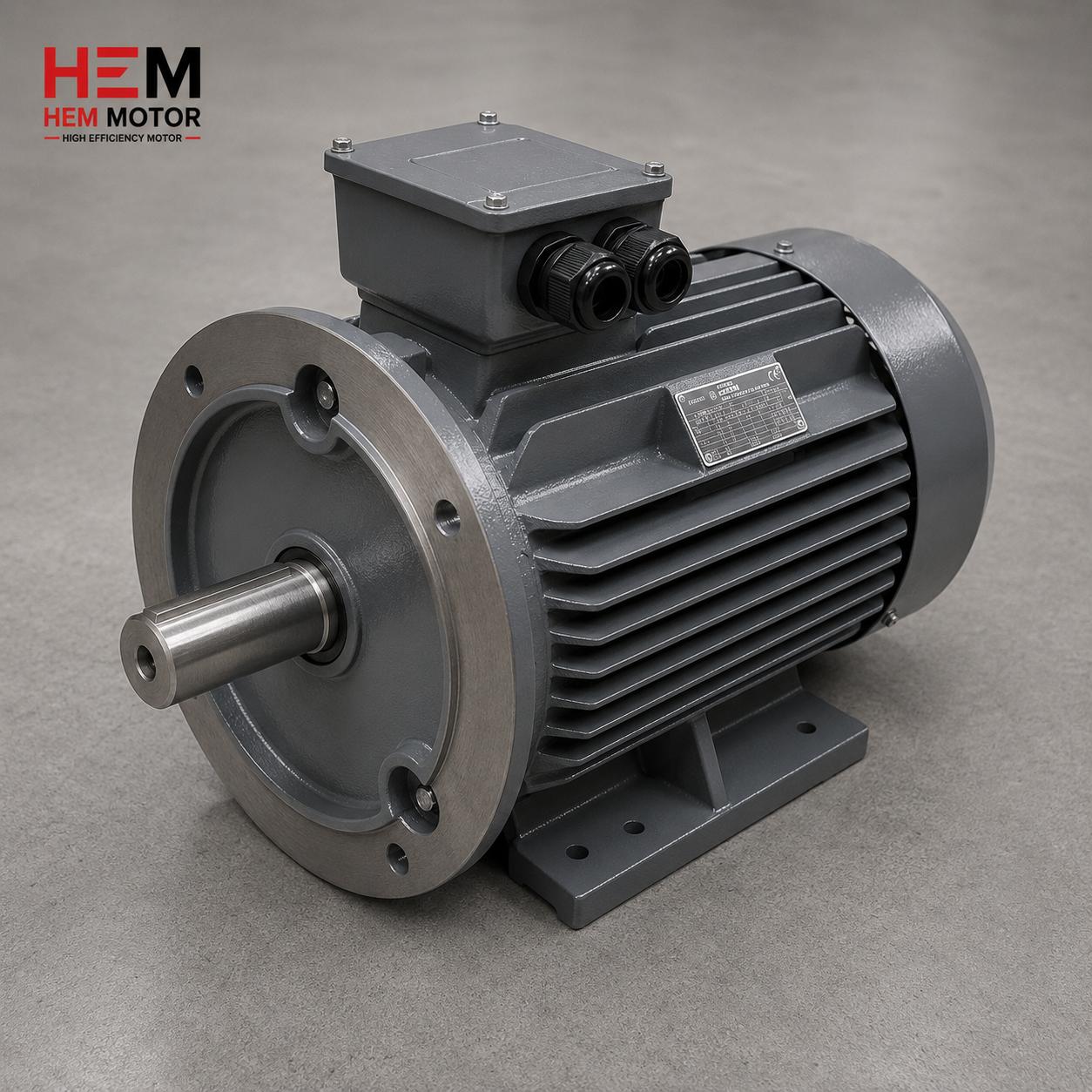
How Does IC418 Cooling Work?
A standard motor (IC411) cools the frame with the airflow generated by a fan at the shaft end. This method is efficient, but the fan also draws in dust and dirt. The IC418 non-ventilated motor removes the fan entirely and dissipates heat only from the frame surface, by natural convection and radiation. Therefore the frame is designed with a larger surface area and a thicker cast-iron mass than a fan-cooled motor of the same power.
The Advantage of Natural Cooling
The absence of a fan leaves no point where dust can accumulate and disrupt cooling. This allows the motor to run for years without cleaning in environments where cement or mining dust is heavy. In addition, because fan noise is also eliminated, the IC418 non-ventilated motor runs quietly; this is an extra advantage in applications where noise must be kept low. The absence of a moving fan part also removes one source of failure.
The Role of the Cast-Iron Frame
Since all heat is dissipated from the frame in IC418 cooling, the frame material is critical. The cast-iron frame is ideal for this task with both its high heat conduction and dissipation capability and its large thermal mass. Cast iron buffers heat during sudden load changes and dissipates it efficiently from its surface. Although aluminium frames are light, they cannot provide the thermal mass and durability required by non-ventilated cooling in most heavy applications.
- Fanless design: no region to clog with dust
- Cooling by natural convection and radiation (IC418/TENV)
- Large-surface, thick cast-iron frame
- Quiet operation: no fan noise
- One fewer source of failure with no moving fan part
- Ideal for very dusty and dirty environments
- Low maintenance need and long cleaning intervals
An Overview of Cooling-Method Codes
Motor cooling methods are defined by "IC" (International Cooling) codes in the IEC 60034-6 standard. The most common code is IC411; this denotes a totally enclosed, externally fan-cooled (TEFC) motor in which a fan at the shaft end blows over the frame from outside. IC418 removes the external fan and leaves cooling entirely to natural convection; this is why it is called non-ventilated or TENV (Totally Enclosed Non-Ventilated). The fact that the only difference between these two codes is "fan/no fan" actually creates an enormous operating difference in very dusty environments.
Alongside these there are also externally forced-cooled (IC416) or water-jacket-cooled solutions; but these are more complex and costly. In very dusty but medium-power applications, the IC418 non-ventilated motor offers a simple, durable and economical middle path. Selecting the right code requires clearly defining the environmental conditions and the motor's operating regime; a wrong code choice means either unnecessary cost or early failure.
In Which Environments Is IC418 Preferred?
IC418 non-ventilated cooling is a solution for environments where fan cooling cannot operate reliably. If a standard fan-cooled motor's fan cowl clogs quickly in fine, sticky dust, a fanless frame becomes a sensible choice.
Very Dusty Industrial Environments
Cement mills, lime kilns, coal preparation plants, mining and aggregate processing lines, and wood and chip processing facilities are the environments where IC418 is most suitable. In these places the dust is both very fine and dense; a standard fan reaches the point of blockage in a short time. In dust-fighting applications, frame selection is as important as pole and power selection. Our pole selection guide can also be reviewed for asynchronous motors.
Low-Speed and Drive Applications
When a standard fan-cooled motor runs at low speed on a variable speed drive, its own fan cannot produce enough air and cooling weakens. In an IC418 non-ventilated motor, cooling does not depend on a fan, so this problem does not occur; the motor continues its natural cooling even at low speed. In this respect the fanless frame can also suit drive applications that demand constant cooling over a wide speed range. Our power and speed guide offers guidance.
The Effect of Dust Clogging on the Motor
Understanding the chain effect created by dust accumulation in a standard fan-cooled motor reveals the value of IC418. When the grilles of the fan cowl and the frame fins become coated with dust, the cooling airflow drops. When the airflow drops, the motor's frame temperature rises; every ten-degree excess temperature roughly halves the life of the insulation. So a clogged fan cowl, though it may appear to keep the motor running in the short term, silently degrades the winding insulation and lays the ground for an unexpected failure. The IC418 non-ventilated motor breaks this cycle entirely.
Winding and Bearing Life
Stable cooling protects not only the winding but also the bearings. In an overheated motor, the bearing grease degrades faster and bearing life shortens. Because the frame temperature is kept under control in an IC418 motor, both the winding insulation and the bearing grease serve closer to their design life. This is a gain that lowers total cost of ownership but is not visible at first glance.
Sizing and Power Limit
Non-ventilated cooling has a cost: at the same frame size, an IC418 motor usually delivers lower power than its fan-cooled equivalent, because heat dissipation depends solely on the surface. For this reason, when selecting an IC418 motor, either a larger frame is chosen or the power is slightly reduced (derating). The right choice is made considering the application's real load point and the ambient temperature. Ambient temperature is directly decisive in IC418 cooling, because heat is dissipated by the temperature difference between the frame and the surroundings.
Maintenance and Operating Advantages
The greatest operating advantage of an IC418 motor is its low maintenance need. Because fan and fan-cowl cleaning is eliminated, the burden on the maintenance team decreases. Since there is no channel for dust to clog, the motor requires cleaning only at long intervals. This is a great convenience for motors in hard-to-reach or continuously running positions. Still, bearing lubrication and general checks must be done regularly, like any motor. You can browse our efficient electric motor product group for efficient and durable options.
Protection Class and Extra Corrosion Measures
Non-ventilated cooling protects the motor from dust clogging; but dirty environments may contain moisture and abrasive substances beyond dust. So when selecting an IC418 motor, the protection class (usually at least IP55), insulation class and frame coating should also be evaluated. Cataphoresis (KTL) coating and additional corrosion protection reduce the damage that mineral-laden dust and moisture inflict on the frame. The terminal box and cable entry should be at the same protection level; otherwise dust and moisture can leak in through the connection points.
In very dirty environments, the placement of the motor also affects cooling. Leaving enough air space around the frame allows natural convection to work; if the motor is buried in a cramped compartment, the effectiveness of non-ventilated cooling decreases. Therefore in IC418 non-ventilated motor installation, a layout where the frame surface can exchange heat with the environment should be preferred.
Supply and Correct Selection
An IC418 non-ventilated motor may not be available off the shelf at every rating in standard catalogues; so at the supply stage it is important to clearly define the application's power, speed, frame size and environmental conditions. A supply model that combines manufacturer assurance with field experience ensures the right frame is selected for the right environment. Although the initial investment of an IC418 motor may be slightly higher because of the larger frame, in very dusty environments this difference is quickly repaid through reduced maintenance, fewer stoppages and extended motor life.
Frequently Asked Questions
What is the difference between IC418 and IC411?
IC411 is the standard method, cooled by the airflow generated by a fan at the shaft end. IC418 is fanless (TENV); heat is dissipated only from the frame surface by natural convection and radiation. The greatest advantage of IC418 is that, with no fan, there is no region that clogs with dust; this is why it is ideal for very dusty environments.
Is an IC418 motor larger at the same power?
Usually yes. Since heat is dissipated only from the surface in non-ventilated cooling, a larger-surface, higher-mass frame is needed to deliver the same power. Therefore an IC418 motor may be one frame size larger than its fan-cooled equivalent, or the power may be slightly reduced in the same frame. Correct sizing is done according to ambient temperature and load point.
Can an IC418 motor be used with a variable speed drive?
Yes, and this is one of IC418's important advantages. When a standard fan-cooled motor runs at low speed, its own fan cannot produce enough air, so its cooling weakens. In an IC418 non-ventilated motor, cooling does not depend on a fan, so natural cooling is preserved over a wide speed range. Even so, inverter-duty insulation and dV/dt precautions on long cables should be considered, as with any drive-fed motor.