English
 Türkçe

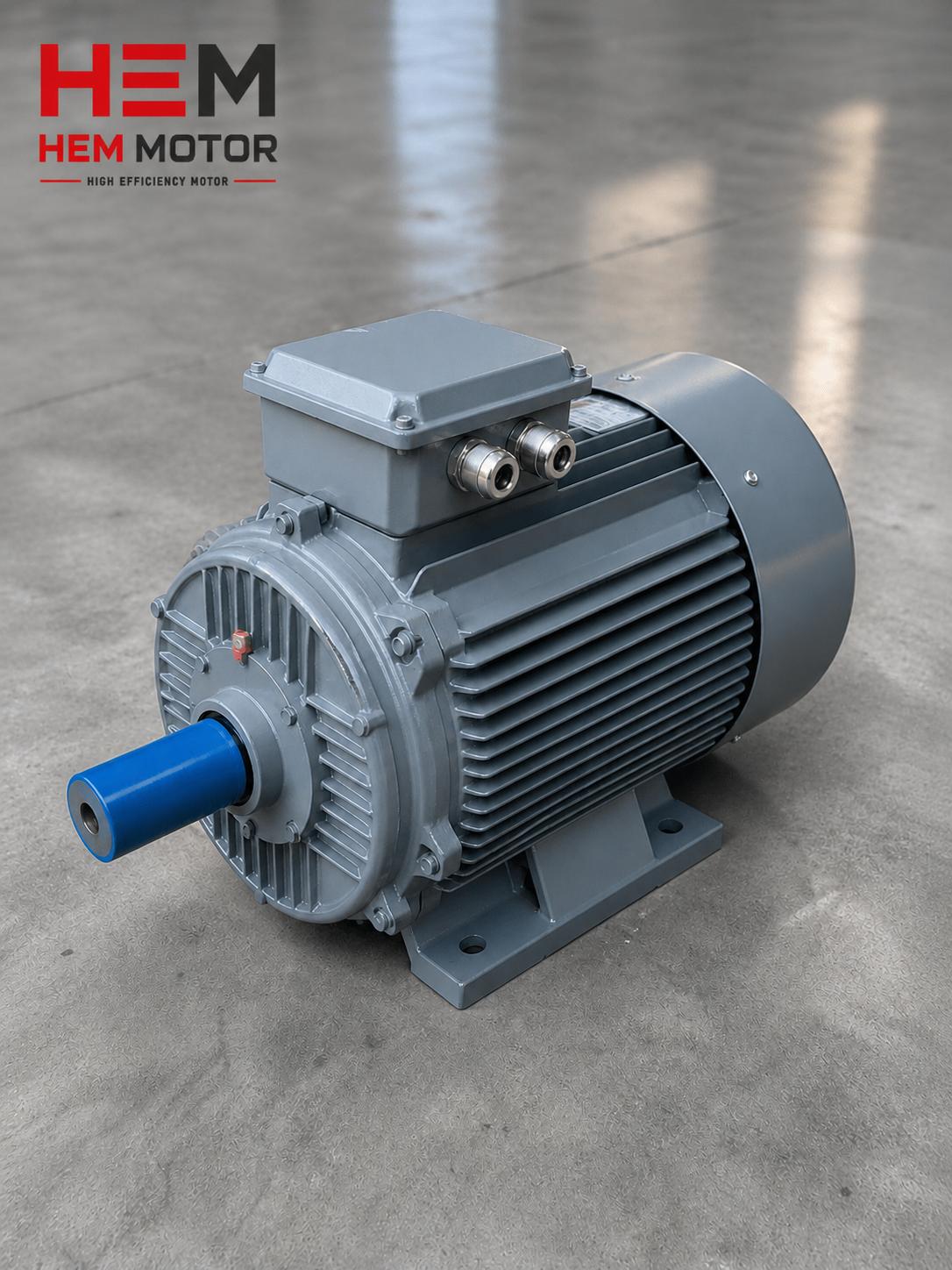

The IP protection class printed on the nameplate of a cast iron motor covers not only the sealing of the frame, but also the sealing of the terminal box and of the cable entering that box. The most common field mistake is that, even when the motor frame is IP55, a cable gland is fitted to the terminal box carelessly, or unused gland holes are left open. In that case the protection class on the nameplate stays on paper; the real protection is only as good as the weakest link, the cable entry.
The terminal box is the point where the electrical heart of the motor opens to the outside world. The winding leads, terminal links and connection lugs all gather here. Every drop of moisture, every speck of dust and every corrosive vapour that enters this volume lowers the insulation resistance, oxidises the terminal screws and, over time, leads to a phase-to-phase or phase-to-ground leakage. Such failures are usually treated as an out-of-warranty winding failure, because the root cause is not the motor itself, but the wrong cable entry and sealing.
In this article we technically address cable gland selection, the correct gland size, thread type, terminal box sealing, and the relationship of the IP protection class with the cable entry in cast iron motors. We supply the motor from stock with the correct gland, gasket material and, where needed, an anti-condensation heater option. For current electric motor prices and a terminal box configuration suitable for your application, you only need to share the details at the ordering stage.
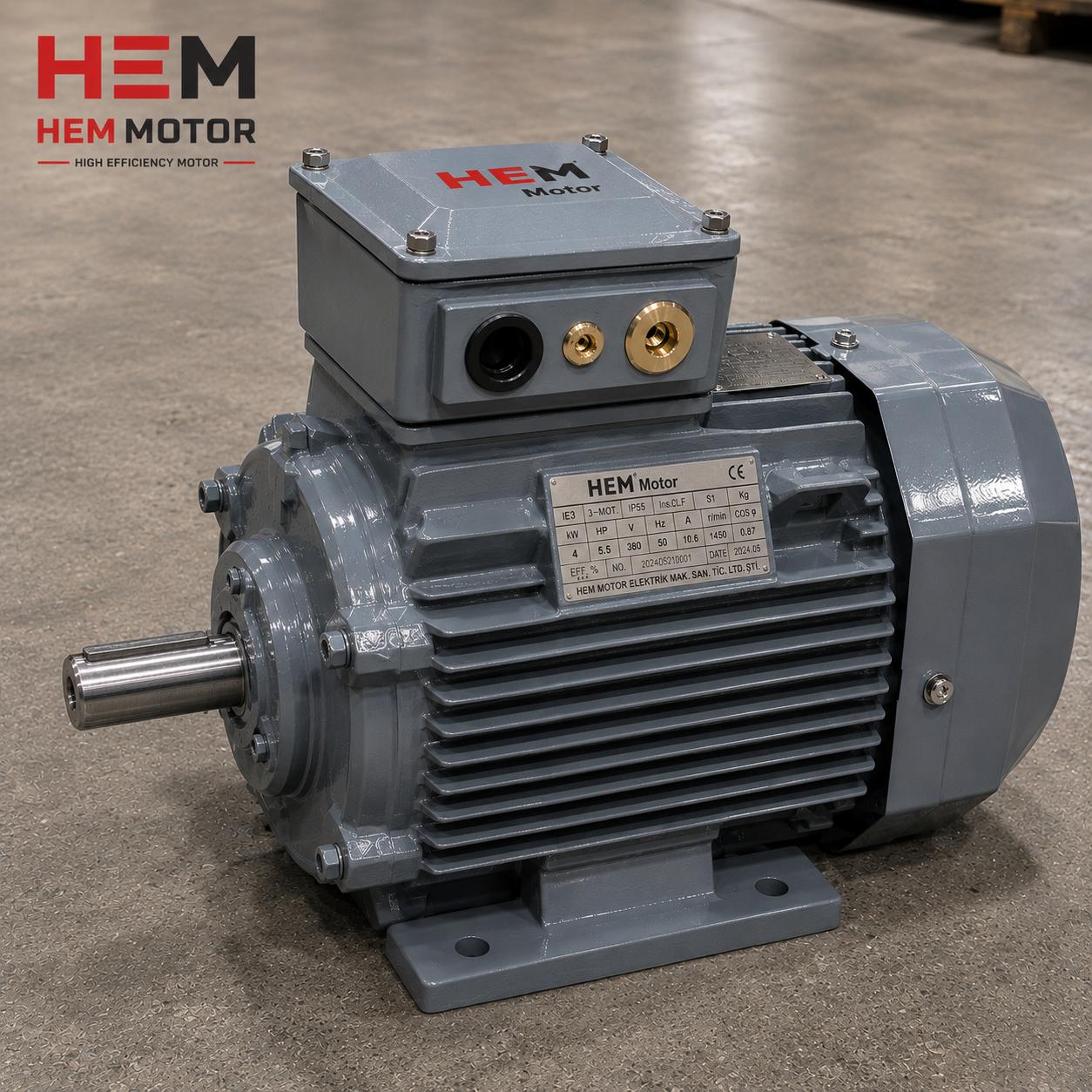
What Does the IP Protection Class Actually Cover?
The IP (Ingress Protection) code consists of two digits. The first digit indicates protection against the entry of solid objects and dust, while the second digit indicates protection against the entry of water. For example, in an IP55 motor, the first "5" indicates partial protection against dust (dust may accumulate but does not affect function), while the second "5" indicates protection against low-pressure water jets from any direction. IP56 protects against powerful water jets, and higher classes protect up to temporary immersion.
The critical point here is this: the IP class of the motor is only valid up to its weakest entry point. Even if the frame is IP55, if a gland with no stated IP class or an IP54 gland is fitted to the terminal box, the real protection class of the system drops to IP54. For this reason the cable gland IP class must not be lower than the IP class of the motor. The gland, the terminal box and the frame are links in the same protection chain.
Terminal Box Gasket Integrity
In cast iron motors there is a gasket between the terminal box cover and the body. This gasket must seat correctly each time the cover is opened and closed, and must not be crushed or torn. During field maintenance, the gasket is often neglected when the cover is removed; a worn gasket renders even the most expensive gland useless. The gasket material (NBR, silicone, EPDM) must be selected to suit the operating temperature and the chemicals in the environment.
Cable Gland Selection: Thread Type and Size
The cable gland mechanically fixes the cable to the terminal box while also sealing the entry hole. Correct gland selection rests on three fundamental parameters: thread type, thread size and the accepted cable outer diameter range.
Metric and NPT Thread Types
In European standard motors, the terminal box entry holes generally come with a metric thread (M16, M20, M25, M32, M40, M50, M63). In North America and some oil-and-gas applications, the NPT (National Pipe Thread) thread is preferred. The thread type must definitely be specified at the ordering stage; if an NPT gland is forced into a metric hole, the thread is damaged, sealing is lost and the terminal box begins to take in water. Thread incompatibility is one of the most common and most easily preventable field mistakes.
Gland Size According to Cable Diameter
Every gland accepts a certain cable outer diameter range. If the cable falls below this range, the rubber gasket cannot grip the cable sufficiently and sealing cannot be achieved; if it is above the range, the gland strains the cable and can crush the insulation. The correct gland should be selected so that the cable diameter falls in the middle of its range. Therefore the cable cross-section and outer diameter must be shared at the ordering stage.
- Thread type: Metric or NPT? Must be compatible with the terminal box hole.
- Thread size: Such as M20, M25, M32; must seat exactly into the entry hole.
- Cable diameter range: The cable outer diameter must be within the range accepted by the gland.
- IP class: The IP class of the gland must not be lower than that of the motor.
- Gasket material: Suitable for operating temperature and ambient chemistry (NBR, silicone, EPDM).
- EMC need: An EMC gland for shielded cable in variable frequency drive applications.
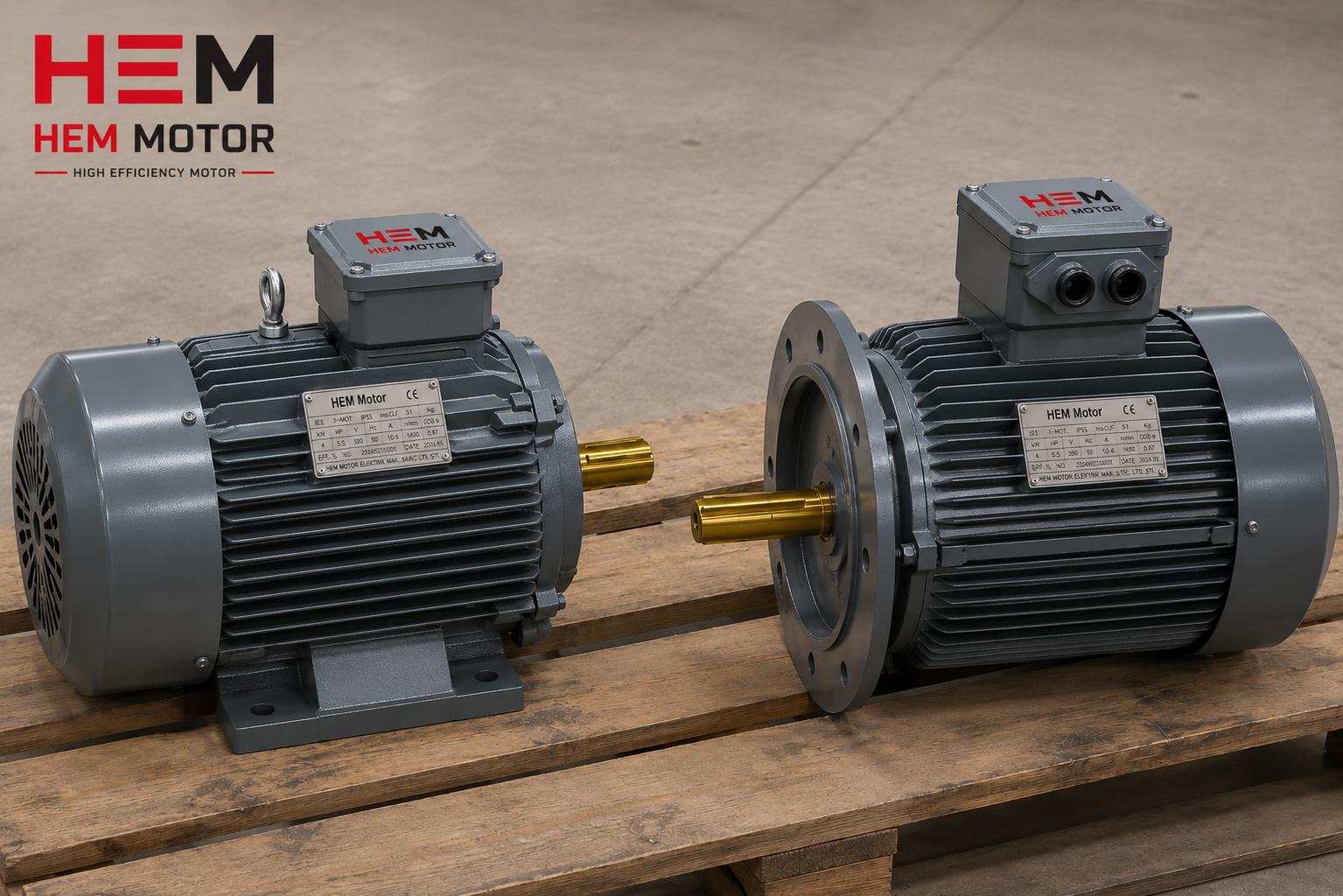
Closing Unused Holes: Blanking Plugs
The terminal box of cast iron motors generally has more than one entry hole. In an application using a single cable entry, if the other holes are left open, the IP protection becomes completely meaningless. Every open hole is an invitation for the entry of dust, moisture and insects. For this reason, all unused holes must be closed with a blanking plug suitable for the thread size of the hole and the IP class of the motor.
The blanking plug also has an IP class, and this class must not be lower than that of the motor. A plastic tape or a makeshift plug is not a permanent solution; it loosens and leaks over time. The correct blanking plug must be suitable for the metric or NPT thread type, gasketed and certified. If you share the terminal box configuration at the ordering stage, we plan together which holes will be used and which will be closed, and supply the motor with the appropriate gland and blanking plug set.
Consequences of Moisture Entering the Terminal Box
Moisture entering the terminal box is a silent but destructive threat to the motor. The chain effects created by moisture are as follows:
- Drop in insulation resistance: Moisture lowers the megohm value of the winding and terminal insulation. This is the first step on the road to leakage current and ultimately a short circuit.
- Terminal and screw corrosion: In a humid environment, copper terminals and steel screws oxidise. Corrosion increases connection resistance, leading to local heating and loosening.
- Condensation: As the motor cools and heats, moisture condenses inside the terminal box through a "breathing" effect. This is especially dangerous in motors that do not run or run intermittently.
- Out-of-warranty failure: Because the root cause of such failures lies in the wrong cable entry, they are usually treated as outside the scope of the manufacturer's warranty.
To prevent this chain, in addition to correct sealing, the anti-condensation heater (space heater) option should also be considered. This low-power heater, which switches on when the motor stops, keeps the terminal and winding volume slightly above ambient temperature, preventing condensation.
EMC and Shielded Cable Applications
If the motor is fed from a variable frequency drive (VFD), the use of shielded cable is almost mandatory. The shield braid of the shielded cable must be earthed 360 degrees and with low impedance. Special EMC cable glands that provide this connect the cable shield to the terminal box body with a wide contact surface. A standard gland cannot provide this EMC connection; there is no low-impedance path for high-frequency interference currents, and both the drive and surrounding equipment may be affected by electromagnetic interference.
For this reason it is important to state at the ordering stage whether the motor will run with a drive or directly from the grid. Planning the EMC gland need from the outset in drive applications guarantees both sealing and electromagnetic compatibility in the field. Our guide on variable frequency drive motor compatibility will be a useful reference.
Points to Watch During Installation and Commissioning
Even if the correct gland and blanking plug are selected, the quality of installation determines the sealing. The gland must be tightened to the manufacturer's torque value; under-tightening leaks, over-tightening damages the gasket and thread structure. The cable should enter the terminal box without tension, leaving a natural "drip loop"; this way any water on the cable flows downward rather than to the gland.
- Tighten the gland to the manufacturer's torque value; do not leave it at hand-tight.
- The outer sheath of the cable must be continuous in the region of the gland's sealing gasket.
- Check the gasket integrity before closing the terminal box cover.
- Close all unused holes with a blanking plug of the appropriate IP class.
- Leave a drip loop on the cable to prevent water from travelling to the terminal.
Correct terminal box configuration is an inseparable part of motor selection. You can find the relationship between frame class, protection class and terminal box size in detail in our article on IP protection class motor selection.
Stock, Supply and Correct Configuration
Terminal box configuration, gland selection and options such as an anti-condensation heater are details that directly determine the field life of the motor. Defining these details correctly at the ordering stage prevents later field interventions and possible failures. When you share your application environment (dust, moisture, chemicals, outdoor), the cable cross-section, the thread type preference and the use of a drive, we supply the motor configured with the appropriate gland, gasket and blanking plug set from stock.
A correctly configured terminal box both saves time during initial installation and ensures that the declared IP protection class of the motor really holds in the field. For a quote and fast supply, you only need to send us your application details.
Frequently Asked Questions
My motor is IP55, does the IP class of the cable gland matter?
Yes, it matters greatly. The IP protection class of the motor is only valid up to its weakest entry point. If you fit a gland lower than IP55 to the terminal box, the real protection class of the system drops to the level of that gland. For this reason the IP class of the gland and blanking plug must not be lower than that of the motor.
What should I do with the terminal box holes I do not use?
All unused holes must be closed with a gasketed blanking plug suitable for the thread size of the hole and the IP class of the motor. Every hole left open allows the entry of dust, moisture and insects, rendering the motor's IP protection useless; tape or a makeshift plug is not a permanent solution.
Is moisture entering the terminal box covered by warranty?
Usually it is not. Since the root cause of the insulation drop and winding failures caused by moisture entering the terminal box is the wrong cable entry and sealing, such failures are usually treated as out-of-warranty winding failures. This risk can be prevented from the outset with the correct gland, blanking plug, gasket and, where needed, an anti-condensation heater.