English
 Türkçe

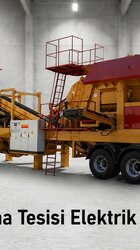
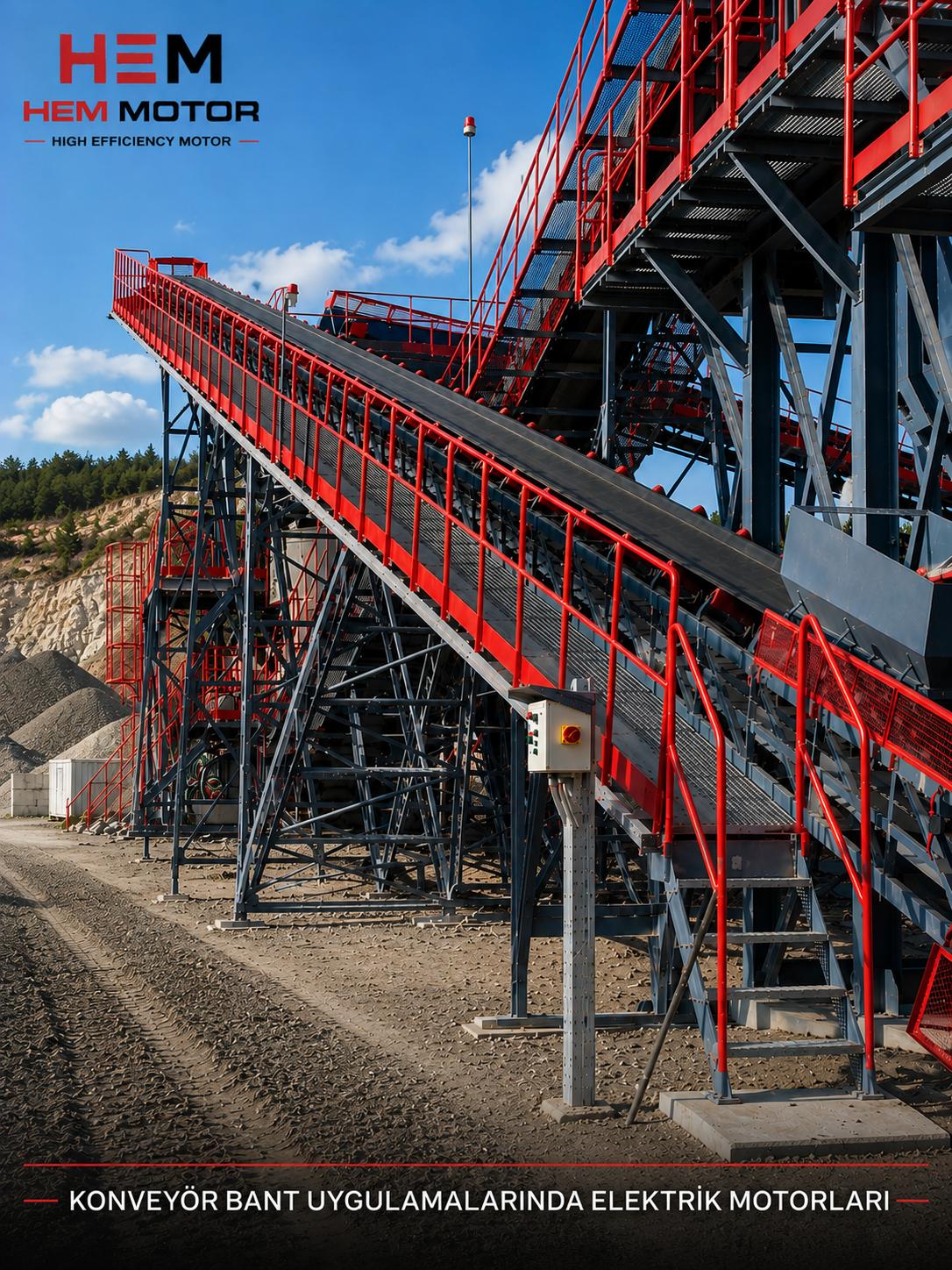

Running a crusher is a very different task from turning an ordinary pump or fan. Because of the heavy wheels, flywheels, and large rotating masses of the breaker, the motor encounters extraordinary resistance at the moment of starting. The most critical element governing this heavy starting behavior is a correctly selected autotransformer (compensated) starter. Choosing the wrong starting method on a high-inertia crusher either burns out the motor with excessive current or fails to produce enough torque and stalls the motor before it can even get up to speed. In this article we examine in detail the autotransformer starter, which reduces the starting current while preserving torque on crusher motors, along with the voltage-torque relationship, tap selection, and the Korndörfer transition.

Why Is a Crusher a High-Inertia Load?
The moment of inertia of a breaker—that is, the rotational inertia denoted by GD² or J—is far greater than that of most standard applications. Jaw crushers have a large flywheel, impact crushers a heavy rotor, and cone crushers large rotating masses. Bringing these masses from zero speed up to full speed requires a considerable amount of energy and time. As a result, crusher starting takes a long time; the motor draws a high current for seconds as it tries to accelerate this large mass.
This situation has two fundamental consequences. First, throughout the prolonged start, the motor and cables are exposed to high current; this means heating and voltage drop. Second, throughout the start, the torque produced by the motor must at every moment be greater than the counter-torque of the load; otherwise the motor can never reach the desired speed and gets stuck. For this reason, when selecting a starting method for a crusher, both limiting the starting current and preserving sufficient torque must be achieved at the same time.
Where Is the Limit of Star-Delta?
Star-delta starting, which is common on low-power and easy-starting loads, is often inadequate on heavy loads such as a crusher. In the star position, approximately fifty-seven percent of the line voltage is applied to the motor; however, since torque is proportional to the square of the voltage, the torque in the star position is only about one-third of the full-voltage torque. Such low torque is often not enough to accelerate a high-inertia crusher. The motor turns slowly in the star position, and at the moment of transition to delta a sudden surge of current and torque occurs. This is precisely the gap that the autotransformer starter fills.
How Does an Autotransformer (Compensated) Starter Work?
During starting, the autotransformer starter applies a reduced voltage to the motor through an autotransformer, instead of full line voltage. Once the motor has reached a certain speed, the autotransformer is taken out of circuit and the motor is connected to full voltage. The greatest advantage of this method is that, while reducing the starting current, it preserves torque much better than star-delta. This is because the autotransformer reduces both the current on the motor side and the current on the grid side proportionally; the current drawn from the grid decreases more than the current drawn by the motor.
This feature is of critical importance. In a plant with limited grid capacity, or on a generator-fed site, the high current drawn at the moment of starting can cause a voltage drop and affect other equipment. By markedly limiting the current on the grid side, the autotransformer starter alleviates this problem. Placing less load on the grid while producing the same starting torque makes it an ideal solution for high-inertia crushers.
The Relationship Between Voltage, Torque, and Tap
At the heart of the autotransformer starter lies a simple but powerful law of physics: the torque produced by the motor is proportional to the square of the applied voltage. For this reason the selected tap of the autotransformer directly determines the starting torque. In practice, autotransformers are generally offered with a few fixed taps:
- 65% tap: Approximately sixty-five percent of the line voltage is applied to the motor; the starting torque corresponds to about forty-two percent of the full-voltage torque. Lower current means lower torque.
- 80% tap: Approximately eighty percent of the line voltage is applied to the motor; the starting torque rises to about sixty-four percent of the full-voltage torque. Higher torque is preferred for heavy starting.
- Tap selection: The correct tap is determined according to the crusher's moment of inertia and counter-torque; too low a tap cannot start the motor, while an unnecessarily high tap reduces the current advantage.
On a high-inertia crusher, the higher tap—that is, 80%—is generally preferred; because sufficient torque is essential to accelerate the heavy mass. However, if the grid capacity is very limited, it may be necessary to start with a lower tap and prolong the start. This balance is an engineering decision that must be evaluated separately for each plant.
The Korndörfer Transition: A Closed-Transition Switch to Full Voltage
One of the most important technical details of the autotransformer starter is how the transition from reduced voltage to full voltage is made. In a simple transition method, if the autotransformer is suddenly taken out of circuit, the motor is disconnected from the grid for a brief moment, and a current surge occurs when it is reconnected. This surge stresses both the motor and the mechanics. The Korndörfer transition is a special circuit arrangement developed to solve this problem.
In the Korndörfer method, at the moment of transition a portion of the autotransformer temporarily behaves like a series reactor, and the motor is at no moment completely cut off from the grid. In this way a smooth transition from reduced voltage to full voltage is provided, without any current interruption or surge. This is a field-proven, reliable solution that protects both the motor windings and the mechanical components of the crusher. The classic three-contactor Korndörfer connection is the standard arrangement that makes this smooth transition possible.
Alternatives for Very Heavy Starts
Some crusher applications are of such high inertia that even an autotransformer starter can remain at its limit. In these cases, rotor-resistance starting methods come into play. In slip-ring (wound-rotor) motors, external resistance is added to the rotor circuit, keeping the starting torque high while the current is limited. In even more demanding applications, liquid-resistance starters are used; these provide a very smooth and controlled start by varying the resistance steplessly throughout the start. The correct method is determined according to the crusher's moment of inertia and the grid conditions.
The selection of the starting method is closely related not only to the motor but also to the supply. Particularly on generator-fed sites, the starting current must be limited according to the generator's capacity to handle the starting load. For this reason, a technical evaluation is required to arrive at the correct starting solution based on the crusher inertia, the grid, and the generator. On the subject of the correct motor and starting combination, the electric motor solutions offered by HEM Motor provide technical support in selecting the power and starting strategy suited to crusher applications.
Mechanical and Thermal Stress in a Crusher Motor
High-inertia starting creates not only electrical but also mechanical and thermal stress on the motor. Throughout the prolonged start, the rotor bars and windings heat up with high current; for this reason crusher motors must be designed to be thermally robust and selected to withstand frequent starting. In addition, the transmission of the starting torque to the shaft and couplings creates a mechanical shock; the correct starting method softens this shock and protects both the motor and the transmission elements.
The main points to watch for in a crusher motor are as follows:
- Thermal capacity: The motor must be able to withstand long and frequent starts without overheating; this is achieved through correct power and frame selection.
- Protection class: On a dusty crusher site, the motor should be selected with at least IP55 protection and a cast iron frame.
- Bearing health: Impact loading and vibration stress the bearings; correct lubrication and monitoring extend bearing life.
- Start monitoring: By monitoring the start duration and current, it should be verified that the starter tap is correctly set.
Determining the Correct Solution
The correct starting solution for a crusher is determined not by a single formula but by data specific to the plant. When the crusher's moment of inertia, counter-torque curve, grid capacity, the presence of a generator, and the starting frequency come together, the correct tap of the autotransformer starter—or, if necessary, a rotor-resistance alternative—becomes clear. This evaluation directly affects the life of the motor and the uninterrupted operation of the plant. On the subject of correct power selection, our content on selecting a 55 kW electric motor offers a complementary framework for power and speed matching. For crusher auxiliary systems, our content on selecting a crusher lubrication unit motor can be reviewed.
Frequently Asked Questions
Why is an autotransformer starter preferred over star-delta on a crusher?
Because a crusher is a high-inertia load and sufficient torque is essential at starting. In the star position, the torque is only about one-third of the full-voltage torque and is often not enough to accelerate the heavy mass. The autotransformer starter preserves torque much better while reducing the starting current, and it reduces the current on the grid side proportionally more.
How do I choose between the 65% and 80% tap?
Since torque is proportional to the square of the voltage, the 80% tap produces a markedly higher starting torque than the 65% tap. On high-inertia crushers, 80% is generally preferred; however, if the grid capacity is very limited, it may be necessary to start with a lower tap. The correct tap is determined according to the crusher's moment of inertia and counter-torque.
Why is the Korndörfer transition important?
The Korndörfer transition provides a switch from reduced voltage to full voltage without any current interruption or surge. Since the motor is at no moment completely cut off from the grid, the current shock and mechanical stress at the moment of transition are eliminated. This is a field-proven, reliable solution that protects both the motor windings and the mechanical components of the crusher.