English
 Türkçe

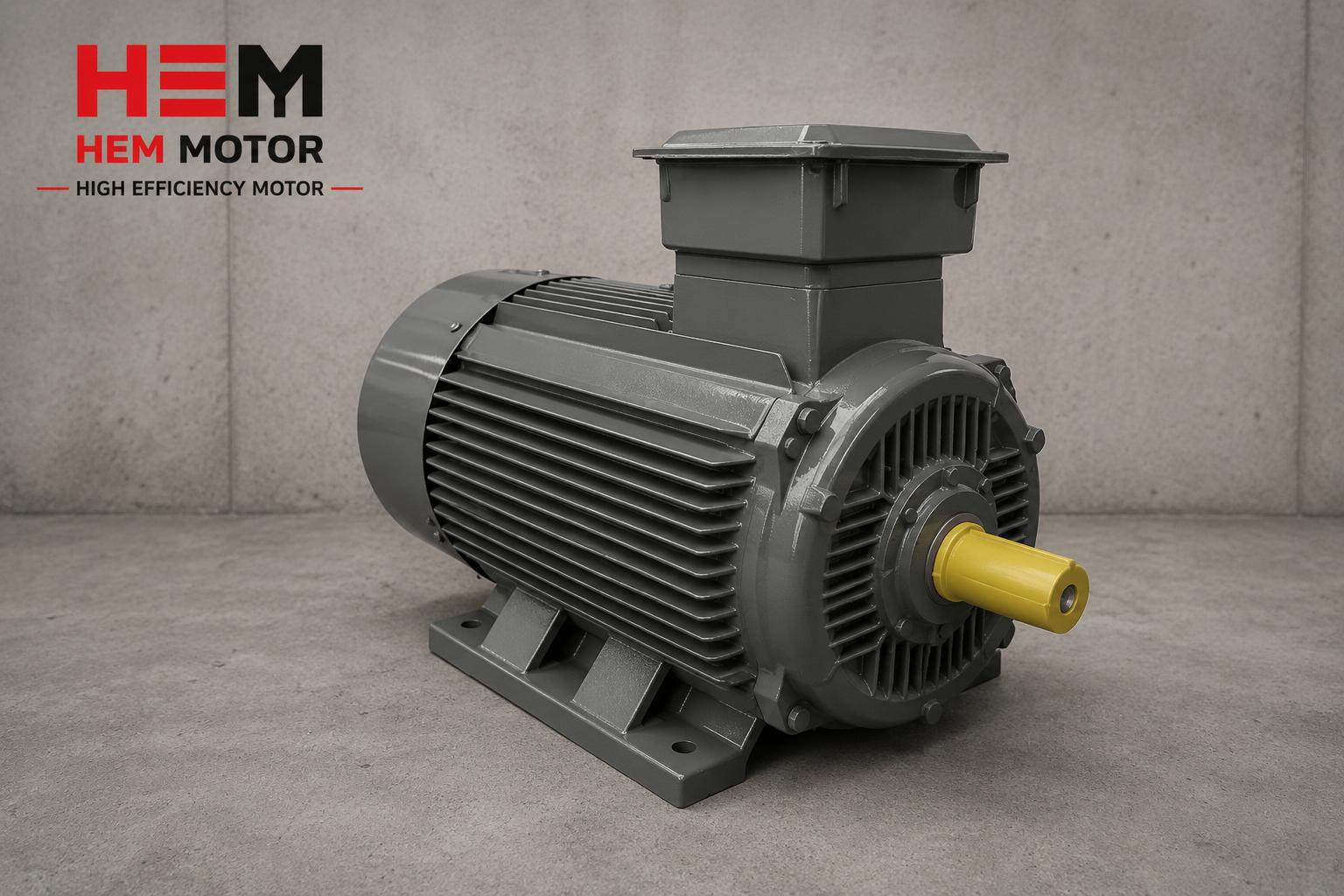

There is a world of difference between ordering a 132-frame, 7.5 kW motor and ordering a 315-frame, 132 kW motor for a plant. The first can be lifted onto a shelf by hand, tossed into the back of a van and dispatched to site the same day. The second, weighing over one and a half tonnes, is a supply project that requires a special forklift, an overhead crane and sometimes a road permit. High-power electric motors above 90 kW are not considered delivered when the purchase is complete, but when commissioning is finished.
The biggest mistake made with high-power motors is treating them as scaled-up versions of small motors. In reality, the requirements for weight, logistics, foundation and commissioning change in nature above a certain power. Mis-planning a one-and-a-half-tonne motor means not just extra cost but a delay lasting weeks. For this reason, buying high power must be treated not as a purchasing line item but as a project to be planned from start to finish.
In this article we plan, step by step, the supply of large-power motors in the 250-355 frame class, from the moment of ordering to the first loaded run. We cover in detail why lead times stretch, how to solve transport and unloading logistics in advance, the reinforced-concrete foundation preparation and the commissioning checklist. Our goal is to help you build a project discipline that strips surprise costs and delays out of buying high power.
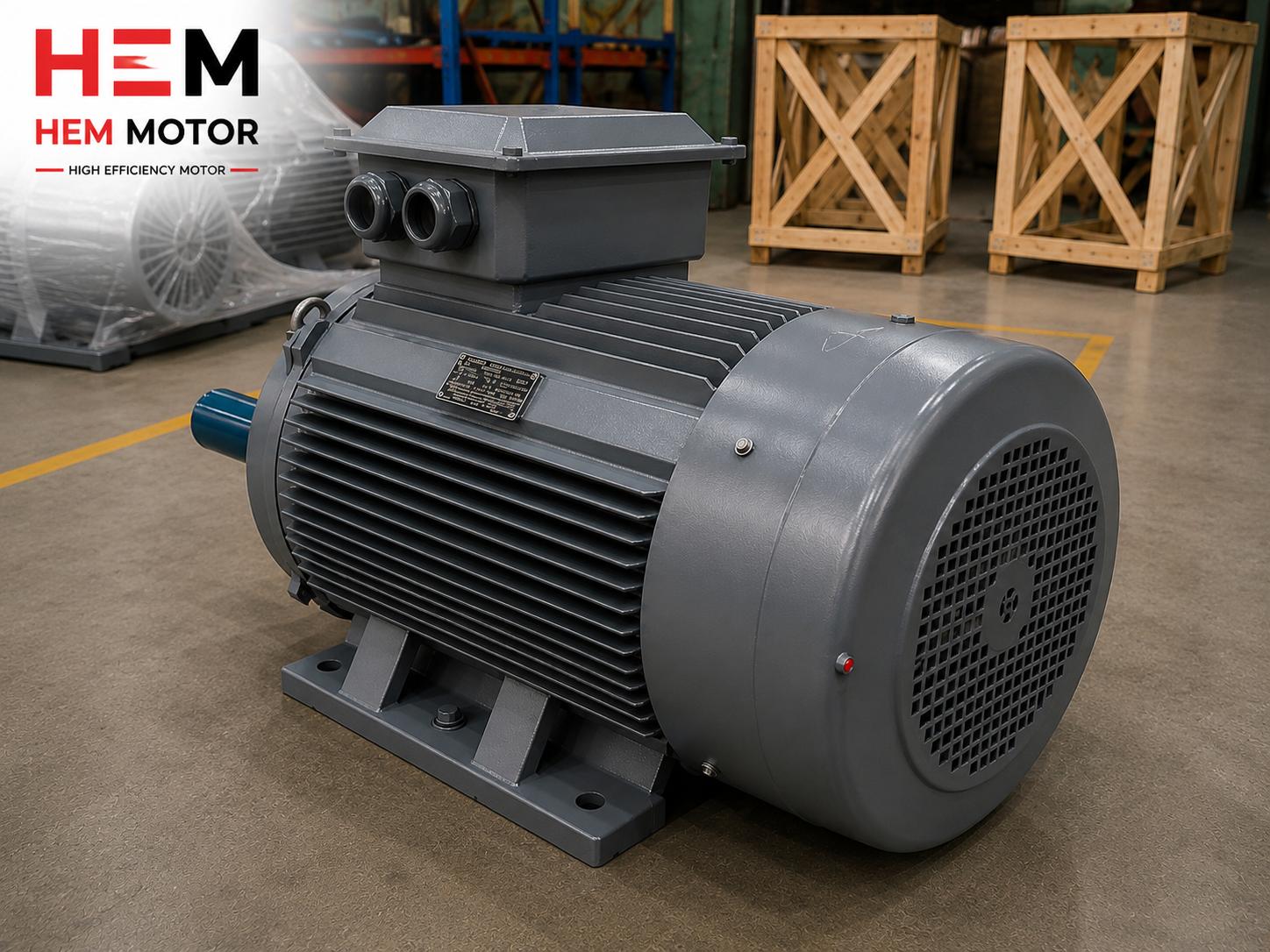
Why Do Large-Power Motors Come to Order?
Because small and medium-power motors see high demand, sellers keep them in shelf stock. But for motors of 90 kW and above, demand becomes sparse while unit cost rises exponentially. A plant's 250-frame motor does not burn out every week; these motors run trouble-free for years. As a result, from the seller's perspective, keeping these large frames on the shelf means both high tied-up capital and a slow turnover rate.
This economic reality explains why lead times stretch. Most high-power motors are pulled from the production line to order or brought from a central warehouse. Even at a standard power and speed, the lead time can extend to 8 weeks; in cases requiring special voltage, special shaft or a high protection class (above IP55), it can stretch to 16 weeks. For this reason, the first rule in buying high power is to plan the need early. Entering a 12-week lead time in panic for a burnt-out motor costs the production line dearly.
Lead-time uncertainty is the most underestimated risk in high-power buying. A supplier saying "about 10 weeks" is not enough for production planning; this period should be secured by contract, and what happens in case of delay discussed up front. For suppliers like us, the key is to reduce the customer's lead-time risk by keeping the most-requested high-power-speed combinations in stock, even if in limited quantities. That is why, within our high-power electric motor supply network, we treat the common frames in the 90-160 kW band as priority stock items. A high-power motor pulled from stock turns the customer's weeks-long lead time into days.
Step 1: Correct Specification and Order Preparation
A mistake on a high-power motor is expensive, because the logistics of return and exchange are a cost in themselves. Returning a one-and-a-half-tonne motor because it arrived wrong means both freight cost and re-supply time. For this reason the specification must be prepared meticulously before ordering. Frame size, power, speed, voltage and mounting type are the basic headings; but at high power there are several more critical items in addition.
- Insulation and temperature class: heat management is critical at high power, F-class insulation and B-class temperature rise are typically requested
- Protection class (IP): IP55 and above in dusty or wet environments
- Cooling method: whether self-fan-cooled (IC411) or forced cooling is required
- Bearing type and lubrication: whether large frames have re-greasable bearings and grease nipples
- Drive compatibility: insulated-bearing need if running with a variable frequency drive (VFD)
- Heater and thermistor: anti-condensation heater and PTC thermistor protection
- Mounting position: the effect of horizontal (B3) or vertical (V1) position on bearing selection
If these items are not specified correctly, the motor that arrives on site may not suit the application even if it fits mechanically. In particular, a motor to be driven by a frequency converter that arrives without insulated bearings comes back as bearing damage months later. Likewise, a motor to run outdoors arriving with a low protection class means a failure on the first rain. The specification is the only way to clarify all of these details up front.
Step 2: Transport and Unloading Logistics
A 250-frame motor can exceed half a tonne, a 315-frame one and a half tonnes, and a 355-frame two tonnes. These weights cannot be carried by standard freight; they require special vehicles, securing and sometimes a road permit. The transport plan must begin at the moment of ordering, not when the motor sets off. For the vehicle to enter the plant, the gate width, manoeuvring area and ground load capacity must be confirmed in advance.
The unloading side is often the overlooked yet most critical step. An overhead crane or a forklift of adequate capacity must be ready on site. The motor body has lifting eyes for hoisting; these eyes are designed only for the motor's own weight, not for lifting attached equipment. The route from the unloading point to the foundation must be cleared in advance, and the ground must be solid enough to carry the load. The capacity of slings and ropes must be chosen to suit the motor weight, and the lifting angle kept within safe limits.
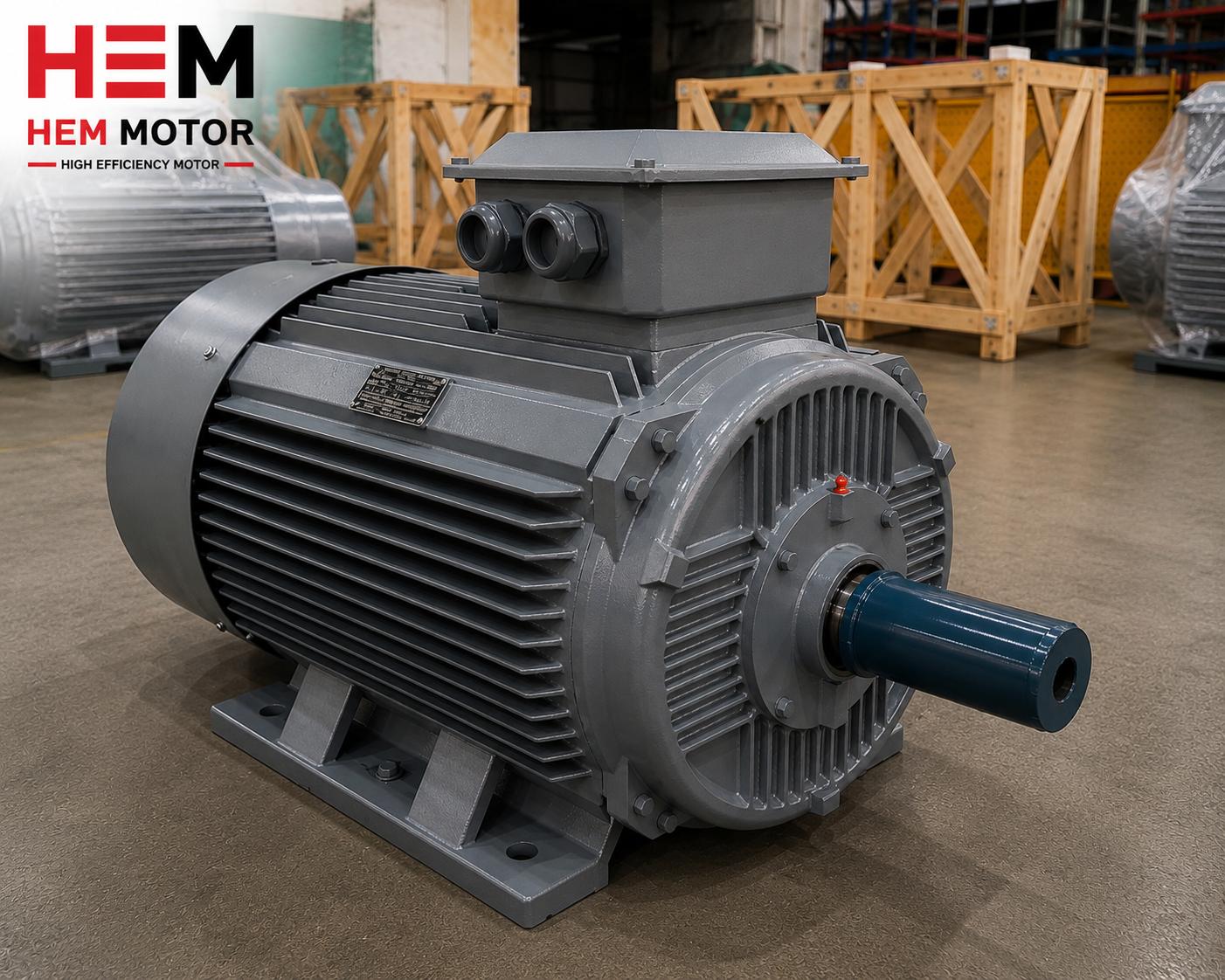
Planning the logistics from the outset prevents the motor from waiting at the site gate. A one-and-a-half-tonne motor waiting a day at the site gate means both extra crane cost and project delay. In our high-power motor dispatch and delivery processes, we plan delivery to be completed in a single pass by querying the customer's site conditions (crane capacity, access route, unloading point) at the order stage. So when the motor arrives, unloading and placement proceed without interruption.
Step 3: Reinforced-Concrete Foundation and Mechanical Preparation
High-power motors demand a solid foundation because of vibration and torque reaction. A light steel chassis is not enough; in most cases a reinforced-concrete foundation is required. Although the foundation's mass varies with the machine it drives, the general rule is that it should have a mass several times that of the motor. The foundation absorbs the motor's vibration energy, transfers it to the ground and prevents resonance. An inadequate foundation causes early vibration-related failures even if the motor is in perfect condition.
Foundation preparation must begin weeks before the motor arrives, because of the concrete's curing time. Concrete usually needs days to weeks to reach full strength; if this period is not accounted for in planning, the foundation will not be ready even when the motor arrives. Anchor bolts are embedded in the concrete so they fit exactly into the motor's foot holes. Therefore the motor's exact mounting dimensions (hole centres, foot dimensions) must be obtained in advance, and the foundation prepared to those dimensions. Assuming the foundation will be poured after the motor arrives puts weeks of gap between delivery and commissioning.
The foundation should also provide for adjustment shims for alignment. On high-power motors, precise alignment is critical for bearing and coupling life; the foundation must be designed to allow these fine adjustments. Oil and water drainage, cable trays and the earthing connection should also be planned at the foundation stage.
Step 4: Commissioning and First Loaded Run
Once the motor sits on the foundation, commissioning begins. The first step is the insulation resistance measurement; especially if the motor has been kept in a damp warehouse, the winding insulation must be measured with a megger and, if necessary, dried by heating. The second step is alignment; in a coupled connection the axial and radial misalignment must be measured precisely, since at high power even a small misalignment quickly fatigues the bearings and coupling. A laser alignment tool is almost a standard requirement on motors of this size.
On the electrical side, high-power motors usually start with star-delta or a soft starter, because direct-on-line starting creates high inrush current on the mains and strains both the mains and the mechanical transmission. On first run, the direction of rotation, no-load current and vibration level are checked. The load is then applied gradually and the winding temperature, bearing temperature and current are monitored. It is normal for freshly greased bearings to run a little hotter in the first hours; this temperature settles over time. When the first loaded run is completed successfully, the high-power motor is truly considered delivered.
Managing Lead-Time Risk with Stock
The biggest uncertainty in high-power supply is the lead time. An 8-16 week wait for a motor that comes to order is unacceptable if it means a production line standing still. For this reason the strategic approach is either to stock critical high-power motors in advance or to secure the lead time by contract through a framework agreement with the supplier. On our side, keeping the most-requested high-power-speed combinations in stock and operating an accelerated supply channel with the central warehouse for the rest is the approach that minimises the customer's lead-time risk.
Keeping a spare high-power motor for a piece of critical equipment may look expensive at first glance, but compared with the cost of an unplanned stop it is usually justified. A single day of lost production, in most cases, exceeds the price of the motor. For this reason, the right question in high-power buying is not "where can I buy this motor cheapest?" but "if this motor fails, how fast can I get back into production?"
Frequently Asked Questions
Why is the lead time for a motor above 90 kW so long?
Because high-power motors see sparse demand and have high unit cost, most sellers do not keep them in shelf stock; they are pulled from the production line to order or brought from a central warehouse. While the lead time can reach 8 weeks at a standard power-speed, it can stretch to 16 weeks in cases requiring special voltage, special shaft or a high protection class. It is possible to bring this time down to days by keeping the most-requested frames in stock; that is why planning the need early is the most critical step in high-power buying.
What should I watch for when unloading the motor on site?
You should learn the motor's weight in advance (half a tonne at the 250 frame, up to two tonnes at the 355 frame) and have an overhead crane or forklift of adequate capacity ready on site. Unloading is done from the lifting eyes on the motor body, and these eyes are designed only for the motor's own weight. The route from the unloading point to the foundation must be cleared in advance and the ground confirmed to carry the load. Sling capacity and lifting angle should also be planned in advance for safety.
Should I prepare the reinforced-concrete foundation before the motor arrives?
Yes. Because concrete curing and reaching full strength takes weeks, the foundation must be prepared well before the motor arrives. Anchor bolts are embedded in the concrete so they fit exactly into the motor's foot holes; therefore you must obtain the motor's exact mounting dimensions in advance. Assuming the foundation will be poured after the motor arrives adds weeks of delay between delivery and commissioning and sets the project back.