 English
 Türkçe

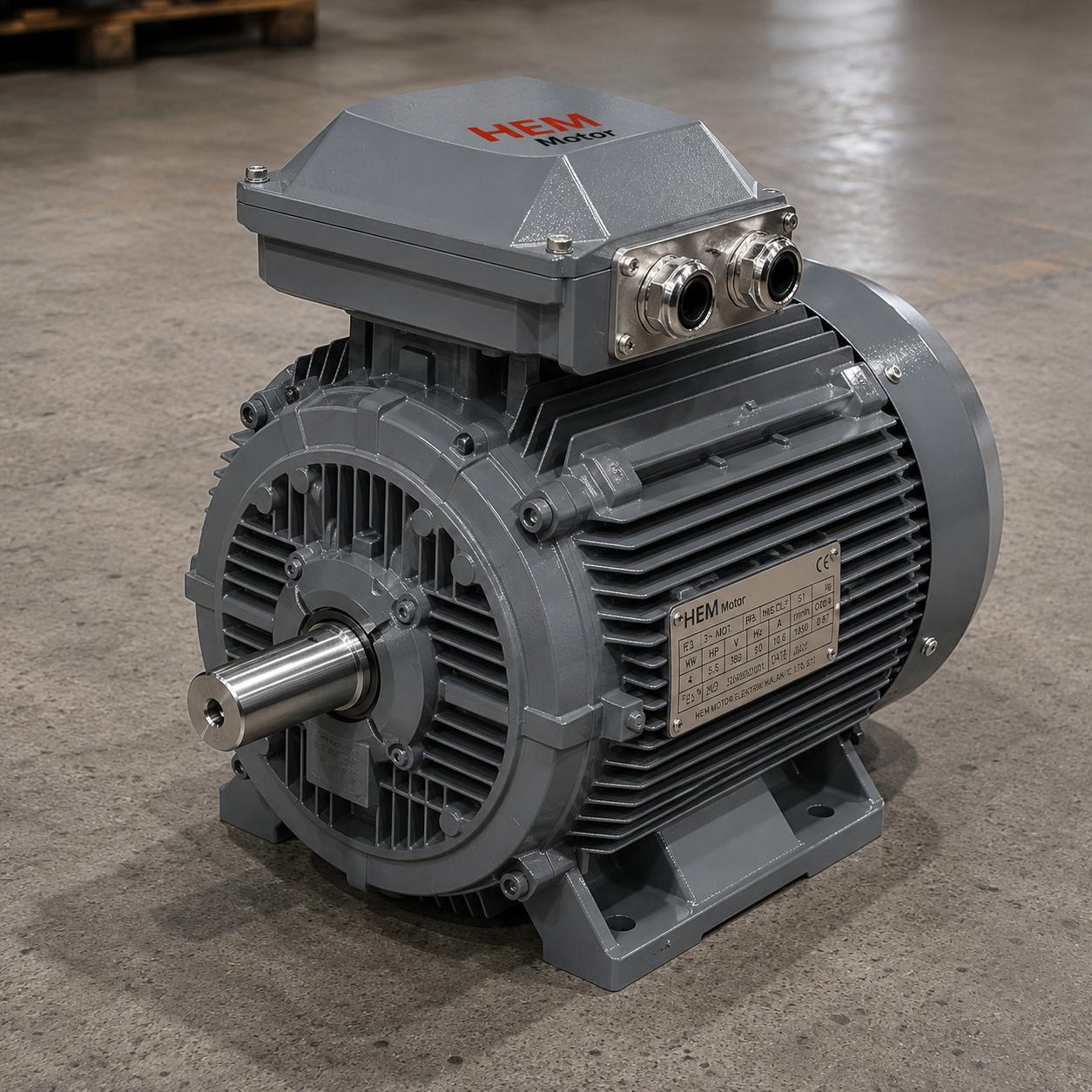
When the drive motor on an overhead crane, gantry crane, monorail or chain hoist stops, the entire loading and material-handling flow halts with it; that is why sourcing the right crane and hoist electric motor quickly is not a cost line but a guarantee of uptime. At HEM Motor we supply the S4 brake motor needs of overhead and gantry cranes across their hoisting, long-travel and cross-travel (trolley) drives with a stock-oriented approach, offering solutions built for high switching frequency and shock loads. A lifting application is fundamentally different from a continuously running conveyor: the motor starts, stops, brakes and holds the load in the air repeatedly. For this reason the price of a crane motor is never set by power alone; duty type, brake torque, inertia and switching frequency are evaluated together. Below we cover motor selection, the supply process and how to get a fast quote under sector-specific headings.
Whether you need a series of motors for a new overhead crane build or a one-to-one replacement of a failed motor on an existing chain hoist, we work with a sourcing approach that defines the correct duty type, brake type and mounting arrangement together with you. Simply send your fast-quote request to learn about HEM Motor electric motor prices and stock availability.
Technical Factors That Drive Crane and Hoist Motor Pricing
In lifting systems the motor switches on dozens, even hundreds of times per hour. This operating profile demands a very different design from a standard industrial motor. When the following points are clear, the right crane motor is identified on the first try and no unnecessary cost arises:
- Duty type (S3/S4/S5): Hoist motors usually run in S4 or S5 intermittent duty with a high number of starts per hour. The larger the duty type, the greater the thermal reserve and endurance of the motor.
- Brake torque and brake type: To hold the load safely, brake torque is selected well above the rated motor torque. DC and AC spring-applied (fail-safe) brake options are evaluated separately for hoisting and travel.
- Inertia and shock-load capacity: Swing while the load is suspended and sudden stops impose shock on the shaft and bearings; a cast-iron body and robust bearing arrangement absorb that shock.
- Pole number and speed: For precise positioning in hoisting, two-speed (e.g. pole-changing) solutions are often preferred; on travel drives, soft starting comes to the fore.
- Mounting and shaft: B3, B5, B35 or custom shaft/flange solutions may be required to connect to the gearbox or hoist drum.
We clarify all of these points for you; describe your application and let us define the right motor and fast-quote options for hoisting and travel together. Our material handling electric motors product group is also frequently used alongside lifting equipment in the same facility.
Drive Points on Overhead Cranes, Gantry Cranes and Chain Hoists
A lifting system never has a single motor; depending on the application, different drive points require different motor characteristics. At HEM Motor we supply all of these points with a stock and fast-delivery focus:
| Drive Point | Operating Character | Key Requirement |
|---|---|---|
| Hoist drive | Raises, lowers and holds the load in the air | High brake torque, S4/S5 duty, safe holding |
| Trolley / cross-travel | Moves the load across the bridge | Soft start, precise positioning, braked stop |
| Bridge / long-travel | Moves the whole bridge along the rails | Synchronised motors, shock-free start, braked |
| Chain hoist / monorail | Single-point lifting and travel along a line | Compact brake motor, high switching frequency |
Whatever drive point you need a motor for, we anticipate the needs of the other points in the same system and present a holistic supply plan. This way you establish a consistent stock and price-performance balance not for a single motor but for your entire lifting system.
Brake Motor: The Foundation of Holding a Load Safely
The heart of a lifting application is the brake. When power is cut or the motor stops, the brake must engage automatically and hold the load in position. For this reason a spring-applied (fail-safe) brake is standard on crane motors: the spring closes the brake when de-energised and the brake opens when energised. Correct brake-torque selection is decisive for both safety and precise positioning. To explore brake-motor technology and selection criteria in more detail, our brake electric motor purchasing page also offers guidance for applications beyond lifting.
High Switching Frequency and Heat Management
Hoist motors that start many times per hour draw high current and heat up at every start. If the duty type is not chosen correctly, the motor is thermally stressed and its life is shortened. We therefore evaluate the number of starts and the load profile together and, where needed, recommend motors with winding temperature protection (thermal switch / thermistor) and a suitable insulation class. Those interested in the technical effect of frequent start-stop operation can learn more from our guide on braked and variable-load duty types.
Supply and Fast-Quote Process
With crane and hoist motors the most critical issue is often time. A crane stopped on the production line or in the field generates cost every hour. At HEM Motor we work stock-first, keeping the most-requested power-speed-brake combinations ready; for special requests we let you plan with a clear lead time.
- One-to-one replacement: Send the nameplate and mounting dimensions of the failed motor and we will quickly identify a motor that fits the same connection.
- New production series: If you are a crane manufacturer, let us build a consistent stock and price-performance plan for recurring orders.
- Project supply: Let us provide a single-source, compatible motor package for all the lifting equipment of a facility.
You can find the technical details of cast-iron, S4 brake motors built for shock loads in our cast-iron crane and hoist motor selection article, and review a practical checklist for the supply process in our crane and chain-hoist motor supply guide. For heavy-duty lifting applications such as mine shaft hoists, our mine shaft hoist and skip motor selection article is an additional resource.
System Efficiency With the Right Motor
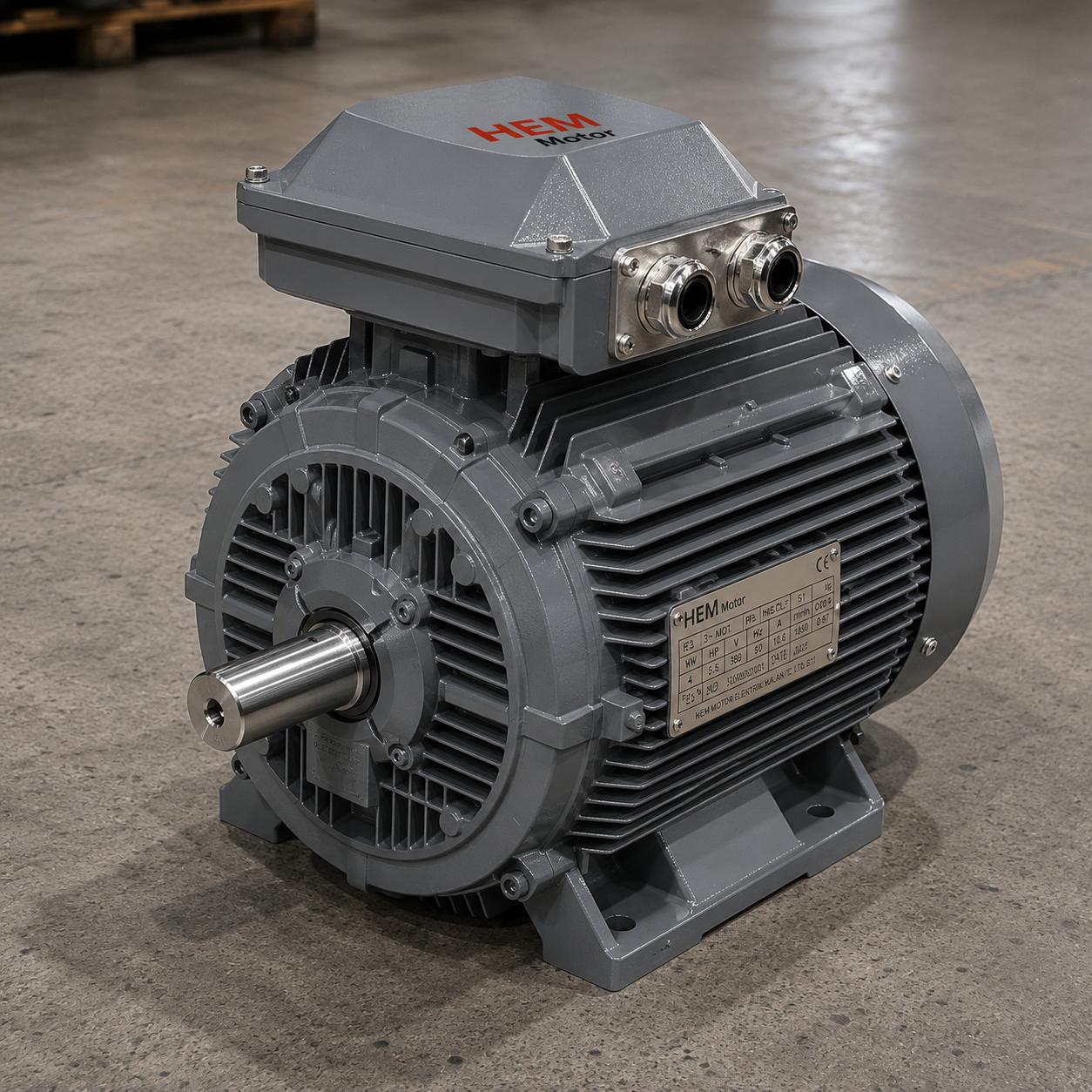
The right motor choice in a lifting system affects not only safety but also energy consumption and maintenance cost. With a high-efficiency motor you lift the same load with fewer losses, manage the heat generated during braking correctly and extend bearing life. To assess the return of switching to efficient motors on continuous and heavy-duty lifting lines, review our high-efficiency electric motors product group.
Frequently Asked Questions
Why does a crane motor always require a brake motor?
Because in a lifting application the load is suspended in the air. When power is cut or the motor stops, the spring brake must close automatically and hold the load in position so it does not fall uncontrolled. This safety function is indispensable in lifting systems, which is why we recommend S4 brake motors as standard on crane drives.
Can you replace my failed crane motor with the same dimensions?
Yes. When you provide the nameplate data (power, speed, voltage, duty type) and mounting dimensions (frame, mounting arrangement, shaft diameter, brake type) of the existing motor, we identify a motor that fits the same connection and meets the same duty, then offer a fast quote. The goal is a one-to-one swap with no mechanical modification.
Should the hoist and travel motors on an overhead crane be the same?
No. The hoist drive requires high brake torque and safe holding; the travel and trolley drives prioritise soft starting and precise positioning. Motors of different character are used in the same system. We evaluate all of your drive points together and recommend a compatible set.
How does a high number of starts affect motor selection?
Frequent starting thermally stresses the motor. If the correct duty type (S4/S5) and suitable cooling are not selected, the motor overheats and its life is shortened. If you send us the number of starts per hour and the load profile, we recommend a thermally safe and long-life motor.
How do I get a fast quote for a crane motor?
Simply send your application (overhead/gantry crane, chain hoist, monorail), the drive point and the nameplate/mounting details of the existing motor. We quickly share our stock status and the most suitable solution in terms of price-performance. For details and HEM Motor electric motor prices, get in touch with us right away.
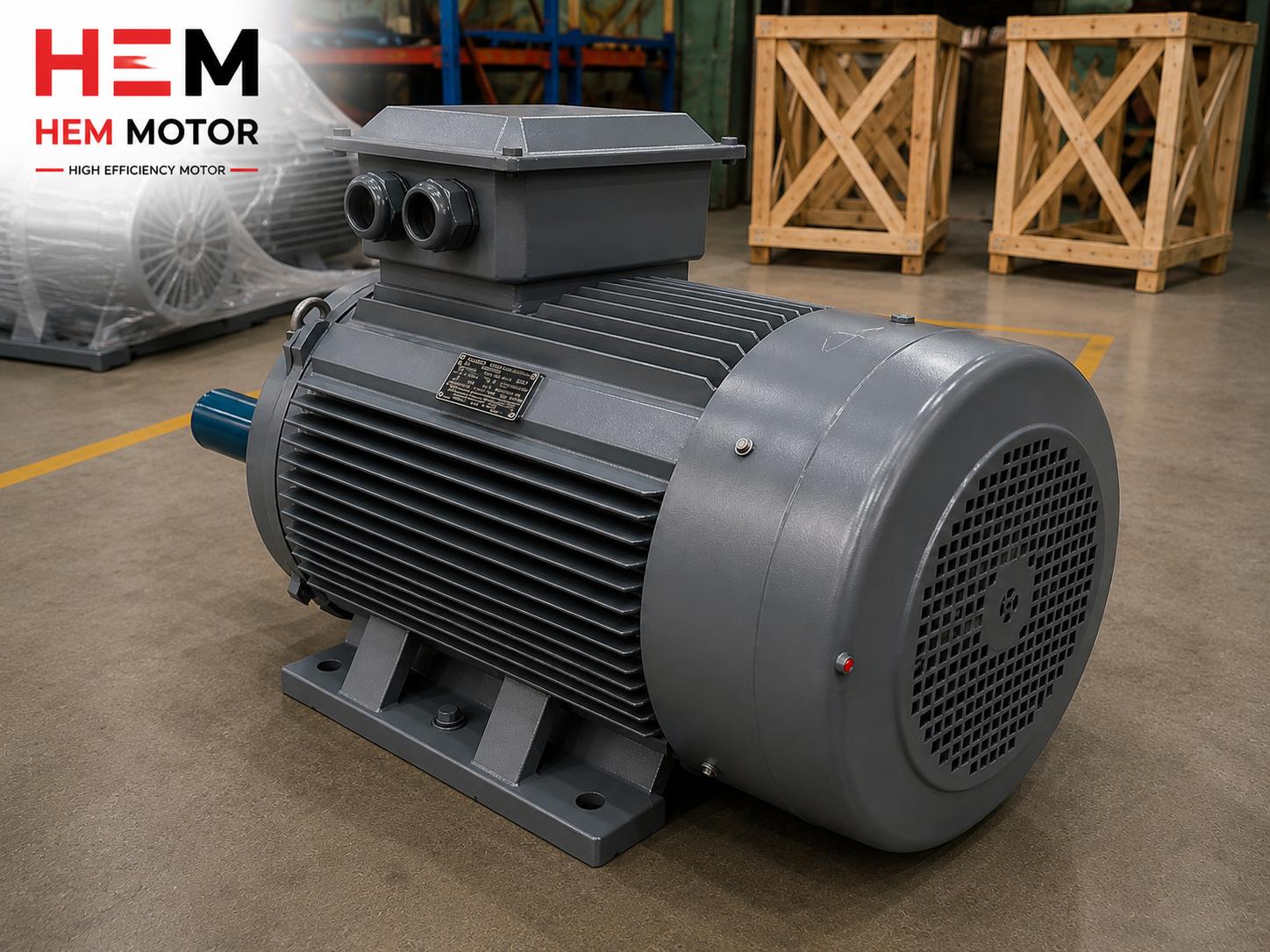
For your overhead cranes, gantry cranes, chain hoists and monorail systems, we offer S4 brake motors built for shock loads that eliminate downtime risk, with the advantage of stock and fast delivery. Let us define the most suitable motor for your needs together, with the correct duty type, brake torque and mounting arrangement; reach out to the HEM Motor team and get your fast quote for a crane and hoist motor.