 English
 Türkçe

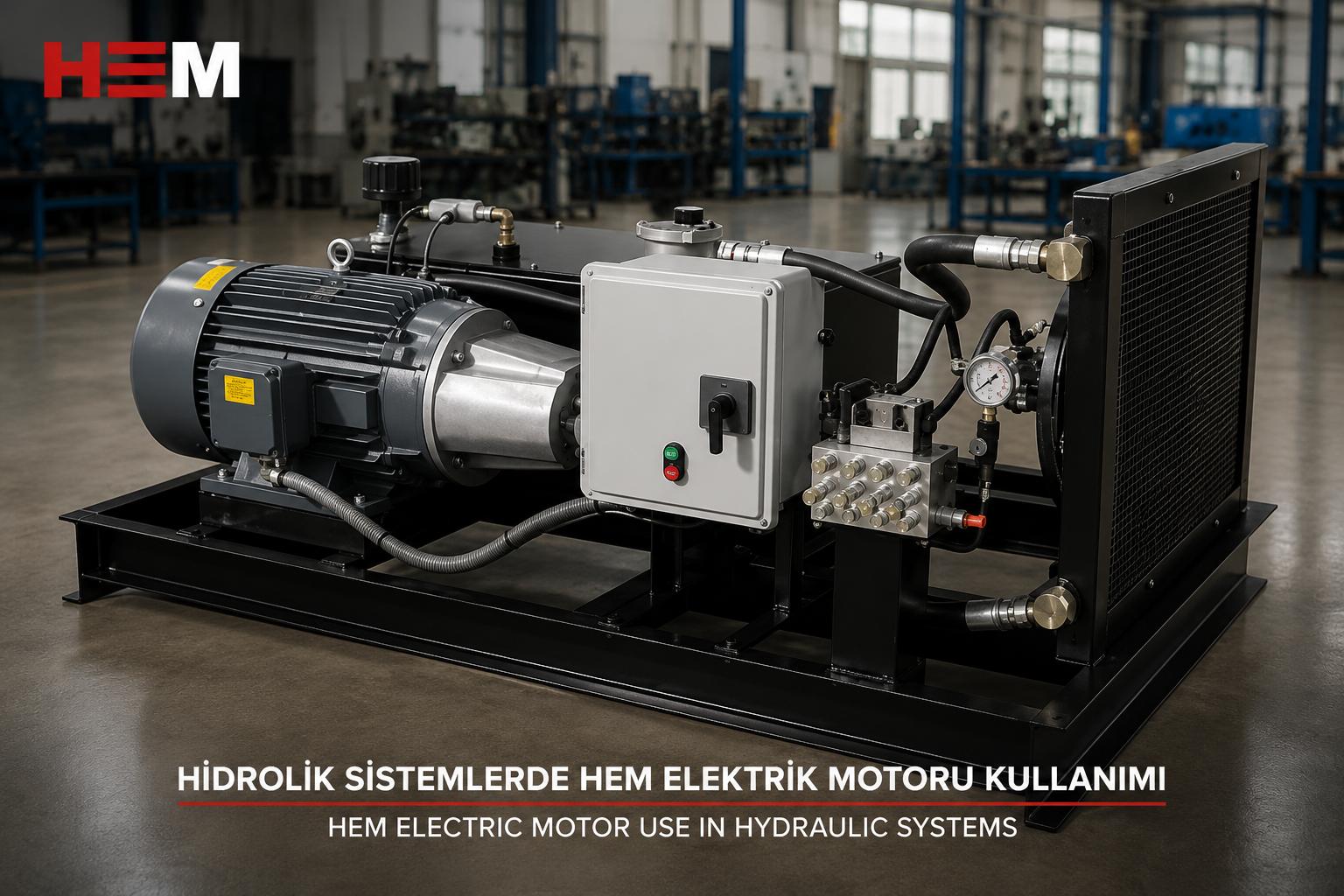
The power of a hydraulic system begins with the electric motor that turns the pump. A press, an injection machine, an elevator, a mobile machine or a test rig; in all these applications the hydraulic power unit (HPU) motor drives the hydraulic pump to produce the system's pressure and flow. As HEM Motor, we supply motors suited to hydraulic pump drives, ready for B5/V1 flange mounting, quiet and built for continuous operation, from stock with the manufacturer's advantage. This page covers what to watch for when buying a hydraulic system electric motor, the price-performance balance and the fast supply process.
In a hydraulic application the motor integrates mechanically with the pump; therefore mounting compatibility, shaft connection and noise-vibration behaviour directly determine the success of the system. In selecting an HPU electric motor, the mounting type, duty cycle (continuous/intermittent) and quietness expectation are evaluated as much as rated power. The sections below are written so you can quickly choose the right motor and clarify your purchasing decision.
Motor-Pump Compatibility in Hydraulic Pump Drives
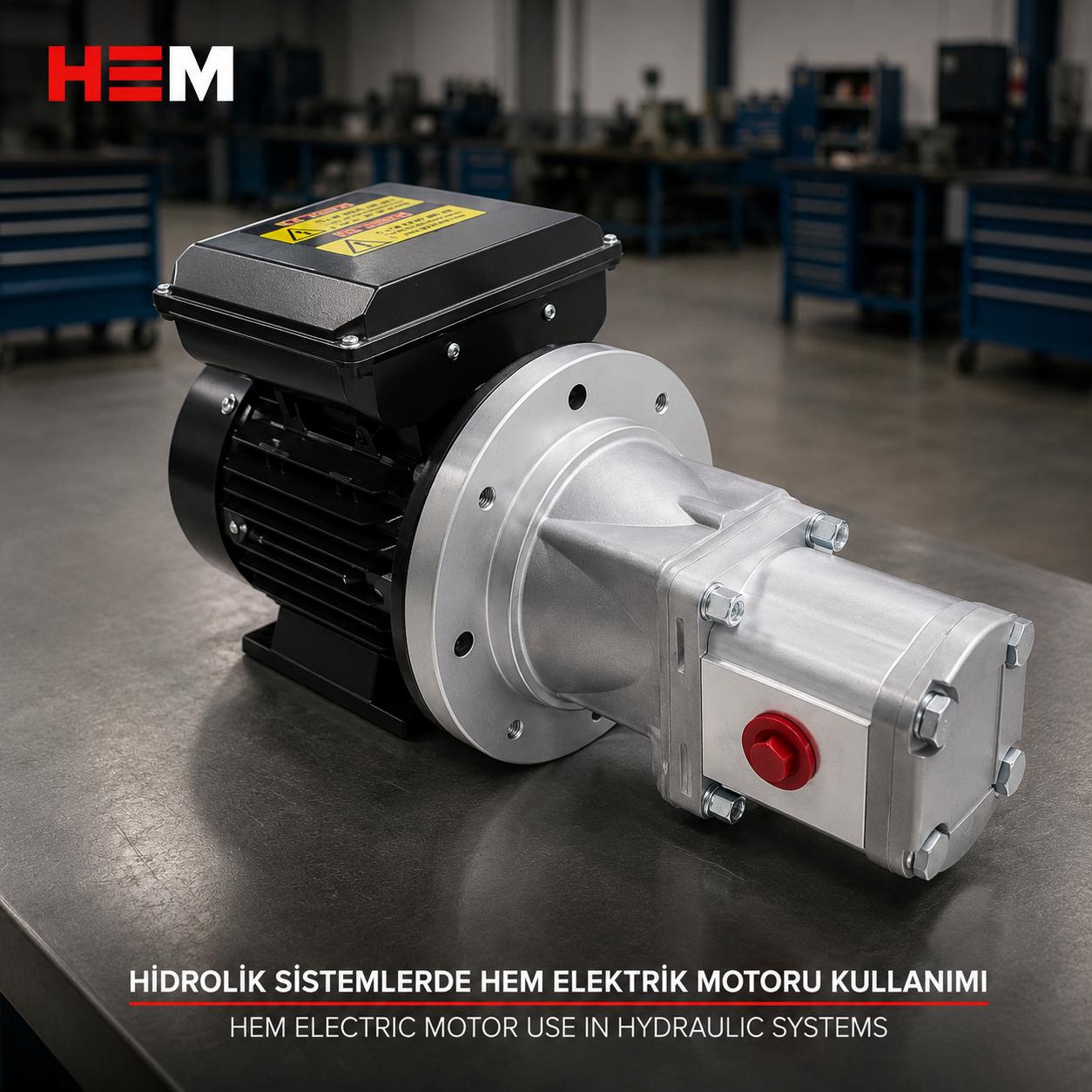
In a hydraulic power unit the motor is usually coupled to the pump directly with a coupling or through a bell-housing connection. For this reason the motor's mounting type and shaft dimensions must match the pump exactly. On vertical tank units V1 mounting (shaft down) is common, while on horizontal units B5 flange mounting is widespread. HEM Motor ensures this compatibility from the start with frame options that meet the flange and shaft standards hydraulic pump makers expect.
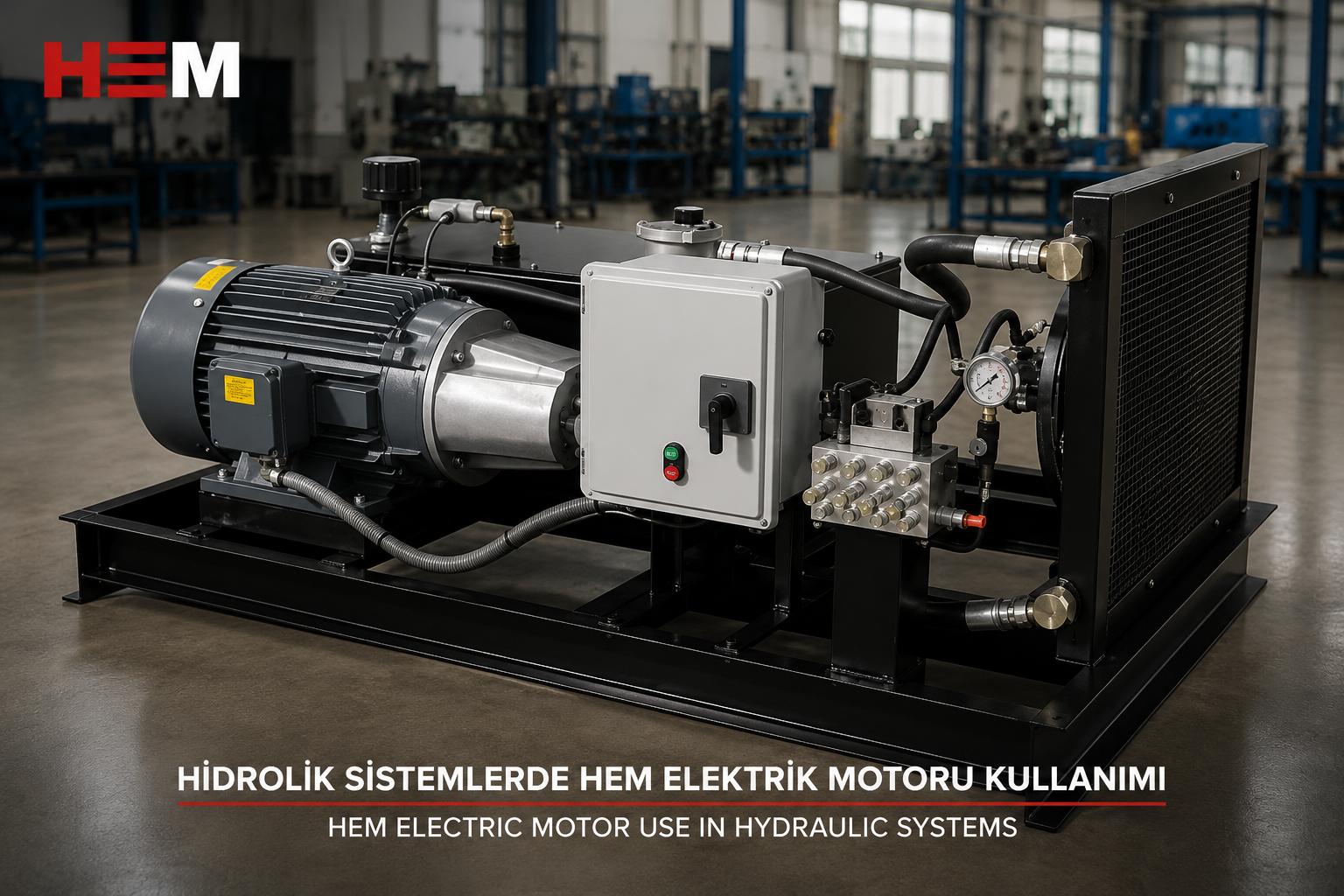
Mounting compatibility is not just a mechanical detail; a wrong flange or shaft choice means extra adapter cost, alignment problems and early bearing failure. That is why sharing the pump connection type before purchase is the key to the right quote. To examine mounting types in detail, see our B5 flange electric motors and B3 foot-mounted electric motors pages.
Continuous or Intermittent? Duty Cycle in a Hydraulic System
Some hydraulic applications run continuously (S1) and some run with frequent start-stop (intermittent). In a continuously running HPU motor, good cooling and a stable winding temperature are essential; in an intermittently running press, heating from frequent starts and a suitable service factor come to the fore. A motor chosen for the wrong regime is either needlessly large and expensive or constantly stressed and prematurely fatigued. That is why clarifying your duty cycle before purchase is a critical step for price-performance.
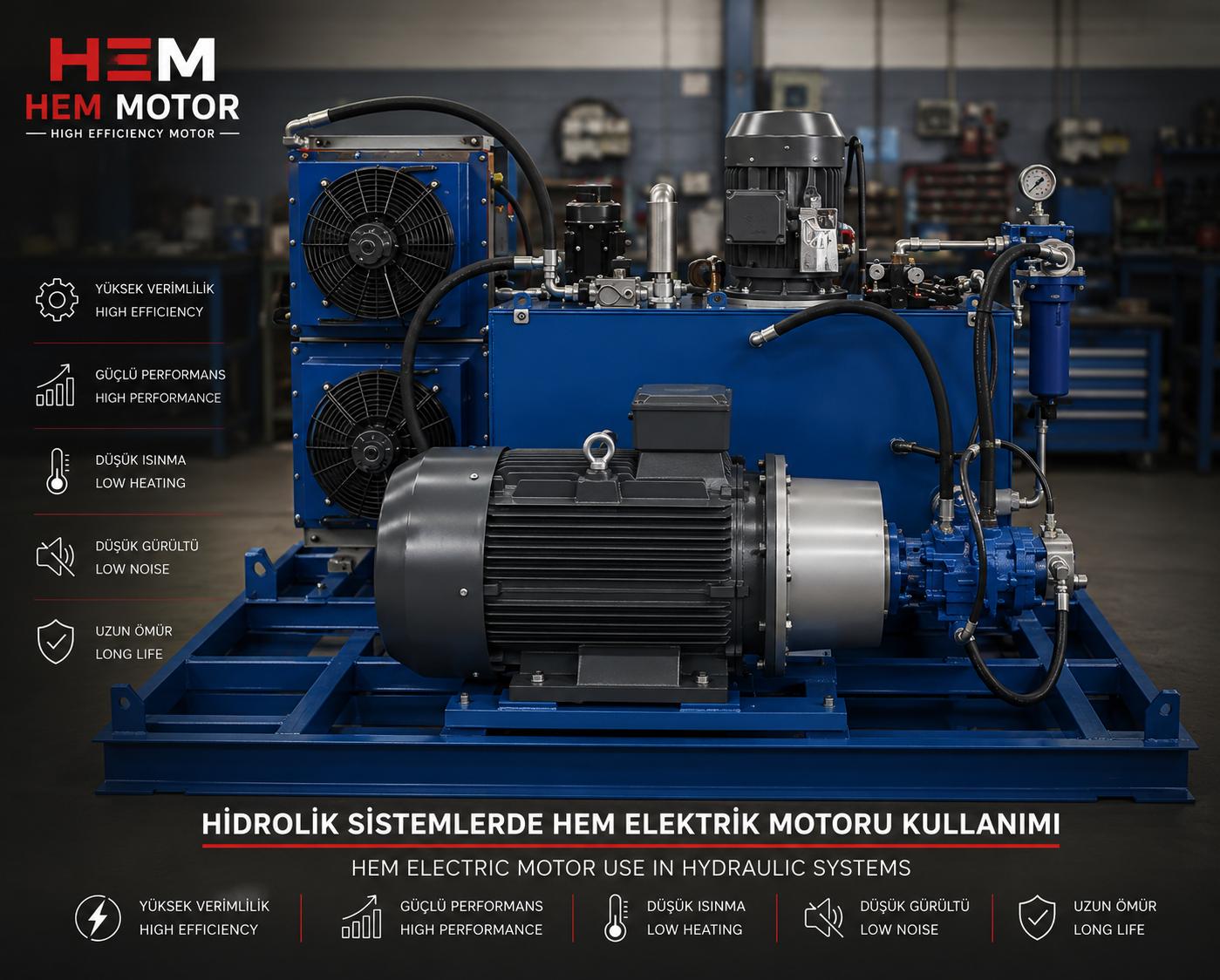
The duty cycle also determines the energy cost. On a hydraulic unit running most of the day, a high-efficiency (IE3/IE4) motor pays back the initial price difference over time through energy savings. To evaluate the efficiency threshold in pump and fan applications, our article on the IE4 threshold in pumps, fans and compressors is a practical reference.
Quiet Operation: Noise and Vibration in a Hydraulic Unit
Hydraulic power units often work inside a workshop or machine, close to people; that is why quietness is an important purchasing criterion. The motor's low noise and low vibration level both increase working comfort and extend pump and coupling life. A well-balanced rotor, quality bearings and the right fan design are the basis of quiet operation. In the HEM Motor series, a balanced rotor and low vibration are met as a standard expectation.
| Hydraulic Application | Prominent Motor Feature |
|---|---|
| Press and injection HPU | High torque, service factor suited to frequent start-stop |
| Continuous circulation unit | S1 duty, good cooling, efficient motor |
| Vertical tank unit | V1 mounting (shaft down), suitable oil seal |
| Quiet in-workshop unit | Low noise, low vibration, balanced rotor |
| Dusty/humid environment | IP55 and above protection, protected terminal box |
Factors That Determine Hydraulic Motor Price
The price of a hydraulic system motor is shaped by your application requirements. Instead of a single number, the following factors are evaluated to find the right price-performance for your needs:
- Rated power and speed: As pump flow and pressure increase, the required power grows.
- Mounting type (B5/V1/B3): A flange and shaft suited to the pump eliminate extra adaptation cost.
- Efficiency class (IE3/IE4): Lowers energy cost on a continuously running unit.
- Duty cycle: Continuous or intermittent; the right regime means the right sizing.
- Noise/vibration expectation: Balanced rotor and quality bearings for quiet applications.
- IP protection class: Selected according to environmental conditions.
- Stock availability: Supply from stock prevents project delay.
The best price is not the lowest number; it is the motor that fits your system best. An oversized motor means efficiency loss at low load, while an undersized motor means constant stress and early failure. With its manufacturer identity, HEM Motor simplifies the electric motor prices and fast quote process to offer you the right motor at the right price-performance.
Buy From Stock: Fast Delivery and Like-for-Like Replacement
A hydraulic unit failure stops the entire machine it is attached to. That is why we keep the most sought-after power-speed and mounting combinations in stock. With your existing motor's nameplate data, mounting type and shaft dimensions, we supply a like-for-like replacement. For our efficient motor range, see our electric motors for reducers and pump electric motors pages. For the right order in vertical, shaft-down applications, our article on vertical motor selection (V1/V5 shaft down) and, for quiet operation, our article on noise and vibration in electric motors: low-noise motor selection are valuable guides.
Frequently Asked Questions
Should I choose B5 or V1 mounting for my hydraulic power unit?
This depends on your unit's design. On horizontal units the pump is usually coupled to a B5 flanged motor; on units mounted vertically on top of the tank, V1 (shaft down) mounting is used. If you share the pump connection type and unit layout, we recommend the right mounting type in the quote.
Is an efficient motor essential on a continuously running hydraulic unit?
Not essential, but quite sensible. On a unit running most of the day, the energy saving of an IE3/IE4 motor offsets the initial price difference over time. If you share your daily running time, we recommend the most suitable efficiency class in price-performance terms.
What should I look at in the motor to reduce noise in a hydraulic unit?
For low noise, a balanced rotor, quality bearings and the right fan design are important. In addition, solid mounting and correct alignment reduce vibration and therefore noise. If you share your quietness expectation, we recommend the suitable motor type.
Can you find an exact match for my existing HPU motor?
Yes. With the nameplate data (power, speed, mounting type, shaft diameter) and pump connection dimensions, we supply a like-for-like replacement. Our wide product range and stock advantage provide fast delivery in urgent replacement.
What information should I send to buy?
Rated power (kW), speed, mounting type (B5/V1/B3), shaft diameter, duty cycle (continuous/intermittent) and any quietness expectation are enough. With this information we prepare a fast quote and clarify stock and lead time.
Choose Your Hydraulic System Motor Correctly and Buy Now
If you are looking for an HPU electric motor that brings together the right power, the right mounting and the right price-performance for a press, injection machine, elevator, test rig or any hydraulic power unit, take advantage of our manufacturer edge. Share your power, mounting type and duty cycle, and let us prepare a fast quote that includes stock availability, lead time and price-performance options. For the full product range and HEM Motor electric motor prices, get in touch with us.