English
 Türkçe

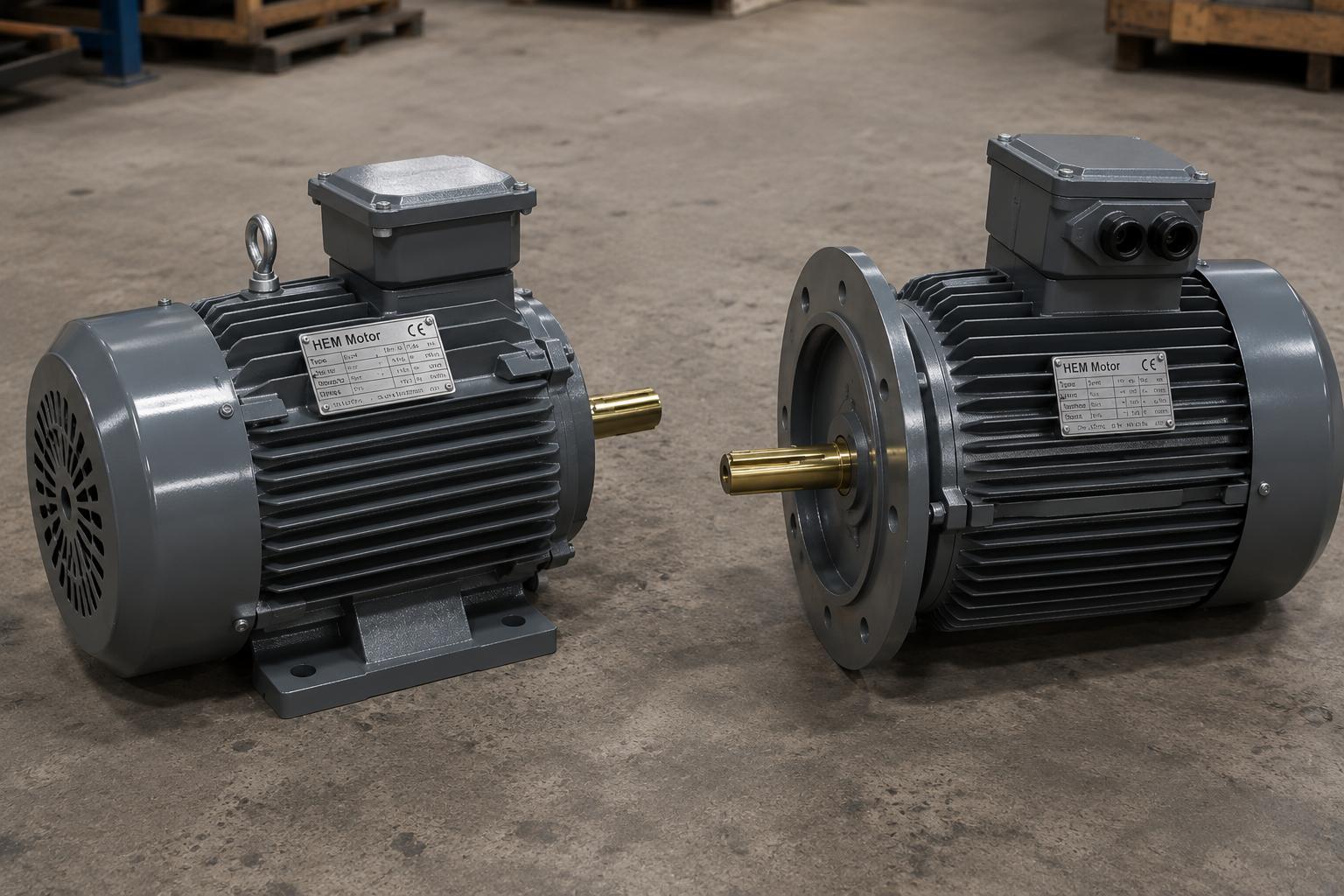

Rubber and tire manufacturing is one of the most demanding industrial environments for an electric motor. From the internal mixer to the mill, from the extruder to the calender, each machine imposes a different load character: some sudden and shock-laden, some continuous and high-torque, others requiring millimetric speed precision. A wrongly selected motor on these lines means frequent failures, line stoppages, deteriorating product quality and wasted energy. Electric motor selection in rubber and tire factories is therefore an engineering decision that must be handled not only with a power (kW) calculation, but together with load profile, starting torque, heating, protection class and a spare-stock strategy. In this guide we cover the motor requirements and correct supply approach for core machines such as the Banbury mixer, open mill, extruder and calender.
Why Is the Load Character of a Rubber Processing Line So Demanding?
Rubber compound is a highly viscous, sticky material. It is stiff when cold and softens as it warms, which means machines run heavy at the start and then under variable load. When a mixer or mill is started, the motor is expected to produce a torque well above its rated value in a short time. Moreover, material clinging to rotors, a sudden charge hitting the calender nip, or a piece jamming in the mill gap, all cause shock (impact) load peaks at the motor. These shocks stress the motor both electrically and mechanically.
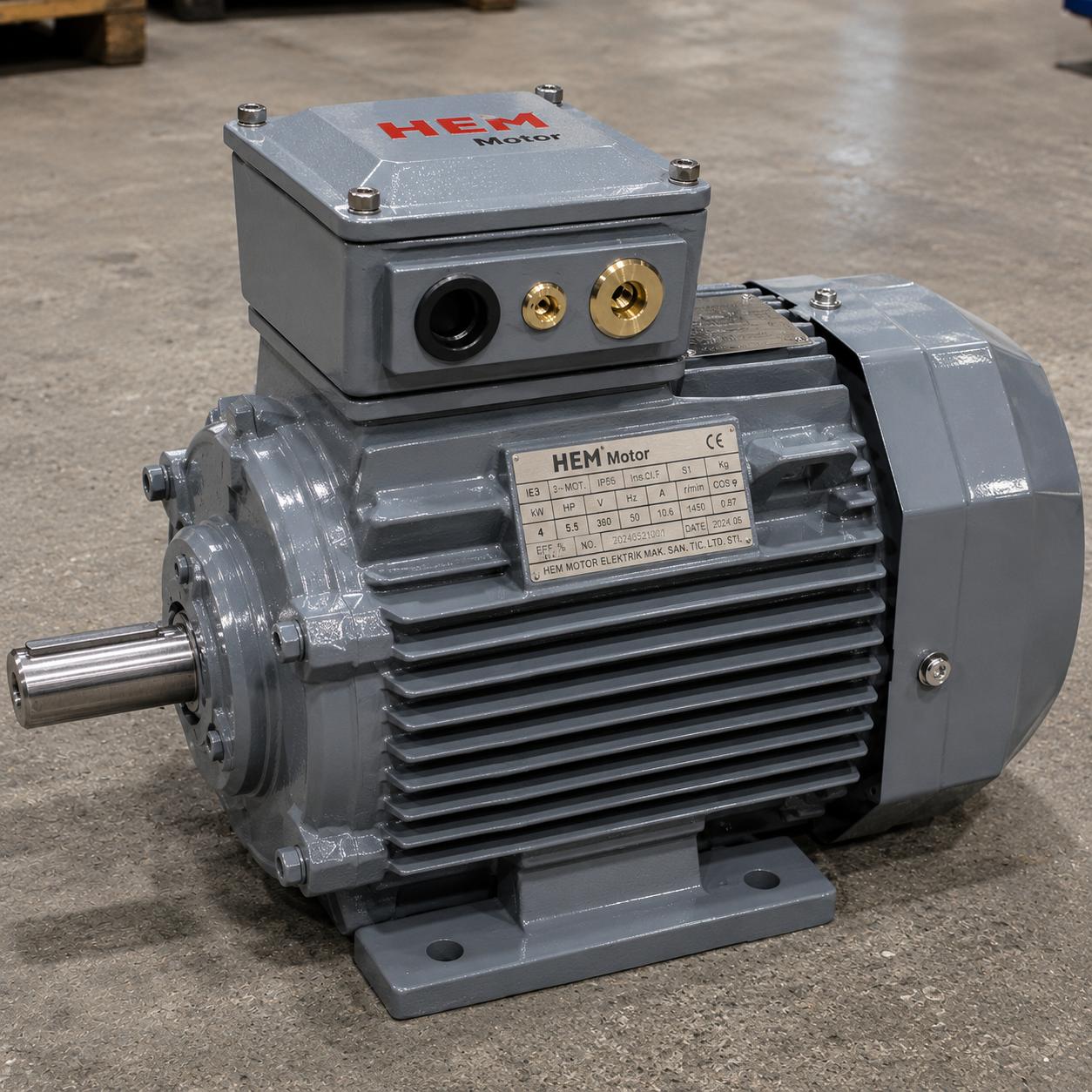
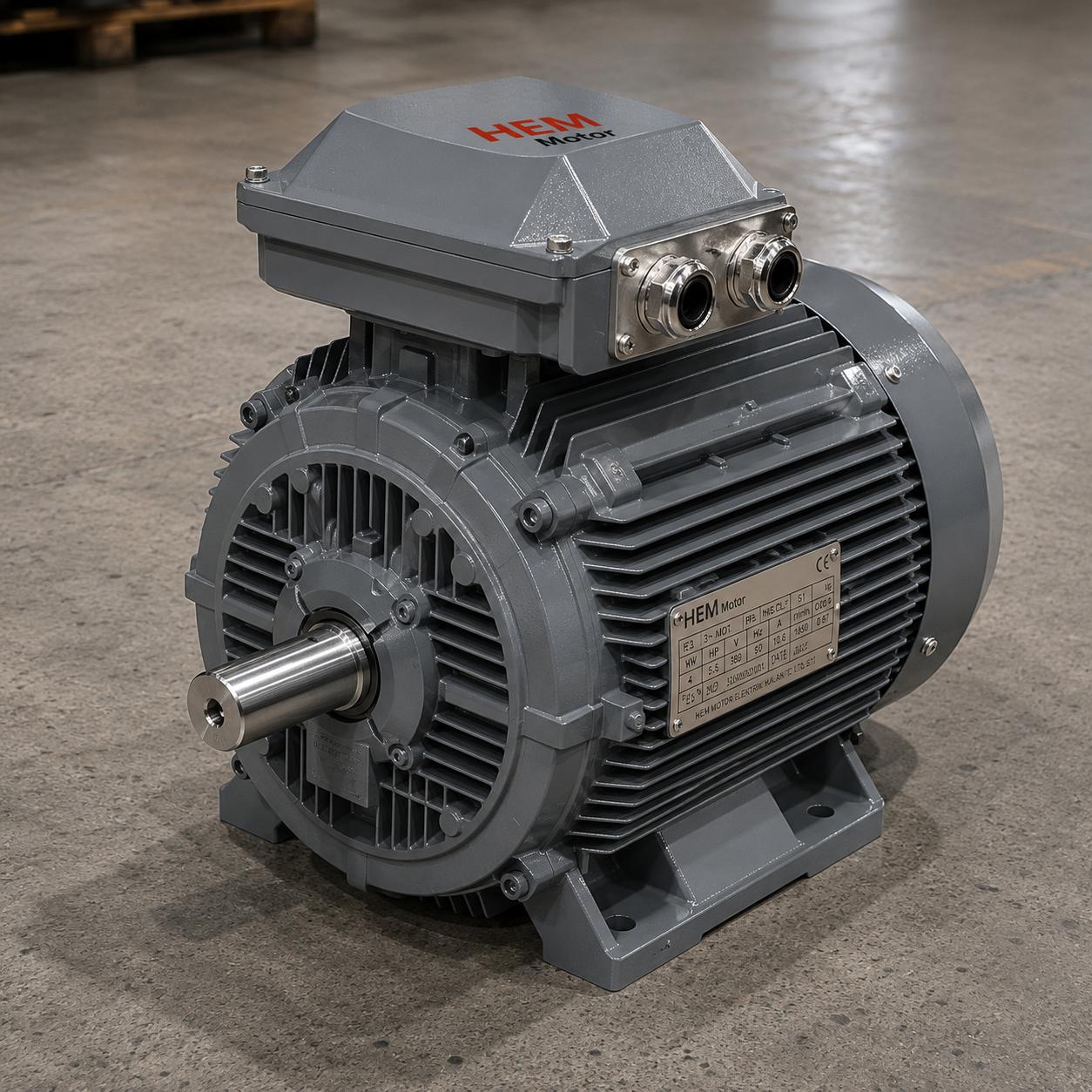
For this reason, three core parameters stand out when selecting motors for the rubber sector: high starting torque, mechanical strength against shock loads, and thermal stability under continuous operation. HEM Motor's range of IE3 and IE4 efficient motors from 0.55 kW to 355 kW, with 100% copper windings and cast iron frame options, addresses these demanding load profiles directly. Selecting a motor by load profile is explained with similar logic in our article on motor selection by load profile in plastic injection and crushing machines.
Banbury (Internal) Mixer Motor: The Highest Starting Torque Is Here
The Banbury-type internal mixer is the heart of the rubber line and the most demanding motor application. Two rotors knead the highly viscous compound; when the rotors are at rest inside a full chamber and must be set in motion again, the motor must produce a very high starting torque close to the breakaway torque.
Motor Selection Criteria for Banbury
- High starting torque (Design H class): Standard Design N motors may be insufficient; a high-starting-torque motor is preferred for starting from a full chamber. Selecting torque classes by load is detailed in our article on asynchronous motor torque classes (Design N/H) and starting torque.
- High inertia and flywheel effect: Since the rotating mass of the mixer is high, starting takes longer; the motor must withstand winding heating throughout the start.
- Soft starting: A soft starter or frequency converter (VFD) is commonly used to protect the grid and the mechanics from shock. Direct-on-line (DOL) starting is suitable only at small powers.
- Reinforced bearings: Heavy-duty bearings are essential for shock loads and high radial forces.
- Cast iron frame: A cast iron frame is preferred for rigidity under vibration and shock; on this topic, impact resistance and frame rigidity in cast iron motors is decisive.
Open Mill (Two-Roll Mill) Motor: Continuous Heavy Torque
The open mill (two-roll mill) thins, mixes and homogenizes rubber between two rolls. Unlike the sudden shock character of the Banbury, the mill motor runs continuously and at high torque. The load changes as the operator feeds the compound; in some applications the front and back rolls turn at different speeds (friction ratio). This requires the motor to run safely in its constant-torque region.
- Continuous duty (S1) design: The mill motor runs for hours without interruption; thermally, a motor suitable for continuous duty with class F (or H if needed) insulation should be selected.
- High torque reserve: Operator interventions and variable feeding cause sudden torque rises; the motor must have high overload capacity.
- Low speed / high torque: The mill usually runs at low speed through a gearbox; the correct pole number (4 or 6 poles) and gearbox matching are important.
- Safety: Because of emergency stop and rapid braking requirements, the motor-drive combination must be chosen carefully.
Extruder Motor: Constant Torque and Precise Speed
A rubber extruder forces the compound through a die with a screw (auger) under pressure to produce profiles, hoses, seals or cable coatings. The core character of an extruder is constant torque and long continuous operation. Since output quality depends directly on the stability of screw speed, precise speed control is critical. Therefore extruder motors almost always run with a frequency converter.
IE4 efficient motors stand out here for efficiency and correct power supply under continuous high load; the topic is illustrated in our article on efficiency at continuous high load with IE4 motors on plastic extruders and process lines. Points to watch for the extruder motor:
- Inverter-duty compatibility: Long low-speed operation on a drive requires extra insulation and, where necessary, forced (external) cooling.
- High efficiency: Since extruders run 24/7, the energy savings of an IE4 motor amortize quickly.
- Thermal protection: Operation protected against overheating with a winding temperature sensor (PTC/PT100) is recommended.
- IP55 and class F: A high protection and insulation class is essential because of dust, carbon black and temperature.
Calender Motor: Precise Speed Synchronization on Multiple Rolls
A calender rolls rubber into thin, uniform sheets; it is used for tire cord fabric coating and sheet production. Multiple rolls must turn at precise speeds synchronized with each other; otherwise sheet thickness and quality deteriorate. The calender therefore requires closed-loop controlled motor-drive systems that provide precise speed synchronization.
- Precise speed regulation: The speed difference between rolls must be kept within a narrow tolerance; encoder feedback is preferred.
- Low vibration: Because surface quality is critical, motor vibration must be low; 100% copper windings and a balanced rotor provide an advantage here.
- Continuous operation: Continuous-duty rating and adequate cooling are required for long production sessions.
Common Motor Selection and Supply Principles for a Rubber Factory
Although the machines differ, some common principles apply across the rubber factory. These principles both extend motor life and reduce unplanned downtime:
- Cast iron frame: Cast iron framed motors are preferred for mechanical strength and heat dissipation in heavy shock and vibration environments.
- IE3 / IE4 efficiency: On continuously running lines, high efficiency directly lowers energy cost and ensures regulatory compliance.
- IP55 protection, F/H insulation: A high protection and insulation class is essential due to carbon black dust, fillers, temperature and humidity.
- Correct starting method: Soft starter or VFD on Banbury and large mills; star-delta at medium powers; DOL at small powers.
- Spare motor stock: Keeping a spare motor of the same power and frame size for critical machines shortens downtime in case of failure.
You can also find the general framework of the rubber and tire sector's motor needs in our rubber and tire factory electric motor selection guide. HEM Motor, as both manufacturer and seller, supplies high-starting-torque, cast iron framed motors suitable for continuous duty for this sector. For power, speed and frame size options suited to your application along with current electric motor prices, you can review our product range.
Fast Supply from Stock and Continuity
Rubber and tire lines mostly run uninterrupted; a single motor failure can stop the entire line. For this reason, the ability to deliver the most-used power-speed combinations (for example medium-power 4-pole mill and extruder motors) quickly from stock is a critical supply advantage for factories. A defined spare-motor list for critical machines is the most effective measure that protects production during unexpected stoppages. An order placed with the correct frame size, shaft diameter and flange type information prevents wrong motor delivery and mounting incompatibility.
Frequently Asked Questions
What type of motor is needed for a Banbury mixer?
A Banbury internal mixer requires very high breakaway torque when starting from a full chamber. Therefore a high-starting-torque motor (Design H type) and a soft starter or frequency converter (VFD) to protect the grid and mechanics are recommended. The motor should be cast iron framed, with reinforced bearings and suitable for continuous duty. Direct-on-line (DOL) starting can be considered only at small powers and under suitable grid conditions.
Why do extruder and calender motors run with a frequency converter?
In extruders and calenders, product quality depends directly on speed stability and on speed synchronization between rolls. A frequency converter (VFD) provides precise, stepless speed adjustment, softens starting and offers energy savings. When running at low speed for long periods on a drive, cooling is reduced, so the motor must have insulation suitable for inverter supply and, where necessary, external cooling.
Why should a motor in a rubber factory be cast iron framed?
Rubber processing machines generate high vibration, shock load and heat. A cast iron frame offers much higher mechanical rigidity and thermal mass than aluminum; it resists deformation under impact and vibration, keeps the air gap stable and dissipates heat better. This extends motor life and reduces unplanned downtime. It should also be evaluated together with IP55 protection and F/H insulation class for dusty and hot environments.