English
 Türkçe

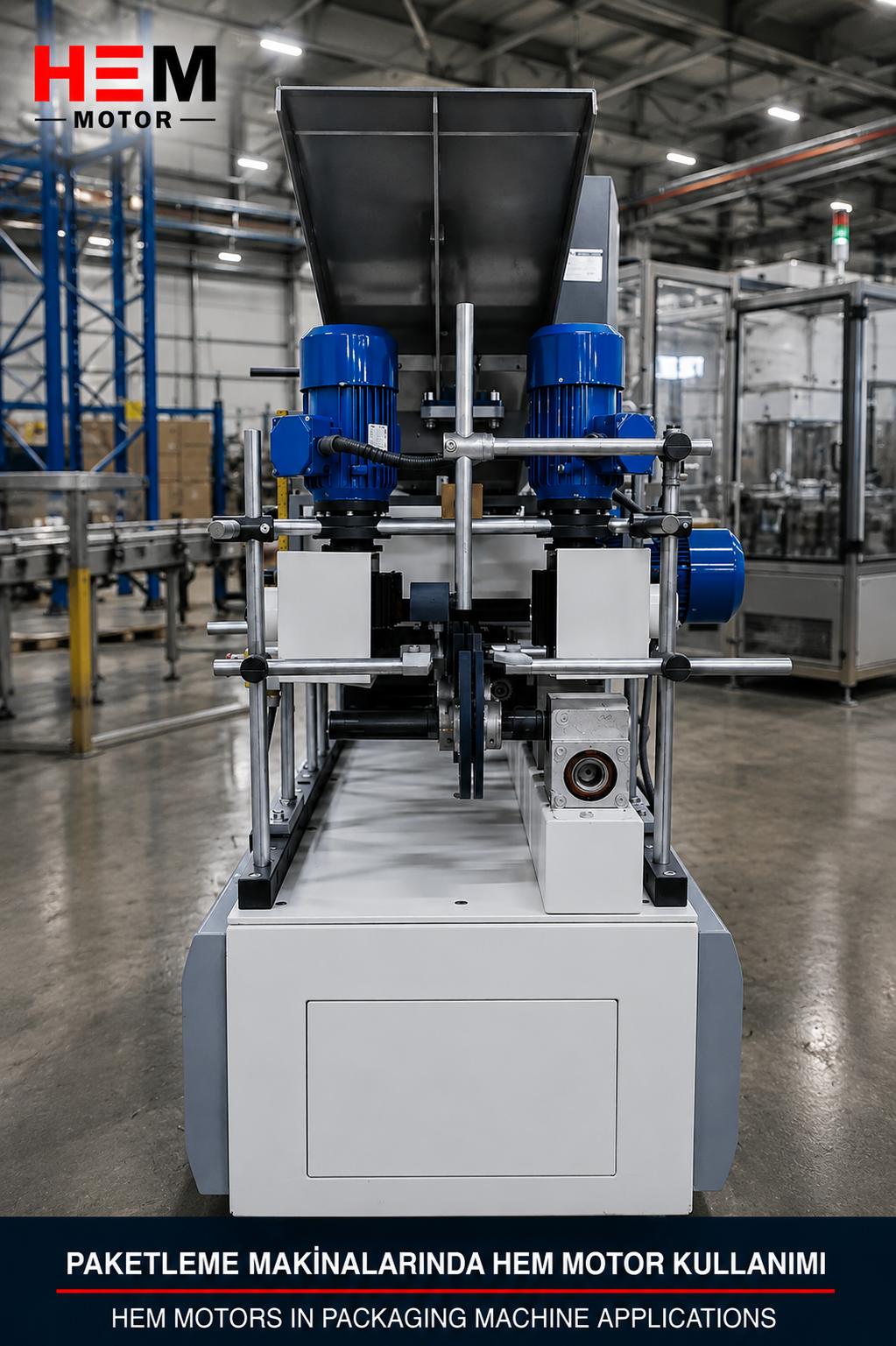

Plastic recycling and pellet (granulate) production plants depend on electric motors that run continuously under heavy load. From taking raw material out of bales and shredding it, through washing and drying, to finally melting it in an extruder and forming granules, every stage stands or falls on a correctly selected motor. In these plants, a motor failure stops not just one machine but the entire production line. That is why plastic recycling plant motor selection is one of the most critical items in a purchasing decision.
As the manufacturer and supplier, we deliver the right motor for every machine, from shredder to granulator, from stock. In this article we examine the three main motor-driven sections of the recycling line, the shredder, the extruder and the granulator, explaining the correct motor power, pole count, protection class and drive type for each.
Motor-Driven Sections of the Recycling Line
A typical plastic recycling and pellet plant consists of machines with widely differing load characters. This diversity makes it necessary to evaluate each machine's motor individually. The load profile of a shredder is the polar opposite of that of an extruder; one is dominated by impact and sudden loads, the other by continuous, steady load.
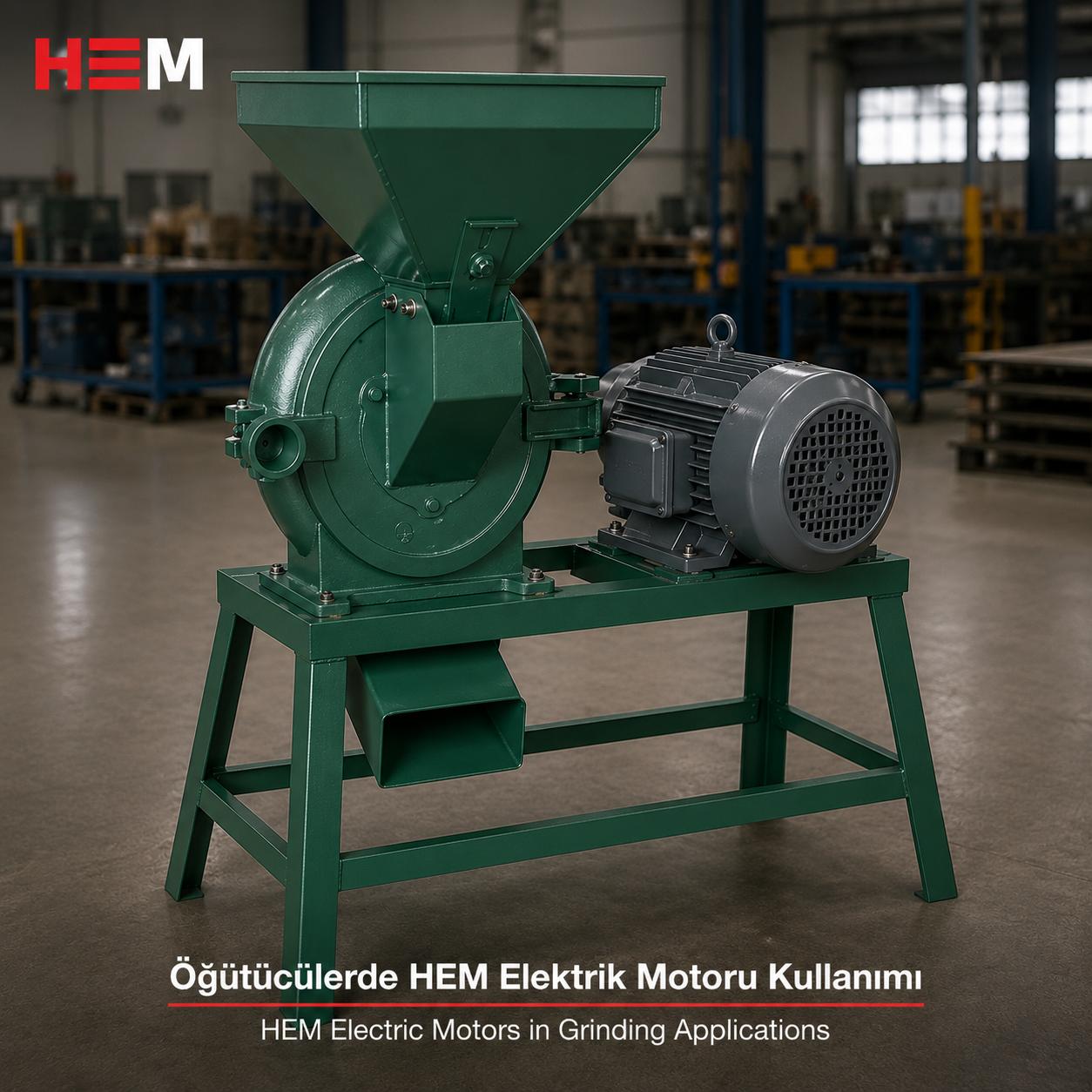
The main motor-driven sections of the line can be listed as: bale openers and feed conveyors, shredders, friction washers, drying centrifuges, the extruder main motor, the melt pump and finally the granulator (pelletizer) cutter motor. Each has a different drive requirement.
Shredder Motor Selection
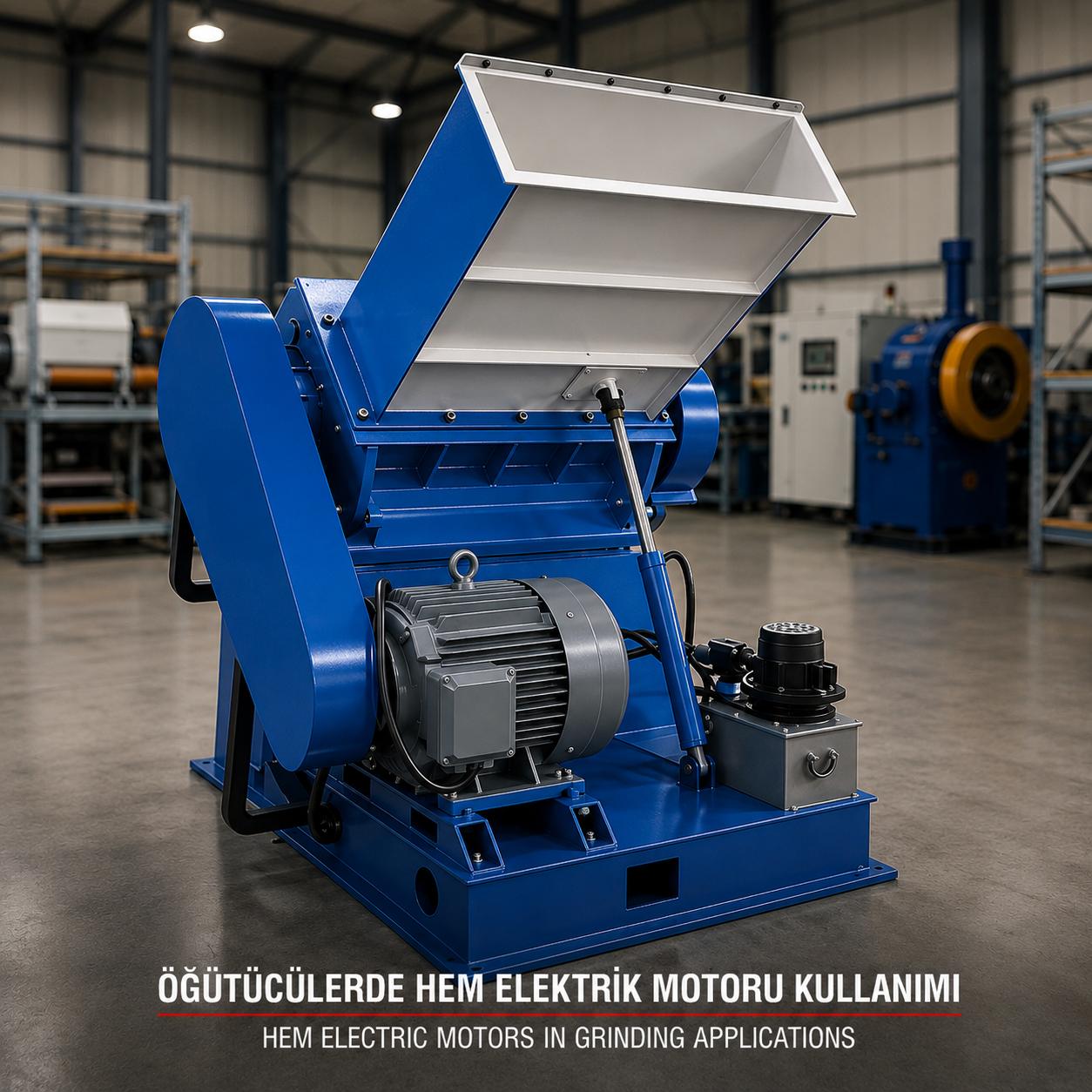
The shredder faces the harshest load conditions on the line. As baled or large-piece plastic is broken between the blades, the motor is exposed to sudden torque shocks. When a hard piece jams the blades, the motor must briefly produce torque far above its rated value. The shredder motor must therefore offer high starting torque and overload endurance.
Pole Count and Geared Drive
Shredders generally run at low speed and high torque. For this reason, 4- or 6-pole motors are used together with planetary or helical gearboxes. Geared drive, rather than direct drive, multiplies torque while protecting the motor. Considering direct drive versus belt losses in the drive choice is important for long-term efficiency.
- Rotor design suited to high starting torque.
- Winding insulation resilient to frequent jam-reverse cycles.
- Thermal protection and preferably thermistor (PTC) sensors.
- At least IP55 protection for the dusty environment.
Using a frequency converter on shredder motors provides soft starting and limits torque during a jam to prevent mechanical damage. For shredder motor selection, you need to know not only the machine's rated power but also its peak load values.
Extruder Main Motor Selection
The extruder is the heart of the recycling line. Here the shredded plastic is melted by heat and friction within the screw and turned into a homogeneous melt. The extruder motor's load character is the exact opposite of the shredder's: continuous, steady and long-duration. The motor runs uninterrupted for hours, even days.
Because of this continuous duty, efficiency is extremely important in the extruder motor. For a motor running more than 20 hours a day, every percentage point of efficiency translates into significant figures on the annual energy bill. We therefore recommend high-efficiency-class motors (IE3, IE4 or synchronous reluctance IE5) for the extruder main motor.
Speed Control and Screw Speed
In an extruder, screw speed directly affects production throughput and melt quality. For this reason, extruder motors are almost always driven at variable speed with a frequency converter. Since constant torque is required across a wide speed range, the motor must remain well cooled at low speeds; this is where forced-ventilation (servo blower) solutions come in.
- High-efficiency-class motor (due to long-duration operation).
- Forced-cooling option for a wide speed range.
- Constant torque capacity tied to melt pressure.
- Avoid oversizing for correct power; see oversizing and right-downsizing.
Granulator (Pelletizer) and Cutter Motor
After leaving the die, the molten plastic is cut into pellets in the granulator. In water-ring or underwater pelletizer systems, the motor driving the cutter blade group runs at high, steady speed. Speed stability in this motor is critical for the uniformity of pellet size.
Granulator cutter motors are usually chosen as 2-pole (high speed) and, since they operate in a high-humidity environment, require at least IP55 and preferably IP56 protection. A stainless or specially coated shaft also protects the motor against corrosion in wet conditions. The power range of these machines is generally mid-level; for example, the 2/4/6-pole options in the 7.5 and 11 kW power classes are frequently used in these applications.
The Right Supply Approach for the Whole Plant
Dozens of motors operate together in a recycling plant. Sourcing all of them from a single supplier, with compatible protection classes and a standardized spare-parts structure, greatly simplifies maintenance management. Thanks to our delivery-from-stock advantage, in case of a failure you can bring the line back online with a spare motor without waiting hours.
When you share your plant project with us, we determine the specific motor power, pole count, protection class and drive type for each machine together and provide a fast quote. For our product range and technical support, visit our homepage.
Motor Load According to the Type of Recycled Plastic
The motor requirements of a recycling line vary markedly with the type of plastic processed. Different materials such as PET bottles, HDPE drums, PP woven sacks, LDPE film and PVC profile demand different torque and power at both the shredding and melting stages. For example, hard, brittle PET produces an impactful but relatively low continuous load in the shredder, while soft, ductile LDPE film wraps around the shredder blades and stresses the motor at continuously high torque.
On the extruder side, the material's melting temperature and viscosity directly affect motor load. High-viscosity, high-melting-point materials require more torque to turn the screw. For this reason, when selecting a motor, not only the line capacity (kg/hour) but also the dominant plastic type to be processed must be specified. Two lines of the same capacity may require different motor powers for different plastic types. We clarify this distinction together for correct supply.
Washing, Friction Washer and Drying Section Motors
Between the shredder and the extruder lies a section of the recycling line that is often overlooked yet critical: washing and drying. The shredded plastic passes through wash tanks and friction washers to be cleaned of labels, soil, oil and organic residue. The motors in this section operate in an environment of constant contact with water, chemicals and abrasive particles.
Friction washer motors clean plastic pieces by rubbing them against each other and the housing with a high-speed rotor. These motors require high, steady torque and, because of the wet environment, demand at least IP55 protection and a corrosion-resistant shaft. Drying centrifuge motors must rotate in balance at high speed and have bearings resistant to vibration. Motor failures in this section usually stem from moisture-induced insulation breakdown and bearing corrosion; choosing the correct protection class minimizes these risks.
Bearings and Sealing in an Abrasive Environment
The two most important factors determining motor life in the washing and drying section are bearing and sealing quality. When water and fine particles seep into the bearing, they disrupt lubrication and consume the bearing quickly. For this reason, reinforced sealing solutions such as V-rings or labyrinth seals, and re-greasable bearings where needed, are preferred in these applications. Correct sealing extends the motor's maintenance interval and increases line uptime.
Feed Conveyors and Auxiliary Drives
The unsung heroes of the recycling line are the feed conveyors. They carry raw material to the shredder, shredded material to washing, and granules to packaging. Conveyor motors are usually chosen as geared (motor-gearbox) units and provide high torque at low speed. Since conveyor load varies, speed control with a frequency converter is useful for synchronizing different sections of the line and preventing blockages.
Efficiency matters in these auxiliary drives too, because when many small motors are added together the total consumption reaches significant figures. Mid-level power classes are common in conveyor and feed motors; for correct pole and power selection in this range, our content on 7.5 and 11 kW power and speed options offers guidance.
Maintenance, Spare Management and Operational Continuity
In a recycling plant, production continuity depends directly on motor reliability. The maintenance strategy is therefore as important as motor selection. Thermal protection sensors (PTC thermistors), vibration monitoring and regular insulation resistance measurement warn of failures in advance and prevent unplanned downtime. On continuously running extruder and granulator motors, a predictive maintenance approach delivers a rapid return on investment.
A spare-motor strategy is also critical. Keeping a spare motor on hand for the line's most critical motors (the extruder main motor, the main shredder) makes it possible to restore the line in minutes rather than hours after a failure. Thanks to our delivery-from-stock advantage, we quickly supply motors in standard power and frame sizes, simplifying your spare management. Building your entire line from a single supplier, with compatible frames and protection classes, streamlines both maintenance and spare inventory.
Frequently Asked Questions
Why should I use a frequency converter on the shredder motor?
A frequency converter provides soft starting that reduces mechanical shocks and, during a jam, limits torque to protect the blades and gearbox. An automatic reverse cycle can also be programmed for jam conditions. This both extends motor life and lowers maintenance cost.
Does a high efficiency class really make a difference on the extruder motor?
Absolutely. Because the extruder runs continuously for more than 20 hours a day, the motor's efficiency directly affects the energy bill. Choosing an IE4 or IE5 synchronous reluctance motor over an IE3 pays back the investment difference within a few years due to continuous operation, and delivers net savings thereafter.
What protection class does the granulator motor need?
The granulator usually operates in a humid, splash-prone environment. We therefore recommend at least IP55 and preferably IP56 protection. In addition, special protection at the shaft and flange against corrosion in wet conditions, along with proper bearing sealing, is important. These details directly affect motor life.