English
 Türkçe

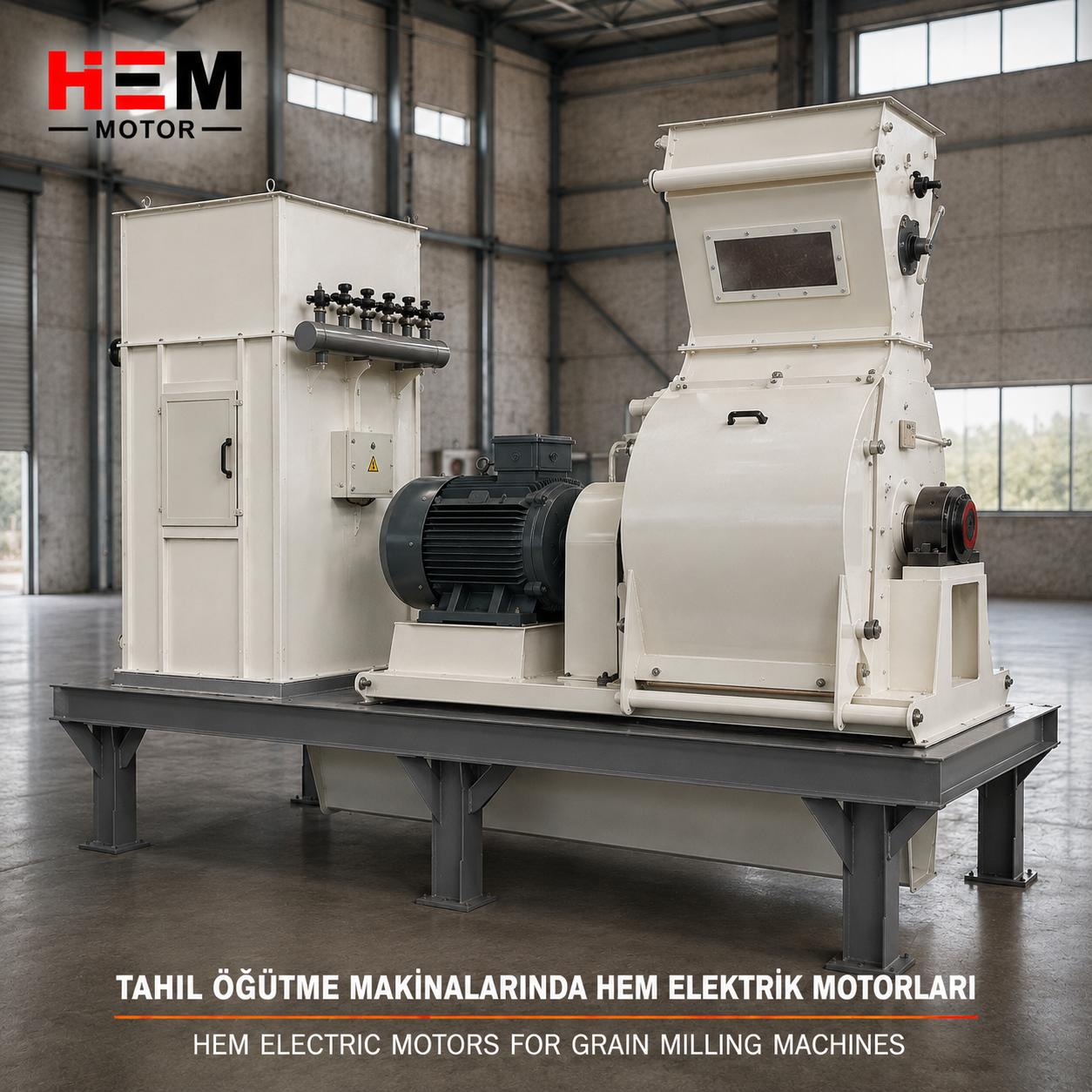

Pasta production is a continuous process consisting of many interconnected mechanical steps, from processing the raw material to packaging. Dough mixers, extruder presses, drying fans, conveyors and packaging machines each run with electric motors of a different character. In selecting an electric motor for a pasta production plant, the food line's needs for hygiene, continuity and efficiency must be considered together, and a motor suited to each machine's load character must be determined.
In this article we cover the main drive points in a pasta production plant and the correct motor selection for each. From the high torque of the dough mixer, to the constant heavy load of the extruder press, to the continuous operation of the drying fans, each application carries its own motor requirement. With the right motor the line runs uninterrupted; with the wrong one, production stops frequently. You can review current electric motor prices and all industrial motor families to plan a supply suited to your plant.
In food production, continuity is critical; the failure of a drive motor can stop the whole line, and the restart process may take longer because of hygiene rules. So motor selection in a pasta plant requires care from both a technical and an operational-continuity standpoint.
The Dough Mixer Motor
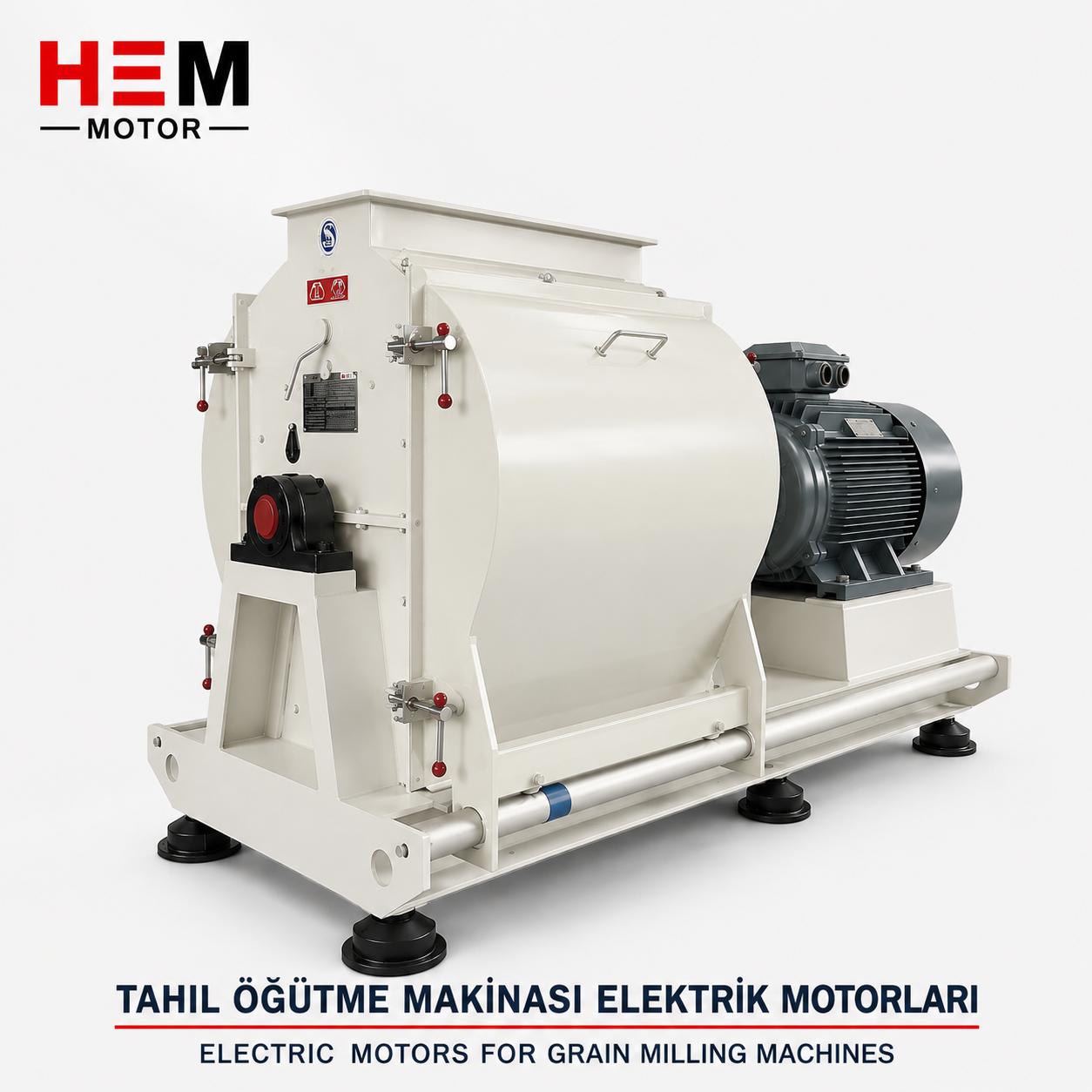
The first step of pasta production is turning semolina and water into a homogeneous dough. Dough mixers require high torque because they mix a dense, heavy mass. In this application the motor must be able to produce high torque at low speed and withstand the variable loads that arise during mixing.
High Torque and Low Speed
Dough mixer motors are usually selected as 4 or 6 pole and often work together with a gearbox. The gearbox reduces the motor's speed, providing the slow, powerful motion the mixer needs. At this point the electric motor for a pasta production plant must be selected to withstand the sudden load increases that occur at start-up and in dense dough. Our pole selection guide provides detail on pole selection.
Continuous and Variable Load
Because the dough's resistance changes during mixing, the motor runs under a variable load. So the motor's thermal capacity and protection system must be selected correctly; it must keep running without tripping during sudden load increases. A correctly sized motor secures both mixing quality and line continuity.
- Dough mixer: high torque, 4/6 pole, geared
- Extruder press: constant heavy load, continuous S1 duty
- Drying fan: continuous operation, efficiency priority
- Conveyor and handling: medium power, 4 pole common
- Packaging: precise, often drive-fed micro motor
- Cleaning and protection class suited to the food environment
- An efficient electric motor choice that preserves continuity
The Extruder Press Motor
The mixed dough is shaped into pasta by being pushed through dies under high pressure in the extruder press. This is one of the most demanding drive points of pasta production, because the extruder continuously drives a constant, heavy load. The motor must be able to carry this continuous load steadily.
Constant Heavy Load and S1 Duty
Extruder press motors run in S1 continuous duty, often for hours without interruption. The load is largely constant but high; so the motor's heat management and durability are critical. The efficient electric motor stands out here with both less heating due to low loss and long life. F insulation class and appropriate protection ensure safe operation under continuous heavy load.
Pressure Fluctuations
As the dough's density and moisture content change in the extruder, the pressure can fluctuate; this affects the motor's load. When the motor is selected with a safety margin for these fluctuations, it stays steady even at the most demanding operating moment. Our power and speed guide offers guidance on the power-speed relationship.
Drying Fan Motors
The shaped pasta is dried in long drying tunnels at controlled temperature and humidity. This drying is provided by many fans running continuously. Drying fan motors consume significant energy by turning for most of the year; so at this point efficiency is reflected directly in the electricity bill.
Efficiency in Continuous Operation
Because drying fans run in S1 continuous duty, preferring a high-efficiency motor markedly lowers lifetime cost. On a drying line with many fans, the small efficiency gain in each motor turns into a large saving in total. In electric motor for a pasta production plant selection, the drying fans are the point where energy efficiency pays off most. You can review our efficient electric motor product group for efficient options.
Hot and Humid Environment
Drying tunnels are a hot and humid environment; this affects motor selection. The motor's insulation class, protection class and heat resistance must be selected to suit this environment. Since cooling a motor running in a hot environment becomes harder, it is necessary to leave a power margin and choose an appropriate protection class.
The Role of Load Character in Motor Selection
In a pasta plant, a single motor type does not suit all points, because each machine's load character is different. The dough mixer runs with high torque and variable load, the extruder press with constant heavy load, the drying fan with continuous and relatively constant load, and the packaging machine with precise and dynamic load. The first step of correct motor selection is to define this character of each drive point accurately.
Load character determines not only power selection but also pole count, duty type and protection system. For example, a frequently starting and stopping conveyor motor and a drying fan motor turning steadily for hours are evaluated under different duty types even if they are the same power. In electric motor for a pasta production plant selection, making this distinction ensures the motor really survives in the field. A wrong match means either unnecessary cost or early failure.
Conveyor and Packaging Motors
Pasta is carried along the production line by conveyors and finally reaches the packaging machines. Conveyor motors usually run at medium power, 4 pole and geared; they provide regular, continuous motion. Packaging machines, requiring precise positioning, often run with drive-fed micro motors. At these points the motor's reliability is decisive for line continuity.
Hygiene and Cleaning
In food production, the environment where the motors are located is cleaned regularly; in some areas washing is also done. So the motors' protection class must be selected to suit cleaning and washing conditions. Motors with smooth surfaces, easy to clean and with appropriate IP protection provide both hygiene and durability on the food line. Our electric motors for gearboxes options can be evaluated for geared drives.
Voltage, Connection and Drive Use
Motors in a pasta plant are usually fed from a 400 V grid; according to their power, they are started direct-on-line (DOL), star-delta or with a variable speed drive. In high-power extruder press motors, star-delta or a soft starter may be preferred to limit the starting current. At points needing speed adjustment, such as conveyors and packaging, a variable speed drive provides both flexibility and energy saving. For motors running on a drive, inverter-duty insulation and adequate cooling at low speed should be considered, and subjects such as voltage spikes (dV/dt) over long cable distances should be planned.
Energy Efficiency and Operating Cost
Pasta production is an energy-intensive process; many motors run continuously for mixing, pressing and especially drying. For this reason, motor efficiency is a decisive item in the plant's total energy bill. High-efficiency motors do the same work with less loss, reducing both energy consumption and heating. In a continuously running plant, the energy a motor consumes over its life far exceeds its purchase price. So preferring an efficient electric motor is not only a technical choice in a pasta plant but a direct cost decision. Especially at points running continuously and at high power, such as drying fans and extruder presses, the payback period of a high efficiency class is often shorter than thought.
Holistic Planning of the Line
In a pasta production plant, motors should be thought of not individually but as an interconnected system. From the dough mixer to packaging, each step depends on the previous one; a stoppage at one point affects the whole line. So motor selection must be done considering the needs of the entire line, not just individual machines. Selecting more reliable and stockable motors at critical points preserves the line's overall continuity. Using standard powers and motors of the same series across the plant simplifies both spare-part management and the maintenance team's work, and lowers total cost of ownership in a food line running 24/7 where stoppage is costly.
Commissioning and Correct Installation
When installing a new motor, correct installation and commissioning directly affect performance. Motor-gearbox alignment, coupling selection and direction-of-rotation checking are the basic points to attend to at first start. Measuring the current at first start to check whether the motor is running at its rated values both confirms correct sizing and catches a possible problem early. Setting the protection according to the motor's nameplate values protects the motor safely during sudden load increases.
Frequently Asked Questions
Why is high torque needed in the dough mixer?
The dough mixer mixes a dense, heavy mass of semolina and water; the resistance of this mass is high. So the motor must be able to produce high torque at low speed and withstand the variable loads during mixing. Usually 4 or 6 pole motors are used together with a gearbox.
Why is efficiency so important in drying fans?
Drying fans run in S1 continuous duty, without stopping for most of the year, and consume significant energy. On a drying line with many fans, the small efficiency gain in each motor turns into a large saving in total. So the drying fans are the point where energy efficiency pays off most.
What should be considered when selecting a motor on a food line?
The load character of each drive point (high torque, constant heavy load, continuous fan) is different and the motor must be selected accordingly. In addition, the hygiene and cleaning conditions of the food environment determine the motor's protection class and surface structure. Because continuity is critical, efficient and durable motors and fast supply from stock stand out.