English
 Türkçe

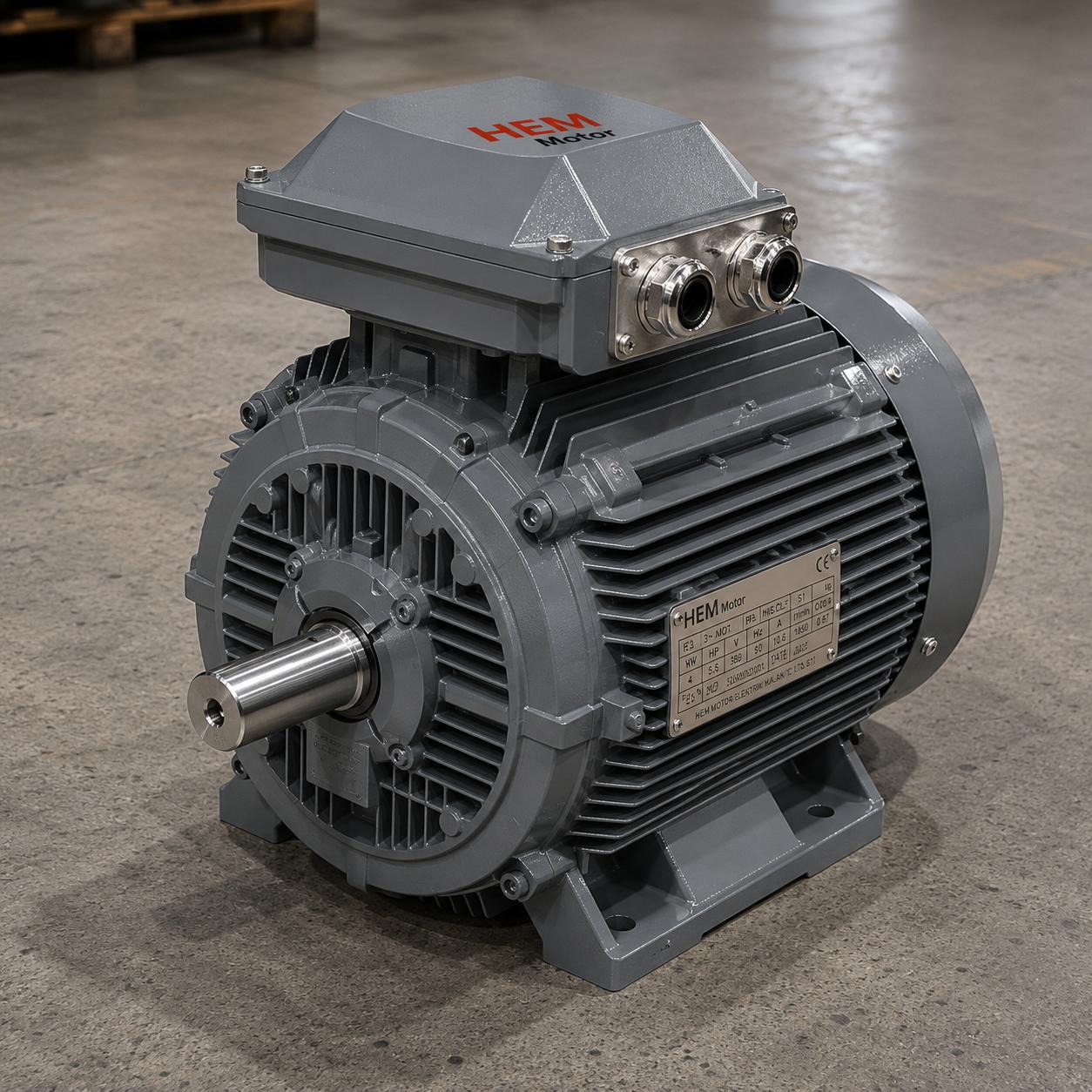

A paper mill or pulp plant is one of the most demanding operating environments for an electric motor. Along the line there is water vapor, heat, chemical mist and fine fiber dust; production usually runs seven days a week, twenty-four hours a day, that is, in an S1 continuous duty regime. Under these conditions a poorly selected motor soon reveals itself through insulation loss, bearing failure and unplanned downtime. The stopping of a single motor on a continuous line can halt an entire paper machine and cause major production losses. That is why, at every drive point from the stock pump to the drying cylinder, from the fan to the refiner and winder, IP55 protection, F-class insulation and a cast-iron frame should be the standard choice. In this article we cover the drive map of a paper and pulp plant, the correct motor selection criteria, and the supply approach that secures production continuity.
Environmental Conditions of a Paper and Pulp Plant
By the nature of papermaking, the process is intertwined with water: high humidity and heat coexist throughout the stock preparation, screening, pressing and drying sections. This environment creates three basic requirements in motor selection:
- IP55 protection: The standard protection level against dust and water jets from any direction; indispensable especially in the wet end and press sections.
- F-class insulation: Preserves insulation life under high ambient temperature and continuous load; can be upgraded to H-class when required.
- Cast-iron frame: Provides mechanical strength, vibration damping and thermal stability; resistant to corrosion and frame deformation in a humid environment.
For very dusty or wet zones the protection class may need to be raised. Our article that examines this topic in detail, IP65/IP66 protection upgrade, clarifies which protection class is appropriate in which section.
Drive Map: Which Motor at Which Point?
A paper mill is not managed with a single type of motor; each section has a different load character. We can examine the drives in two main groups.
High-Power Continuous Drives: Pump, Vacuum, Fan
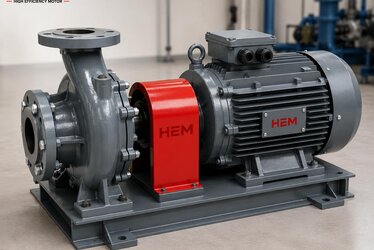
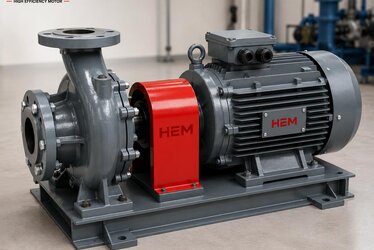
Drives such as the stock pump, vacuum pump and fan/blower demand high power and uninterrupted S1 continuous duty. Because the annual running hours at these points are very high, efficiency directly reflects on the energy bill. IE4 Super Premium class motors significantly reduce losses compared with standard motors, yielding substantial annual savings. Reading the flow-head curve correctly at the stock pump, and evaluating inertia and starting torque at the fans, are critical. For correct power and speed selection in pump drives, our pump motor selection guide is a basic resource.
Sectional and Speed-Controlled Drives: Drying Cylinder, Refiner, Winder
Precise speed control is critical in sectional drives such as the drying cylinder, refiner and winder. The tension of the paper web must be kept precisely coordinated from section to section; otherwise the web breaks or quality deteriorates. At these points, motors driven by a VFD/drive are used and the correct rated torque is of great importance. For equipment operating at high and variable load, such as the refiner, overload capacity and drive compatibility must also be evaluated. For the efficiency aspect of variable-speed drives, our article on efficient motor VFD and harmonic filter will be useful.
Efficiency and the Energy Bill
Paper and pulp is an energy-intensive sector; a large part of total operating cost comes from electricity consumption. Since motors are responsible for most of the electricity consumed in the plant, the efficiency class directly affects the profit-and-loss statement. What choosing a high-efficiency motor provides:
- Lower loss: An IE4 motor produces less heat than a standard motor, which means both a lower bill and a lower cooling load.
- Lower operating temperature: Lower loss means lower winding temperature and longer insulation life.
- Fast payback: At high running hours, the efficiency difference repays the motor's extra cost in a short time.
For drives that run at part load, how the efficiency curve behaves also matters; therefore a motor should be evaluated not only at its rated point but across its real load profile. For this topic our article on the part-load efficiency curve of high-efficiency motors is a guide.
Production Continuity: Stock and Spare Motor Strategy
Unplanned downtime on a paper machine is very expensive; restarting a stopped line can take hours, during which production halts entirely. For this reason, fast supply at the moment of failure is as critical as motor reliability. A sound spare-motor strategy includes:
- Spare stock for critical drives: A spare should be ready for motors that stop the line, such as the stock pump and vacuum pump.
- Standardized frame and mounting: Choosing common frame and mounting types where possible reduces spare-part variety.
- Fast supply channel: Work with a supplier that operates from stock and provides fast quotation and a clear lead time.
A contracted spare-stock model for critical motors significantly reduces the risk of unplanned downtime. We cover this approach in detail in our article on a contracted consignment critical spare motor stock agreement.
Stock Pump and Vacuum System Drives
At the heart of the paper machine are the stock pumps and the vacuum system. Stock pumps must carry the fiber-laden fluid at a constant flow; fluctuation in the flow directly affects the basis weight and quality of the paper. In these pumps, correct power and speed selection is decisive for both quality and energy. Points to watch:
- Constant flow: The stock pump is usually driven by a drive to keep the flow constant and adjustable.
- Abrasive fluid: Stock containing fiber and filler affects seal and sealing selection; on the motor side, continuous-load endurance is important.
- NPSH and suction: Suction conditions must be evaluated correctly so the pump does not cavitate.
The vacuum system, meanwhile, drives large vacuum pumps for dewatering in the press section; these pumps run at high power and continuously. Our article addressing suction head and cavitation risk in centrifugal pumps, centrifugal pump motor NPSH and cavitation, is a useful resource for correct selection in stock and vacuum drives.
Insulation, Humidity Protection and Motor Life
The humid environment of a paper and pulp plant is the factor that stresses motor insulation and windings the most. When a motor stops for a long time and cools, condensation can form on the winding; this moisture lowers the insulation resistance at restart and leads to premature failure. Several measures stand out for managing this risk:
- Anti-condensation heater (space heater): Keeps the winding above the dew point when the motor is stopped, preventing condensation; provides strong protection in humid plants.
- Tropicalization (humidity-protection varnish): Increases the winding's resistance to moisture and chemical mist with an additional protective coating.
- F-class insulation, B-class temperature rise: Operating the insulation with a temperature rise below the nominal value significantly extends its life.
Our article addressing the details of humidity protection and heater application in a humid environment, tropicalization, humidity protection and space heater selection, offers recommendations directly applicable to facilities like a paper mill. The combination of these measures protects motor life against unexpected moisture failures.
Fan, Blower and Inertia Management
The large fans in the drying and ventilation sections of a paper mill carry large impellers with high moment of inertia (GD²). During starting these fans draw high current from the motor for a prolonged period; without the correct starting method and inertia calculation, the motor winding can overheat during start. Points to watch at this stage:
- Inertia matching: The fan's moment of inertia must be compatible with the motor's starting capacity.
- Starting method: A soft starter or drive reduces the starting current and the mechanical shock.
- Temperature protection: For frequently started fans, thermal protection and the motor duty type (S-duty) must be chosen correctly.
Our article addressing the starting and inertia management of large-impeller fans in detail, pump and fan motor inertia (GD²) and starting, is a comprehensive resource for correct motor and starting selection. Correct inertia and starting management both protects winding life and reduces unplanned downtime.
The Paper and Pulp Plant Solution with HEM Motor
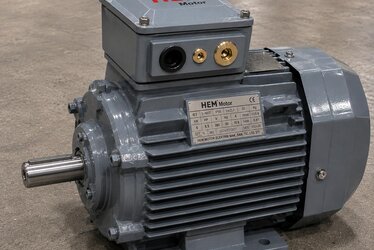
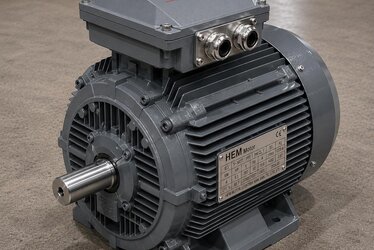
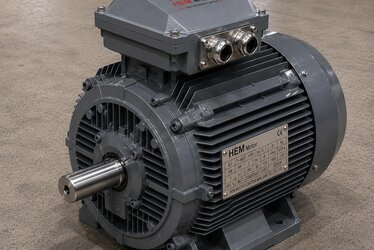
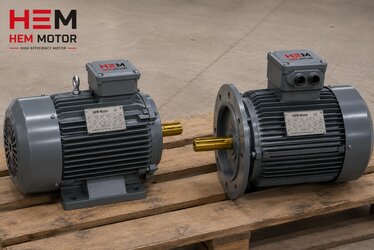
HEM Motor offers IP55, IE4 cast-iron motors from 0.55 to 355 kW, from stock and with manufacturer assurance. From the stock pump to the fan, from the drying cylinder to the refiner, the correct combination of power, speed, protection and mounting is recommended for each drive point according to the application load. As a manufacturer and seller, fast quotation, clear lead time and broad stock support the uninterrupted operation of the paper mill. You can reach our full product range through the HEM Motor homepage.
Frequently Asked Questions
Why is IP55 protection considered standard in a paper mill?
Because papermaking runs intertwined with water vapor, chemical mist and fine fiber dust; IP55 provides protection against dust ingress and water jets from any direction. This level is necessary especially in the wet end and press sections; in more aggressive zones an upgrade to IP65/IP66 may be considered.
Why is a drive needed in sections like the drying cylinder and winder?
In these sectional drives the tension of the paper web must be kept precisely coordinated; the smallest speed mismatch leads to a web break or quality loss. Motors driven by a VFD/drive provide this precise speed control; in addition, the correct rated torque and overload capacity must be verified at the outset.
Why is keeping a spare motor so important on a continuous line?
Because unplanned downtime on a paper machine is very expensive and restarting the line can take a long time. Keeping spares of critical drives in stock and working with a supplier that provides fast supply from stock is the foundation of production continuity. HEM Motor provides support at this point with broad stock and fast quotation.