English
 Türkçe




Gaziantep holds a distinctive weight on Turkiye's manufacturing map as a genuinely multi-sector industrial city. Textiles, carpet weaving, food processing, machine building and plastic injection all intertwine here, forming a supply ecosystem that radiates across the whole of Southeastern Anatolia. Behind this density lies a single shared truth: at the heart of every factory, every line and every machine, an electric motor turns. If the motor stops, the line stops; if the line stops, orders are delayed; and if orders are delayed, customers are lost.
For this reason, supplying electric motors in Gaziantep and the surrounding provinces is not merely about selecting the right product. It is about delivering the right product at the right time and with the right logistics. The region runs at a high tempo, with production often flowing uninterrupted across three shifts. In such an environment, waiting weeks for a motor's lead time is simply not an acceptable scenario. Fast delivery from stock is not a luxury in this geography; it is a necessity.
HEM Motor, drawing on industrial experience since 1979, plans its supply for Gaziantep Organized Industrial Zone, Şehitkamil and the surrounding provinces by handling product and logistics together. The goal is to deliver the motor of the correct power and frame type in the shortest possible time, without keeping the customer's line waiting. In this article we examine the motor needs of Gaziantep and Southeastern industry in detail, the technical requirements that stand out by sector, and why fast supply is so critical.
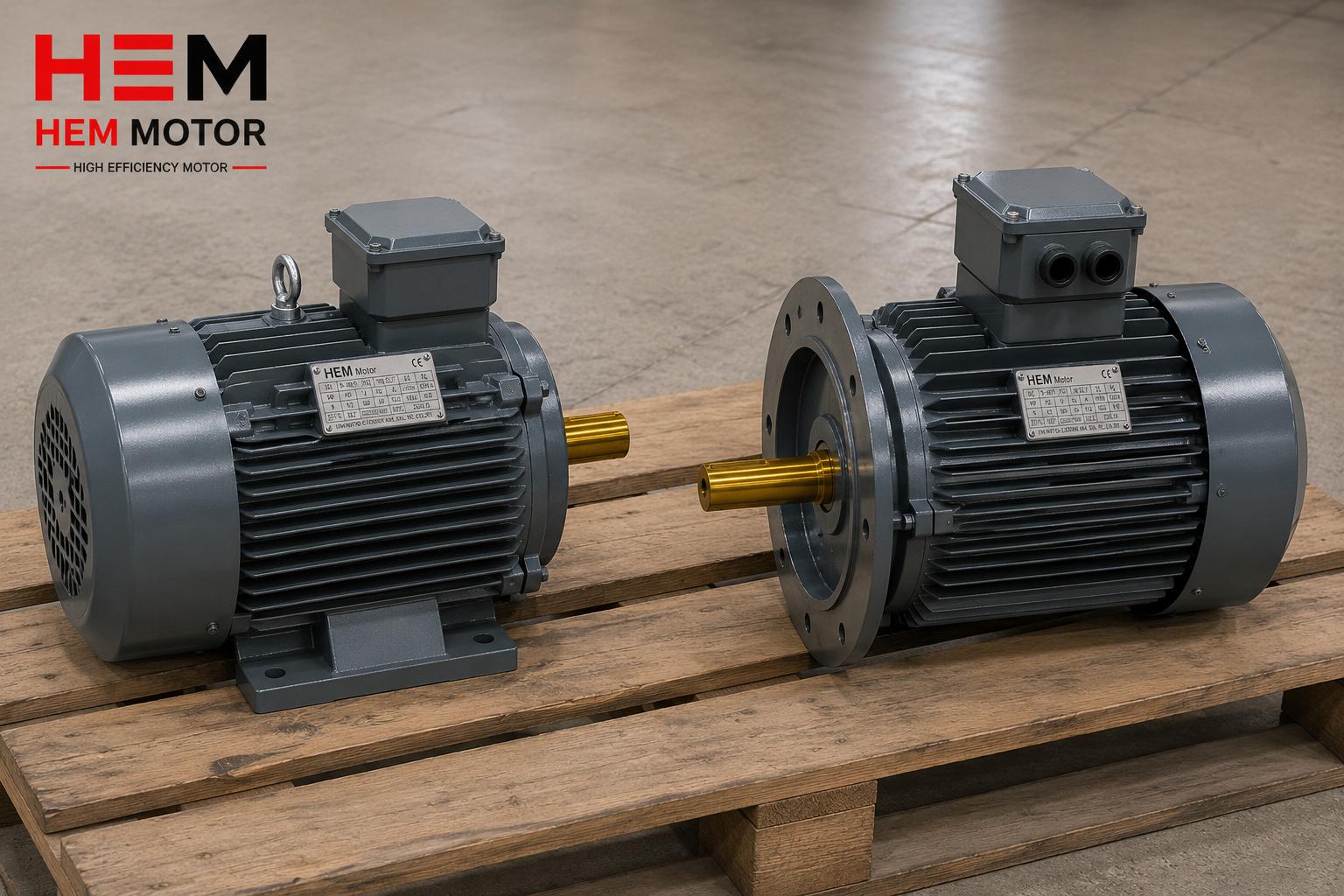
The Structure of Gaziantep Industry and Its Motor Demand
Gaziantep is home to one of Turkiye's largest organized industrial zones. Tens of thousands of enterprises operate in the city, the vast majority of them production-oriented. This structure spreads motor demand across an extremely wide spectrum in both quantity and variety. On one side, small fractional-power drive motors are needed; on the other, main drive units of hundreds of kilowatts are requested within the same region.
Understanding the region's industrial fabric is a prerequisite for correct motor supply. The leading sectors in Gaziantep and their motor applications can be summarized as follows:
- Textiles and carpet weaving: Looms, twisting machines, carding and winding units demand motors that run continuously and without vibration.
- Food processing: Mixers, conveyors and fans on flour, spice, nut and ready-food lines require high hygiene and uninterrupted operation.
- Machine building: CNC machines, hydraulic units and test systems rely on high-efficiency, precise drive motors.
- Plastic injection and recycling: Granule lines, extruders and crushing mills are powered by heavy-duty motors.
- Packaging and cardboard: High-speed printing and cutting lines demand motors with high resilience against frequent starts and stops.
This diversity shows that no single motor type can meet the entire region's needs. Correct supply requires evaluating each sector's duty cycle, ambient conditions and continuity expectations separately.
Why Is Fast Delivery From Stock Decisive?
In a region with a high production tempo like Gaziantep, a motor failure usually means an unplanned stoppage. An unplanned stoppage can in turn trigger a chain of production loss, delayed deliveries and contract penalties. At this point, what is decisive is how quickly the needed motor can be brought to site.
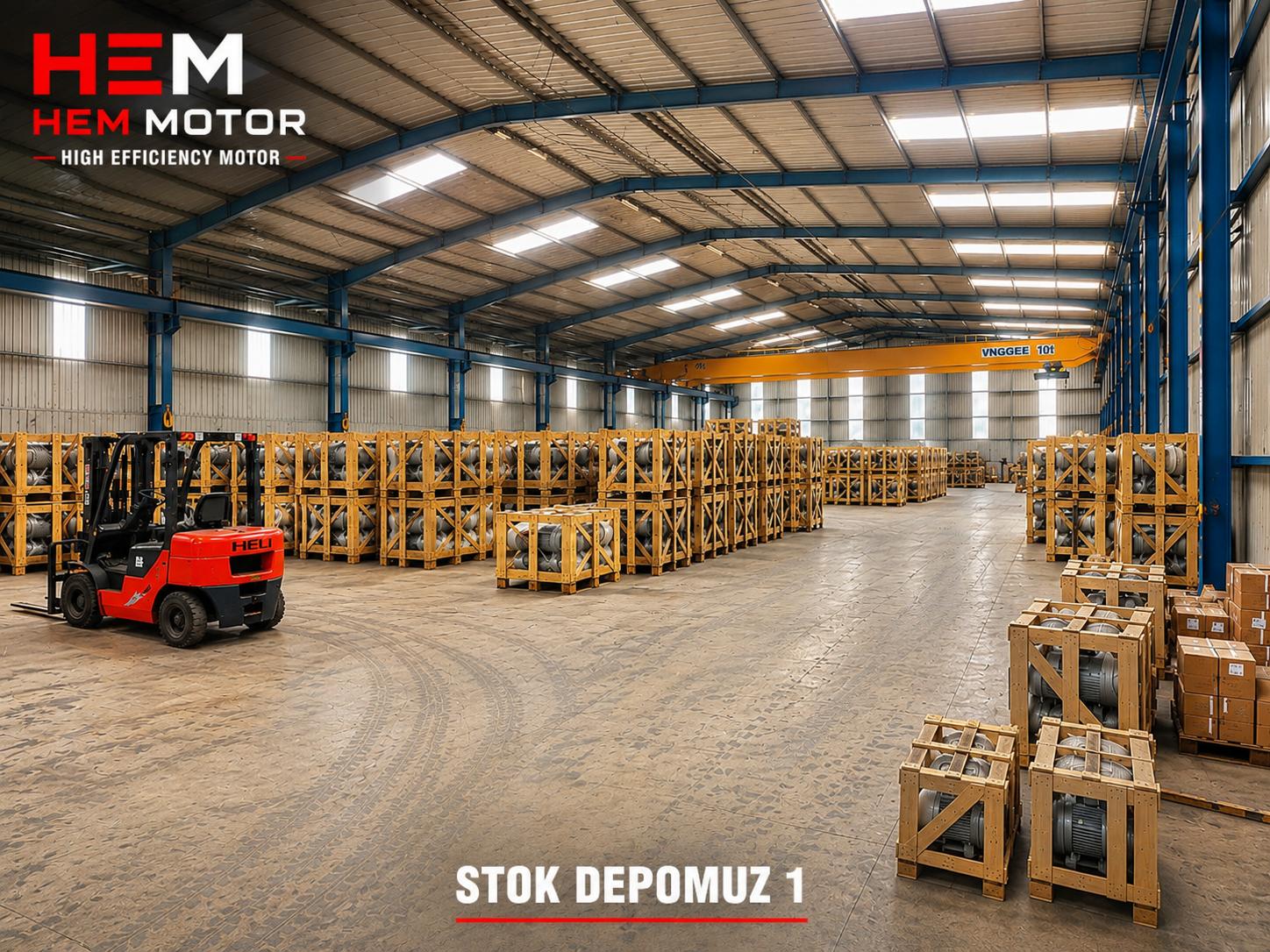
A strong stock structure is the foundation of this speed advantage. Keeping IE3 efficiency class motors ready in common power ranges, across different frame types and mounting configurations, reduces lead time from days to hours. If you wish to examine the effect of high-efficiency motors on operating cost and the sectors in which they stand out more deeply, our content on IE3 motor application areas and sectors offers a comprehensive starting point.
A few typical scenarios that make the value of fast delivery concrete:
- A main drive motor burns out mid-shift and a replacement is needed the same day.
- During commissioning of a new line, many motors are supplied simultaneously to avoid project delays.
- Additional motors are required to expand capacity during a seasonal demand surge.
- An old, inefficient motor is retrofitted with a high-efficiency motor.
The common denominator in every scenario is the same: the line must not be kept waiting. Having the right product in stock matters, but so does delivering it rapidly to its place with the right logistics.
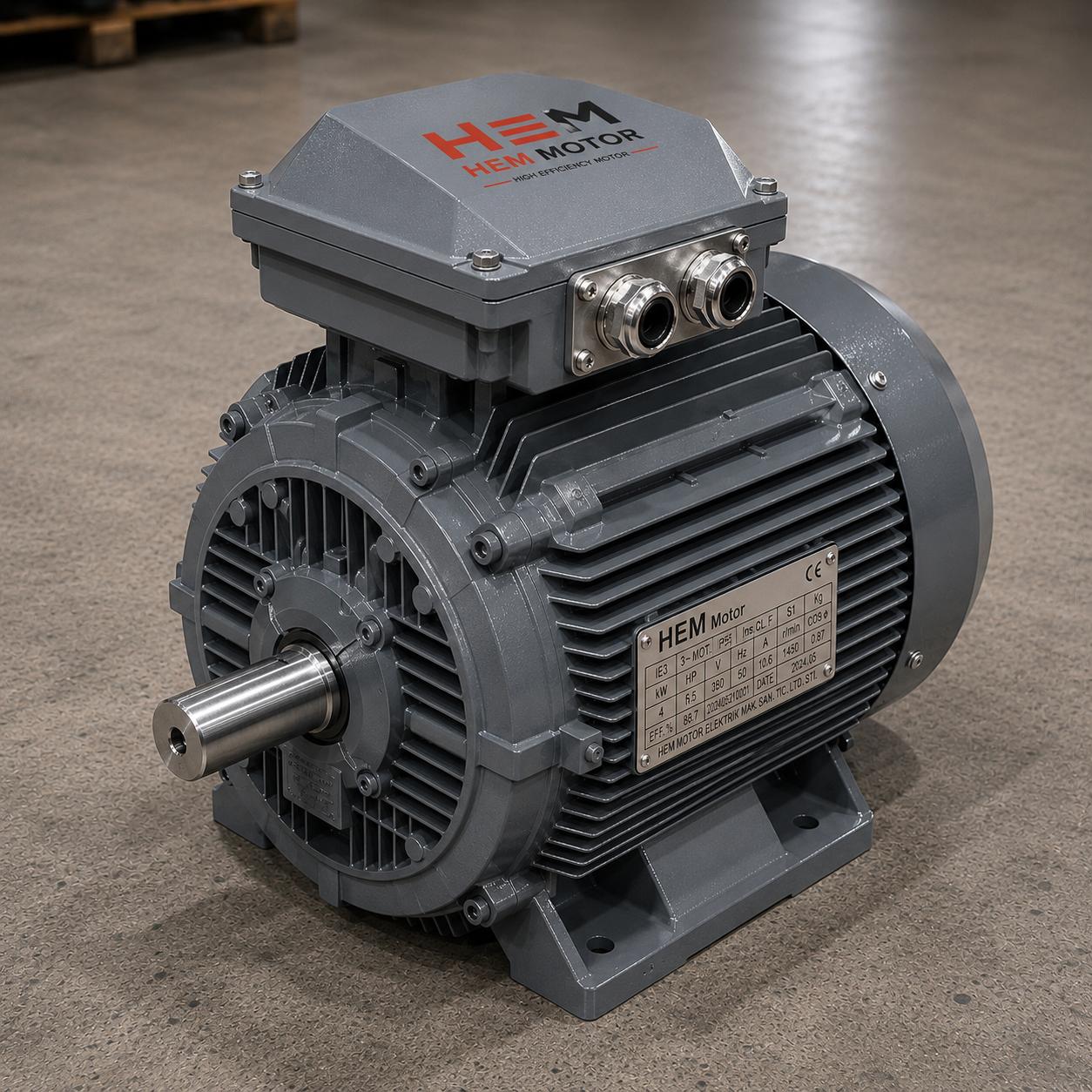
Logistics Planning: The Right Product and the Right Transport Together
The geography of Southeastern Anatolia is vast; while Gaziantep is the center, Şanlıurfa, Adıyaman, Kilis, Kahramanmaraş and surrounding provinces also host intense industrial activity. For this reason, logistics is as important a component of motor supply as product selection. Delivering the right motor at the wrong time, or damaged, is as costly as not delivering it at all.
Regional Distribution and Delivery Speed
The Gaziantep OIZ and Şehitkamil area sits at the center of distribution planning due to its dense industrial population. For deliveries to surrounding provinces, the motor's weight, dimensions and mounting configuration determine the transport method. For high-power motors, forklift and crane access, along with complete shipment of cables and accessories, is planned in advance.
Selecting the Correct Frame and Protection Class
Some facilities in the region are exposed to dusty, humid or open-field conditions. In these environments, the motor's protection class (IP) and frame material must be chosen correctly. Especially in open-field and aggressive environments, the corrosion and open-field durability of cast iron framed motors becomes an important selection criterion. Choosing the wrong protection class means recurring failures in a short time.
Technical Requirements by Sector
Each branch of Gaziantep industry expects a different performance from the motor. Reading these differences correctly optimizes both the initial investment and the long-term operating cost.
Textiles and Carpet
Textile machines mandate continuous, low-vibration operation. Yarn breakage and weaving defects are directly related to the motor delivering smooth torque. In this sector, low vibration and quiet operation stand out; in more advanced applications, the quiet, low-vibration design of IE4 motors is a reason for preference.
Food and Packaging
On food lines, hygiene and continuity are essential. A washable frame, an easy-to-clean surface and a high protection class are decisive in this sector. Conveyor and mixer drives frequently require speed control with a frequency inverter; the use of a VFD frequency inverter with an asynchronous motor comes into play at this point.
Plastics and Machine Building
Plastic recycling and injection lines operate in a heavy-duty regime. Sudden load changes, high starting torque and continuous high temperature are characteristic of this sector. Here, winding quality and insulation class directly determine the motor's lifespan.
- Crushing and granule lines that require high starting torque.
- Extruder drives operating continuously at high temperature.
- Injection machines demanding precise speed control.
A Total Cost of Ownership Perspective
The real cost of a motor is not limited to its purchase price alone. Energy consumption, maintenance needs and the risk of downtime are all part of the total cost. Especially in Gaziantep facilities running three shifts, the motor's annual energy consumption quickly exceeds its purchase price. For this reason, choosing the efficiency class is the most decisive decision in the long run. To evaluate the subject in a more quantitative framework, our content on total cost of ownership in high-efficiency motors guides you in calculating the payback period.
The correct supply approach requires considering the first day together with the next ten years. For all your motor needs across Gaziantep and Southeastern industry, you can contact the HEM Motor team to plan the right product, the right power and the right logistics together.
Technical Parameters to Watch in Correct Motor Selection
In Gaziantep industry, correct motor supply does not end with matching the power value. For the motor to fit the application precisely, a series of technical parameters must be evaluated together. A wrong parameter, even if unnoticed at first, reveals itself over time as efficiency loss, overheating or premature failure.
- Pole count and speed: 2-, 4- or 6-pole motors offer different speed ranges. In pump and fan applications, the correct speed choice simplifies the mechanical drive.
- Mounting configuration (B3, B5, B14): Foot-mounted, flange-mounted or combined mounting is determined by the machine design. The wrong mounting configuration creates a mismatch on site.
- Service factor: The capacity to withstand short-term overloads provides a safety margin in facilities running three shifts.
- Duty cycle (S1-S9): Continuous, intermittent or variable-load operation affects the motor's thermal design.
- Ambient temperature and altitude: In conditions outside standard values, the motor power must be reassessed (derating).
Defining these parameters correctly saves time at the quotation stage and prevents surprises on site. An experienced supplier clarifies these values together by listening to the application.
Energy Efficiency and Carbon Footprint
In Gaziantep's export-oriented industry, energy efficiency is not only a cost but also a competitive factor. Facilities shipping products to the European market increasingly must report the carbon footprint of their production processes. High-efficiency motors contribute directly at this point; by doing the same work with less energy, they reduce both the bill and the emission burden.
Raising a motor's efficiency class, while creating a small difference in the initial investment, turns into a large saving over the operating life. To address the environmental and financial dimensions of this subject together, our content on the effect of high-efficiency motors on the carbon footprint offers a valuable perspective. Especially in continuously running textile and food lines, the efficiency class choice directly affects the annual energy budget.
- High efficiency means lower energy consumption and lower emissions.
- It provides a reportable efficiency advantage for exporting facilities.
- On continuously running lines, the payback period shortens markedly.
The HEM Motor Approach in the Supply Process
HEM Motor handles supply to Gaziantep and Southeastern industry as a consulting process. Understanding the customer's application is as important as determining the right motor. This approach prevents, from the outset, the returns, delays and efficiency losses that arise from wrong product selection.
The basic steps of the process can be summarized as follows:
- Needs analysis: The application's power, duty cycle and ambient conditions are clarified.
- Correct product matching: Efficiency class, frame type and protection class are determined according to the application.
- Stock and logistics planning: Delivery time and transport method are planned in advance.
- After-sales support: Spare parts and technical consultancy are kept accessible.
This holistic approach aims for the motor to run correctly not only on the day it is purchased but throughout its life. In Gaziantep's high production tempo, this continuity is the most valuable advantage.
Frequently Asked Questions
How long is the delivery time to Gaziantep OIZ?
Motors in common power and frame types that can be delivered from stock are usually brought to site in a very short time with correct logistics planning. What is decisive is the motor's stock status and the accessibility of the delivery point. For urgent replacement needs, fast delivery is planned as a priority.
Which motor type is suitable for the textile and plastics sectors in Gaziantep?
While low vibration and quiet operation stand out in textiles, high starting torque and durable insulation are decisive in plastics and recycling. In both sectors, IE3 and higher efficiency class motors are recommended because they reduce energy cost. The correct choice is made according to the application's duty cycle.
Do you also supply motors to surrounding provinces?
Yes. While Gaziantep is the center, motor supply and logistics planning are also provided to Şanlıurfa, Adıyaman, Kilis, Kahramanmaraş and other industrial provinces of Southeastern Anatolia. The regional distribution network ensures that facilities in surrounding provinces also benefit from fast delivery.