English
 Türkçe

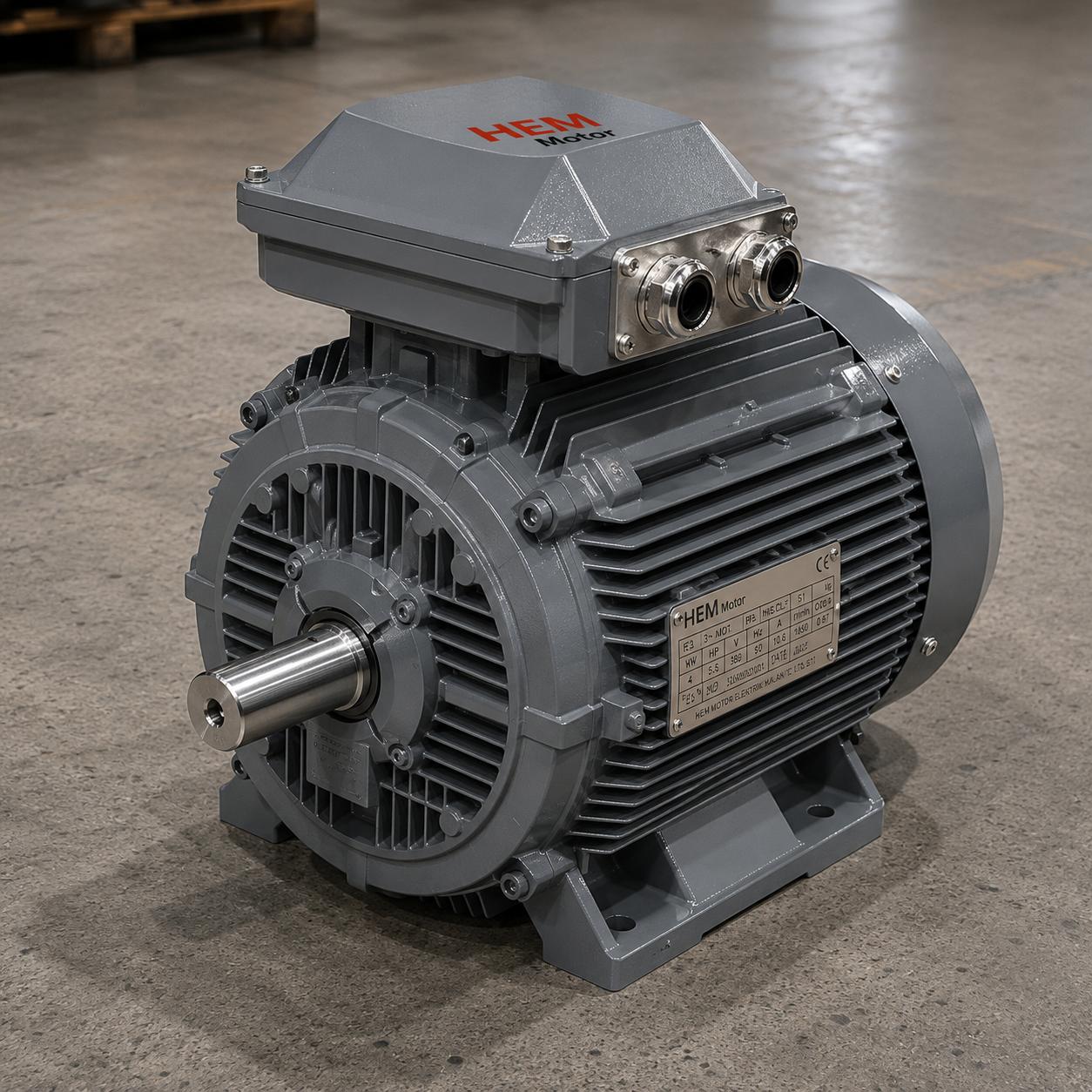

Cable and conductor production plants are among the most demanding industrial sectors in terms of electric motor selection. This is because a cable passes through very different mechanical processes along the production line, such as drawing, bunching, winding and extrusion; each stage demands a different torque-speed characteristic. From the drawing bench, where copper or aluminium rod is thinned into wire, to the extrusion line, where the wire is coated with insulating material, every machine must operate continuously and at constant quality. In this article we address electric motor selection for a cable production plant line by line, examining the constant-torque needs of the drawing, bunching, winding and extrusion processes and the correct supply criteria from a manufacturer's standpoint.
At HEM Motor we believe that, on continuously operating production lines, a motor must be selected not only for power but also for the correct torque characteristic, efficiency class and durability. In cable plants, a motor stopping halts the entire line and can turn the semi-finished cable into scrap; reliability is therefore at least as important as efficiency. Below we address each process separately and explain the motor selection logic step by step.
Drawing Line: High and Stable Torque
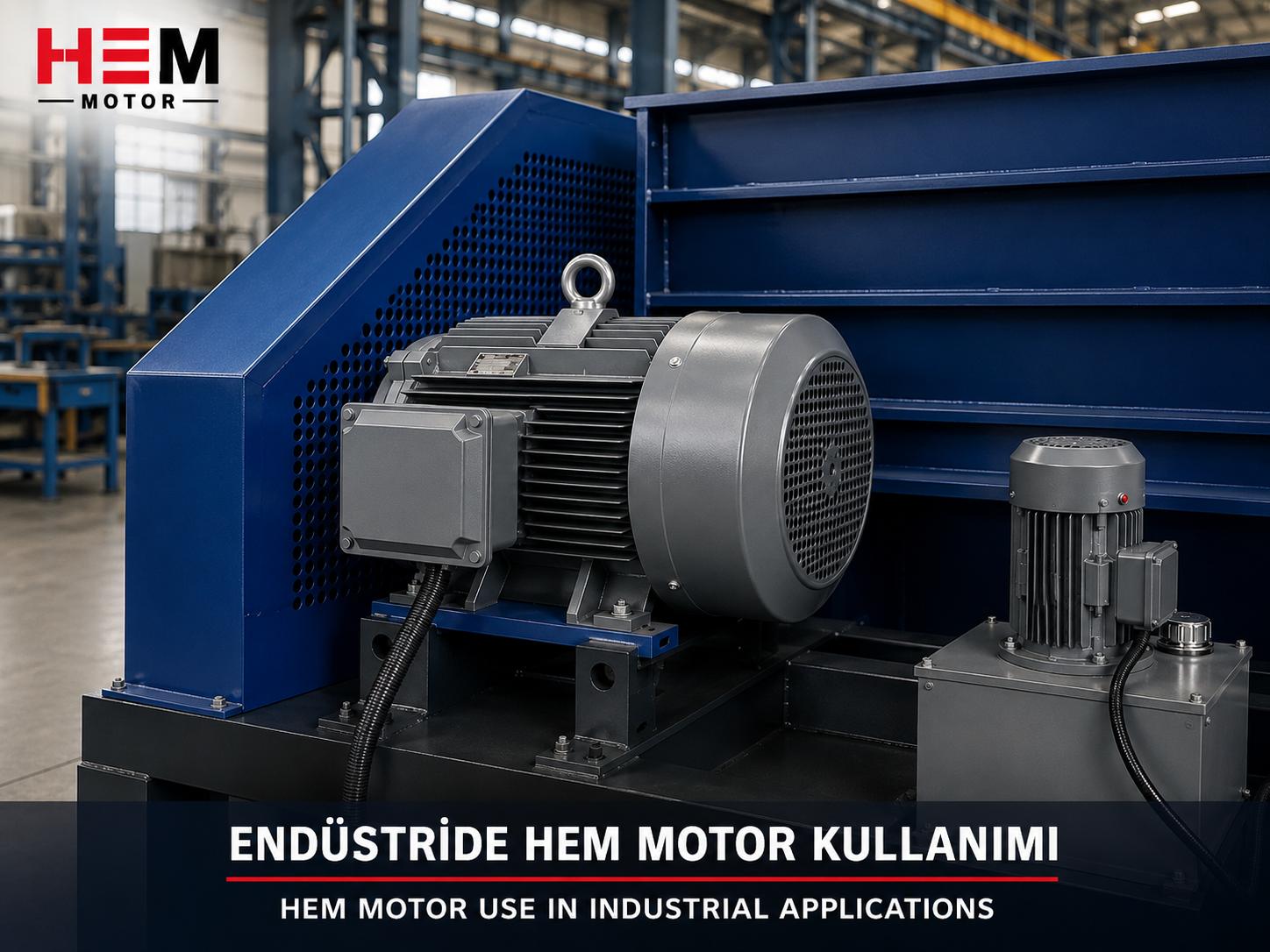
The drawing line is the process in which thick copper or aluminium rod is gradually thinned by passing it through a series of dies. This process requires high and stable torque, because the wire is subjected to a certain pulling force as it passes through each die, and this force must be balanced along the line. Points to watch in motor selection on the drawing line:
- Constant-torque characteristic: In the drawing process, the torque must remain stable even if the speed changes; motors operating in the constant-torque region together with a variable frequency drive are therefore preferred.
- High starting torque: When a loaded drawing line that has stopped is restarted, high starting torque is required; the motor must meet this torque.
- Continuous duty (S1): Drawing lines run continuously for long periods; motors suitable for S1 continuous duty and resistant to heating should be selected.
- Cast iron body: Under mechanical vibration and continuous load, a cast iron body provides advantages in durability and vibration damping.
On the drawing line, the motor is expected to withstand sudden load changes and continuous high torque. The need for constant torque requires the motor and drive to be selected together on this line. For wire drawing plants that involve similar drawing processes, our article on cable and wire drawing factory electric motor supply is a complementary resource.
Bunching/Stranding Line: Balanced and Low-Vibration Operation
The bunching line is the process in which several thin wires are brought together and twisted to form a single multi-wire conductor. Here the balance of speed and torque is critical, because the rotating structure of the bunching machine (cage or rotor) must run balanced and with low vibration. Otherwise the wire tension is disturbed and conductor quality drops. Highlights in motor selection on the bunching line:
- Low-vibration operation: The rotating bunching cage requires a balanced, low-vibration motor; vibration affects both product quality and motor life.
- Precise speed control: To keep the wire tension constant, the motor speed must be controlled precisely, which implies operation with a variable frequency drive.
- Balanced bearing structure: Under continuously rotating load, a quality bearing structure ensures uninterrupted operation of the line.
- Synchronisation: Speed coordination of the motors is important for synchronised operation of the bunching and winding lines.
The bunching process gives the best results with balanced, precisely operating motors. Low vibration and continuous line operation are an area where high-quality industrial-type motors are preferred.
Winding/Take-up Line: Constant Tension and Torque Control
The winding line ensures that the produced wire or cable is wound onto the reel evenly and at constant tension. The most critical concept here is constant tension; as the reel fills, its diameter grows, and to maintain the same linear speed the motor's speed and torque must be continuously adjusted. Points to watch in motor selection on the winding line:
- Torque-controlled operation: As the reel diameter grows, torque control is needed to keep the tension constant; this is achieved in motors operating with a drive.
- Wide speed range: Since operation is required at different speeds when the reel is empty and full, the motor is expected to operate efficiently over a wide speed range.
- Soft starting and stopping: Sudden starting or stopping can cause the wire to break or slacken; soft starting is important.
- Torque at low speed: Sufficient torque must be maintained even at low speed while the reel fills.
The winding line requires the motor to be selected together with the drive so as to provide constant tension. Motor selection on this line directly determines production quality.
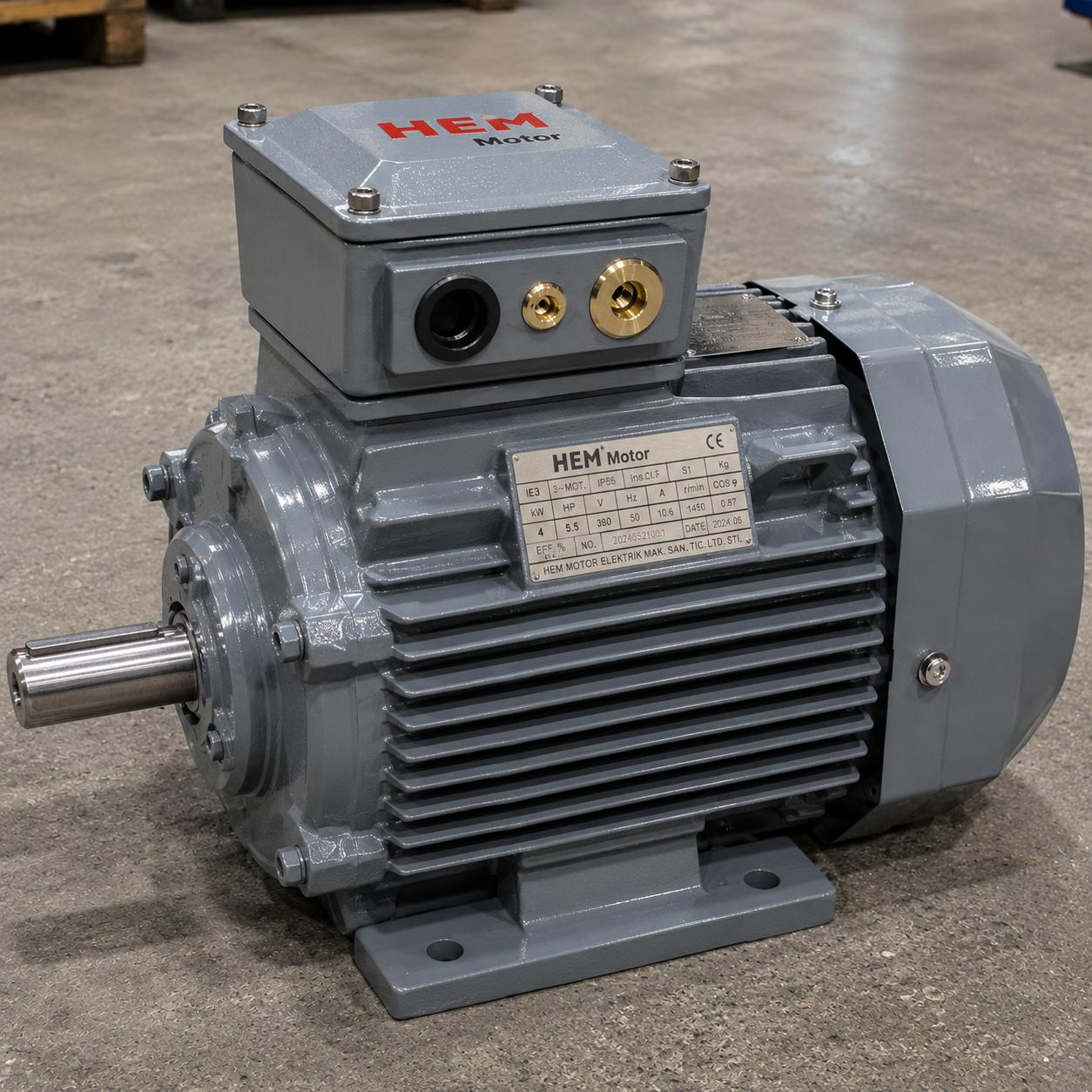
Extrusion Line: Continuous and Stable Constant Torque
The extrusion line is the process in which the conductor is coated with insulation or sheath material (PVC, XLPE, polyethylene). The motor that turns the extruder screw is one of the most critical motors, because the stability of the material flow ensures the cable insulation has a homogeneous thickness. Highlights in motor selection on the extrusion line:
- Constant and stable torque: The extruder screw demands stable torque while the speed is held constant; torque fluctuation distorts insulation thickness.
- Continuous heavy duty: The extrusion line runs continuously for long periods; S1 continuous duty type and a heat-resistant structure are essential.
- High efficiency: A continuously running extruder motor directly affects energy cost; IE4 or IE5 efficient motors reduce operating cost in the long term.
- Compatibility with the gearbox: The extruder screw is usually driven through a gearbox; it is important that the motor is offered with flange and speed options compatible with the gearbox.
On the extrusion line, efficiency and stability are important together. In a continuously running extruder motor, high efficiency is decisive in terms of energy savings; on this subject, our article on energy savings with high-efficiency motors and VFD explains the general principles.
A Holistic Approach to Motor Supply in a Cable Plant
A cable production plant requires a different motor characteristic on each of the drawing, bunching, winding and extrusion lines; yet the common denominator of all of them is continuity, stability and reliability. A holistic supply approach includes these criteria:
- Line-based torque-speed analysis: The required torque characteristic, speed range and duty type should be determined separately for each line.
- Drive compatibility: Since most lines require variable speed and torque control, motor-drive compatibility should be planned from the start.
- Stock and lead time: Fast motor supply in the event of a line breakdown prevents scrap loss; the supplier's stock and lead-time capability is therefore important.
- Spare motor strategy: Keeping a spare motor on critical lines shortens unexpected downtime.
- Efficiency class: On continuously running lines, IE4/IE5 efficient motors significantly reduce energy cost in the long term.
At HEM Motor we evaluate motors on a line basis for cable and conductor production plants, offering solutions in the appropriate torque, speed and efficiency class for each of the drawing, bunching, winding and extrusion processes. When a gearbox requirement arises for extruder and continuous-line drive, our conveyor belt electric motors product group is a reference for similar constant-torque applications. Our article on aluminium extrusion plant electric motor selection, which involves similar extrusion and drawing processes, deepens the motor logic on the extrusion side.
If you wish to carry out line-based motor selection, quotation and lead-time evaluation for your cable plant, you can contact us for up-to-date electric motor prices and stock availability. Correct motor selection is the foundation of the line producing continuously and at high quality.
Auxiliary Equipment Motors: Cooling, Aspiration and Conveying
A cable production plant is not made up only of the main process lines; numerous auxiliary equipment items around the drawing, extrusion and winding lines also require motors. These auxiliary motors are often overlooked, but they should take their place in a holistic supply plan:
- Cooling pumps: Circulation pump motors are required to cool the cable in a water bath after extrusion; in these continuously running pumps, an efficient motor provides energy savings.
- Aspiration and exhaust fans: Fan motors are used to evacuate the smoke and vapour generated in the extrusion and mixing zones; these must be durable and suitable for continuous operation.
- Material feeding conveyors: Conveyor and screw motors require constant torque to carry granular material to the extruder.
- Mixers and dosing: Mixers where insulation material is prepared are driven by motors that demand high starting torque.
- Hydraulic units: In press and mould-change systems, hydraulic unit motors should be selected suitable for continuous operation.
Selecting auxiliary equipment motors with the same diligence as main-line motors increases the reliability of the entire plant. Since most of these motors run continuously, the efficiency class directly affects total energy cost. For continuously running blower and aspiration applications, our article on vacuum pump and industrial blower motors provides additional information.
Efficiency Class, Regulation and Energy Cost
Cable production plants are high energy-consuming operations; the efficiency-class choice is therefore critical in terms of both regulation and operating cost. On continuously running lines, the right efficiency class makes a notable difference in the annual energy bill:
- Regulatory compliance: In certain power ranges, high-efficiency-class motors are legally required; at the supply stage it should be ensured that the motor meets the current efficiency-class requirements.
- Payback period: The initial investment difference of a high-efficiency motor is recovered relatively quickly through energy savings on a continuously running line.
- Part-load efficiency: On winding and bunching lines, motors run at variable load; IE4/IE5 motors offer high efficiency at part load too.
- Total plant efficiency: Raising the efficiency class of all main-line and auxiliary equipment motors improves the plant's total energy performance.
At HEM Motor we evaluate your cable plant's entire motor requirement together in terms of efficiency, regulatory compliance and operating cost, offering solutions in the appropriate efficiency class for main-line and auxiliary equipment.
Frequently Asked Questions
Why is constant torque so important on a cable production line?
Because in the drawing, winding and extrusion processes, keeping wire tension and insulation thickness homogeneous depends on the motor holding its torque stable. If the torque fluctuates, the wire tension changes, the insulation thickness is distorted and cable quality drops. That is why motors on these lines are usually selected to operate in the constant-torque region together with a variable frequency drive. Constant torque directly affects both product quality and the scrap rate.
Which efficiency class motor should be preferred in a cable plant?
On continuously running cable production lines, IE4 or, if possible, IE5 efficient motors should be preferred. Since these lines run for most of the day, the motor's efficiency class directly determines energy cost. The initial investment difference of a high-efficiency motor is recovered relatively quickly through energy savings on a continuously running line. We can evaluate the efficiency-class choice together according to the line operating hours.
Should the extruder motor have a gearbox or use direct drive?
Since extruder screws usually require low speed and high torque, the motor is mostly driven through a gearbox. The gearbox converts the motor's high speed into the low speed and high torque the extruder screw needs. It is therefore important that the extruder motor is offered with a gearbox-compatible flange connection (B5/B35) and suitable speed options. We can determine the motor and gearbox combination together according to the application's torque-speed requirement.