 English
 Türkçe

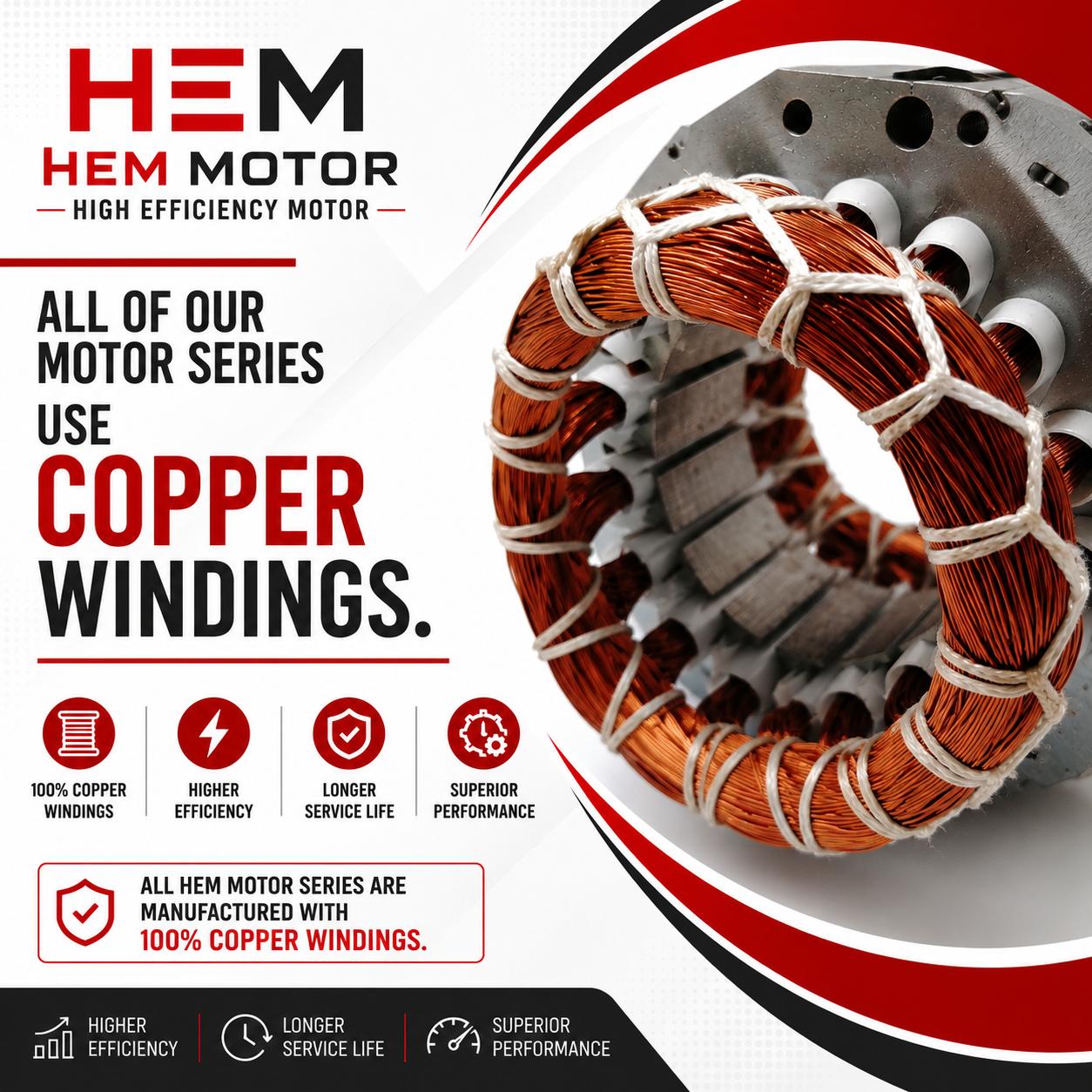
Have you ever noticed how much energy a continuously running motor consumes? This is exactly why an IE3 electric motor should sit at the top of your purchasing list today. As HEM Motor, we supply premium-efficiency IE3 class motors from stock with manufacturer assurance and prepare a fast quotation with the best price-performance balance for your facility. On this page we explain, in clear sales-focused language, why the IE3 efficiency class has become mandatory, which factors shape its price, and how to choose the right power rating.
We supply high-efficiency IE3 motors across a wide power range from 0.75 kW up to 355 kW, with 2-, 4-, 6- and 8-pole options. Our goal is not merely to sell a motor; it is to choose, together with you, the right motor that lowers your energy bill, reduces downtime and shortens the payback period.
Why Is the IE3 Efficiency Class Now a Requirement?
The international IEC 60034-30-1 standard groups electric motors by efficiency into IE1, IE2, IE3 and IE4 classes. IE3 means "premium efficiency" and is now the legal minimum efficiency threshold across many power ranges. In other words, below certain power ratings it is no longer possible to place an IE1 or IE2 motor on the market. This regulatory shift protects the buyer from low first-cost but high-consumption motors and delivers real savings in the long run.
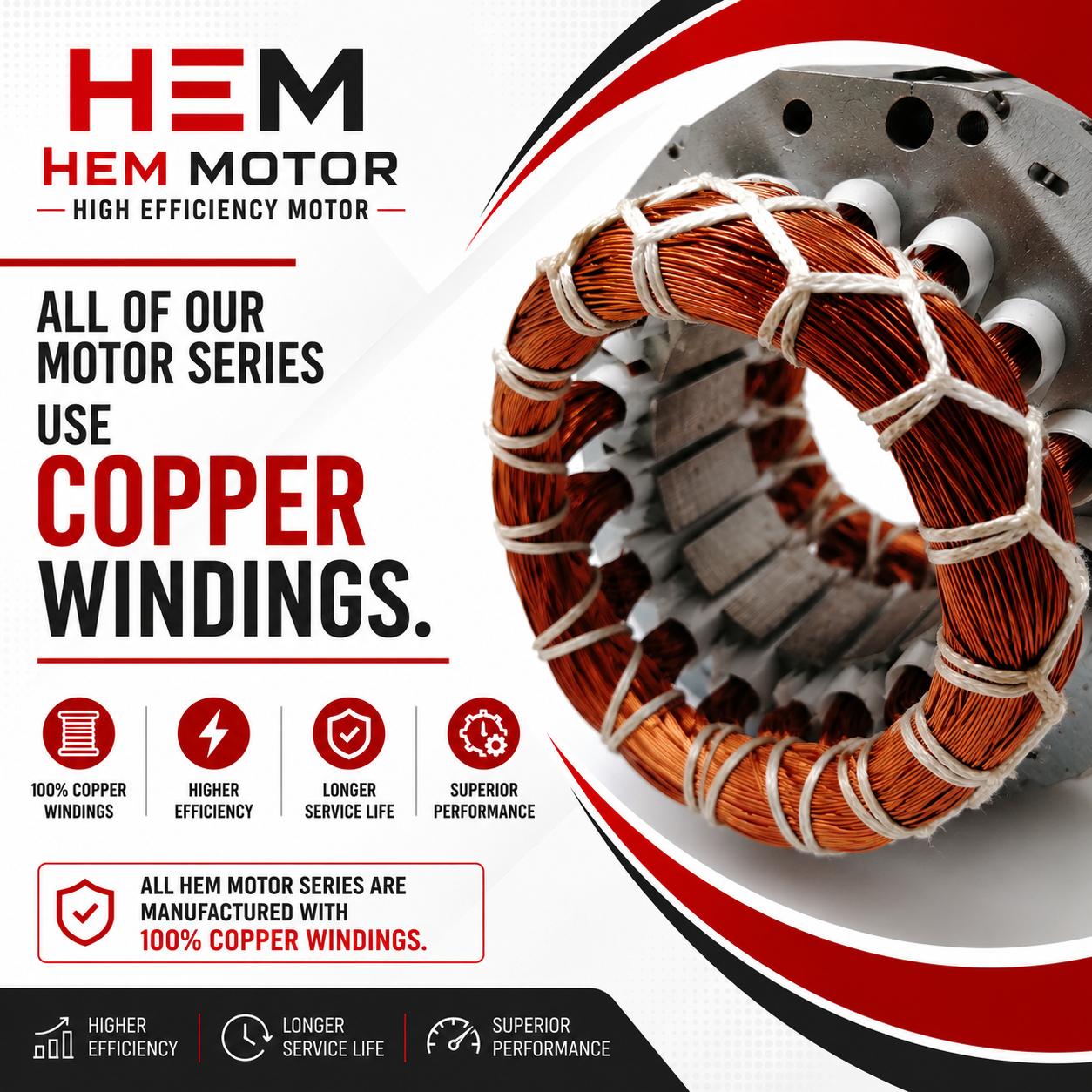
IE3 motors are built with higher-grade lamination stacks, optimised copper winding designs and low-loss bearing-and-fan systems. The result is a motor that does the same work drawing less energy, runs cooler and therefore lasts longer. If you want to study the regulatory side of efficiency classes in depth, see our guide on when IE3 and IE4 efficiency become mandatory.
Factors That Determine the Price of an IE3 Electric Motor
The price of an IE3 motor is not a single line item; it is the combination of several technical factors. Without quoting any figures, let us transparently share which elements push cost up or down. That way, when you receive a quotation, you know exactly what you are paying for.
| Factor | Effect on Price and Explanation |
|---|---|
| Power (kW) | As power rises, material, lamination and copper usage increase; price-performance matters even more at higher ratings. |
| Pole / Speed | Low-speed (6-8 pole) motors need a larger frame at the same power, which affects cost. |
| Frame material | Cast-iron frames are more durable than aluminium and better suited to heavy industrial use. |
| Mounting type | Foot (B3), flange (B5/B14) or combined (B35) options require different machining. |
| Protection class | Upgrades above standard IP55, such as IP65/IP66, add cost for dusty and wet environments. |
| Options | Add-ons such as PTC/PT100 thermal protection, anti-condensation heaters and forced fans change the price. |
Choosing the right motor means not overpaying for unnecessary options. The healthiest approach to electric motor prices is to describe your application to us and receive a tailored fast quotation. To get to know the standard range, review our IE3 electric motors product category and, for sector-specific use, our IE3 efficient asynchronous electric motors page.
Compared with IE1 and IE2: The Return of Premium Efficiency
An old-stock IE1 or IE2 motor may seem more attractive at first glance. Yet in a continuously running facility the difference quickly shows up on the energy bill. Because an IE3 motor operates with fewer losses at high load, it produces the same output at lower consumption. As running hours rise, the gap accumulates and the price-performance balance turns clearly in favour of IE3.
Let us summarise this comparison in principle rather than in numbers: when you buy a low-efficiency motor you pay less up front but consume a little more electricity every day. With IE3 you pay a balanced amount at the start and save every day. To see the selection criteria between IE3 and IE2 in more detail, read our article on when old-stock IE2 motors make sense.
Should I Buy IE3 or IE4?
This decision depends entirely on your running hours and application. For a critical pump or fan that runs long hours, mostly at full load, moving up to IE4 may be worthwhile. For motors that run intermittently or stand as a spare, IE3 is usually the most sensible price-performance choice. To clarify this distinction, we recommend our guide on when staying with IE3 is sensible and, for comparison, our IE4 electric motors blog category.
Which Power and Speed Ship Fast from Stock?
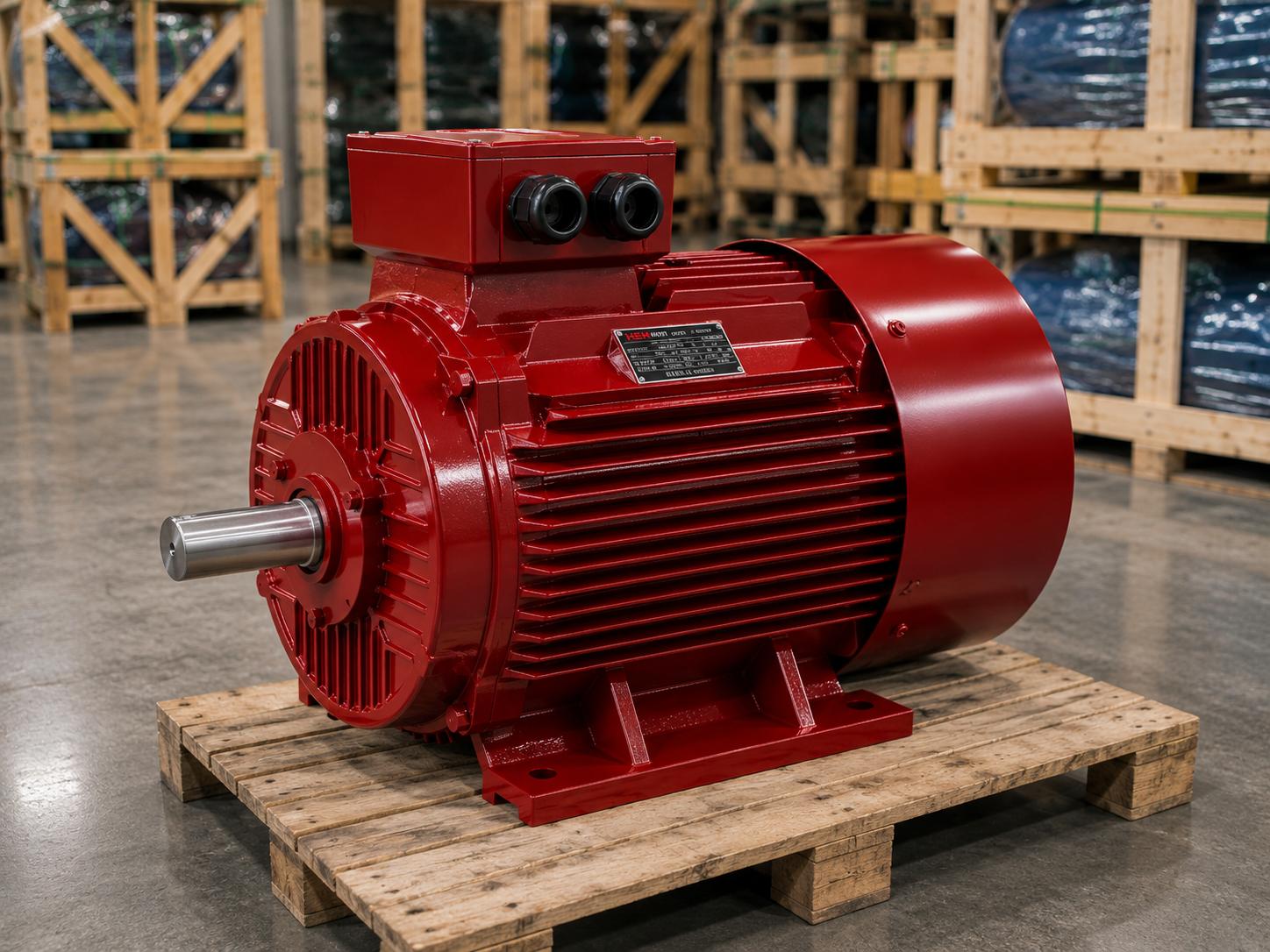
We shorten lead times by keeping the most sought-after IE3 combinations in stock. Ratings of 0.75 kW, 1.1 kW, 2.2 kW, 4 kW, 5.5 kW, 7.5 kW, 11 kW, 15 kW, 18.5 kW, 22 kW, 30 kW and 37 kW in 2-, 4- and 6-pole options are largely ready on our shelves. For larger ratings we provide planned supply aligned with your project schedule.
- Small powers (0.75-4 kW): Fast supply for pumps, fans and small machine drives.
- Medium powers (5.5-22 kW): The most sought-after band for conveyor, blower and compressor applications.
- Large powers (30-355 kW): Planned supply for crushers, large fans and process lines.
If you want to see the stock guide by power, our IE3 stock guide listing the most sought-after power and speed combinations is just for you. For the whole high-efficiency range, you can also visit our high-efficiency electric motors category.
The Manufacturer Advantage: Why HEM Motor IE3?
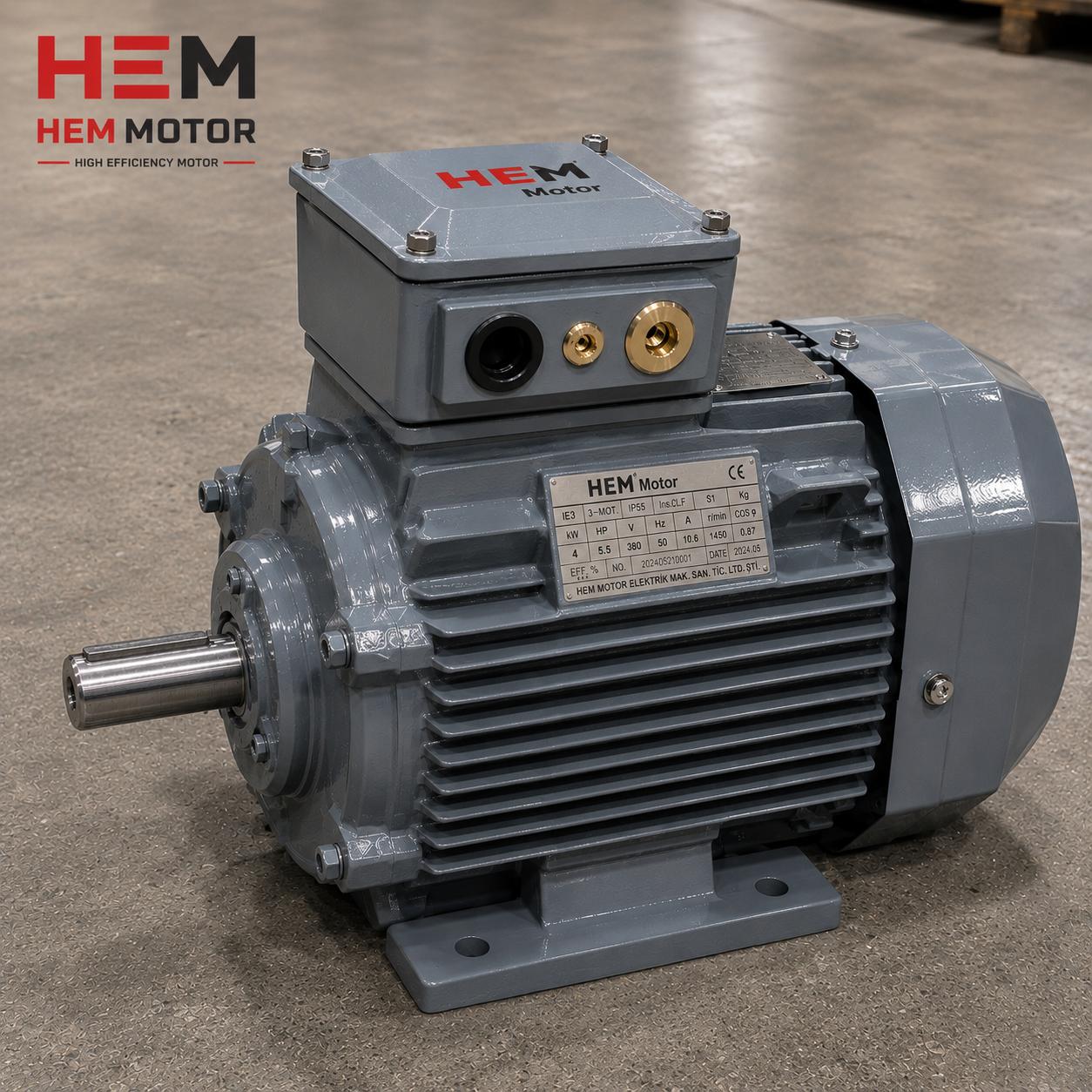
The biggest difference is that you are buying directly from the manufacturer, not from a reseller. That means option flexibility, stock depth, technical support and delivery speed solved straight from the source. Our copper-wound premium IE3 motors offer a long-lasting investment with cast-iron frame options designed for heavy industrial use.
We determine the right power, the right mounting type and the right options together with you and prepare a tailored fast quotation. If you are unsure about mounting types, our electric motor mounting types category and especially our B5 flange electric motors page will guide you.
Frequently Asked Questions
Does an IE3 motor have the same dimensions as the old motor in my facility?
Largely yes. IE3 motors comply with IEC standard frame dimensions; the foot-hole spacing, shaft diameter and flange dimensions stay the same. In some cases the IE3 frame may be one size larger, so we recommend sharing your existing motor's nameplate data with us before ordering.
Is the IE3 motor much more expensive than IE2?
There is a balanced difference in the initial purchase price; however, in continuously running facilities this difference amortises itself over time through energy savings. From a price-performance standpoint, IE3 is almost always more profitable in high-running-hour applications.
How long do I wait for a power rating that is out of stock?
The most sought-after ratings are usually ready in our stock and ship quickly. For out-of-stock or specially optioned motors, we state the lead time clearly in our quotation, aligned with your project schedule.
Do you provide warranty and technical support for IE3 motors?
Yes. As a manufacturer we warrant our motors and offer technical support during commissioning and selection. We listen to your application and advise so that you choose the right motor.
What should I do to get a fast quotation?
Simply send us the power you need, the speed (pole count), the mounting type and any special conditions (dusty/wet environment, drive-fed operation). The HEM Motor team will prepare a tailored, price-performance-focused quotation.
To take your facility's energy efficiency to the next level and source the right IE3 motor on the best terms, get in touch with us today. For IE3 electric motor sales directly from the manufacturer, fast from stock and high in price-performance, hemmotor.com is always by your side.