 English
 Türkçe

The decision to replace an old motor with a new one often starts with a single question: does an efficient motor upgrade really pay off, or is it more sensible to keep running the existing motor? On this page, HEM Motor explains the efficiency ladder from IE1 up to IE3, IE4 and IE5, where the losses decrease and the payback logic in plain language. Our aim is to help you understand your energy saving potential with the right price-performance balance, without drowning you in figures. Once the decision is clear, you can plan the upgrade by getting a fast quote from our wide efficient motor range whenever you wish.
A motor's efficiency class shows how little energy it uses to do the same job. A low-efficiency motor converts part of the electricity it consumes into heat rather than useful work; that is, it quietly generates cost every day. When you switch to an efficient motor, this loss decreases, and the difference becomes more pronounced the more the motor runs. To explore our efficient product range, see our high-efficiency electric motors category, and request a quote for current electric motor prices from the HEM Motor homepage.
The IE Efficiency Ladder: What Do IE1, IE3, IE4 and IE5 Mean?
The international IE (International Efficiency) classification grades motors by their efficiency. Each step means less loss and higher efficiency than the previous one. Understanding this ladder determines which class makes sense for you to move to.
From IE1 to IE3: The First Big Leap
The IE1 standard efficiency class is now considered old and has given way to IE3 in most new applications. The move to the IE3 premium efficiency class is the first big step that noticeably reduces losses. If you are still running an old IE1 motor, switching to IE3 is usually the move with the fastest return. For IE3 options, see our IE3 electric motors category.
IE4 and IE5: Super and Ultra Premium
The IE4 super premium class pulls operating cost down even further for plants with long running hours. The IE5 ultra premium class targets the lowest loss level and is preferred especially in critical processes that run without interruption. Although these higher classes carry a higher value at first, they offset the difference over time with energy saving in heavily running motors. You can compare the higher classes from our IE4 electric motors and IE5 electric motors categories.
Where Do the Losses Decrease? The Inner Structure of an Efficient Motor
An efficient motor wins not by magic, but through better material and more careful design. The main points where losses decrease are:
- Copper loss: Higher-quality and more copper winding lowers winding resistance.
- Iron loss: A thin, low-loss lamination pack reduces magnetic losses.
- Friction loss: Good bearings and optimised fan design lower mechanical loss.
- Load losses: Better rotor design limits losses under load.
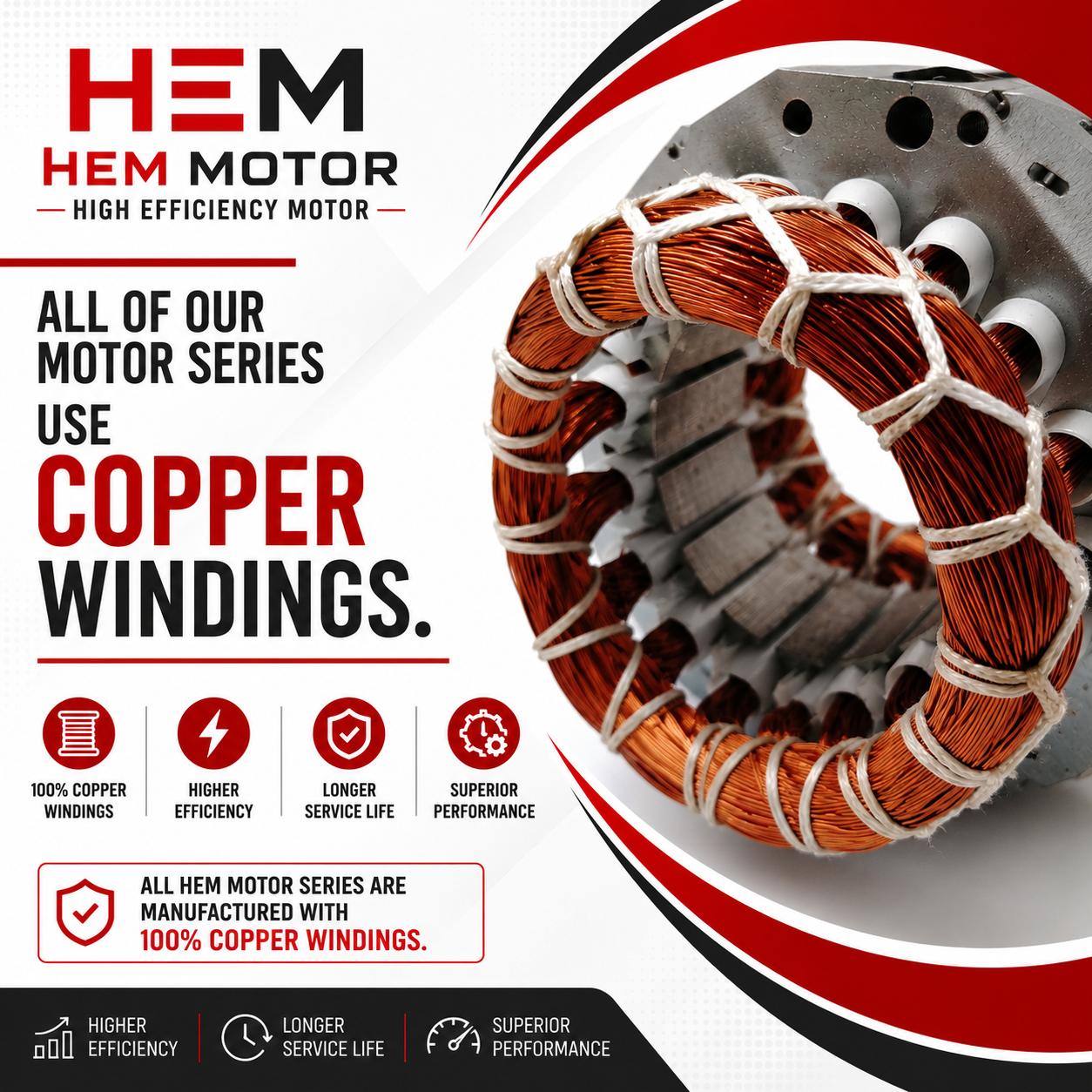
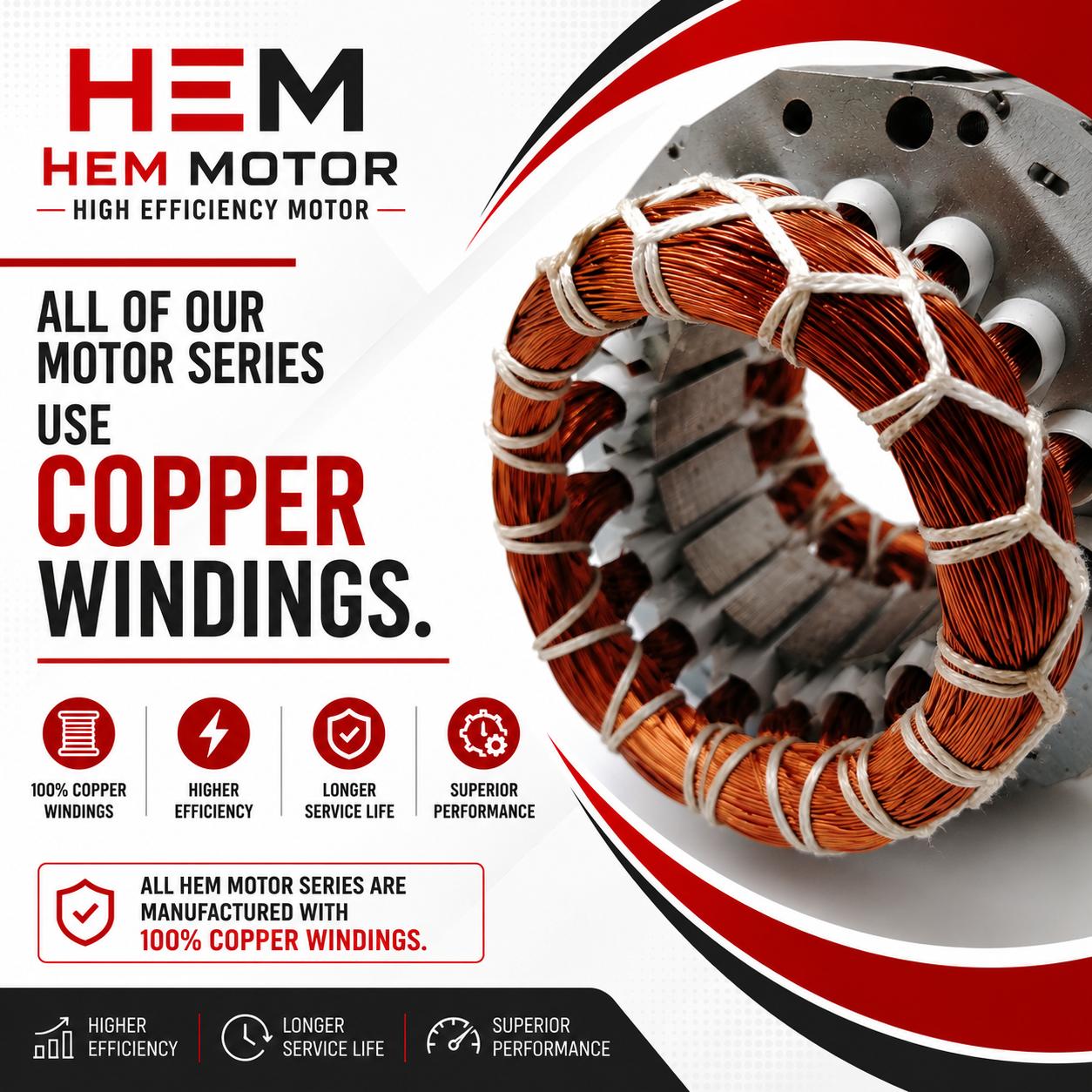
The sum of these improvements lets the motor do the same job with less electricity. To see the effect of copper winding on efficiency in more depth, the content in our high-efficiency motors category will guide you.
Payback Logic: A View Without Figures
The logic of an efficient motor upgrade is simple: the more hours the motor runs, the faster the saving from lower loss accumulates. The table below helps you evaluate the upgrade decision qualitatively.
| Running Profile | Logic of Upgrade | Recommended Direction |
|---|---|---|
| Multi-shift, continuous | Saving accumulates fast | Strong case for IE4 / IE5 |
| Single shift, regular | Balanced return | IE3 / IE4 sensible |
| Infrequent, short | Slow return | IE3 may suffice |
| Old IE1 motor | Loss high in any case | Move to IE3 first |
What matters is giving the decision according to the motor's real running profile. If you share your running hours, we recommend the most sensible efficiency class and the right price-performance balance for you.
Mind Mechanical Compatibility When Replacing the Old Motor
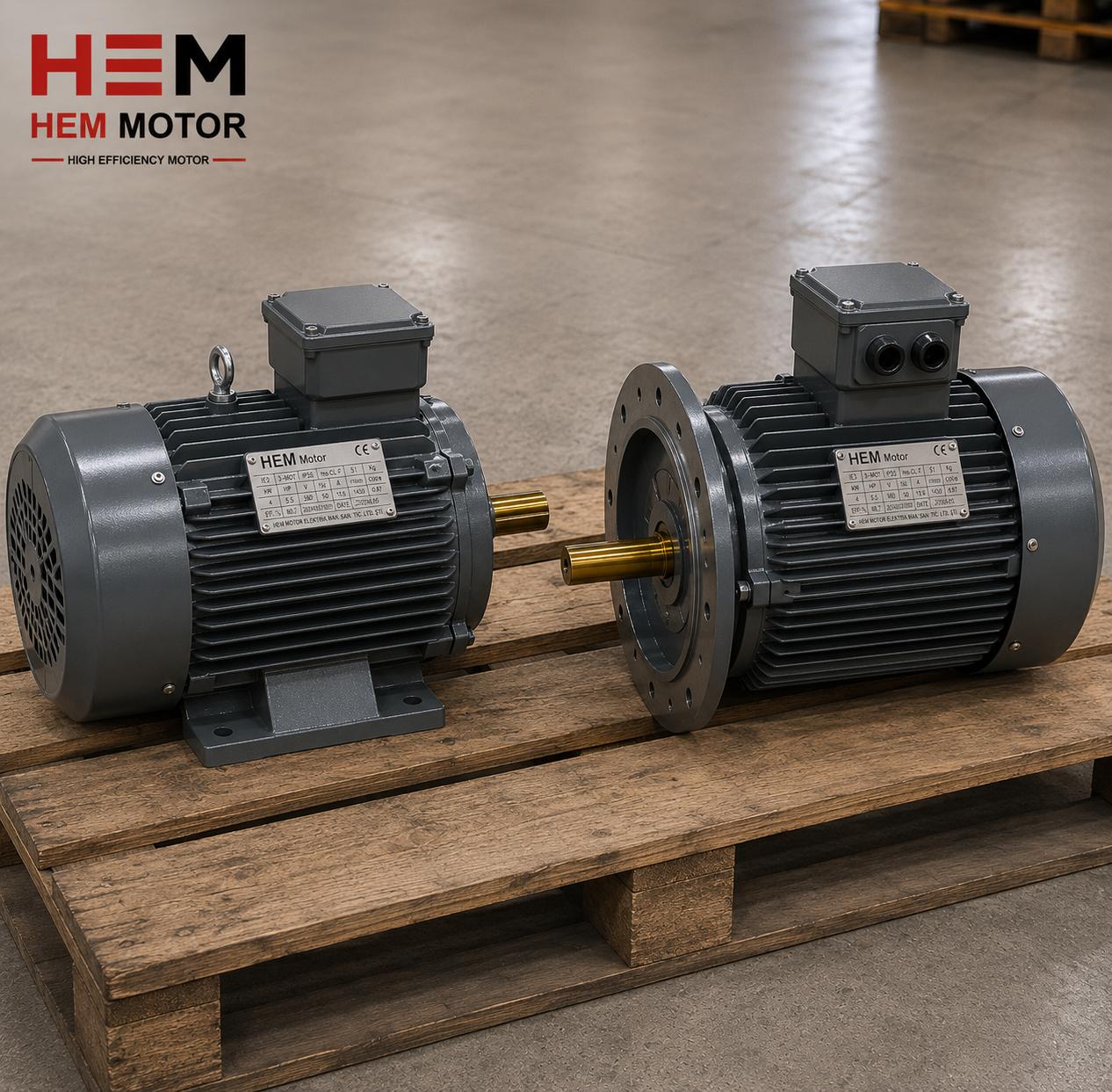
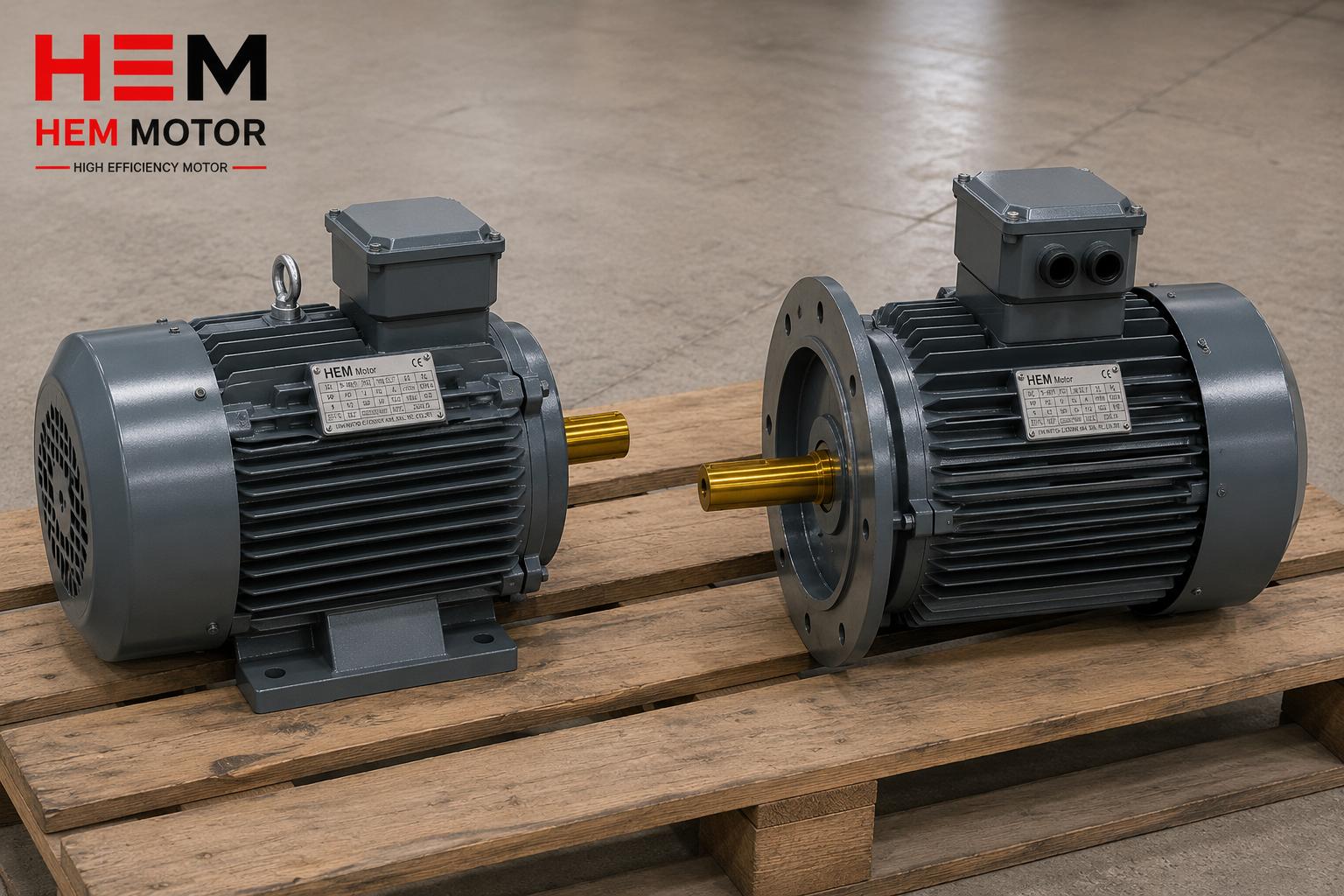
When switching to an efficient motor, most buyers worry whether the new motor will fit the existing machine. The good news: thanks to IEC standard frame dimensions, an IE4 motor of the same power and frame size usually fits smoothly in place of the old motor. Still, headings such as foot hole spacing, shaft diameter, flange size and terminal box orientation should be verified before ordering. By doing these checks together, we ensure you face no surprises during the mounting stage of the upgrade. For mounting compatibility, our electric motor mounting types page will be useful.
The Gain of an Efficient Motor With a Gearbox and Drive
The gain of an efficient motor upgrade is fully understood when evaluated not with the motor alone, but with the whole drive chain. In plants using a motor together with a gearbox or a speed control device (drive/VFD), switching to an efficient motor lifts the energy performance of the entire chain. In a drive-fed application, when speed is adjusted to need, the efficient motor's low losses are preserved over a wider operating range; in a geared application, the efficient motor transfers more useful power to the output shaft. Since our HEM Motor range includes both efficient motors and compatible electric motors for gearboxes, you can plan the upgrade with system integrity.
Especially in variable-load applications such as pumps and fans, pairing an efficient motor with a drive raises the energy saving potential to the highest level. So the upgrade decision should not be limited to the motor class alone; the application's load profile and drive setup should be evaluated together. If you share your load profile, we recommend both the right efficiency class and complementary components at the best price-performance balance.
Efficiency Class Mandate and Future Readiness
Energy efficiency regulations gradually phase out lower efficiency classes over time, which makes turning to higher-efficiency motors in new purchases advantageous. Moving to an IE3 or IE4 motor today not only lowers energy cost; it also prepares your plant for future regulations. Continuing to run an old-stock low-efficiency motor may look affordable in the short term, but in the long term it can create a disadvantage in both energy and compliance. Moving to the right class in time secures both your operating cost and your future readiness. You can review the differences between efficiency classes from our IE4 electric motors and IE3 electric motors categories.
The HEM Motor Advantage in Efficient Motor Upgrade
An efficient motor upgrade is not a cost but an investment; and making this investment with the right supplier amplifies the difference. With its identity as both manufacturer and seller, HEM Motor offers a wide efficient motor range from IE3 to IE5 from stock or with short lead times. We recommend the right class according to your running profile, verify mechanical compatibility together, and help you plan the upgrade smoothly. So you both lower your energy cost and receive technical support from a single source. For more content on the sector use of efficient motors, see our electric motors category.
Frequently Asked Questions
When is an efficient motor upgrade sensible?
The most decisive factor is running hours. If the motor runs long hours in multiple shifts, moving to IE4 or IE5 accumulates saving fast. In infrequent applications, IE3 can be a balanced choice. If you share your running profile, we recommend the most suitable class and price-performance balance.
Should I replace my old IE1 motor right away?
Old IE1 motors have high losses and are usually the replacements that give the fastest return. If you are still running an IE1 motor, we recommend at least evaluating the switch to IE3. If you share your motor's details, we determine a suitable equivalent.
Will the new efficient motor fit my old machine?
Thanks to IEC standard frame dimensions, an efficient motor of the same power and frame size usually fits smoothly. Still, we verify headings such as foot, shaft, flange and terminal orientation together, so you face no surprises during mounting.
Should I buy IE4 or IE5?
IE5 targets the lowest loss and stands out in critical processes that run without interruption; IE4 is a balanced higher class for a wide range of applications. We determine the right choice between the two together according to your running intensity.
How should I evaluate the payback of the upgrade?
Payback depends on the motor's running hours and the efficiency difference; the more it runs, the faster it returns. It is best to give the decision over total cost of ownership. You can clarify the evaluation by getting a quote from our electric motor prices page.
To both lower your energy cost and capture the right price-performance balance with an efficient motor upgrade, contact us. HEM Motor is at your side with a wide efficient motor range and the advantage of supply from the manufacturer; get a fast quote now and plan your upgrade today.