English
 Türkçe

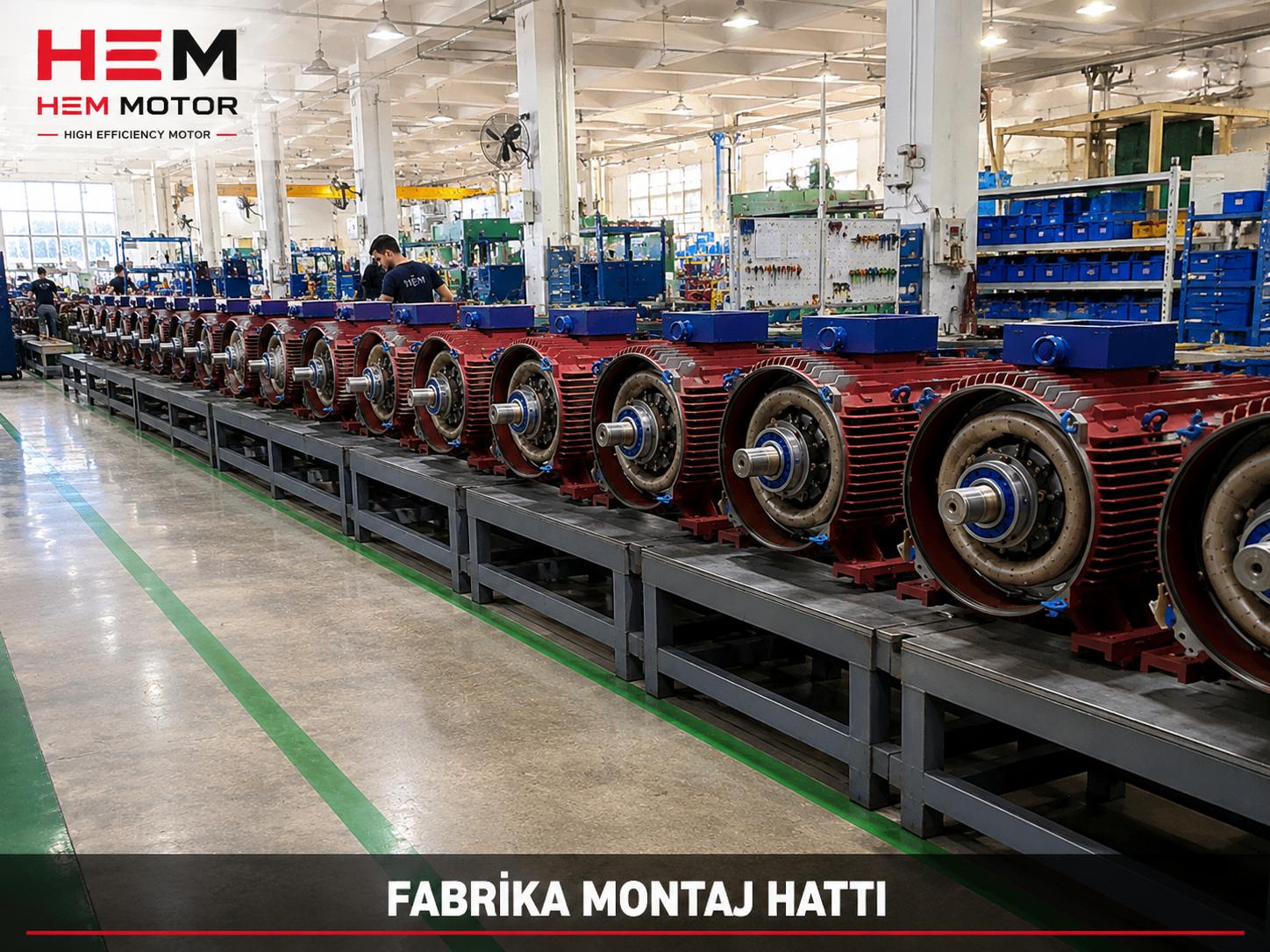

Brick and tile factories are among the most demanding industrial environments, where heavy dust, high temperature, and the pressure of uninterrupted production all come together. From clay preparation to forming, from drying to firing, every stage is built on correctly selected and reliably supplied electric motors. In these plants, the failure of a single motor can stop an entire line and disrupt the kiln regime. In this article we cover motor selection for clay mixer, extruder, kiln fan, and conveyor drives; the protection and derating requirements imposed by dust and temperature conditions; and the importance of keeping spare motors on critical lines, all from the perspective of fast supply with manufacturer assurance.
Main Drives in Brick and Tile Production
The motor-driven equipment in a brick/tile plant falls into four main groups: clay preparation (mixer, edge runner mill, crusher), forming (extruder/vacuum press), the firing line (kiln and fan groups), and material handling (conveyors, car pushing systems). Each group has a different load character, and motor selection must follow that character.
Clay Mixer, Pug Mill, and Edge Runner Drive
Clay preparation equipment demands a high starting torque due to the heavy, sticky material inside it. Edge runner mills and mixers in particular require a breakaway torque far above the rated torque when setting a stationary clay mass in motion. The typical selection in these applications:
- Usually 1000 or 1500 rpm (6 or 4 pole) motors, combined with a high-reduction gearbox.
- Cast iron housing, for mechanical strength under impact and vibration loads.
- High starting torque and the capacity to carry frequently repeated impact loads.
- Class F insulation and 100% copper winding for thermal endurance.
The continuous impact load at these points requires the motor to be selected with ample thermal and mechanical robustness; a motor chosen to cut costs will soon stop the line with a winding or bearing failure.
Extruder (Vacuum Press) Drive
The extruder, the heart of forming, shapes the brick/tile profile by forcing clay continuously and under high pressure through the die. This application runs in an uninterrupted S1 continuous duty regime under a high and steady load. It is usually one of the highest-power motors in the plant and corresponds to large-frame options (IEC 200–355L) in the range. Here:
- Efficiency class is critical; since the extruder runs 24/7, an IE3 Premium or preferably IE4 Super Premium motor directly lowers energy cost.
- Continuous torque capacity at full load is essential in S1 duty.
- Cast iron housing and robust bearing selection extend life under high radial load.
We explained the nuances of correct power selection under continuous load on extruders and similar process lines in our article on correct power supply under continuous load on extruders and process lines.
Kiln Fan, Burner Fan, and Cooling Fan Drive
Fans play a vital role on the firing line: combustion air, flue gas extraction, in-kiln circulation, and cooling. The motors of these fans often run in a hot environment or near hot gas flow, which raises two important issues.
Temperature Derating
A motor's rated power is usually given for a 40°C ambient temperature. When the ambient temperature around the kiln exceeds this, the motor power must be reduced by derating, meaning a larger frame/power should be selected. Otherwise the winding exceeds the Class F temperature limit and life is shortened. In some applications forced cooling units are added.
Efficiency and the Fan Law
Since fans run continuously, efficiency directly affects operating cost. When evaluating the efficiency class threshold for pump and fan applications, our article on the IE4 threshold in pumps and fans helps you decide. In hot and dusty fan applications, fan cowl and protective guard selection is also important; we gathered the topic in our content on fan cowl and protective guard selection in dusty environments.
Conveyor and Belt Drive
Conveyors that carry material between the drying and firing lines require low speed and high torque. The right solution here is to select the motor together with a gearbox, that is, as a geared motor (gearmotor). The HEM Motor range includes worm gearboxes and helical bevel gearboxes for this need. For conveyor drives:
- A suitable reduction ratio is chosen for low output speed and high output torque.
- Starting torque is considered on lines with frequent stop-start.
- IP55 protection is preferred for dusty environments, and IP65/IP66 in heavy dust.
Protection Class Against Dust and Environmental Conditions
The dense clay and chamotte dust in a brick/tile environment is the motor's greatest enemy. Dust can clog the fan cowl, reduce cooling, and shorten bearing life by entering the bearings. Therefore:
- IP55 protection is standard, and IP65/IP66 is preferred on request in heavy dust accumulation.
- The fan cowl and protective guard should be selected to reduce dust buildup and clogging.
- Periodic cleaning and keeping the fan channel clear are essential for full power without derating.
To compare motor selection in similar heavy industrial kiln environments, our article on glass and ceramic factory electric motors kiln fan and mill selection is a good reference.
Drives on the Drying Line and Car Pushing Systems
Drying before firing is one of the longest and most energy-intensive stages of brick/tile production. In tunnel dryers, the circulation fans that provide humidity- and temperature-controlled air circulation require motors that run continuously and steadily. Since these fans often operate with variable air flow, motors suitable for being driven by a variable frequency drive are preferred; this provides both energy savings and precise climate control. The car pushing (pusher) systems that move cars between the dryer and kiln require high pushing force at low speed; here geared motors and, if needed, brake motor options are evaluated. In these applications:
- The motor must be selected with thermal headroom due to frequent stop-start.
- A gearbox with a suitable reduction ratio is chosen for high torque at low speed.
- A brake motor or drive control is used where positioning accuracy is required.
The efficiency of the fan motors on the drying line is an important item in the plant's total energy consumption; due to the high operating hours, choosing IE4 instead of IE3 provides distinct savings in the long run.
Mounting Types and Mechanical Compatibility
Each drive point on brick/tile lines requires a different mounting type, and clarifying this detail in advance prevents surprises during installation. The mounting options in the HEM Motor range are determined according to need:
- B3 foot mounting: The classic horizontal mounting bolted to a frame or foundation; common on conveyors and general drives.
- B5 large flange and B14 small flange: Compact mountings flanged directly to a gearbox or machine.
- B35 combined mounting: For heavy applications requiring extra mechanical support, with both foot and flange together.
Confirming mechanical details such as shaft diameter, flange hole pattern, and direction of rotation at the quotation stage guarantees that the spare motor fits the existing equipment seamlessly. Submitting the request together with the existing motor's nameplate and dimension information speeds up the correct match.
Supply, Stock, and Spare Motors on Critical Lines
In brick/tile production, continuity of the kiln regime is essential; the sudden failure of an extruder or kiln fan motor can cause production loss lasting days and damage to the kiln. For this reason:
- Keeping a spare motor on critical lines (extruder, main kiln fan, edge runner mill) is recommended for operational safety.
- Confirming the correct power, mounting type (B3 foot, B5/B14 flange, B35 combined), and shaft/flange dimensions in advance guarantees mounting compatibility.
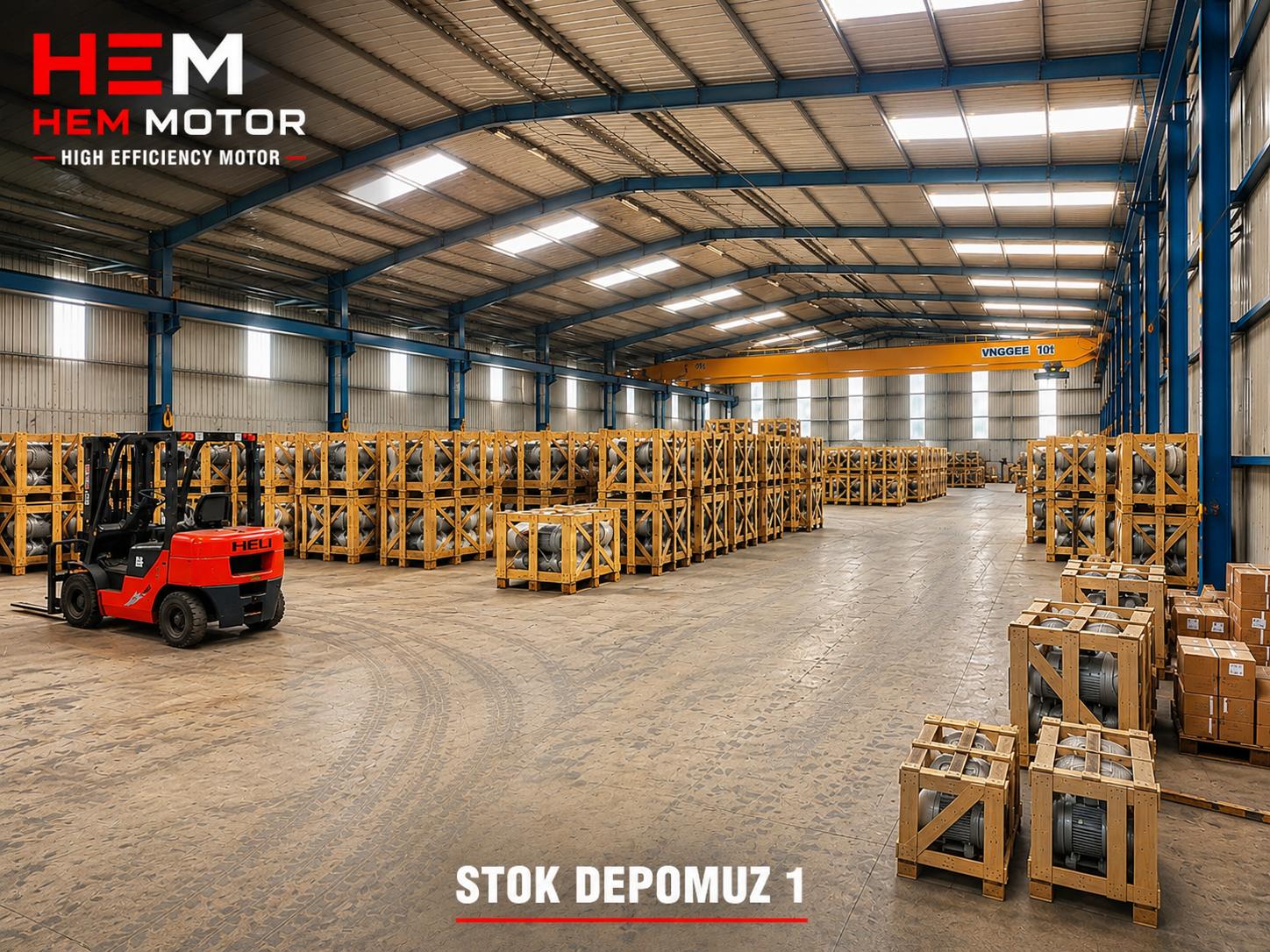
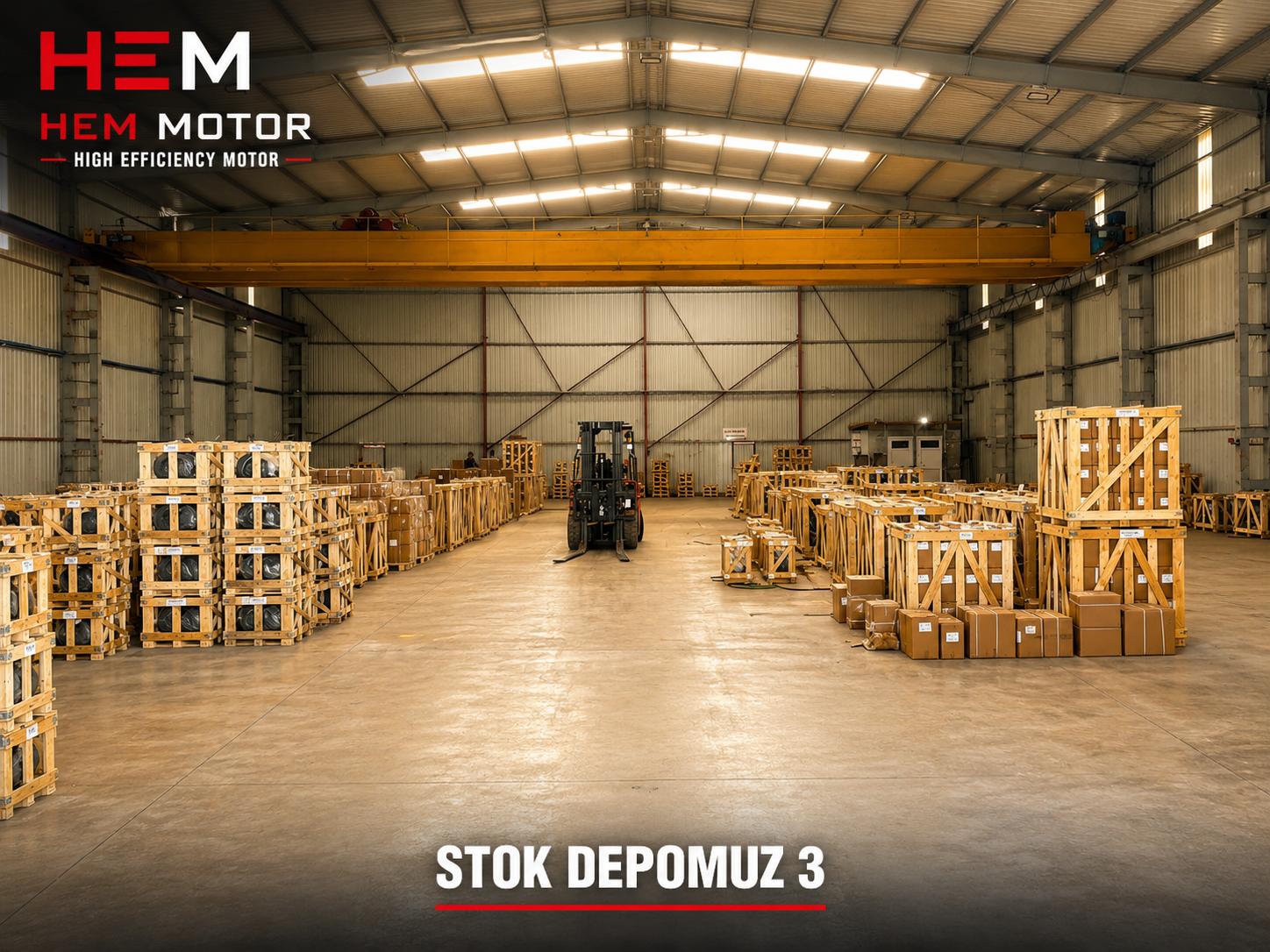
- As a manufacturer, HEM Motor offers a wide power range (0.55–355 kW) from stock with fast delivery and plans supply for critical spares.
For motor and gearbox selection suited to your line, derating calculation, and spare planning, you can request a quote and get information about current electric motor prices.
Frequently Asked Questions
Why might I need to select a larger power for a kiln fan motor?
When the ambient temperature around the kiln exceeds 40°C, the power the motor can carry decreases (derating). To keep the winding from exceeding the Class F temperature limit, you must select a larger power/frame or add forced cooling; otherwise the motor life is seriously shortened.
Which protection class is suitable for a clay mixer?
Due to dense clay dust, IP55 is recommended as standard and IP65/IP66 on request at points with heavy dust accumulation. In addition, selecting a fan cowl that does not trap dust and regular cleaning preserve cooling performance.
Should I choose a separate motor or a geared motor for a conveyor drive?
Since conveyors require low speed and high torque, a geared motor (gearmotor) is the most practical solution. The choice between a worm gearbox and a helical bevel gearbox is determined by the required output speed, torque, and mounting orientation; it is clarified at the quotation stage according to need.