 English
 Türkçe

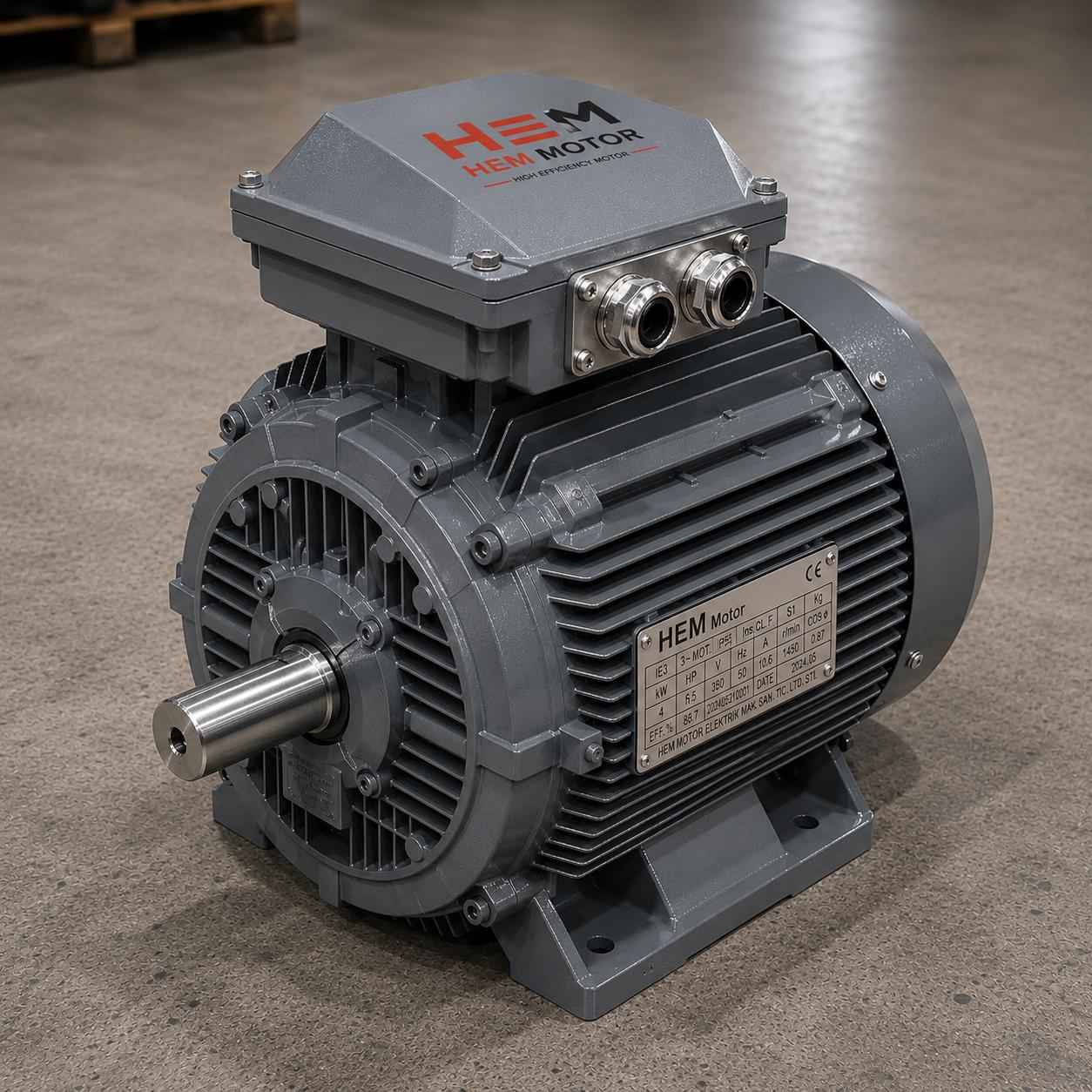
When a machine stops on a spinning, weaving, knitting or dyehouse line, it is often not just that loom that is affected but the entire production flow; that is why sourcing the right textile machinery electric motor quickly and without interruption is a critical priority for textile facilities. At HEM Motor we offer, with a stock-oriented approach, electric motors suited to precise speed control and continuous operation across a wide range of applications, from ring spinning machines to weaving looms, from circular knitting machines to dyehouse stenter and drying lines. Unlike most industrial branches, textile applications demand both high continuity and low vibration with quiet running; yarn breakage, winding faults or a drop in fabric quality are directly related to the smooth and stable operation of the motor. Below we cover textile-specific motor selection, speed-control needs and how to get a fast quote, machine by machine.
Whether you need a series of motors for building a new textile machine or a one-to-one replacement of a failed motor on an existing loom with the same character, we work with a sourcing approach that defines the correct speed, mounting arrangement and protection class together with you. Simply send your fast-quote request to learn about HEM Motor electric motor prices and stock availability.
Factors That Determine Textile Motor Price and Performance
In textile machines the motor usually runs uninterrupted all day, even across shifts. This operating profile requires the correct duty type and the right thermal design. When the following points are clear, the right textile machinery motor is identified on the first try:
- Precise speed control (VFD/encoder): For yarn tension, winding speed and fabric feed ratio, the motor must run at a precise speed with a variable frequency drive (VFD) or with encoder-based closed-loop control.
- Continuous duty (S1): Because most textile lines run uninterrupted, S1 continuous duty and a suitable insulation class are priorities.
- Low vibration and quiet running: Vibration both degrades yarn/fabric quality and harms the working environment; a balanced rotor and low-noise fan design become important.
- Protection against lint and fibre wrapping: In a textile environment, airborne lint and fibre accumulate on the fan cowl and cooling surfaces; a suitable fan cowl and guard selection is required.
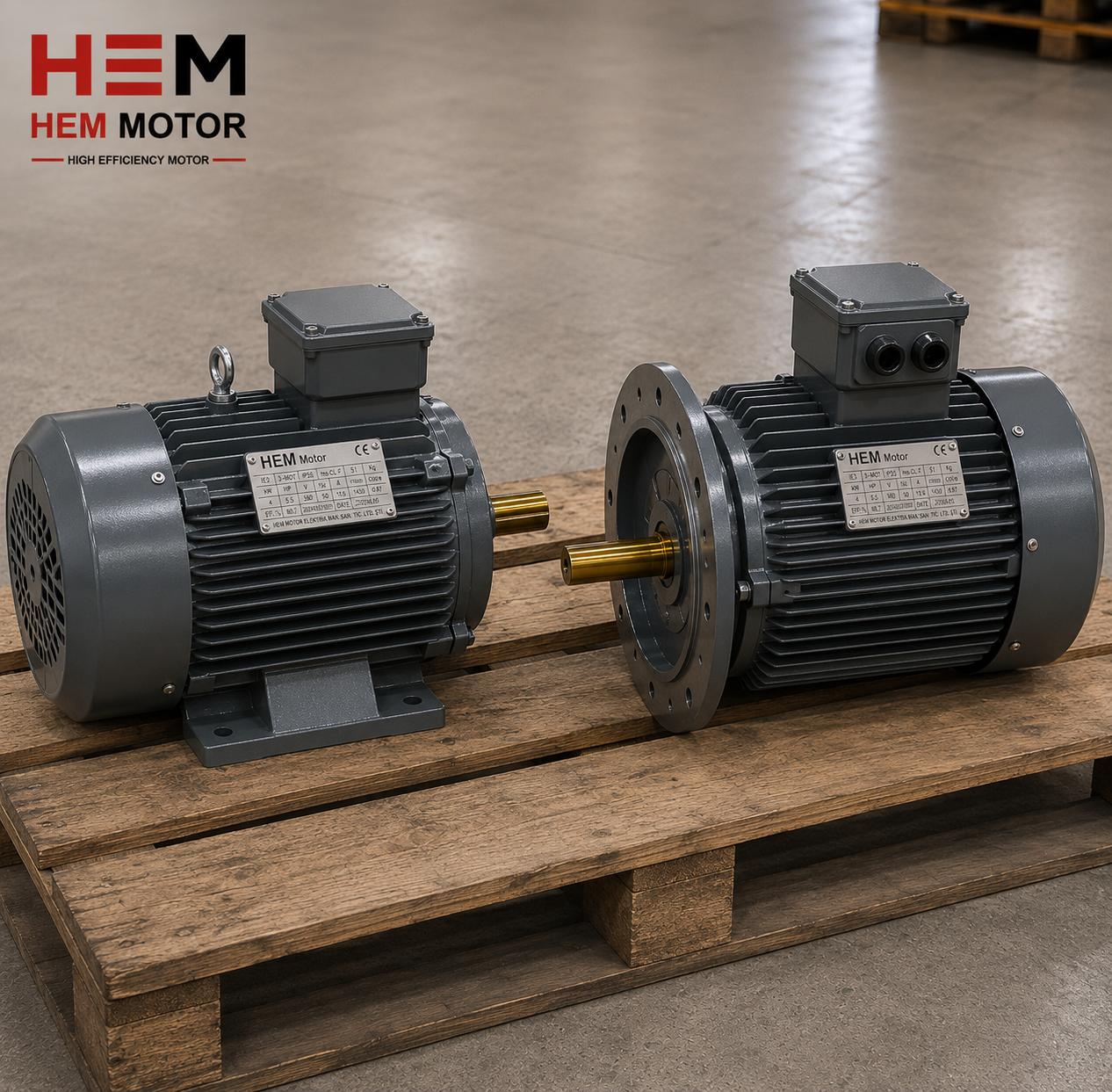
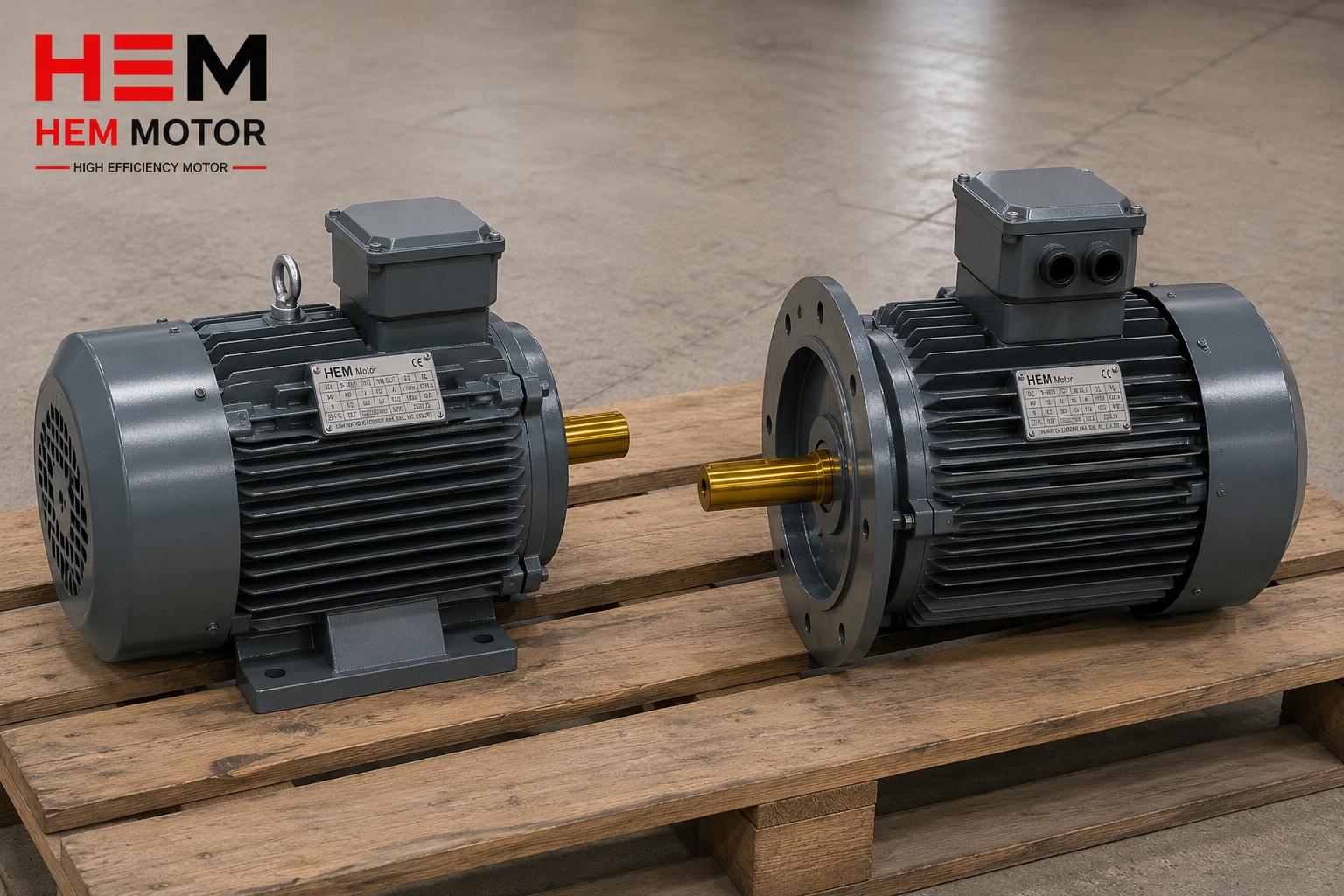
- Mounting and shaft: B3, B5, B35 or custom shaft solutions are defined per application for connection to the machine.
We clarify these points for you; describe your machine and operating regime and let us define the right motor for precise speed control together with fast-quote options. Our IE3 efficient asynchronous electric motors product group, widely used on textile lines, also lowers energy cost on continuously running machines.
Spinning, Weaving, Knitting and Dyehouse: Motor Needs by Machine
A textile facility never has a single type of motor; each process demands its own characteristic. At HEM Motor we supply all of these points with a stock and fast-delivery focus:
| Process / Machine | Operating Character | Key Requirement |
|---|---|---|
| Ring spinning machine | Continuous spinning at high speed | Precise speed, low vibration, continuous duty |
| Weaving loom | Weft-warp motion, rhythmic load | Stable speed, low noise, robust bearings |
| Circular / flat knitting | Continuous loop formation | Quiet running, precise speed, compact body |
| Dyehouse stenter / drying | Fan and roller drive at high temperature | Heat resistance, continuous duty, IP protection |
| Circulation and pumps | Dye and water circulation | Wet-environment protection, uninterrupted running |
Whatever machine you need a motor for, we anticipate the needs of the other processes in the same facility and present a holistic supply plan. This way you establish a consistent stock and price-performance balance not for a single motor but for your entire textile line.
Precise Speed Control: The Foundation of Yarn and Fabric Quality
In textiles, speed stability is directly reflected in product quality. A small fluctuation in winding speed disrupts yarn tension and creates streaks and weight differences in fabric. For this reason VFD-based precise speed control or encoder-based closed-loop solutions are preferred on textile motors. On drive-fed motors, correct selection of winding insulation and cooling is also critical for long life.
Continuous Operation and Heat Management
On looms running non-stop across shifts the motor generates heat continuously. If the correct insulation class, suitable cooling and, where needed, winding temperature protection (thermal switch/thermistor) are not selected, motor life is shortened. If you send us your operating regime, we recommend a thermally safe and long-life motor. You can find the selection of cast-iron, low-vibration motors for weaving and knitting looms in detail in our cast-iron motor selection for weaving and knitting machines article.
Supply and Fast-Quote Process
In textile facilities, downtime often affects the efficiency of the entire shift. At HEM Motor we work stock-first, keeping the most-requested power-speed combinations ready; for special requests we let you plan with a clear lead time.
- One-to-one replacement: Send the nameplate and mounting dimensions of the failed motor and we will quickly identify a motor that fits the same connection with the same character.
- New production series: If you are a textile machine manufacturer, let us build a consistent stock and price-performance plan for recurring orders.
- Project supply: Let us provide a single-source, compatible motor package for all the spinning, weaving, knitting and dyehouse lines of a facility.
You can find a machine-by-machine motor requirement list for textile and spinning machines in our textile and spinning machinery motor requirement list article, and the selection specific to dyehouse and finishing lines in our textile dyehouse and finishing facility motors article.
Energy Savings in Continuous Production With an Efficient Motor
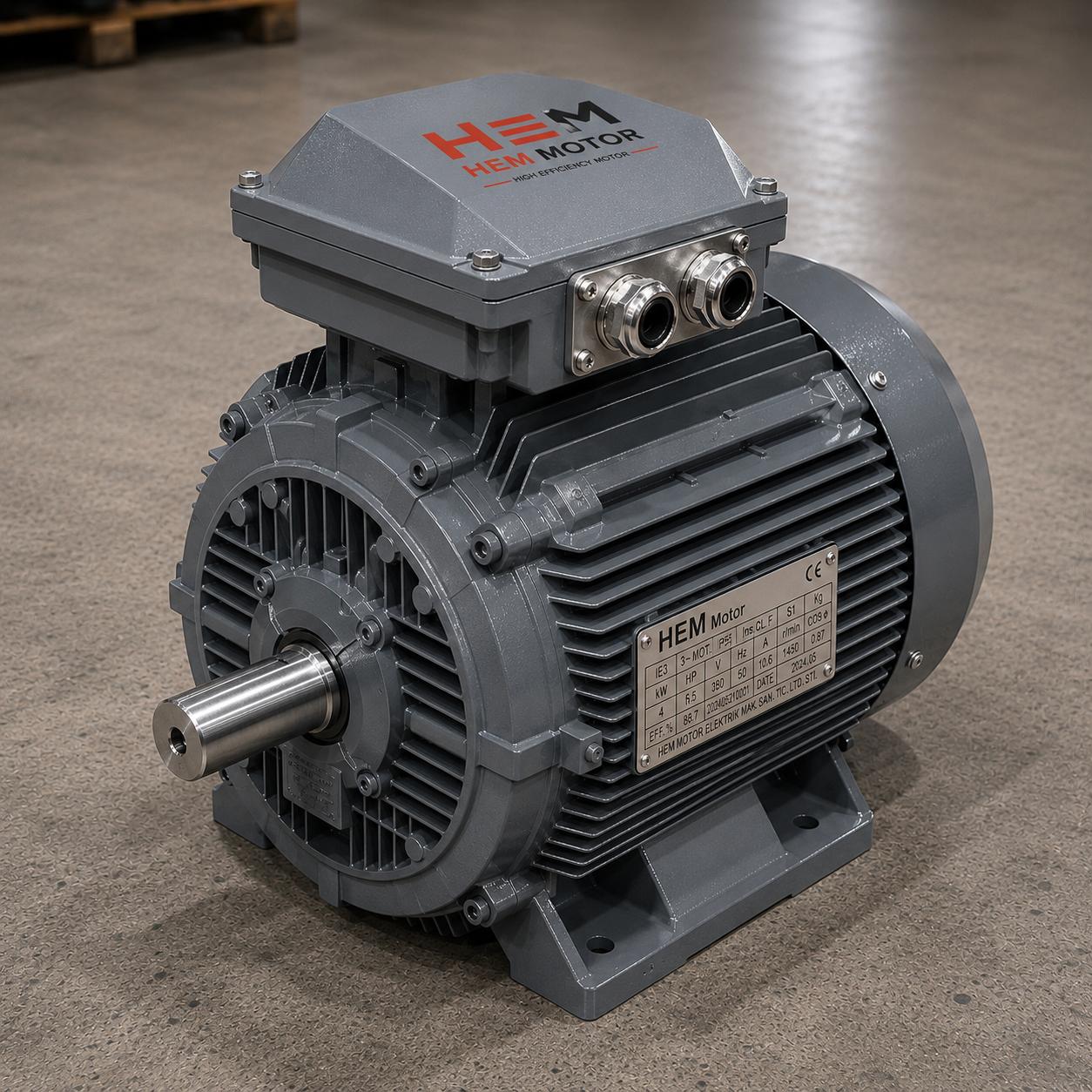
Because textile lines run all day, often across three shifts, motor efficiency is reflected directly in the energy bill. Switching to a high-efficiency motor on a machine running continuously lets you achieve the same production with less energy. You can review the return of using efficient motors in continuous processes in our IE4 motor continuous-process paper and textile line article, and browse our high-efficiency electric motors group for product options.
Frequently Asked Questions
Why is precise speed control important on a textile machine motor?
Because yarn tension, winding speed and fabric feed ratio depend directly on speed stability. Small fluctuations in speed can cause yarn breakage and streaks or weight differences in fabric. Motors running with a variable frequency drive (VFD) or encoder-based closed-loop control provide this precision and preserve product quality.
Can you replace my failed loom motor with the same dimensions?
Yes. When you provide the nameplate data (power, speed, voltage, duty type) and mounting dimensions (frame, mounting arrangement, shaft diameter) of the existing motor, we identify a motor that fits the same connection and meets the same duty, then offer a fast quote. The goal is a one-to-one swap with no mechanical modification.
Which motor is suitable for hot and humid environments such as a dyehouse?
Dyehouse stenter, drying and circulation lines involve high temperature and a humid environment. These points require a suitable insulation class, higher IP protection and heat-resistant bearings. If you send us the ambient conditions, we recommend a thermally and mechanically suitable motor.
How do lint and fibre in the textile environment affect the motor?
Airborne lint and fibre accumulate on the motor's fan cowl and cooling surfaces, weakening cooling and causing overheating. For this reason a suitable fan cowl, guard and regular cleaning are important; where needed we recommend a solution with higher IP protection.
How do I get a fast quote for a textile machine motor?
Simply send your machine (ring spinning, weaving, knitting, dyehouse), the process point and the nameplate/mounting details of the existing motor. We quickly share our stock status and the most suitable solution in terms of price-performance. For details and HEM Motor electric motor prices, get in touch with us right away.
For your spinning, weaving, knitting and dyehouse lines, we offer textile motors that secure uninterrupted production, suited to precise speed control, with quiet and continuous operation, all with the advantage of stock and fast delivery. Let us define the most suitable motor for your needs together, with the correct speed, duty type and protection class; reach out to the HEM Motor team and get your fast quote for a textile machinery motor.