 English
 Türkçe

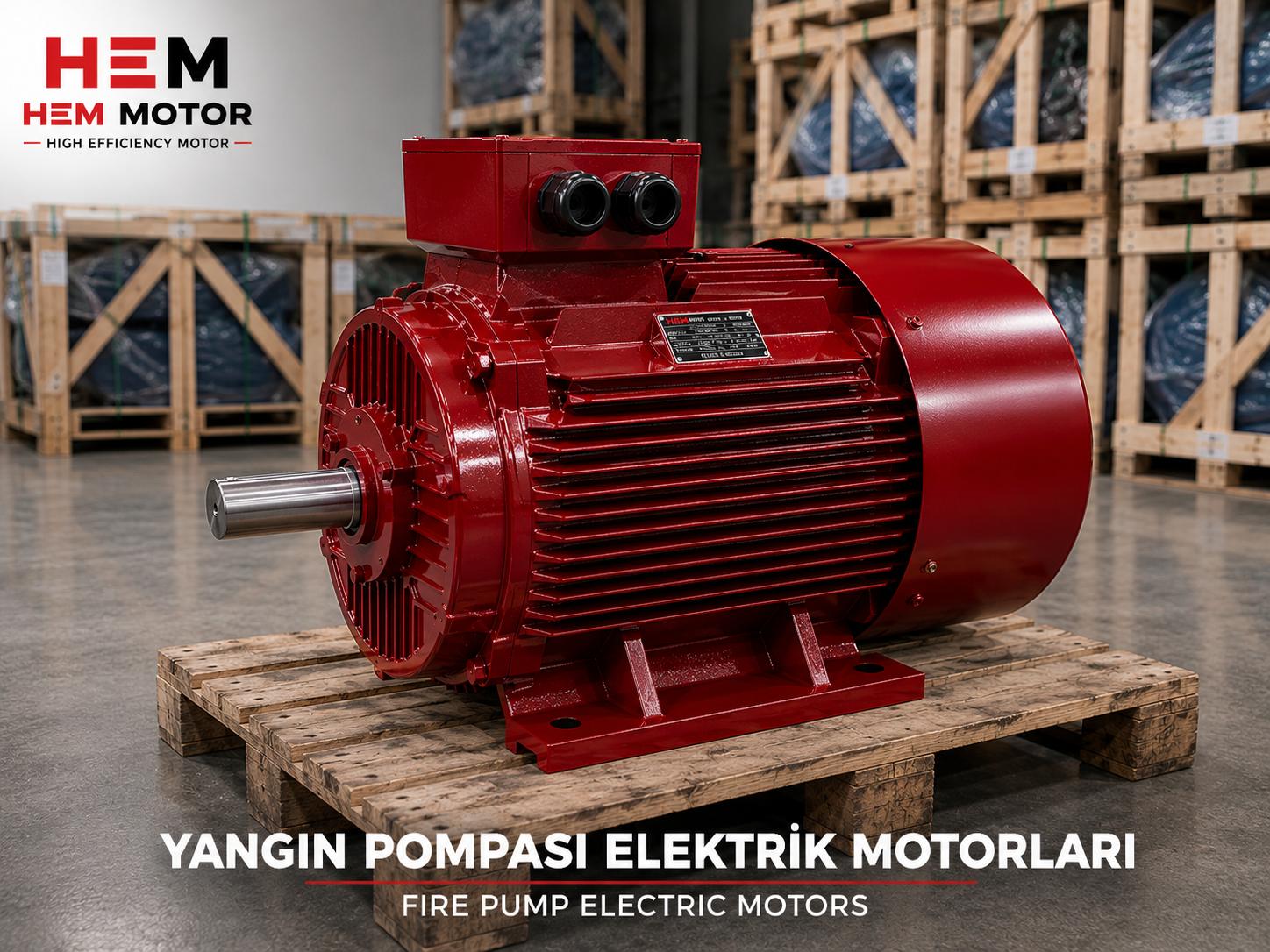
A pump that comes on in a fire, or the booster set that balances a building's water pressure, is only as reliable as the motor behind it. That is why selecting a motor when you buy a fire pump motor or a booster (hydrophore) motor calls for criteria different from an ordinary purchase: constant readiness, stable operation under pressure and certified reliability. As HEM Motor we build motors for fire and booster systems with manufacturer rigour, offer a wide power range from stock and deliver a clear price with a fast quote. This page explains the criteria for choosing the right motor.
Jockey and Main Pump Motor in a Fire Pump System
A fire pump set is not a single motor. The jockey pump that covers small pressure losses and the main fire pump that runs in an actual fire work together. The jockey pump runs often but briefly, while the main pump runs rarely yet at full load for a long time. These two duty profiles require different motor choices: for the jockey a motor that withstands frequent start-stop, for the main pump a motor that is stable at high power and can run continuously. The HEM Motor range is planned to cover this pair together.
In fire systems the most critical motor trait is that it runs without hesitation when it engages. A motor idle for months is expected to take full load on the first attempt at the alarm. Winding quality, insulation class and bearing endurance are therefore kept higher than on a standard motor. When sizing the system to the project, pump pressure, flow and the building's fire load are evaluated together.
Where Fire Pump and Booster Motors Are Used
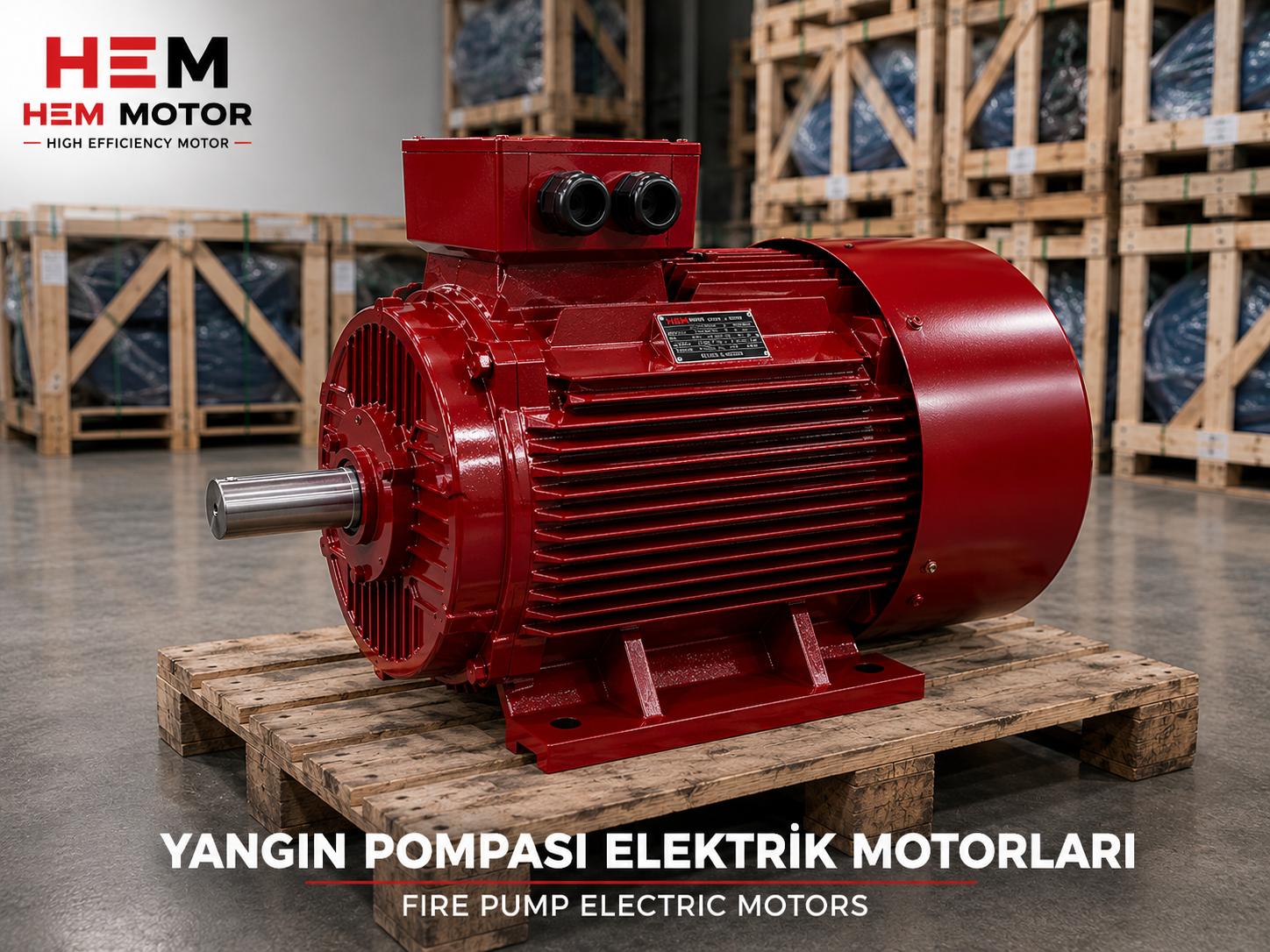
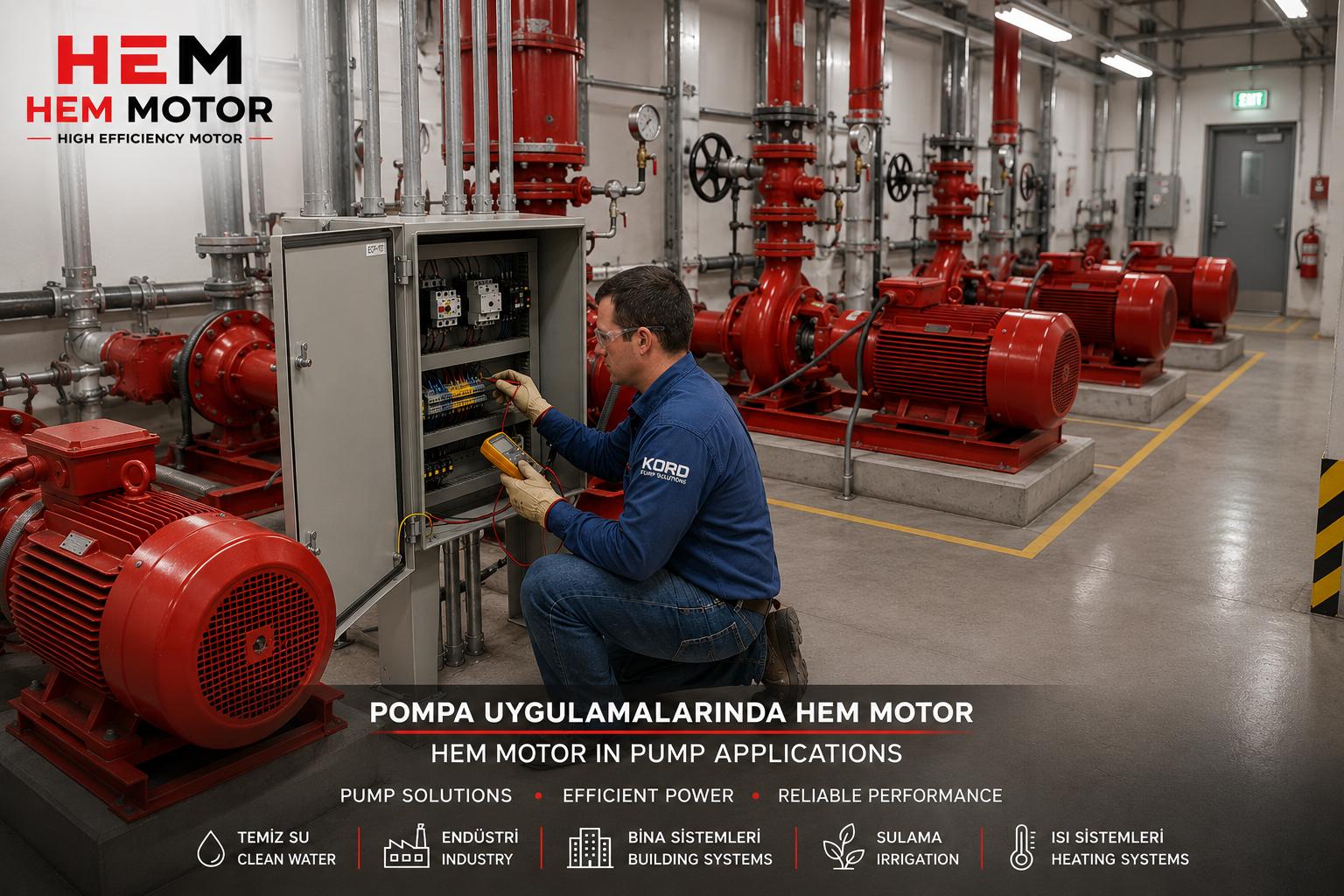
Fire and booster motors serve a very wide range of buildings. From high-rise residences to hotels and hospitals, from shopping malls to logistics warehouses, from factories and industrial zones to schools and public buildings, these motors form the basis of both life safety and water comfort. Sprinkler systems, fire cabinets and hydrant lines are the main applications a fire pump set feeds, while the booster that balances a building's water pressure carries steady flow to every tap.
- High-rise buildings: Main fire pump and booster set carrying pressure to upper floors.
- Hotels and hospitals: Uninterrupted water comfort and certified fire safety together.
- Malls and logistics warehouses: High-flow pump motor feeding a wide sprinkler network.
- Factories and industrial zones: Hydrant and process-water boosting in production areas.
- Estates and housing complexes: Booster set for balanced water distribution across multiple blocks.
Each application has a different fire load, floor count and water need, so motor power and duty type are chosen to the building. Correct matching secures both safety in a fire and daily water comfort.
Pressure and Continuous Operation in Building Boosters
A booster ensures balanced water pressure reaches every tap in a multi-storey building. Here the motor engages and disengages many times a day, so it must withstand a frequent start-stop profile. In modern boosters with a pressure tank and frequency control the motor turns under softer load, yet stable torque and low heating are still expected. A wrongly chosen booster motor either fails to hold pressure or wastes energy.
| System | Duty Profile | Required in Motor |
|---|---|---|
| Jockey pump | Frequent, short | Frequent start-stop endurance |
| Main fire pump | Rare, full load, long | Stability at high power |
| Building booster | Intermittent through the day | Continuous duty, low heating |
| Pressurisation set | Variable flow | Compatibility with frequency control |
When matching a motor to your booster set you can review our booster electric motors product page, and when replacing to suit your existing pump benefit from our booster motor replacement from the nameplate guide.
A Product Range Built from Power, Speed and Body Options
In fire and booster applications the motor is sized to the pressure and flow the pump requires. The pump's operating point sets the needed power, while the efficiency point of the pump curve fixes the right speed. Centrifugal fire and booster pumps usually produce high pressure with 2-pole (high-speed) motors, while 4-pole solutions are preferred where higher flow is needed. The HEM Motor range covers a broad power spread from a small building to a large facility.
- Power range: A broad kW spread from a small estate booster to a large facility's main fire pump.
- Speed options: 2-pole for high pressure, 4-pole for high flow.
- Mounting type: Flanged and foot bodies close-coupled directly to the pump.
- Duty type: Continuous (S1) for the main pump, frequent start-stop endurance for the jockey.
- Protection class: IP protection suited to a damp technical room and outdoor settings.
Correct power and speed selection determines both that pressure holds in a fire and the energy efficiency in daily duty. When you share the pump model and the required pressure-flow values, we confirm the close-coupled motor dimensions together.
Certification, Continuous and Intermittent Endurance
When fire safety is at stake, the motor's documents matter as much as its technical traits. The conformity declaration, insulation and temperature class certificates are required for the project approval of a fire pump set. As HEM Motor we offer motors suited to continuous (S1) and intermittent duty profiles with the necessary documentation. Continuous duty stands out in the main fire pump, while intermittent duty stands out in jockey and booster use; correct duty-type selection directly affects motor life.
For more technical detail on duty type and continuous endurance, see our guides and technical information articles. What to watch when choosing a fire pump motor is in our questions to ask when buying a fire pump motor article.
A Step-by-Step Road Map for Correct Motor Selection
Selecting a fire or booster motor becomes far safer with a few clear steps:
- 1. Define the system: Identify whether it is a jockey, a main fire pump or a booster.
- 2. Clarify pressure and flow: Determine the head and flow the pump requires.
- 3. Select the duty type: Continuous (S1) for the main pump, frequent start-stop for the jockey.
- 4. Match speed and power: Set kW and pole count to the pump curve efficiency point.
- 5. Verify documents: Confirm insulation and temperature class certificates for project approval.
- 6. Assess the setting: Choose the protection class to suit the technical room's humidity and temperature.
When you share these with us we make the right fire pump electric motor or booster motor selection together and quickly confirm the suitable body from stock.
Factors That Determine Price and the Manufacturer Advantage
The price of a fire or booster motor cannot be explained with a single item. The most decisive is the power and speed class, followed by duty type, protection class, body material, mounting type and the required documentation. Certified supply and a high insulation class suited to continuous duty are items that shape price. Our manufacturer identity removes the intermediaries and lets us set the price-performance balance in your favour, protecting both your budget and your project schedule.
Stock, Fast Quote and the Manufacturer Advantage
Fire and booster projects are usually tied to a delivery date; a motor delay holds up the whole system. That is why we keep the most used power and speed classes in stock and ship them to site fast once the quote is approved. Our manufacturer identity enables both rapid dispatch in the standard range and a flexible solution per project, turning the price-performance balance in your favour.
- Jockey pump motor: The pressure keeper that engages frequently.
- Main fire pump motor: Stable main power at full load.
- Booster motor: Intermittent duty for building pressure.
- Certified supply: Documents suited to project approval.
- Delivery from stock: Fast dispatch in frequently requested powers.
To choose the right motor for your fire pump or booster set, share the pump model and the pressure and flow values with us. Send a fast quote request to the HEM Motor sales team for same-day feedback. For fire pump bodies you can also review our fire pump electric motors category.
Maintenance, Testing and Keeping the System Ready
A fire pump set must be ready to run at every moment of its life, not just the day it is installed. Regular test runs, insulation resistance checks of the motor and monitoring of bearing condition are therefore critical. Keeping a motor idle for months ready through periodic tests guarantees it takes full load on the first attempt at the alarm. On the booster side, the pressure tank pre-charge and the motor's draw current should be checked regularly.
As HEM Motor we offer the fire pump and booster motors we produce under warranty and provide technical guidance on commissioning and periodic testing. A correctly installed and regularly tested system engages without hesitation when life safety requires it.
Why is a fire pump motor selected differently?
Because the motor must wait for months and take full load on the first attempt at the alarm. Its winding, insulation and bearing endurance are therefore kept higher and a motor suited to continuous duty is chosen.
Does a booster motor withstand frequent start-stop?
A correctly chosen booster motor is suited to engaging and disengaging many times a day. With frequency control it runs more softly; we recommend a motor that withstands intermittent duty for your application.
Are the jockey pump motor and main pump motor the same?
No. The jockey pump runs often but briefly; the main fire pump runs rarely yet at full load for a long time. These two profiles require different power and endurance, and we select both to suit the range.
Which documents are required for project approval?
Insulation and temperature class certificates and the conformity declaration are required for the project approval of a fire pump set. We offer motors suited to continuous duty with the necessary documentation.
What information should I give before buying?
The pump model, the required pressure and flow, and whether the system is a jockey, a main pump or a booster are enough. With these we clarify stock and price-performance and send a fast quote.
In a fire pump and booster motor, reliability, correct duty type and certified supply matter, and so do fast delivery and a clear price. Tell us your need and we will quickly present the right stock motor and a transparent quote, so your system is ready to engage.