 English
 Türkçe

The success of an industrial investment or a serial production project often depends on a decision far deeper than choosing individual motors: building the right procurement model. If you are setting up a facility that needs dozens or even hundreds of electric motors, buying piece by piece at retail logic both inflates your costs and pushes your delivery schedule into uncertainty. This is exactly where wholesale and project-based electric motor procurement becomes a critical advantage, both financially and technically. Buying directly from a manufacturer removes the intermediate layers, simplifies pricing, clarifies delivery planning and lets you receive engineering support straight from the source.
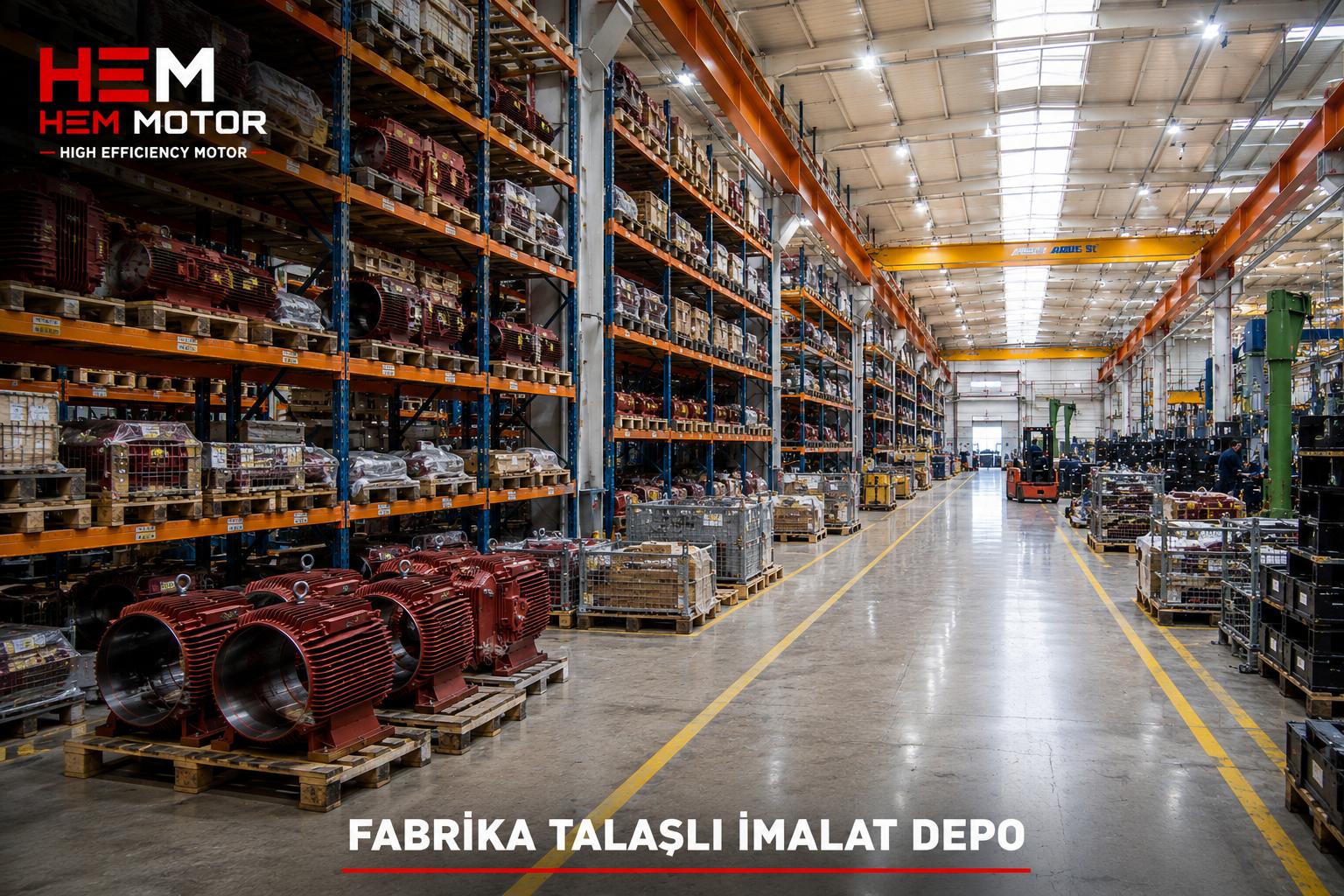
At HEM Motor, we treat the needs of contractors, OEM manufacturers, panel builders and large-scale facility investors not as isolated order lines but as a complete project. A single project may require motors in dozens of different power ratings, speeds and mounting types; supplying all of them to the same standard, within the same delivery window and in the same technical language is simply not possible through scattered purchasing. A stock-holding manufacturer approach, meaning continuously keeping ready stock in key power ranges, is the strongest assurance that your project timeline will not be derailed by motor supply.
In this article we will explain in detail why project-based and wholesale motor supply produces the highest value when sourced from the manufacturer, in which situations requesting a project quote makes sense, what information you should prepare during the quotation process, and how standardization and framework agreements pay off over the long term. Our goal is to give you a clear roadmap before you enter your next major procurement.
The Core Advantage of Buying Direct from a Manufacturer
When you buy an electric motor from a dealer, a distributor or an intermediary supplier, the price you pay contains more than the cost of the product; every intermediary adds its own margin, stock-risk premium and logistics profit. Direct electric motor procurement from the manufacturer means shortening this chain. When the intermediate layers disappear, the unit price improves significantly, especially in high-volume purchases, and that difference is felt directly in the project budget.
Yet the value of buying from the manufacturer is not limited to price. The real difference appears in the technical dialogue. An intermediary supplier can only sell you the product listed in the catalogue; when you speak with the manufacturer, you can discuss everything at an engineering level, from the winding structure and cooling class to mounting solutions and special shaft dimensions. If a motor in your project has a non-standard requirement, this can only be resolved through direct contact with the manufacturer. Running the electric motor selection process from the very start with the manufacturer's technical team eliminates incompatibilities while still at the project stage.
The third major advantage of manufacturer sourcing is continuity and traceability. When you order 50 motors today and need another 50 of the same specification tomorrow, a manufacturer-based supply relationship guarantees that you receive the same winding, the same performance and the same quality again. While different batches may come from different sources through intermediary channels, consistency is fundamental in manufacturer supply.
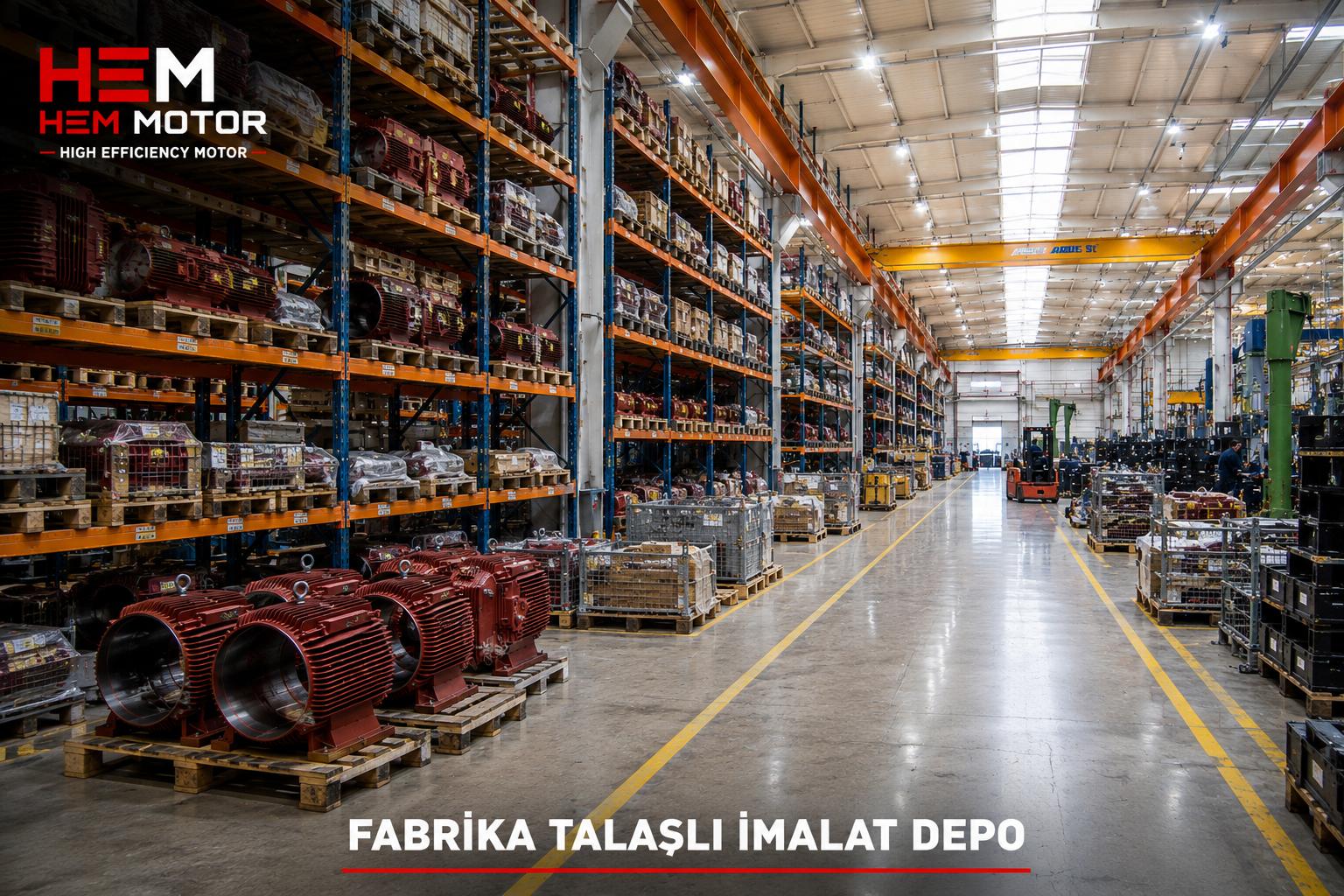
The Stock-Holding Manufacturer: Insurance for Your Delivery Schedule
One of the greatest risks in project management is a critical component not arriving on time. Since the electric motor is the heart of most mechanical and process lines, a motor delay pushes back the entire commissioning schedule. That is why stocked electric motor supply is not a luxury but a necessity in serious projects.
The stock-holding manufacturer approach means that products in the most demanded power and speed ranges are kept ready and waiting. For the vast majority of standard three-phase asynchronous motors, this means fast dispatch after the order without waiting in the production queue. Keeping continuous stock especially in the three-phase electric motor families ranging from 0.75 kW into the medium-to-high power band makes it possible to respond quickly to your project's urgent needs as well.
Stock management also means being able to plan staggered deliveries. In a large project, not all motors are needed at the same moment; motors come into service at different times according to the assembly sequence. When you work with a stock-holding manufacturer, you can slice deliveries according to your project's real timeline, achieving just-in-time supply without creating unnecessary on-site storage costs or damage risk.
Why Is Supply Reliability So Important?
For a contractor or an OEM manufacturer there are contractual delivery dates, and when those dates are missed, penalty clauses, reputational loss and cash-flow problems come into play. Supply reliability, meaning that the order arrives on the promised date and to the promised specification, therefore ranks even above price as a criterion. A low-priced supply with uncertain delivery often turns into the most expensive option due to the indirect costs of delay. Working with a reliable electric motor supplier protects the time dimension of your project, which is at least as important as the motor itself.
How Does Project-Based Pricing Work?
When buying a single motor, the list price applies; but when a project of 30, 100 or 500 motors is involved, pricing works with a completely different logic. Project-based electric motor pricing evaluates the total volume of the purchase, the product mix, the delivery schedule and the continuity of the relationship as a whole. For this reason, project quotes are always more advantageous than the sum of line-by-line retail prices.
Several core factors determine project pricing. The first is total quantity and power distribution: a large number of motors of the same type simplifies production and stock planning, opening the door to better conditions. The second is delivery flexibility: a planned, predictable delivery with a clarified schedule is priced far more efficiently than urgent and scattered demands. The third is whether the relationship is long-term; repeat purchases and framework agreements create more predictable conditions.
A transparent project quote should clearly include not only the unit price but also the delivery schedule, validity period, technical specification list and scope. Obtaining a direct manufacturer quote for current electric motor prices and your project conditions is the right way to place your procurement on a solid budgetary foundation. This way you build your project's financial planning on real figures rather than estimates.
Engineering Support and Motor Selection
An aspect of wholesale buying that is at least as valuable as price is the technical support that helps you choose the right product. In a large project involving hundreds of kW of total power, oversizing every motor unnecessarily increases both the initial investment and the operating energy cost. Conversely, undersizing leads to failures and downtime. A selection process carried out with the manufacturer's engineering team ensures that the most appropriate power and efficiency class is determined for each application.
Energy efficiency sits at the center of project procurement today. Although high-efficiency motors may look slightly more costly in the initial investment, in continuously running applications they recover the difference quickly through energy savings. For this reason, choosing high efficiency classes such as the IE3 electric motor in projects both lowers operating costs and is a future-proof decision in terms of compliance with energy regulations. In a technical discussion with the manufacturer, it is assessed clearly which efficiency class genuinely delivers payback in which applications.
Engineering support is not limited to motor selection either. Many technical details such as mounting type (foot, flange, foot-flange), protection class, insulation suited to ambient conditions, compatibility with frequency inverter operation and special shaft-bearing solutions must be decided correctly at the project stage. Trying to solve these on site wastes both time and money; early technical dialogue with the manufacturer ends these issues at the source.
Standardization for Contractors and OEM Manufacturers
Instead of using dozens of different motors in a project, steering toward a standard motor family as much as possible fundamentally simplifies project management. Motor standardization across a project simplifies both spare-parts management and maintenance processes. When motors from the same series are used, the field technical team only needs to master a single product family; there is no separate learning curve for each motor.
For OEM manufacturers, standardization means stability of the production line. When a machine builder can use the same motor in every batch of its product, assembly times become predictable, quality consistency improves, and the warranty commitments given to the end customer rest on a solid foundation. Manufacturer-based standard supply is indispensable for this consistency.
Another dimension of standardization is the spare-motor strategy. When a limited number of different motor types are used across the project, the number of spare motors that must be kept for critical production lines also decreases. A single spare can come to protect multiple points. This both frees up capital and enables rapid intervention in case of failure.
What to Pay Attention to in Wholesale and Project Supply
For a successful project supply, clarifying each of the following items in advance keeps the process running smoothly:
- Complete motor list (BOM): The power, speed, mounting type and quantity of every motor should be collected in a single table so the quote is complete and comparable.
- kW distribution and quantities: How many units of each power are needed should be clarified; this information is the basis of both stock and price planning.
- Delivery schedule: The sequence and timing in which motors are needed on site should be defined; any need for staggered delivery should be shared up front.
- Efficiency class preference: High efficiency class for continuously running applications and standard class for short-duty applications should be evaluated.
- Ambient and mounting conditions: Conditions such as dust, humidity, temperature and outdoor placement, as well as mounting geometry, should be stated in advance.
- Inverter compatibility: For motors that will run under frequency control, this requirement should be specified at the quotation stage.
- Framework agreement need: If repeat purchases are planned, discussing long-term conditions from the start is beneficial.
Framework Agreements and Long-Term Cooperation
A one-off large purchase is valuable in itself; but real supply assurance emerges when recurring needs are tied to a framework agreement. Framework-based electric motor supply allows you to purchase certain motor types under previously agreed conditions over a defined period. This structure is advantageous for both sides, as it offers the buyer predictability and the manufacturer a plannable demand.
The most concrete benefit of framework agreements is price and delivery predictability. Instead of renegotiating with every order, you can place orders quickly within the scope of the agreement, while the manufacturer, knowing your annual requirement, can build its stock and production plan accordingly. This is the most reliable form of supply chain, especially for OEM companies that produce regularly.
Long-term cooperation also means the preservation of accumulated technical knowledge. As the manufacturer comes to know your applications, your preferred configurations and your past projects, it can produce faster and more accurate solutions with every new order. This institutional memory is a value that never forms across scattered supply channels.
How to Request a Project Quote
The path to obtaining a solid project quote runs through conveying the request as completely and clearly as possible. The more information you share, the more accurate and comparable the returned quote will be. An ideal project request should contain the following: the power (kW) list of the motors, their speeds, mounting types, the required efficiency class, total quantities, the delivery schedule and any special technical requirements.
If you have a ready bill of materials (BOM) in hand, sharing it directly greatly accelerates the process. Even without a BOM, the manufacturer's technical team can help with the correct motor selection from a short description of the applications. What matters is conveying clearly which motor will operate where and under which conditions. A request sent with uncertainty can only be answered with an uncertain quote.
When you structure the quotation process correctly, what arrives in your hands is not merely a price; it is a complete supply solution including a delivery plan, a technical specification breakdown and a supply guarantee. Obtaining a direct manufacturer quote for your wholesale and project-based purchases is the most sensible way to protect both your budget and your schedule.
Frequently Asked Questions
What is the minimum number of motors needed to request a project quote?
There is no fixed lower limit; the deciding factor is not quantity so much as whether the purchase carries the integrity of a project. Any need consisting of related motors with a plannable delivery schedule can be evaluated on a project basis. As a general rule, as the quantity and total power increase, the advantage of project conditions becomes more pronounced. The best approach is to share your requirement list and assess together whether your purchase is suitable for a project quote.
What is the difference between delivery from stock and a production order?
Delivery from stock means that the requested motor is held ready in the most commonly used standard power and speed range and is dispatched quickly without waiting in the production queue. A production order comes into play when a non-standard special configuration or a very large quantity is required, and it involves a defined production time. The value of the stock-holding manufacturer approach is that it can meet most standard needs with fast delivery while offering a planned schedule for special needs.
What information should I prepare when requesting a quote?
Ideally it is enough to prepare the kW power list of the motors, their speeds, mounting types, the desired efficiency class, how many of each type are needed and the delivery schedule. Sharing a bill of materials (BOM), if available, speeds up the process. If details such as operation with a frequency inverter, special ambient conditions or special shaft-bearing requirements are also stated up front, the returned quote will be both more accurate and ready to implement.
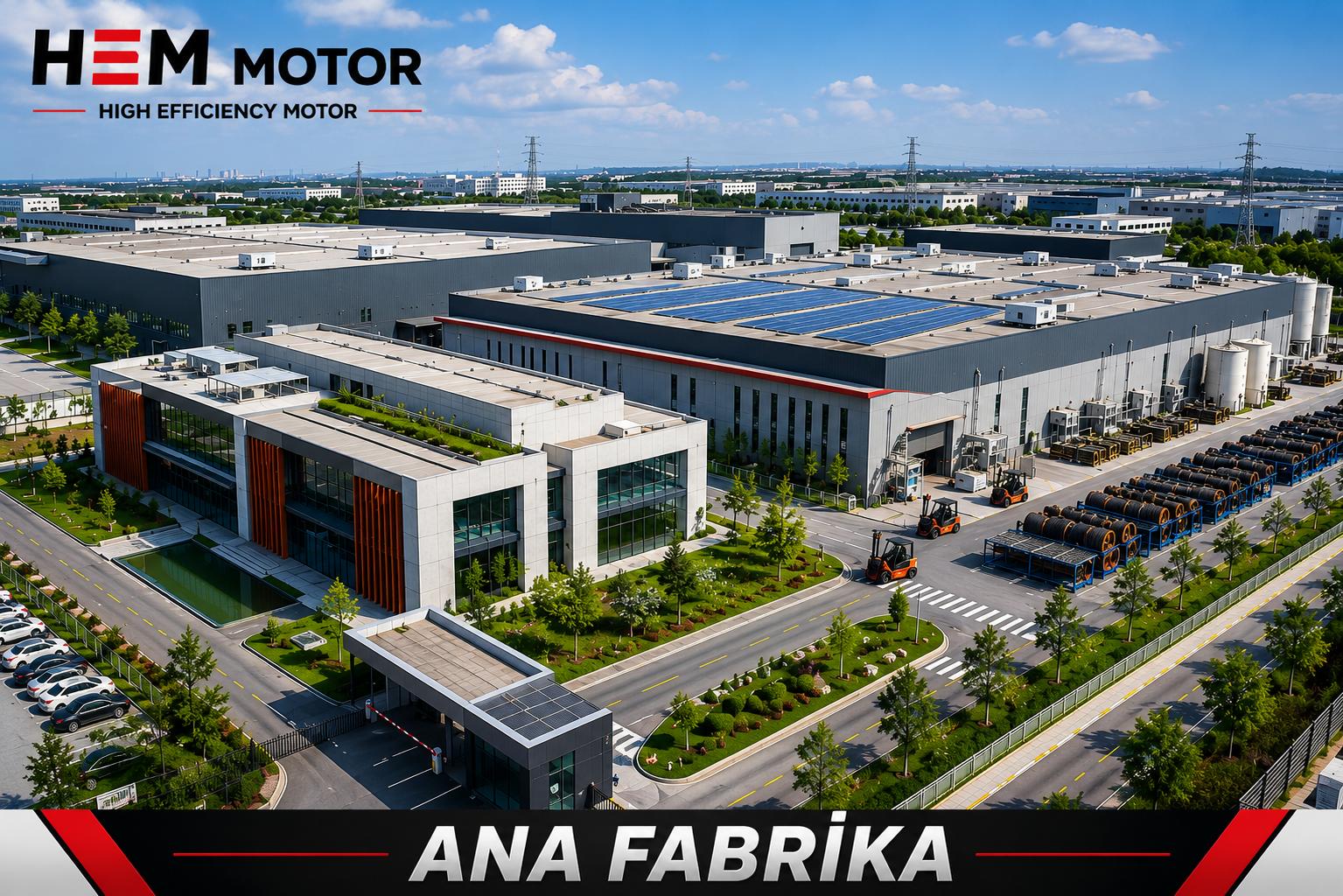
In wholesale and project-based electric motor procurement, direct supply from the manufacturer means not only a better unit price but also more reliable delivery, stronger technical support and long-term continuity. Whatever the scale of your project, once you clarify your requirement list and convey it to the right source, motor supply ceases to be a risk item in your project and becomes a solid foundation. At HEM Motor, with our stock strength and engineering support, we stand alongside your projects.