 English
 Türkçe

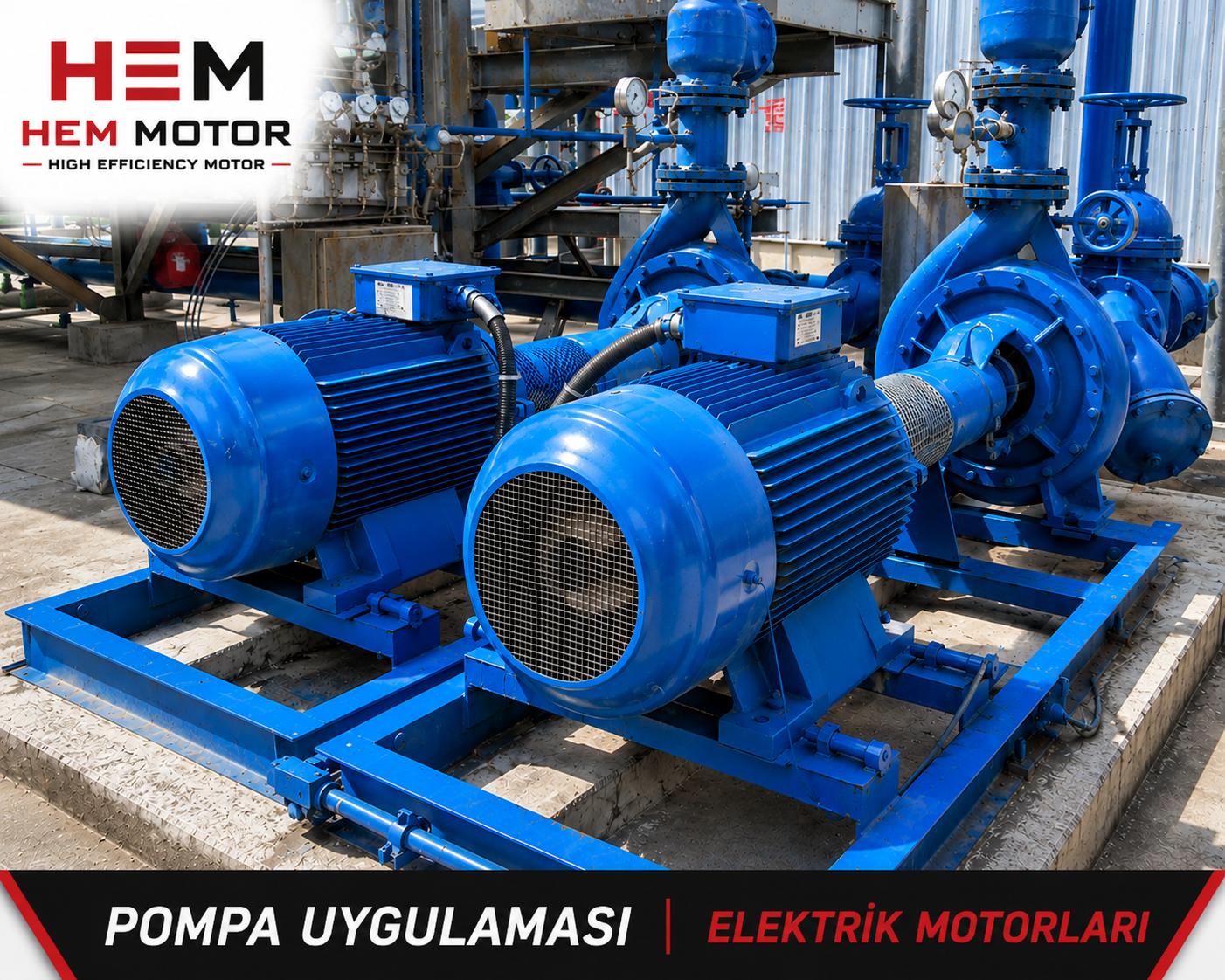
Pump and fan applications are the two main areas where the electric motor is most intensively used in industry. Water supply, wastewater, cooling, ventilation, process circulation and countless operations are carried out with these two application groups. This prevalence makes fast supply of the correct motor from stock extremely important, because a stopped pump or fan, in most plants, means a direct loss of production or comfort. Selecting a pump and fan electric motor therefore requires both determining the correct technical features and being able to supply quickly.
Pump and fan applications have their own characteristics from the motor's perspective. Both typically create a variable torque load: the power drawn by the motor changes rapidly with speed. This feature directly affects both motor sizing and the use of speed control (a drive). The correct pole count, the correct efficiency class and the correct mounting type determine whether the pump or fan runs efficiently and with a long life.
In this article we address the technical features of pump and fan motors, the correct selection criteria and the advantage of fast supply from stock. Our goal is to help businesses both select the correct motor and preserve production and service continuity by procuring it in the shortest time.
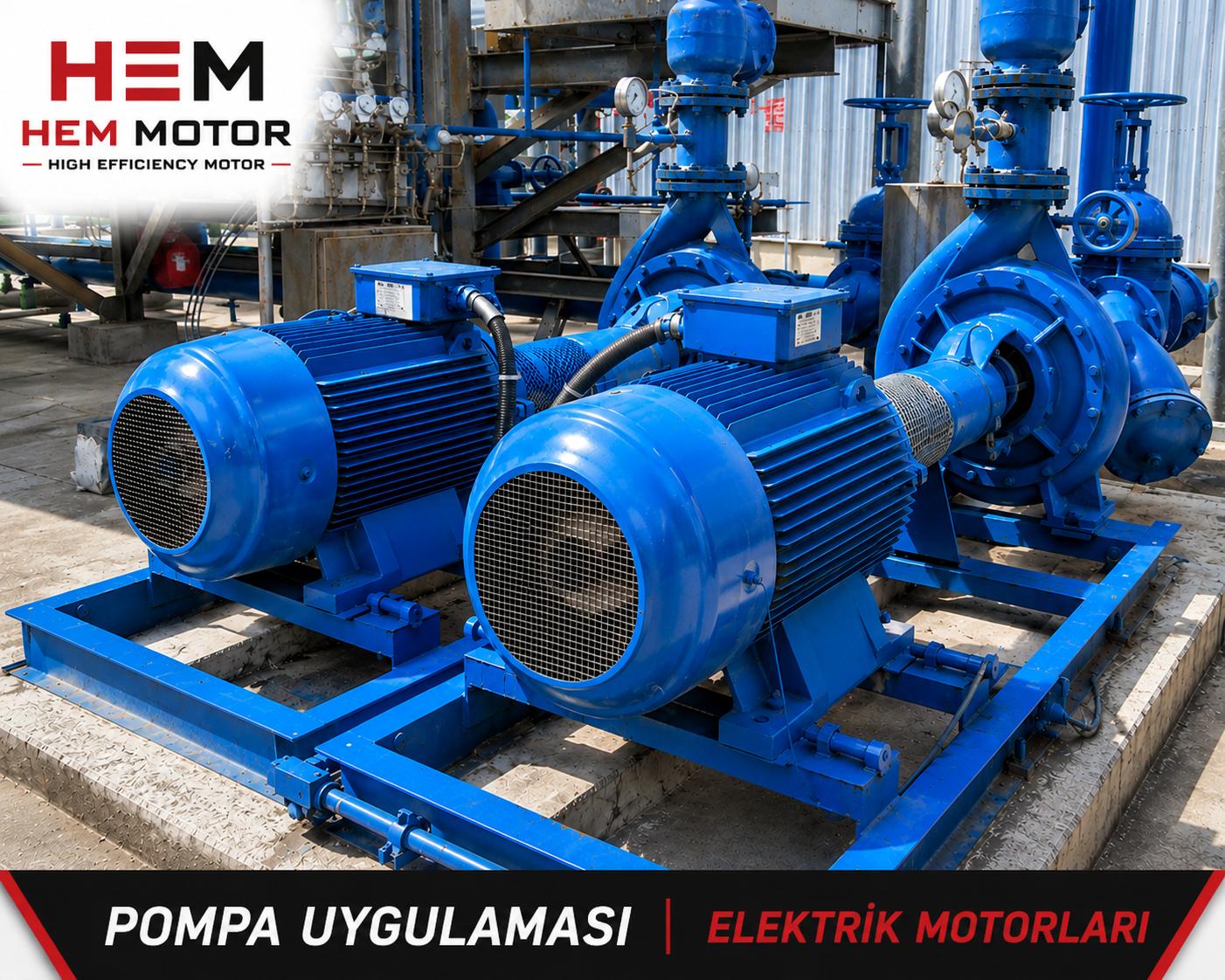
Motor Characteristics in Pump and Fan Applications
Pumps and fans are classified in engineering as "variable torque" loads. In these applications, the required torque varies in proportion to the square of speed, and the power in proportion to the cube of speed. This relationship explains why speed control is such an effective energy-saving method: lowering the speed slightly reduces the drawn power much more. For this reason, the use of a frequency inverter (drive) is common in pump and fan applications.
Pump Motors
In pump applications, the correct speed directly determines the head and flow rate. In centrifugal pumps, speed is the fundamental variable of the performance curve. Correct pump electric motor selection becomes possible by capturing the power and speed suited to the pump's operating point. Oversizing causes the pump to run at an inefficient point and wastes energy; undersizing causes the flow rate not to be met.
Fan Motors
Fan applications involve a high inertia load. For the fan blade to start turning, the motor must initially provide a high starting torque. Moreover, fans usually run continuously for a long time, which makes the efficiency class stand out. A high-efficiency fan electric motor significantly lowers the energy cost in continuously running ventilation and cooling systems.
Criteria in Correct Motor Selection
When selecting a pump and fan motor, several basic criteria must be evaluated together. These criteria ensure the motor runs fully matched to the application and efficiently.
- Power (kW): Must be determined according to the real power need of the pump or fan at its operating point.
- Speed (pole count): The speed the application requires is provided by the correct pole count.
- Efficiency class (IE): IE3 and IE4 classes stand out in continuously running applications.
- Drive compatibility: If speed control is needed, the motor must be selected as suitable for drive operation.
- Protection class (IP): High IP protection is required in pump motors operating in wet environments.
- Mounting type: Flange (B5/B14) or foot (B3) mounting is chosen according to the pump.
When these criteria are determined correctly, the motor both fully matches the pump or fan and runs at the point closest to its plate efficiency. A wrongly selected motor, whether oversized or undersized, leads to both energy loss and early failure.
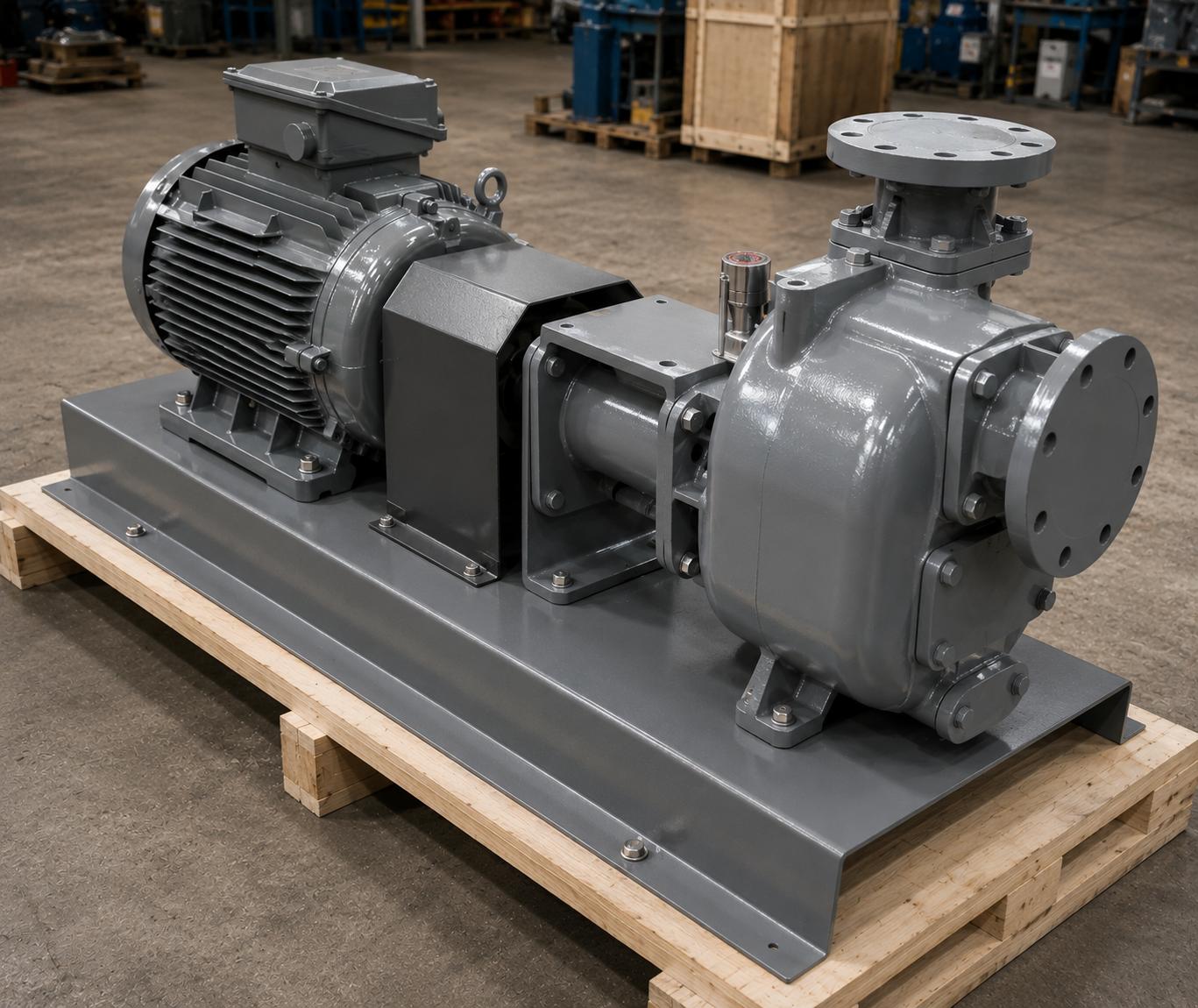
The Advantage of Fast Supply from Stock
The biggest advantage of pump and fan motors is that, being standard, they can be supplied quickly from stock. In applications such as water supply, cooling and ventilation, a motor failure usually requires urgent intervention. Keeping the most demanded power, pole and efficiency class combinations ready prevents production or service interruption in these emergencies.
The pump and fan electric motor products in standard power ranges can usually be dispatched quickly from stock. In applications requiring special configuration, the technical team determines the most suitable solution and clarifies the supply process. Correct guidance prevents the purchase of the wrong product and the associated loss of time.
Energy Efficiency and Payback
Since pump and fan applications usually run for a long time, the efficiency class directly affects the energy cost. A high-efficiency motor provides significant annual savings in a continuously running pump or fan. This saving often pays back the initial investment difference in a short time. Combined with speed control, the energy saving reaches much higher levels.
Variable Torque Load and the Importance of Speed Control
The most defining feature of pump and fan applications is that they create a variable torque load. Since the power drawn in these applications is proportional to the cube of speed, when the flow or air stream needs to be partly reduced, lowering the motor's speed is far more efficient than throttling a valve or damper. Half-closing a valve wastes energy, while lowering the speed reduces the drawn power considerably. For this reason, the use of a frequency inverter in pump and fan systems is one of the most effective tools of energy management.
When selecting a pump and fan electric motor to run with speed control, the motor must be compatible with the drive. In motors that will run at low speeds for a long time, the cooling of the frame-mounted fan may be insufficient; in that case a model with external (forced) cooling should be preferred. In addition, insulation strength and, where needed, winding protection gain importance in motors running with a drive. The correct selection secures both energy savings and the motor's life.
System Curve and Operating Point
The efficiency of a pump or fan depends not only on the motor's efficiency but also on the system's operating point. The point where the pump curve and the system curve intersect is the real operating point. When the motor is selected to match this point, both the pump and the motor run in the most efficient range. A wrong selection shifts the operating point to an inefficient zone, causing both energy loss and mechanical strain. For this reason, motor selection must be evaluated together with the whole system.
Maintenance and Reliability
The reliability of pump and fan motors depends on regular maintenance as much as on correct selection. In pump motors operating in wet environments, regular checking of sealing elements and the protection class prevents water from entering the motor. In fan motors, bearing condition and balancing must be monitored regularly for vibration and noise. A small wear detected early can be remedied before it turns into a major failure.
In continuously running critical pumps and fans, keeping a spare motor or having a fast supply guarantee is the most effective way to prevent unplanned stoppages. A standard fan electric motor or pump motor provides this security because it can be supplied quickly from stock. When correct maintenance and fast supply are combined, the system's availability is maximized and unexpected costs are minimized. You can review our product groups on the IE4 electric motor page, use our kW and HP power guide for power selection, and reach all our services through the homepage.
Sizing for Real Demand
One of the most common mistakes in pump and fan systems is sizing the motor for a peak condition that rarely occurs and then running it permanently at low load. This keeps the motor in a band where both efficiency and power factor are poor, so the high plate efficiency is never realized in the field. The correct approach is to size the motor for the real, typical operating demand and to handle occasional peaks through proper system design or speed control rather than permanent oversizing.
Starting Characteristics and Inertia
Pump and fan motors differ in their starting behavior, and understanding this difference is essential for correct selection. Fans, especially large industrial fans, carry a high rotational inertia. When the motor starts, it must accelerate a heavy rotating mass up to speed, which can prolong the starting time and heat the motor. If the start is too long or too frequent, the windings can overheat, so the motor and its protection must be selected with the inertia in mind. In some cases a soft starter or a drive is used to limit the starting current and ease the acceleration.
Centrifugal pumps, by contrast, usually present a lighter starting load because the torque demand rises with speed rather than being high from standstill. However, pumps bring their own concern: operating against a closed or throttled valve, or running dry, can damage both the pump and the motor. A correctly selected pump electric motor together with proper control and protection avoids these conditions. Considering the starting characteristics, inertia and protection together ensures the motor reaches its operating point safely and runs reliably for years without nuisance trips or premature wear.
Frequently Asked Questions
What should I consider when selecting a pump motor?
When selecting a pump motor, you should first determine the real power need at the pump's operating point, then choose the required speed (pole count) and efficiency class. In motors operating in wet environments, high IP protection, flange mounting suited to the pump and correct sealing are important. Avoiding oversizing ensures the pump runs at an efficient point.
Why is the efficiency class important in a fan motor?
Fans usually run continuously for a long time. Therefore, the efficiency class directly determines the annual energy cost in a fan motor. A high-efficiency fan motor provides significant savings in continuously running ventilation and cooling systems and pays back the initial investment difference in a short time. Combined with speed control, the saving grows even further.
How quickly are pump and fan motors supplied?
Pump and fan motors in standard power, pole and efficiency class combinations can usually be dispatched quickly from stock. Since a motor failure in applications such as water supply, cooling and ventilation requires urgent intervention, this speed is of great importance. In applications requiring special configuration, the technical team determines the most suitable solution and clarifies the supply process.