 English
 Türkçe

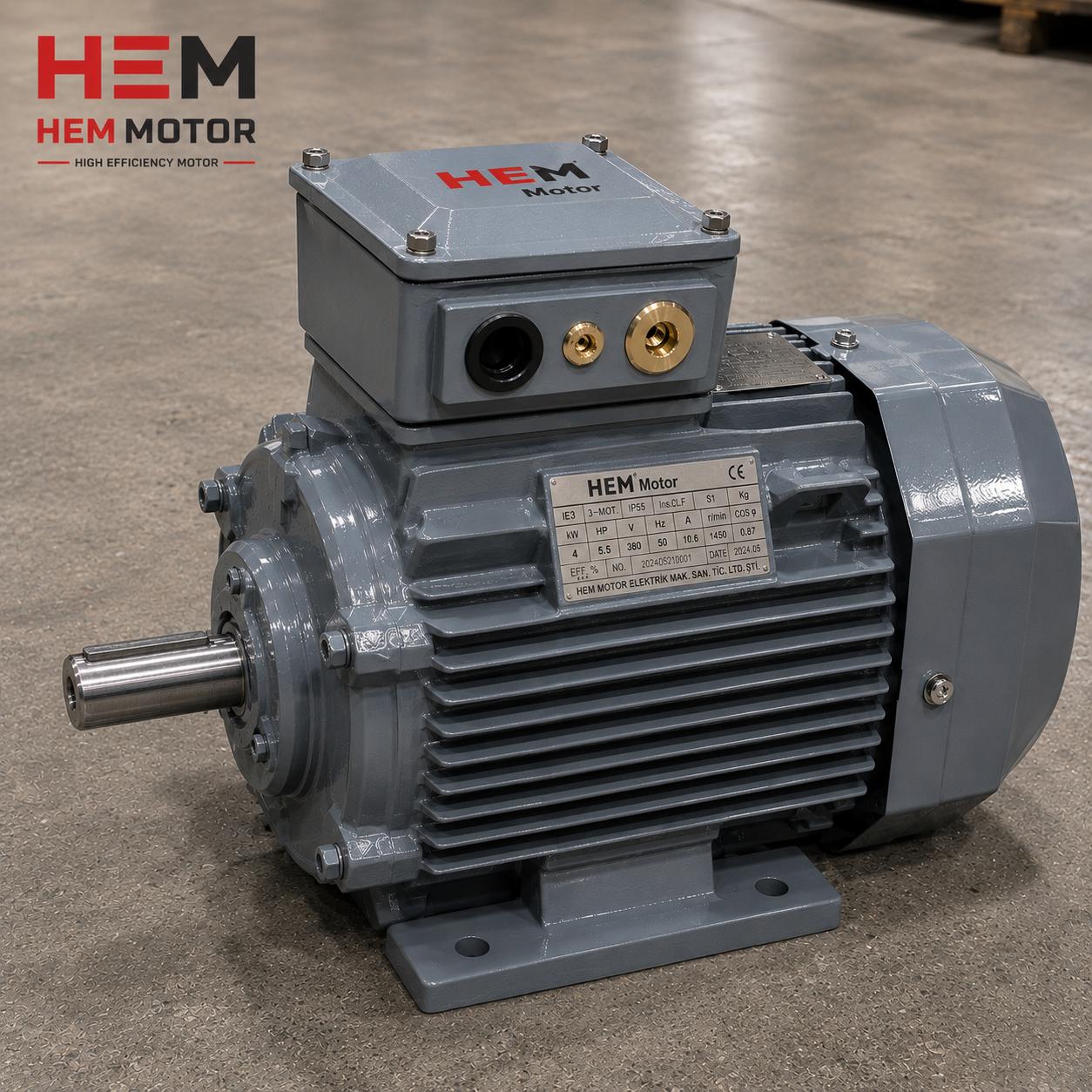
Industrial, that is general-purpose electric motors, form the most widely used motor class in industry. Pumps, fans, conveyors, compressors, gearboxes and countless machine drives are realized with these motors. The "general-purpose" definition expresses that the motor has a standard design suited not to a single specific application but to a wide range of uses. This standardization provides a great advantage in both production and supply, because the most demanded power, pole and efficiency class combinations can be procured quickly from stock. Selecting an industrial electric motor therefore begins with determining the correct power and efficiency class.
The price of general-purpose motors varies with power, pole count, efficiency class, frame material and mounting type. The IE2, IE3 and IE4 versions of a motor of the same power sit at different price levels; however, the energy savings provided by the higher efficiency class often pay back the initial investment difference in a short time. For this reason, the purchase decision should be based not only on the label price but on the lifetime cost.
In this article we address the technical features of industrial general-purpose electric motors, the factors affecting price and the correct purchasing approach. Our goal is to help businesses both select the correct product and make a long-life investment at the most suitable cost.
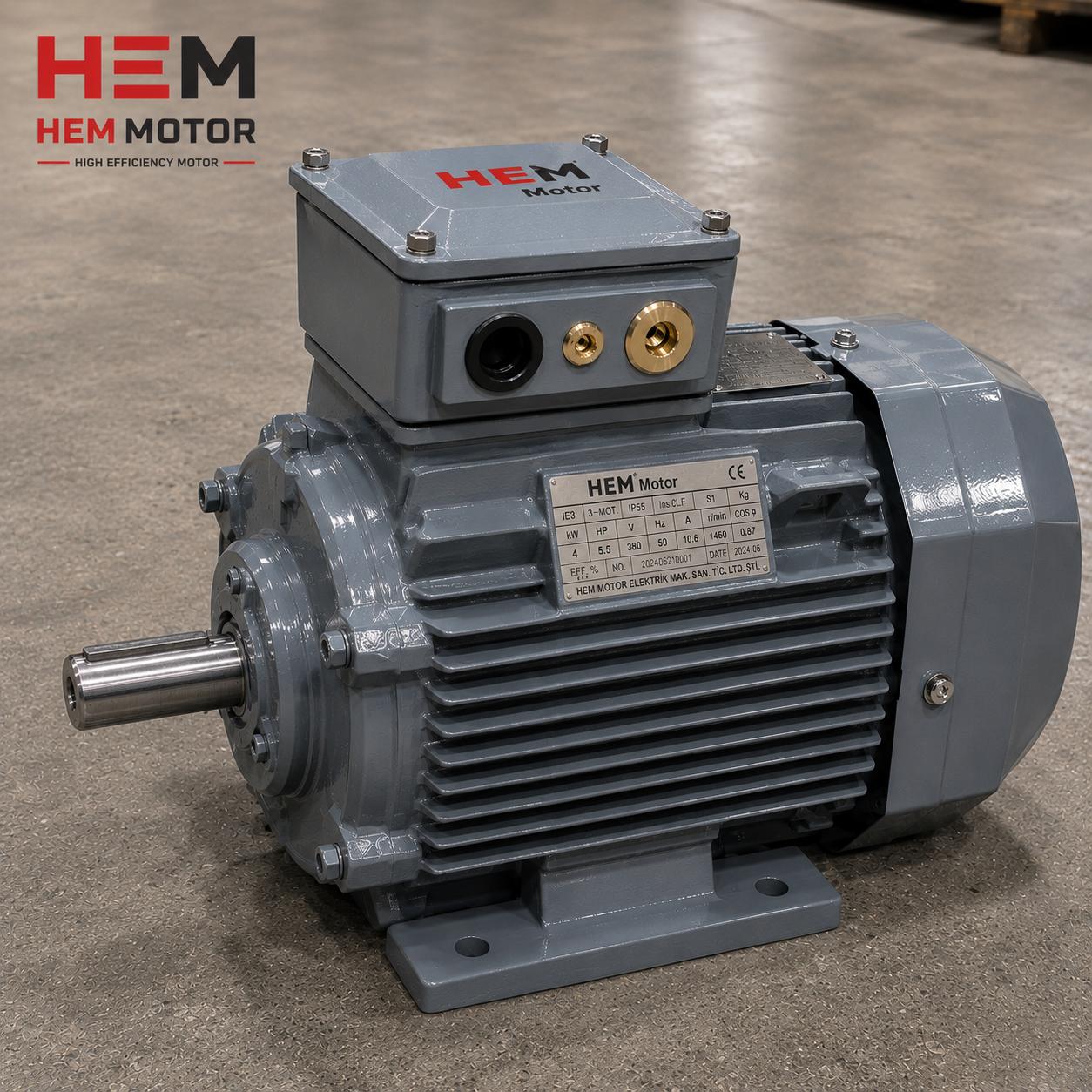
Technical Features of the General-Purpose Electric Motor
General-purpose motors are based on a standard asynchronous (induction) motor architecture. They are fed from a three-phase grid, have a squirrel-cage rotor structure and operate reliably at constant speed. The biggest advantage of these motors is that they can run smoothly across a wide range of applications and provide ease of spare parts and maintenance. Thanks to standard frame sizes, mounting compatibility is largely preserved even between different brands.
Power and Pole Count
General-purpose motors are produced across a very wide power range. The pole count determines the motor's speed: a 2-pole motor turns at about 3000 rpm, a 4-pole at 1500 rpm, a 6-pole at 1000 rpm and an 8-pole at around 750 rpm. The speed the application requires is met by selecting the correct pole count. In applications such as pumps and fans, where speed directly determines performance, pole selection is critically important.
Efficiency Class
General-purpose motors are offered in IE2, IE3 and IE4 efficiency classes. European Union regulations make at least the IE3 class mandatory across many power ranges. In continuously running applications, the IE4 electric motor stands out with the energy savings it provides. As the efficiency class rises, the motor's losses decrease, the operating temperature drops and its life is extended.
Factors Affecting General-Purpose Motor Price
Knowing the main factors that determine the price of industrial motors is necessary for a correct purchasing decision. The price depends not on a single variable but on multiple technical features.
- Power (kW): As power increases, the motor's material quantity and price increase.
- Efficiency class: IE3 and IE4 motors are priced higher than IE2 because they contain more and higher-quality active material.
- Frame material: A cast iron frame is more durable than aluminum and is usually priced higher.
- Pole count: Low-speed (6/8 pole) motors are priced differently because they require a larger frame at the same power.
- Mounting type: Foot, flange or combined mounting can affect the price.
- Protection and special equipment: Additional equipment such as high IP protection, thermistors and heaters is reflected in the price.
When these factors are evaluated together, the reason for the price difference between two motors becomes clear. What matters is to choose not the cheapest motor but the one most suitable for the application and with the lowest lifetime cost.
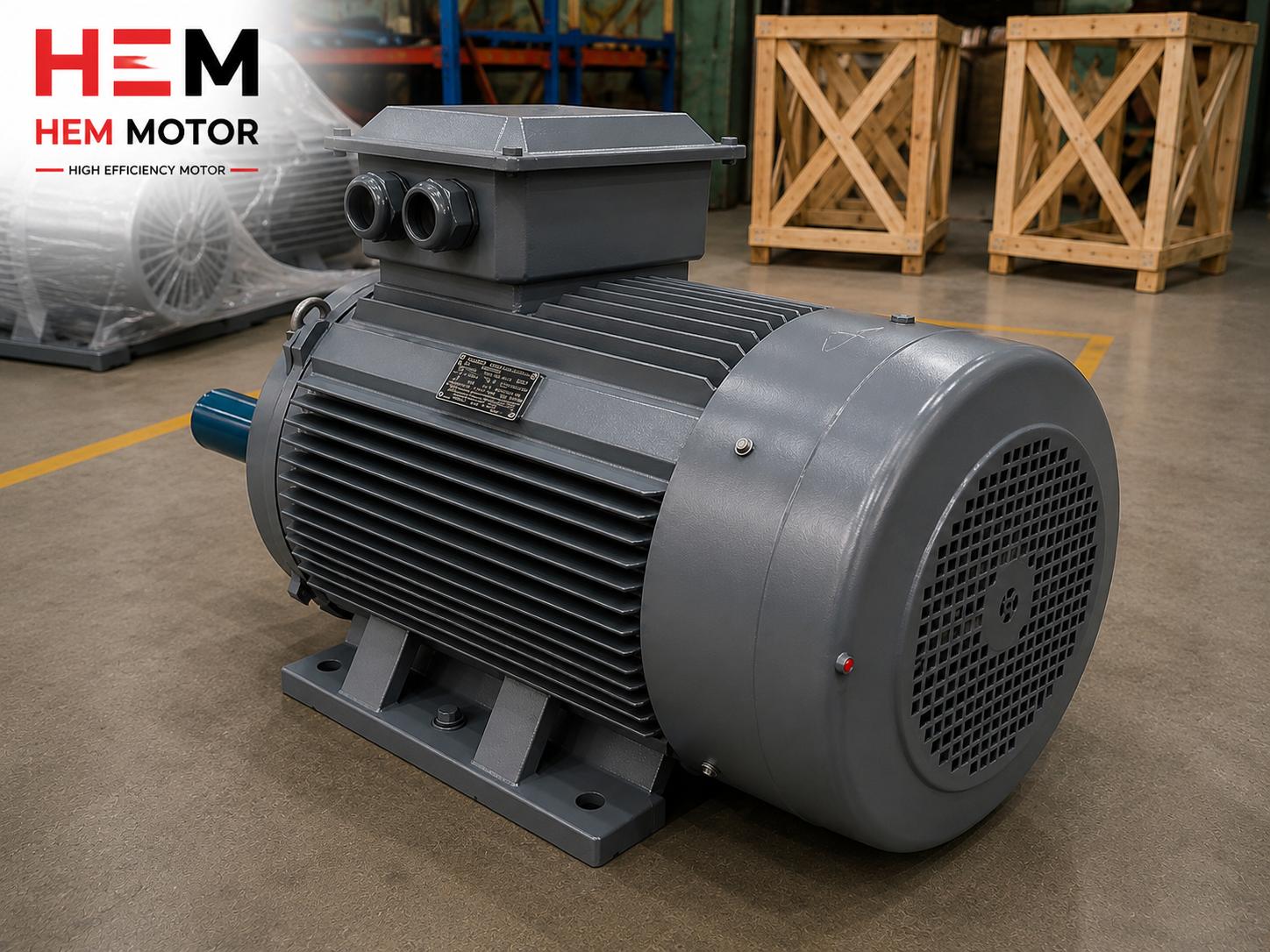
The Correct Purchasing Approach: Lifetime Cost, Not Label Price
The purchase price of an electric motor is small next to the energy it consumes over its life. In a typical continuously running industrial motor, the initial investment makes up only a small portion of the total cost of ownership; the large remainder is the energy cost. For this reason, looking only at the label price when making a purchase decision is misleading. The correct approach is to calculate the lifetime cost by evaluating the motor's annual operating hours, average load factor and efficiency class together.
When this calculation is made, it becomes clear how long it takes for a higher-efficiency general-purpose electric motor to pay back the initial investment difference. In multi-shift applications, this period is often quite short, and the high-efficiency motor leaves a serious net gain over its life.
Fast Supply from Stock
One of the biggest advantages of general-purpose motors is that, being standard, they can be supplied quickly from stock. When the most demanded power, pole and efficiency class combinations are kept ready, a long stoppage of the production line is prevented in an unexpected failure or an urgent capacity increase. This speed is critically important, especially for plants in continuous production.
Which Motor for Which Application?
Although general-purpose motors address a wide range of applications, each application has its own needs. In pump applications the correct speed and torque curve stand out, in fan applications low starting torque and high inertia load, and in conveyors high starting torque. Correct motor selection becomes possible by matching these characteristics to the application.
With a wide range of power and efficiency classes, it is possible to find a suitable industrial electric motor for every application. You can review our product groups on the IE4 electric motor page, benefit from our kW and HP power guide for power and speed selection, and our pole selection guide for pole selection. You can reach all our products and services through the homepage.
Quality Indicators in a General-Purpose Motor
When comparing prices, it is not enough to look only at power and efficiency class; the motor's quality indicators must also be considered. Even if two motors are in the same IE class, the winding material used, the insulation class, the bearing quality and the frame workmanship create significant differences in life and reliability. One-hundred-percent copper windings, F class insulation and quality bearings ensure the motor runs with a long life and low failure risk.
The insulation class determines the maximum temperature the motor's windings can withstand. A motor with F class insulation but designed to operate at a B class temperature rise has a wide thermal reserve. This reserve preserves the motor's life in hot environments or under high load. Therefore, when selecting an industrial electric motor, the insulation and temperature rise class should be evaluated as much as the efficiency value on the plate.
Bearings and Mechanical Durability
The reliability of general-purpose motors depends largely on bearing quality. Correctly selected, quality bearings reduce vibration and extend the motor's maintenance interval. Especially in high-speed 2-pole motors, balancing quality and bearing selection are critically important in terms of vibration and noise. In a quality motor, these details are invisible but directly determine its life.
Renewal and Fleet Management
For plants housing many motors, the correct approach is to manage the motor fleet as a whole. When it is documented how long each motor runs, at what load factor it turns and which efficiency class it is in, renewal priorities clearly emerge. When the most-used and least-efficient motors are replaced first with high-efficiency models, the fastest energy savings are achieved.
This approach allows the renewal investment to be made not randomly but based on data. Replacing an old IE1 or IE2 motor with a correctly sized IE4 electric motor pays for itself in a short time in continuously running applications. The fleet management mindset is made easier by the standard structure of general-purpose motors, because the replacement can be done while largely preserving mounting compatibility.
Standardization and Spare Parts Advantage
One of the less visible but highly valuable benefits of general-purpose motors is their standardization. Because their frame sizes, shaft dimensions and mounting interfaces follow international norms, a motor from one supplier can usually be replaced by an equivalent from another without redesigning the machine. This compatibility reduces downtime during a failure and simplifies long-term maintenance planning. A plant that standardizes its motor fleet around common frame sizes can keep fewer spare units while still covering many machines.
This standardization also protects the buyer against long lead times. When a specialized, custom motor fails, replacement can take weeks; when a standard industrial electric motor fails, an equivalent is often available from stock the same day. For continuous-production plants, this difference is decisive. Therefore, favoring standard general-purpose motors wherever the application allows is not only a cost decision but also a risk-management decision that supports uninterrupted operation and predictable maintenance budgets over the equipment's life. For multi-machine plants, this advantage compounds: standardizing on common frames and a single trusted efficiency class simplifies training, stocking and replacement, so the whole maintenance operation becomes faster, leaner and easier to plan year after year.
Selecting the Right General-Purpose Motor
A general-purpose electric motor is not designed for one specific machine; it serves a wide range of applications such as pumps, fans, compressors, conveyors, gearboxes, mixers and mills. This versatility simplifies stock management, spare-part planning and replacement, because standard frame sizes, shaft diameters and flange types are widely accepted across industry. When the correct power and speed are chosen, a general-purpose motor delivers a long service life with low maintenance cost and fast availability from stock.
Choosing the right motor follows a few clear steps: define the load's power and torque demand, select the pole count for the required speed, match the frame and flange to the mounting arrangement, set the protection class for the environment, and pick the efficiency class according to the operating profile. Confirming stock and lead time at the quotation stage ensures the project is commissioned without delay. A higher efficiency class costs slightly more upfront but quickly pays back through energy savings in continuously running applications, so the total cost of ownership — not just the sticker price — should drive the decision.
Frequently Asked Questions
What does the price of a general-purpose electric motor depend on?
The price varies with the motor's power, pole count, efficiency class, frame material and mounting type. The IE2, IE3 and IE4 versions of a motor of the same power sit at different price levels. However, the energy savings provided by the higher efficiency class often pay back the initial investment difference in a short time, so the decision should be based on lifetime cost.
Should I choose IE3 or IE4?
This decision depends on the motor's annual operating hours. In continuously running or multi-shift applications, the IE4 class is usually more advantageous with the additional energy savings it provides, and the initial investment difference is recovered quickly. In applications that run little, the IE3 class may be sufficient. The decision is made by evaluating operating hours and energy price together.
How quickly is a general-purpose motor supplied?
General-purpose motors in standard power, pole and efficiency class combinations can usually be dispatched quickly from stock. This speed is critical for production continuity, especially in unexpected failures and urgent capacity increases. In applications requiring special configuration, the technical team determines the most suitable solution and clarifies the supply process.