 English
 Türkçe

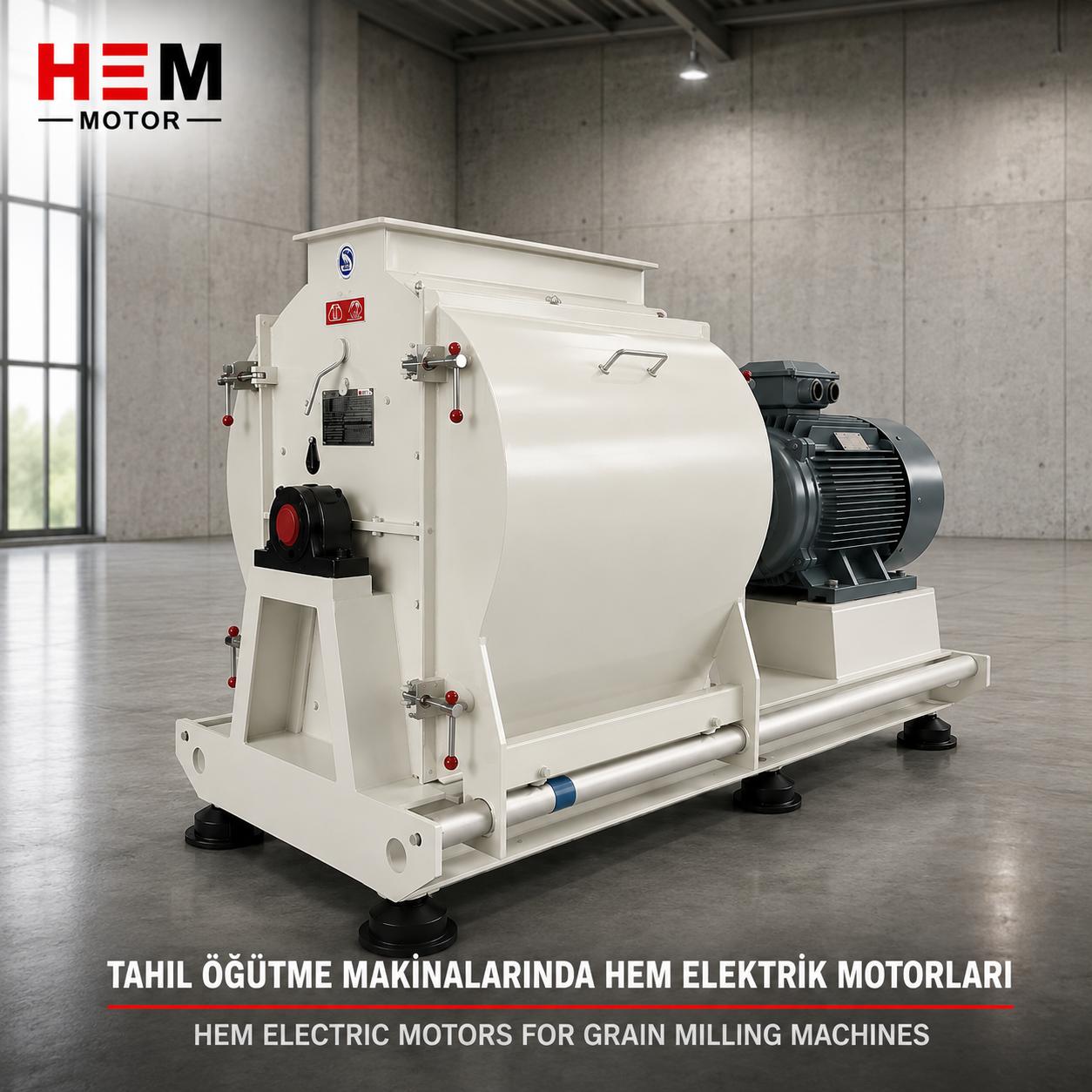
If you operate a flour mill, a grain-milling plant or a feed factory, electric motors turning day and night are at the heart of your production. From the roller mill to the sifting unit, from the aspiration fan to the conveyor, a correctly chosen motor at every point directly determines both milling quality and operating cost. Choosing a flour mill electric motor involves special criteria such as continuous-duty endurance, protection against dust (IP), high torque and the right power-speed match. On this page we explain the motor types used in grain-milling plants, their operating conditions and how to set the right price-performance balance, then share the steps to get a fast quote and supply from stock.
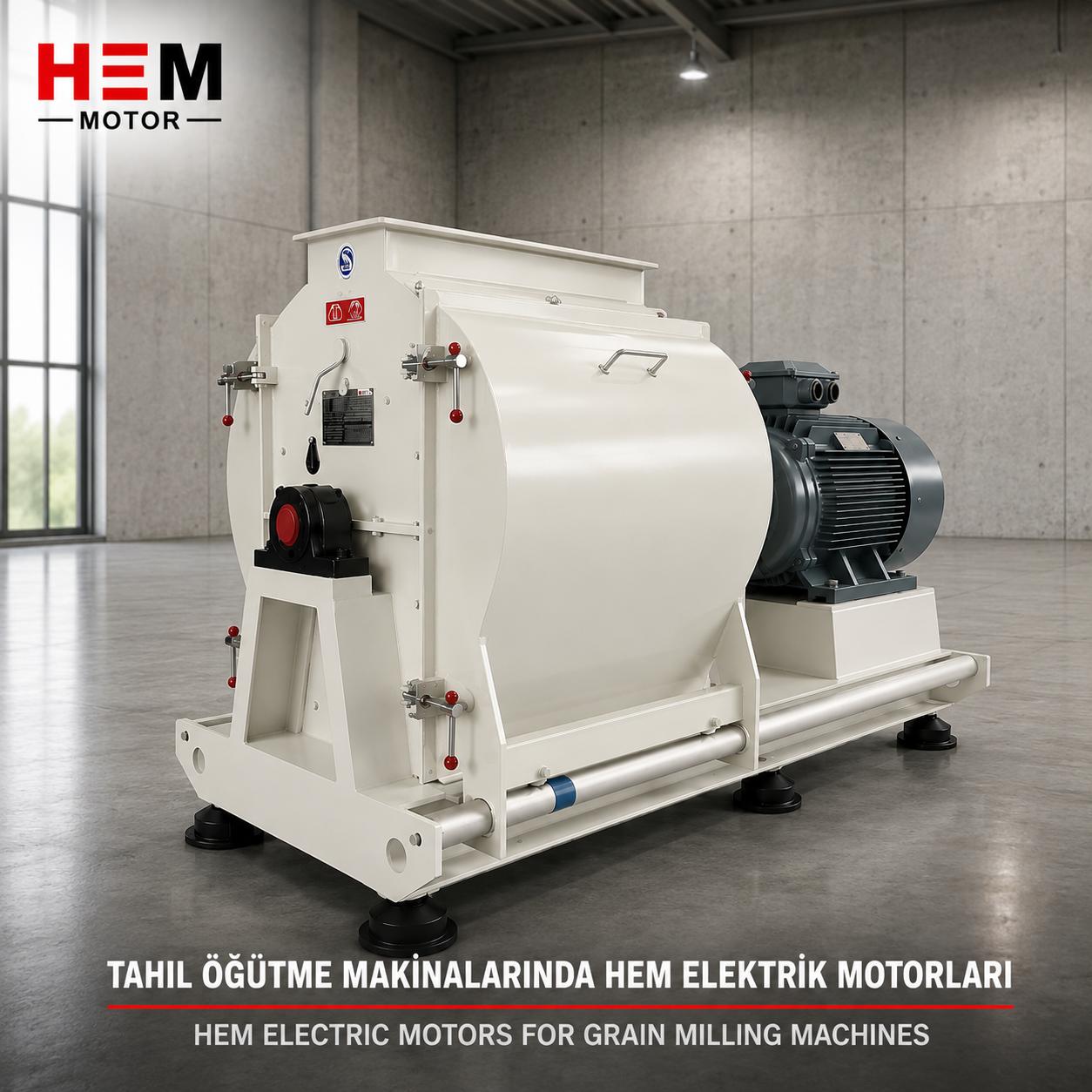
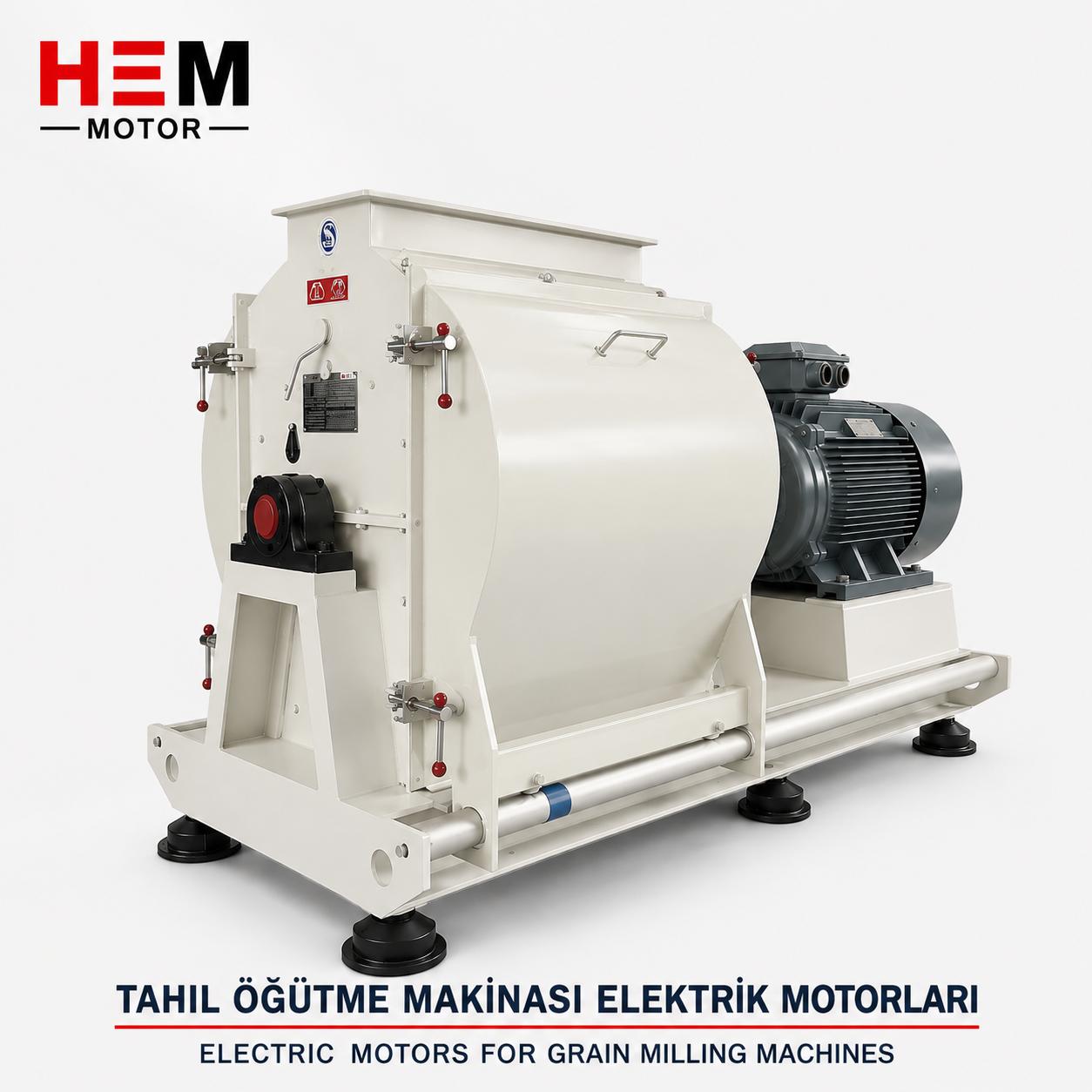
At HEM Motor we stock motors suitable for flour mills and grain-milling machines in various power and speed options, delivering products durable against continuous and dusty operating conditions at the right electric motor prices. In grain-milling machinery, HEM electric motors are a reliable choice for uninterrupted production.
Which Motors Are Used in a Flour Mill?
A flour mill or grain-milling plant consists of many motors working in harmony. Each operates in a different link of the milling chain:
| Unit | Motor Function | Key Requirement |
|---|---|---|
| Roller mill | Grinds grain between roller cylinders | High torque, continuous-load endurance |
| Sifter (plansifter) | Separates milled product by size | Balanced, vibration-free operation |
| Aspiration fan | Draws dust and provides air flow | Dusty environment, high IP protection |
| Conveyor / screw | Transports grain and flour to units | Low speed, high torque |
The common denominator of these motors is that they mostly work in a continuous-duty regime and in a dusty environment. Therefore, protection against dust and continuous-load endurance are far more critical criteria in flour mill motors than in a standard industrial motor.
Roller Mill and the High-Torque Need
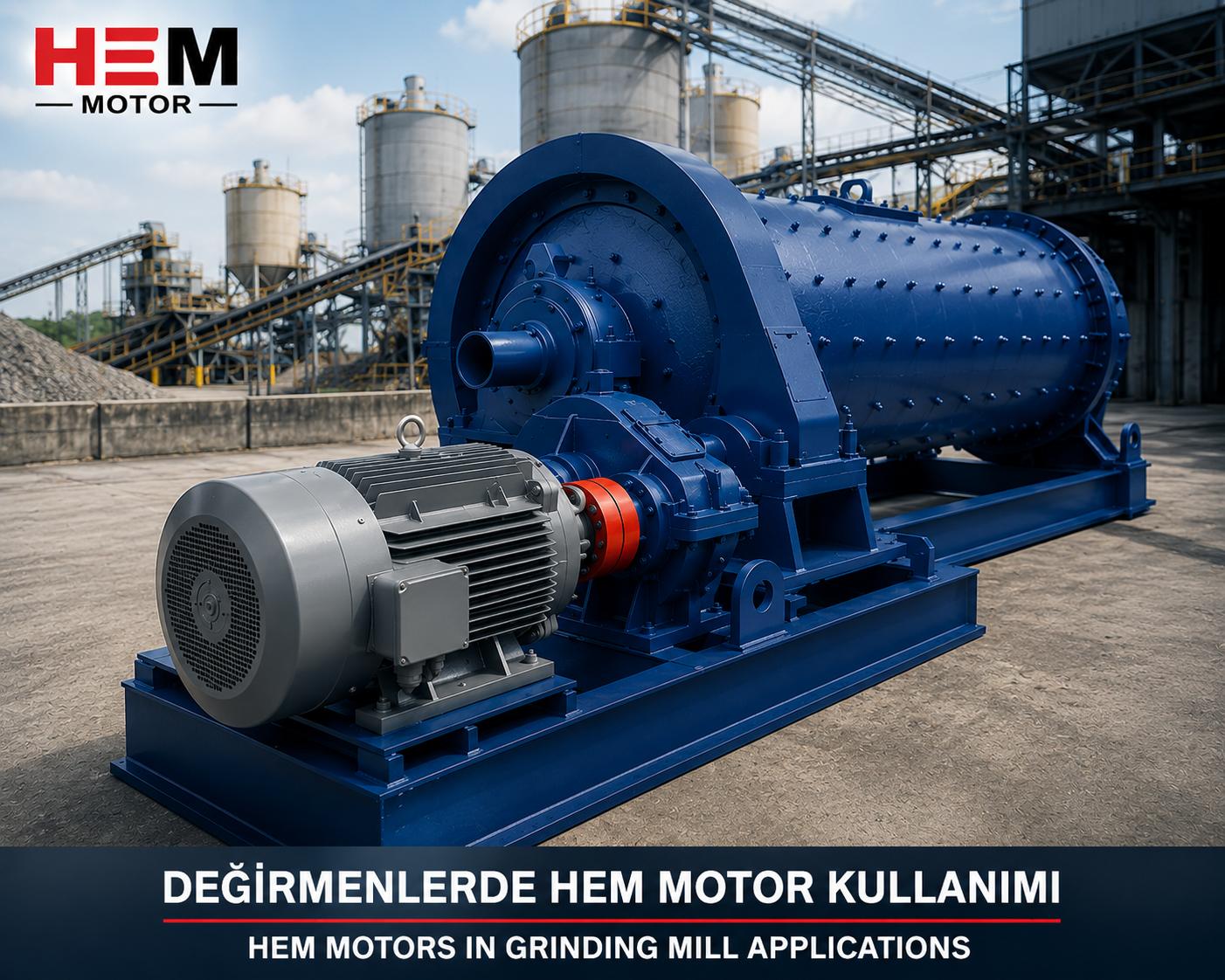
The roller mill that grinds the grain is one of the most heavily loaded units of the plant. The grain passing between the roller cylinders puts a continuous and variable load on the motor; especially when restarting under full load, the motor must provide a high starting torque. For this reason, correct power selection and sufficient torque reserve in roller mill motors guarantee milling quality and continuity. Our general-purpose industrial motors product group offers suitable solutions for such heavy and continuous applications.
Dusty Environment and IP Protection Class
Flour and grain milling is, by its nature, a dust-heavy process. Flour and grain dust suspended in the air enters the windings and bearings of a poorly protected motor, both disrupting cooling and causing early failure. For this reason, the IP protection class is one of the most important selection criteria in flour mill motors:
- Protection against dust ingress: A suitable IP level protecting windings and bearings from flour dust.
- Continuous-load endurance: A design that can run without stopping for long periods and dissipates heat well.
- Easy cleaning: A body structure where dust accumulation can be cleaned.
- Robust body: A cast-iron body preference durable under continuous vibration and load.
- Thermal protection: Protective elements that monitor winding temperature.
Choosing the right IP level and body type for a dusty environment extends the motor's life by years. In flour-dust environments carrying an explosion risk, additional protective measures may come into play; when you share your application, we determine the right protection level together. Grain dust entering the bearings, accumulating on the cooling fins and clogging the fan cover can over time cause the motor to overheat; therefore periodic cleaning and the right protection level are two matters that should not be neglected in a continuously running mill.
You can also benefit from our content where we cover motor selection specific to grain milling and flour production in depth. Our feed factory and mill motors selection article explains the right power and torque selection for pellet press, roller and elevator motors; our bakery, bread and flour factory electric motors article details the motor choice suitable for dough kneading, sifting and aspiration units. These resources help you determine the most suitable motor for each unit in your plant.
Continuous Operation and Correct Power-Speed Selection
Flour mills generally run throughout shifts, even without interruption. In this continuous-duty regime, if the motor's power and speed are not chosen correctly, either milling capacity drops or the motor is constantly stressed and wears out early. In high-torque units such as roller mills and conveyors, low-speed (4- or 6-pole) motors are preferred, while in aspiration fans high-speed (2-pole) motors are chosen.
The right price-performance balance is established exactly here. When you share information such as milling capacity, grain type and number of units, we determine the power that fits the need exactly, neither too much nor too little. To lower your energy cost with efficient motor choices, you can review our IE3 electric motors and feed machinery electric motors product groups.
Factors That Determine the Flour Mill Motor Price
In grain-milling motors, the price is determined not only by power but by a series of technical choices:
- Power and speed: The kW and speed determined by milling capacity and unit.
- IP protection class: The protection level required for a dusty environment.
- Efficiency class: The IE3/IE4 choice affects energy cost in continuous operation.
- Body material: Cast-iron body advantage in heavy and vibrating operation.
- Mounting type: Foot, flange or combined connection.
- Stock status: Fast supply from stock protects production continuity.
When we balance these factors for your application, the most accurate electric motor prices for your mill emerge. Briefly describing your need is enough for us to offer the most suitable motor; you can request a fast quote via the HEM Motor homepage.
Fast Supply from Stock and Uninterrupted Milling
In a flour mill, a motor failure directly means production downtime and order delays. For this reason, stock availability is of great importance for mill motors. By keeping the most used power and speed steps in our stock, we minimise the waiting time for your urgent needs.
If you are building a new mill or increasing capacity, planning the motor selection early makes the delivery time predictable. The right motor, the right protection and supply at the right time keep your milling line uninterrupted. In grain-milling machinery, HEM electric motors are solutions designed for continuous and reliable production.
Frequently Asked Questions
What does the flour mill electric motor price depend on?
The price varies with the motor's power and speed, IP protection class, efficiency class (IE3/IE4), body material and mounting type. Because dusty and continuous operating conditions require more durable equipment, these factors affect the cost. The healthiest way to the right price is to describe your application and request a fast quote.
Which motor is needed for a roller mill?
Because the roller mill imposes a high and variable load, a motor with sufficient starting torque and continuous-load endurance is needed. Low-speed, robust-body motors are usually preferred. If you share your milling capacity, we determine the right power together.
Which IP protection class should be chosen in a dusty environment?
A sufficient IP protection level that prevents flour and grain dust from entering the windings and bearings should be chosen. A low-protection motor fails early in a dusty environment. If you share your environmental conditions, we recommend the suitable protection class.
Does the mill motor run continuously?
Yes, flour mills generally run throughout shifts or without interruption. For this reason, continuous-load endurance, correct power selection and thermal protection are of great importance.
Are the motors in stock and how fast is delivery?
The most used power and speed steps are kept in our stock and shipped quickly. For special configurations, we clarify the delivery time before the order.
Let Us Choose the Right Motor for Your Mill Together
Choosing a flour mill motor becomes clear when decisions such as high torque, dusty-environment protection and continuous-duty endurance come together correctly. Briefly describing your application is enough for us to offer the most suitable motor with the right price-performance. For uninterrupted milling, long motor life and fast supply from stock, you can contact us via our electric motor prices and fast quote page. Never let your mill stop.