 English
 Türkçe

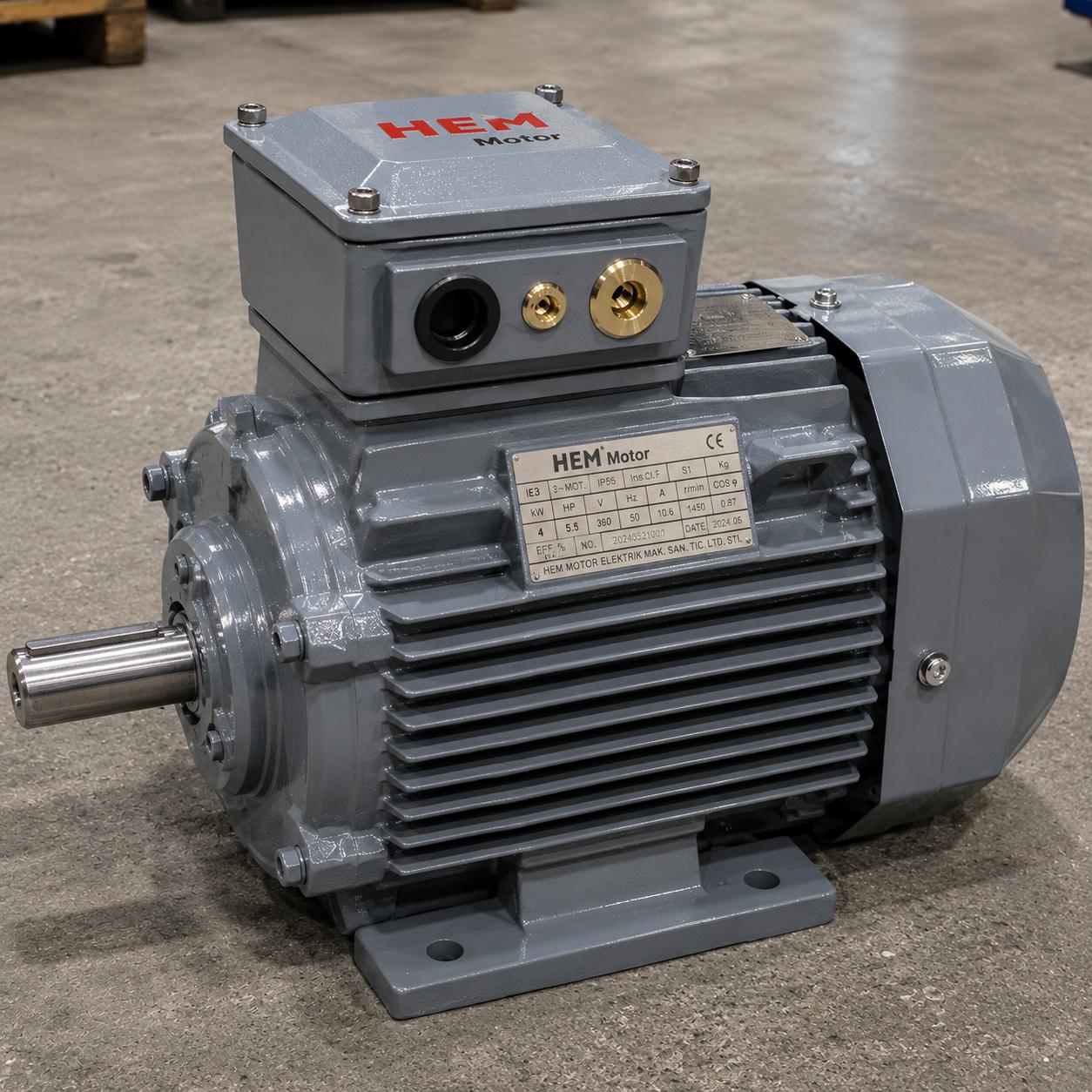
The most common question in any electric motor purchase is always the same: how are electric motor prices determined, and why is there a significant price difference between two motors of the same power rating? The answer is not hidden in a single line item; alongside power, the efficiency class, number of poles, frame size, mounting type, protection class and special hardware requests all directly shape the price. To make the right procurement decision, understanding each of these factors one by one is critical, both for protecting your budget and for selecting a motor that perfectly fits your application.
At HEM Motor, our goal is to supply you with the most suitable motor at the most accurate price, without leaving you alone among complex technical tables. Thanks to our position as a manufacturer and stock supplier, we offer motors in standard power ranges with short lead times, while also guaranteeing a fast and clear quotation process for special requests. On this page, we will detail every factor that determines a motor's price and explain, one by one, the information you need to share with us so that you can receive an accurate price quote.
If you have an urgent motor requirement for your project, you can learn a clear price and lead time within minutes by conveying the right information in the right format. The sections below are prepared to make you both a technically informed buyer and to turn the procurement advantage in your favor.
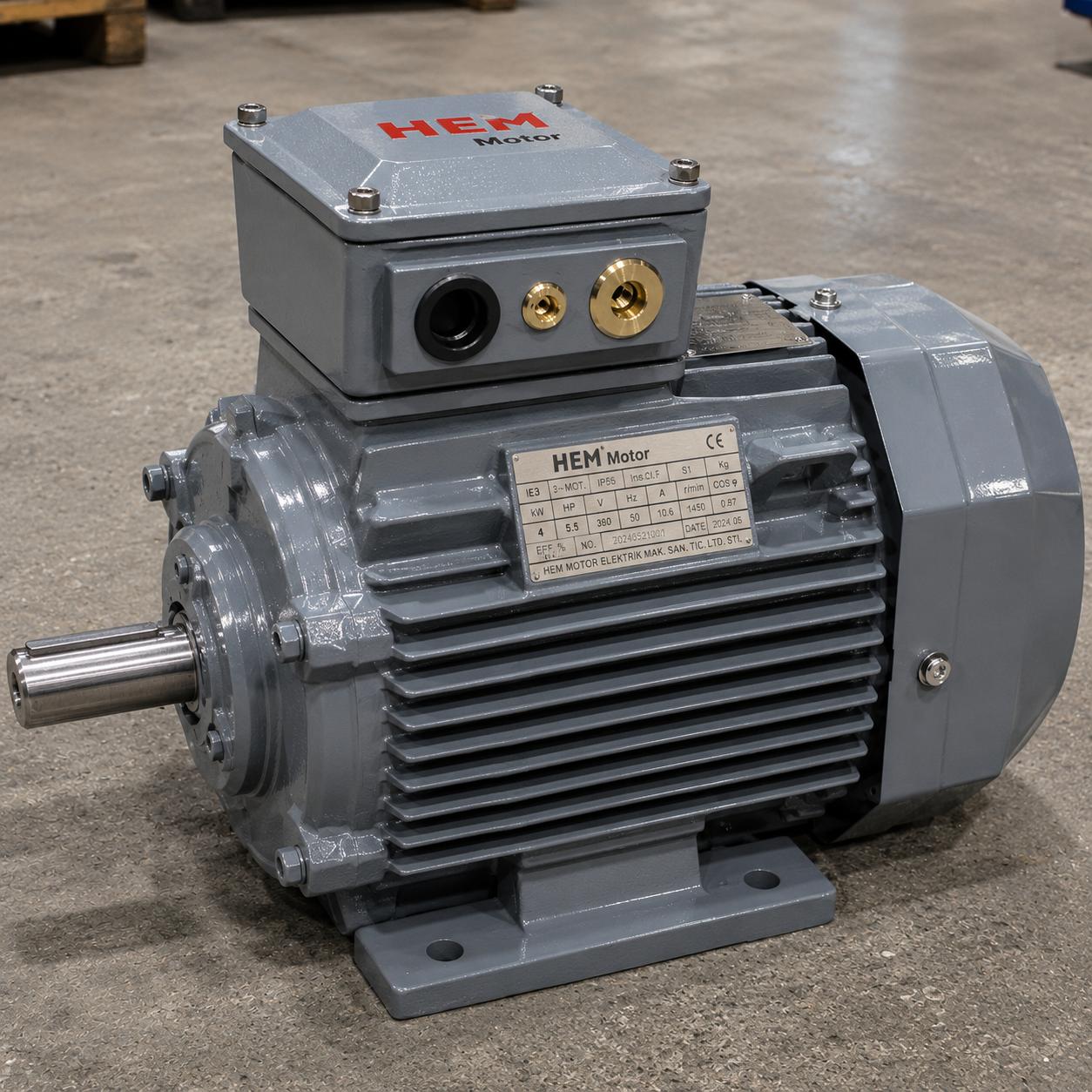
The Key Factors That Determine an Electric Motor's Price
An electric motor's price is a direct reflection of its production cost. This cost includes many variables, from the weight of the copper, steel laminations, aluminium and cast materials used, to the motor's efficiency class and special hardware. When you choose two different motors for the same application, each of these variables pushes the total price up or down. To make the right procurement decision, each of these factors must be evaluated separately.
Power (kW) and Motor Size
The most fundamental factor that determines price is the motor's output power. As power increases, the amount of copper winding inside the motor, the lamination stack size and the frame dimensions grow; therefore, material cost and price rise in direct proportion. For example, the price gap between a 0.75 kW motor and a 30 kW motor multiplies not only because of power, but also because of frame size, weight and the quantity of raw material used. For this reason, calculating the power you need accurately allows you both to avoid unnecessary cost and to prevent the selection of an underpowered motor. An oversized motor means both an excessive price and inefficient operation.
Efficiency Class: IE2, IE3, IE4 and IE5
Today, one of the factors that most affects motor prices is the efficiency class. Motors classified as IE2, IE3, IE4 and IE5 differ clearly in price even when they share the same power rating. To move up to a higher efficiency class, more and higher-quality copper winding, a larger lamination stack and lower-loss materials are placed inside the motor. This increases the initial purchase cost. However, there is an important balance here: a high-efficiency IE3 electric motor or an IE4 motor may appear more expensive at the initial investment, yet it pays for itself in a short time through the savings it provides on electricity consumption.
Efficiency regulations in Europe and Turkey mandate a minimum IE3 efficiency class within certain power ranges. For this reason, motor selection should consider not only the price, but also the legal requirements of the application and the long-term operating cost. If you are undecided about the efficiency class, we can determine the most suitable class for your application together. For more information on this subject, you can review our IE3 high-efficiency electric motors page.
Number of Poles and Speed (RPM)
The number of poles in a motor determines its rotational speed, that is, its rpm. A 2-pole motor rotates at approximately 3000 rpm, a 4-pole at approximately 1500 rpm, a 6-pole at approximately 1000 rpm and an 8-pole at approximately 750 rpm. Motors with the same power but a different number of poles have different prices. As a general rule, low-speed (high-pole) motors tend to be more expensive because they produce the same power from a larger frame. Determining the speed your application requires accurately directly affects both the price and the mechanical design.
Frame Size and Mounting Type
A motor's frame size is defined within a range that varies from 56 up to 355 and above according to IEC standards. This dimension determines the motor's mechanical size, shaft diameter and mounting holes. The mounting type also affects the price: different connection forms such as foot-mounted (B3), flange-mounted (B5, B14) or foot-and-flange (B35) require different casting and machining processes in production. Specifying your application's mounting form accurately is important for clarifying both the price and the lead time. For the right frame and mounting selection in three-phase applications, you can evaluate our three-phase electric motor solutions.
Protection Class (IP) and Cooling
The environment in which the motor will operate determines its protection class. While IP55 offers standard industrial protection, environments exposed to dust, moisture or water spray require IP56, IP65 and higher protection classes. A higher protection class increases the price because it requires tighter sealing, special seals and different frame designs. Similarly, the motor's cooling method (self-fan cooled, externally fan cooled or water cooled) is another important element affecting the cost.
Brand, Raw Material and Copper Cost
One of the largest raw material items in electric motors is copper. Fluctuations in copper prices directly affect motor prices. Likewise, the costs of silicon steel, aluminium and the cast frame are reflected in the total price. The brand factor covers elements such as production quality, warranty, spare part access and technical support. More established brands that produce higher quality, even if slightly more expensive at the initial price, reduce the total cost of ownership thanks to long service life and a low failure rate. For this reason, the most accurate approach in motor selection is to look not only at the label price, but at the product's lifetime cost.
The Effect of Special Hardware and Options on Price
Every special piece of hardware added to a standard asynchronous motor increases the price by a certain amount. These options are chosen according to the application's requirements and, when determined correctly, significantly increase the motor's lifespan and performance. Among the frequently requested options are the following:
- Brake motor: The electromagnetic brake used in applications requiring rapid stopping and position holding adds extra cost to the motor, but is critical for safety and precision.
- Encoder: An encoder is added in servo-like applications requiring precise speed and position feedback; this hardware both increases the price and broadens the motor's field of use.
- Special voltage and frequency: Voltage and frequency values outside the standard 400 V / 50 Hz (for example 230/400 V, 690 V or 60 Hz) require special winding design and affect the price.
- Thermistor and thermal protection: PTC thermistors or thermal contacts that monitor winding temperature protect the motor against overheating and are reflected in the price as additional hardware.
- Forced cooling fan: An external fan used in speed-controlled applications requiring continuous high torque at low speed prevents the motor from overheating and is a separate cost item.
- Special shaft and special dimensions: Non-standard shaft diameter, shaft length or special connection requests raise the price because they require additional machining in production.
Determining accurately which of these options are truly required allows you both to avoid unnecessary cost and to ensure the motor operates flawlessly in the application. For the right option selection, it is enough to share your requirement with us clearly; we can determine the most suitable configuration for your application together.
The Procurement Advantage of Buying From the Manufacturer and From Stock
The most overlooked issue in electric motor procurement is the effect of the purchasing channel on cost and lead time. As intermediary tiers increase, both the price rises and the lead time lengthens. Buying from a manufacturer and stock supplier shortens this chain, providing a clear advantage in terms of both price and time.
The Speed Advantage of Stock Supply
Keeping motors in standard power, pole and mounting combinations in stock allows projects to progress without waiting. In the event of a breakdown or an urgent capacity increase, fast supply from stock guarantees that your production line does not stop. As HEM Motor, we offer commonly requested power ranges from stock, thereby reducing the lead time from days to hours. This speed advantage is invaluable, especially in sectors where unplanned downtime is costly.
Cost Advantage and Correct Sizing
Buying from the manufacturer offers a more competitive price by eliminating unnecessary intermediary profit margins. However, the real cost advantage lies not only in the label price, but in selecting the right motor correctly the first time. A wrongly selected motor ends up costing far more together with the subsequent replacement, installation and downtime costs. For this reason, procurement carried out with technical consultancy is the smartest approach for reducing the total cost. To guide you through the process of choosing the right motor, you can benefit from our electric motor selection guide.
How to Get a Fast and Accurate Quote
The fastest way to obtain a clear price quote is to convey the correct technical information completely. Requests made with incomplete information lengthen the quotation process due to back-and-forth question-and-answer traffic. When you convey the following information, we can offer you a clear price and lead time in the shortest possible time.
The Information You Need to Provide for an Accurate Quote
- Power (kW): The motor's output power. If you are replacing an existing motor, state the nameplate value; if you are selecting for a new application, state the calculated power.
- Number of poles or speed (RPM): Is it 2, 4, 6 or 8-pole, or what is your target speed? This information is essential for selecting the correct speed.
- Voltage and frequency: Supply values such as 230/400 V, 400/690 V, 50 Hz or 60 Hz.
- Mounting type: Connection form such as foot-mounted (B3), flange-mounted (B5/B14) or foot-and-flange (B35).
- Protection class (IP): A protection level such as IP55, IP56 or IP65 suited to the operating environment.
- Special needs: Options such as a brake, encoder, thermistor, forced cooling, special voltage or special shaft.
- Quantity: The number of motors you need; quantity affects both the price and the delivery planning.
When you convey this information, your request is evaluated by our technical team and a fast price quote is prepared for the most suitable motor for your application. For stock products the lead time is extremely short; for special requests, we share the production and delivery plan clearly. To get information about current electric motor prices and stock availability, it is enough to share your requirement with us.
Correct Information Means a Correct Price
When you make a motor request, the accuracy of the information you share determines the accuracy of the price you will receive. For example, specifying a wrong IP class can result in a motor that is unsuitable for the environment and fails in a short time. Likewise, choosing the power larger than necessary means both paying an excessive amount and the motor running inefficiently. For this reason, describing your application in as much detail as possible during the quotation stage guarantees both the correct price and the correct product.
Considering the Total Cost of Ownership
The real cost of an electric motor is not limited to the purchase price alone. The electrical energy a motor consumes over its lifetime is, in most applications, many times the purchase price. For this reason, a high-efficiency motor, even if slightly more expensive at the initial investment, quickly pays for itself through energy savings. In continuously operating applications, an investment in an IE4 or IE5 class motor pays itself back within a few years and provides a clear saving thereafter.
When evaluating the total cost of ownership, it is necessary to also take into account the maintenance requirement, spare part access and the downtime cost that will be incurred in the event of a breakdown. Working with a stock supplier minimizes this cost by providing fast replacement at the moment of breakdown. This holistic perspective guides you to select not just the cheapest, but the most correct and most economical motor.
Frequently Asked Questions
Why can two motors of the same power have different prices?
Two motors with the same kW power can have different prices due to efficiency class (IE2, IE3, IE4), number of poles, frame size, mounting type, protection class and special hardware. A motor with a higher efficiency class is more expensive because of the additional copper and quality materials placed inside it; however, it is more economical in the long run thanks to the savings it provides on electricity consumption. For this reason, when making a price comparison, all the technical features of the motors must be evaluated together.
What should I do to get a fast and accurate quote?
To get the fastest quote, it is enough to convey the motor's power (kW), number of poles or speed, voltage/frequency values, mounting type, protection class (IP), any special hardware needs and the quantity completely. When this information is complete, our technical team offers a clear price quote and lead time in a short time for the most suitable motor for your application. For stock products, delivery is quite fast.
What is the advantage of buying from the manufacturer and from stock?
Buying from a manufacturer and stock supplier provides both a more competitive price and a much shorter lead time by eliminating intermediary tiers. While motors in standard power ranges are supplied quickly from stock, special requests are offered with a planned production and a clear delivery process. In addition, selecting the right motor correctly the first time with technical consultancy eliminates potential future replacement and downtime costs, maximizing the total procurement advantage.