 English
 Türkçe

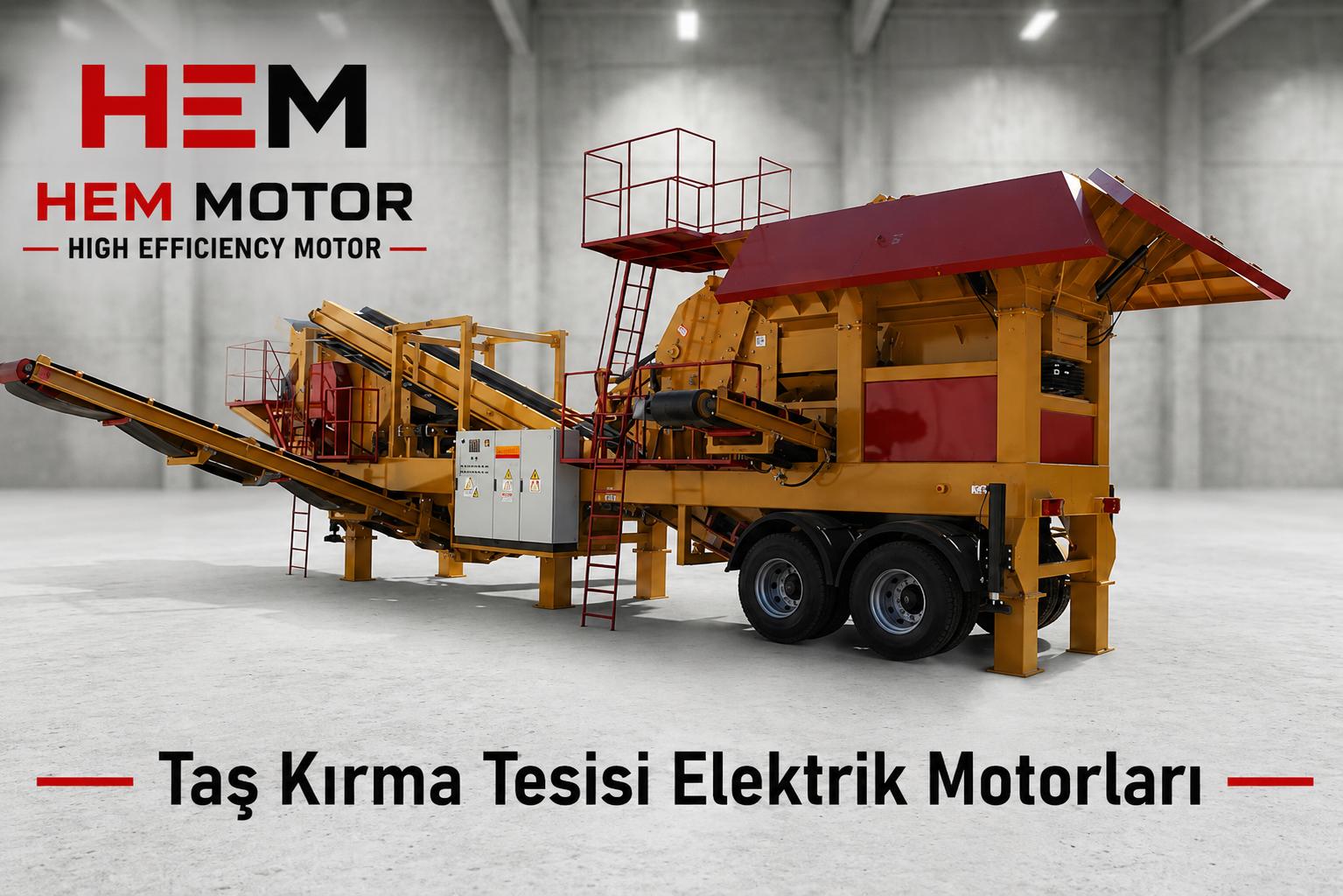
When a motor stops at a stone-crushing site, not only that machine but the entire plant stops; that is why what you look for in a crusher motor is a solution that withstands heavy duty, produces high torque and is protected against dust. As HEM Motor, we manufacture and sell crusher and stone-crushing-screening plant electric motors from stock; we quickly supply the right motor for the entire line, from primary and secondary crushers to screening and conveyor drives. On this page we clearly explain the heavy-duty criteria that determine crusher electric motor prices, which motor is required for which machine, and the supply process. Simply tell us your requirement; we will find the highest price-performance motor on a short lead time. You can view the entire range from our electric motor prices page and create a quote request directly.
Heavy Duty and High Torque: The Essentials of a Crusher Motor
A crusher motor is set apart from an ordinary industrial motor; because the crushing process is an impact, fluctuating and high-moment load. The moment the stone enters the main jaw, the motor sees a sudden resistance and must carry this load without allowing the power to drop. For this reason, in crusher motors high starting torque, an impact-resistant rigid housing and sufficient inertia are critically important. A wrongly selected motor either struggles at start-up or, under impact load, heats up continuously and fails early.
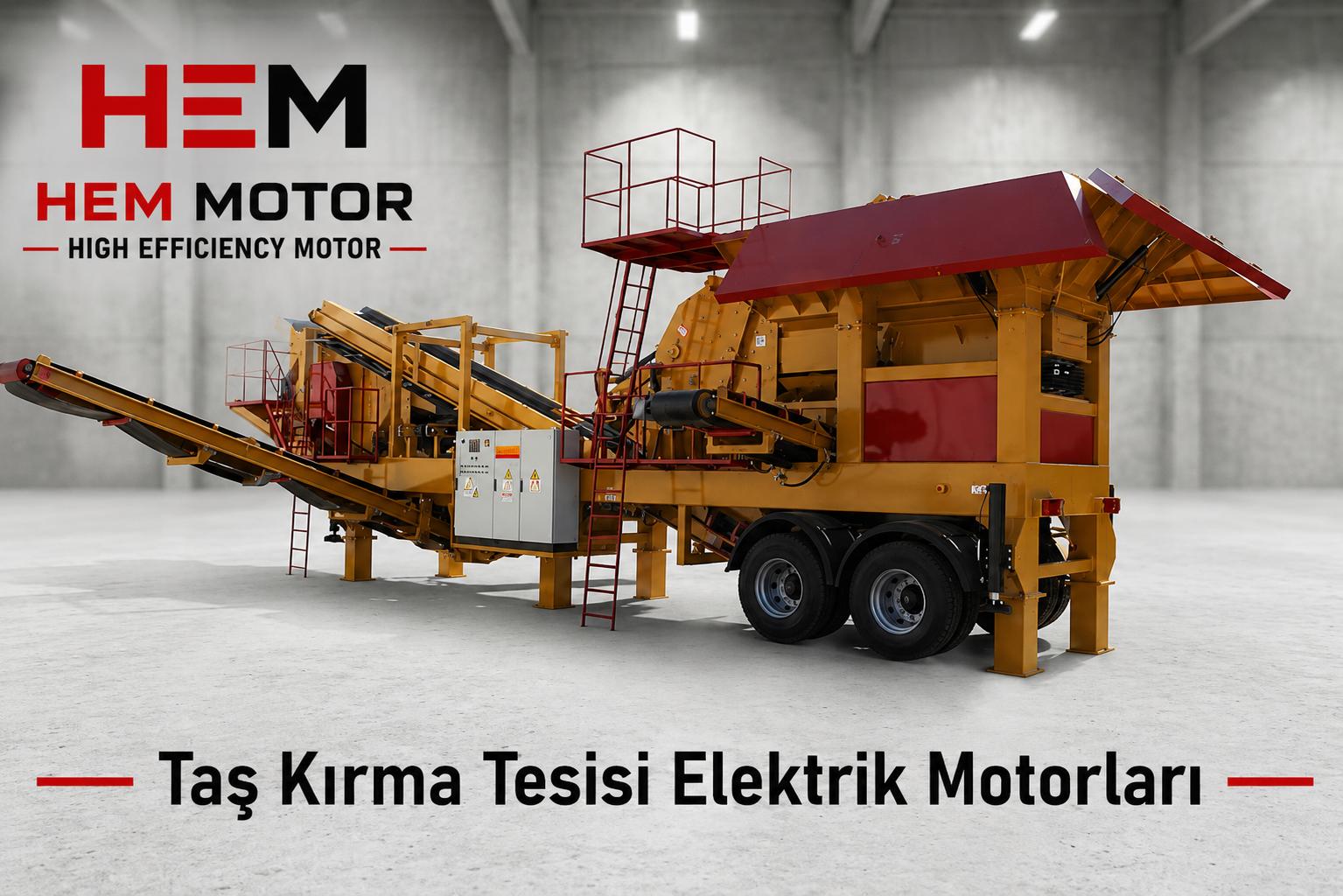
The stone-crushing plant site above shows the demanding environment in which a crusher motor works; dust, vibration and continuous heavy load are present together. For the right power and speed selection in this environment, our article Electric Motor Selection for a Crusher and Stone-Crushing Plant is a clear starting point. As a ready product, our Stone-Crushing Screening Plant Motors page is ready for supply from stock.
Primary and Secondary Crusher Motors: The Right Power for the Machine
In a stone-crushing-screening plant, not a single motor but a chain of motors operates. The primary crusher requires the greatest power and the highest torque; because it is the first to crush the coarsest material. The secondary crusher processes smaller pieces and requires a different power-speed profile. Motor selection also varies between jaw, impact and cone crushers; each has a different load character.
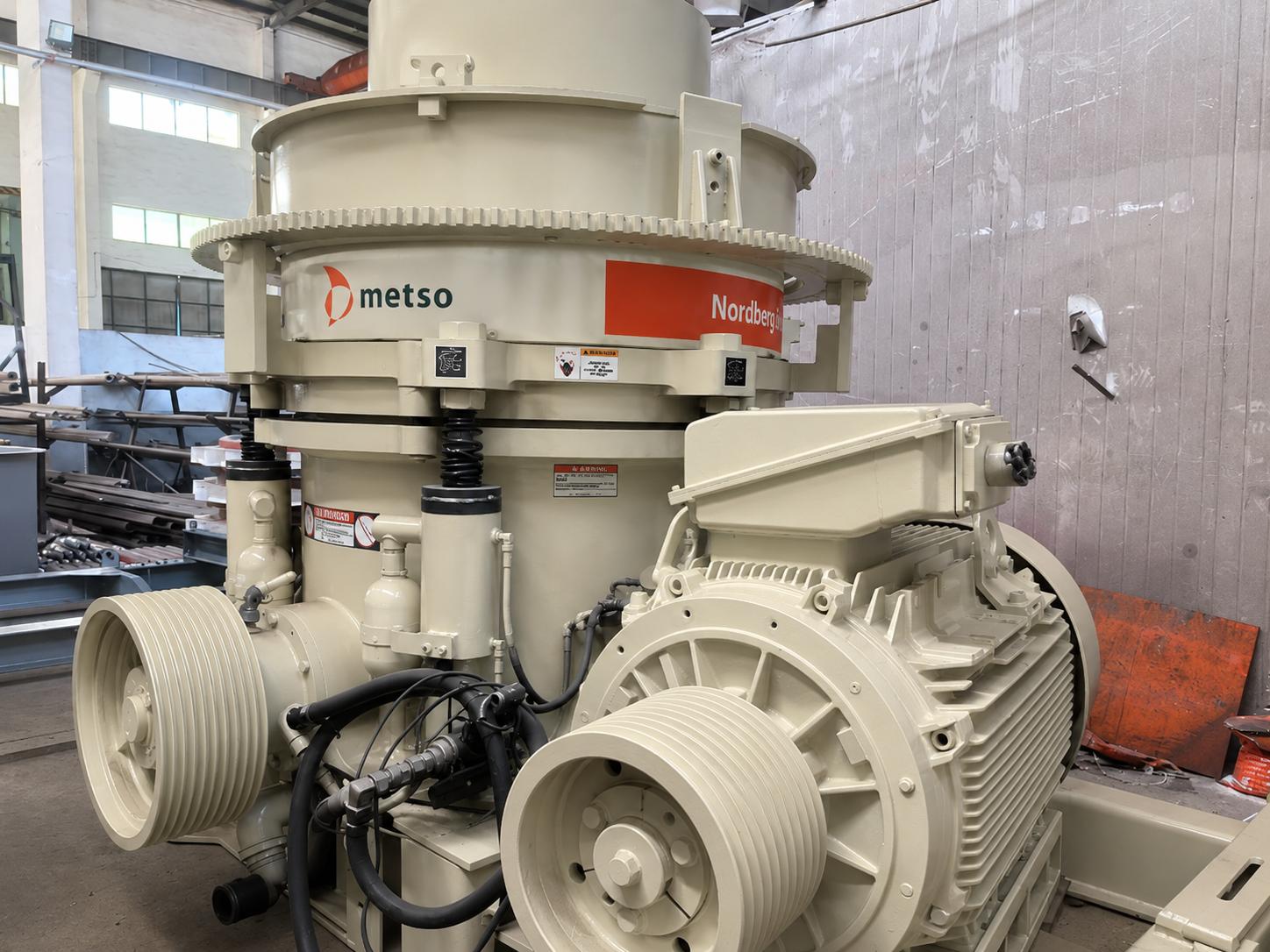
The cone crusher above is a machine generally used in the secondary and tertiary stage; due to its continuous and high-moment load it requires a heavy-duty motor. We address power selection according to jaw, impact and cone crushers in our article Crusher Motor kW Selection. The relationship between flywheel and inertia under impact load is explained in our article Motor Selection under Impact Load: Flywheel, Inertia and Crusher Drive.
Screening and Conveyor Motors: The Rest of the Line Matters Too
In a crusher plant, the motors that feed and convey are as critical as the main crusher. Vibrating screen motors, feeder motors and belt conveyor drive motors sustain the flow of the line. Since these motors also work under dust and vibration, they require high IP protection and a durable housing. As HEM Motor we provide all the auxiliary motors of the line together with the main crusher from a single supplier, on the same quality line.
- Vibrating screen motors: Require durable bearing arrangements under continuous vibration.
- Feeder motors: Provide controlled torque for steady feeding.
- Belt conveyor drive: Requires high starting torque and continuous heavy duty.
- Auxiliary pumps and fans: Feed the dust suppression and cooling lines.
To go deeper into the selection of motors other than the main crusher, our article Motors Other Than the Main Crusher in a Crushing-Screening Plant is a good resource.
Single Supply for the Entire Line: The Advantage of the Crusher Motor Group
When building or renewing a stone-crushing plant, buying the motors piece by piece from different suppliers means compatibility problems, different quality lines and scattered responsibility. As HEM Motor we offer all the motors of the line from a single point and with the same quality understanding, from the primary crusher to the secondary and tertiary stage, from screening to feeder and conveyor. This approach both eases assembly and lets you handle your business with a single point of contact for spare parts and replacement needs.
- Single point of contact: A single supplier and a single quality standard for all line motors.
- Compatible power distribution: Correct power and speed matching between stages.
- Shared spare stock: Keeping similar frame sizes together provides speed in replacement.
- Project-based planning: Planning the motor group in advance for a complete plant.
From a single main crusher motor to the entire motor group of a complete plant, we are by your side at every scale with the manufacturer advantage. We work out the power profile of the line together, match the right motor to each stage and optimize price-performance across the whole line.
Dust Sealing and IP Protection: Long Life in the Field
The greatest enemy at a stone-crushing site is dust. Fine stone dust that gets inside wears the bearings and strains the winding; this means early failure. For this reason, in crusher motors high IP protection (IP55, IP65 and above) and correct sealing are our standard recommendation. Combined with a cast housing, the motor offers long life against dust, impact and moisture. We explain how to plan dust sealing in our article Dust Sealing and IP65/IP66 Protection on a Crusher Motor.
| Plant Section | Motor Requirement | Key Criterion |
|---|---|---|
| Primary crusher | High torque, large power | Starting torque and inertia |
| Secondary/cone crusher | Heavy duty, continuous load | Continuous moment endurance |
| Screening and feeder | Vibration-resistant | Bearing arrangement and IP protection |
| Conveyor drive | High starting torque | Starting and continuity |
Bearing Life: Managing Impact, Dust and Lubrication Together
In crusher motors the bearing is one of the most strained and most frequently failing parts. When continuous impact load, the dense dust in the environment and insufficient lubrication come together, bearing life shortens rapidly. Managing these three factors together determines the real field life of the motor. While the rigid cast housing keeps the bearing seat solid, the correct grease type and a regular lubrication interval delay wear; high IP protection then prevents dust ingress. As HEM Motor we select crusher motors considering these three elements together and evaluate reinforced bearing arrangement options for heavy-duty lines. We detail the ways to extend bearing life in crusher and mill motors in our article Bearing Life in Crusher and Mill Motors: Impact, Dust and Lubrication.
Factors Determining Crusher Electric Motor Prices
In a crusher motor, price is the sum not only of power but also of the heavy-duty requirements. Crusher electric motor prices are shaped according to the power and torque requirement, the housing material (usually cast iron), the protection class, the starting method and the required accessories. In direct purchase from the manufacturer we optimize these factors together with you and prepare the highest price-performance motor according to the real load profile of the site. In mobile and portable crushing plants, durability and compactness are evaluated together; on this subject our article Electric Motor Supply in a Mobile Crusher and Portable Crushing Plant provides guidance.
Starting: Soft Start under High Inertia
Because crusher motors drive machines with high inertia, starting is one of the most critical moments of selection. The heavy mass of the large jaw or cone crusher causes the motor to draw high starting current for a long time; this strains both the motor and the grid. The right starting method softens this load. While star-delta or a soft starter is often sufficient at small and medium powers, solutions such as a liquid resistance starter (LRS) and a slip-ring motor come into play in very large crushers. As HEM Motor we plan the starting method together when selecting the motor and minimize the risk of heating and current surge at start-up. We detail the starting options for a crusher motor in our article Starting a Crusher Motor: Soft Starter, Star-Delta and Direct-On-Line Starting.
Downtime Cost and Fast Replacement: The Field Value of Stock
The most expensive item in a stone-crushing plant is not the price of the motor but the time the motor is stopped. When a crusher motor fails, production stops for hours, sometimes days, and this loss is far greater than the motor itself. For this reason, in heavy-duty motors the right supplier is the one that offers fast replacement and keeps common powers in stock. As HEM Motor, thanks to our manufacturer stock, we deliver common crusher and line motors to the field on a short lead time and ensure that production restarts quickly even in unexpected stoppages. We address the ways to reduce downtime cost in our article Motor Failure and Reducing Downtime Cost in a Crusher Plant. For all stone-crushing guides, our category Crusher & Stone-Crushing Motors is the reference point.
Frequently Asked Questions
Why is high torque so important in a crusher motor?
The crushing process is an impact and fluctuating load; the moment the stone enters the jaw, the motor sees sudden resistance. Without high starting torque and sufficient inertia, the motor struggles, heats up and fails early. For this reason we select the motor according to the load profile of the site.
Do you only supply the main crusher motor?
No. Alongside the primary and secondary crusher, we also supply the screening, feeder and conveyor drive motors from a single supplier; we gather the entire line on the same quality line.
What protection is needed against dust?
At a stone-crushing site, high IP protection (IP55, IP65 and above) and correct sealing are recommended. Together with a cast housing, this protection keeps the bearings and winding safe against dust for a long time.
Do you supply motors for a mobile crushing plant?
Yes. In mobile and portable crushing plants we evaluate durability and compactness together and recommend motors resistant to vibration and jolting. When you tell us the type of plant and the power requirement, we supply the motor suitable for the field on a short lead time.
Can you find an equivalent for my existing crusher motor?
Yes. Send us the power, speed, frame size, mounting type and shaft diameter information on the existing motor's label; we quickly determine an exact equivalent or a suitable replacement motor and deliver it to the field in a short time according to stock availability. In this way your line does not stop for long in an unexpected failure.
Get a Quote for Fast Supply to the Field
Do not keep your stone-crushing plant waiting: whether it is a single crusher electric motor or a motor group for the entire line, HEM Motor is by your side with its manufacturer advantage and stock. Send us your machine type, power, torque requirement and field condition information and let us deliver the highest price-performance heavy-duty motor to the field on a short lead time. For fast supply and a quote, create your request right away through HEM Motor.
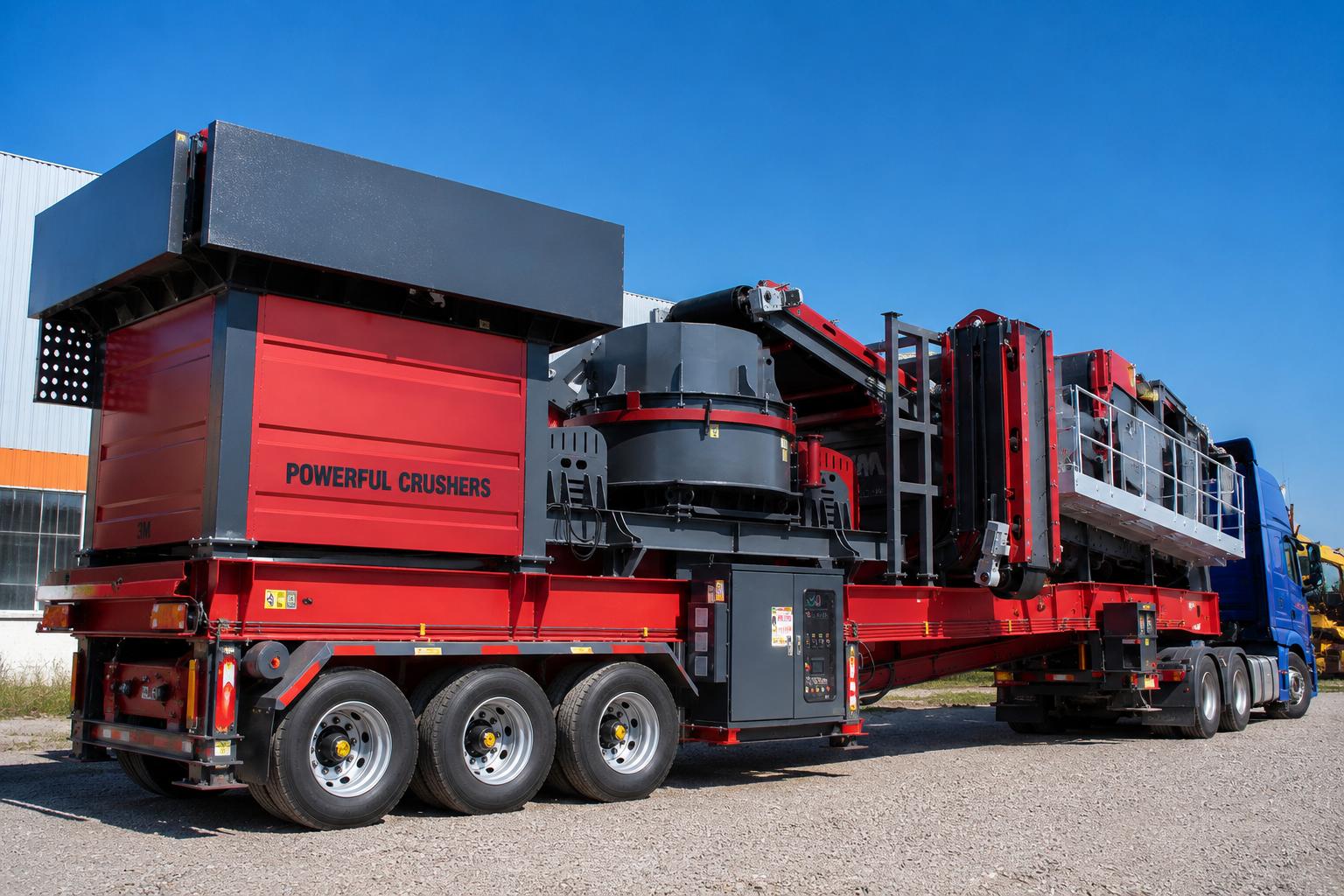
The mobile stone-crushing-screening plant above shows an installation operating on the move in the field; in this type of plant, the fact that the motors are both durable and quickly replaceable directly reveals the value of manufacturer stock.