 English
 Türkçe

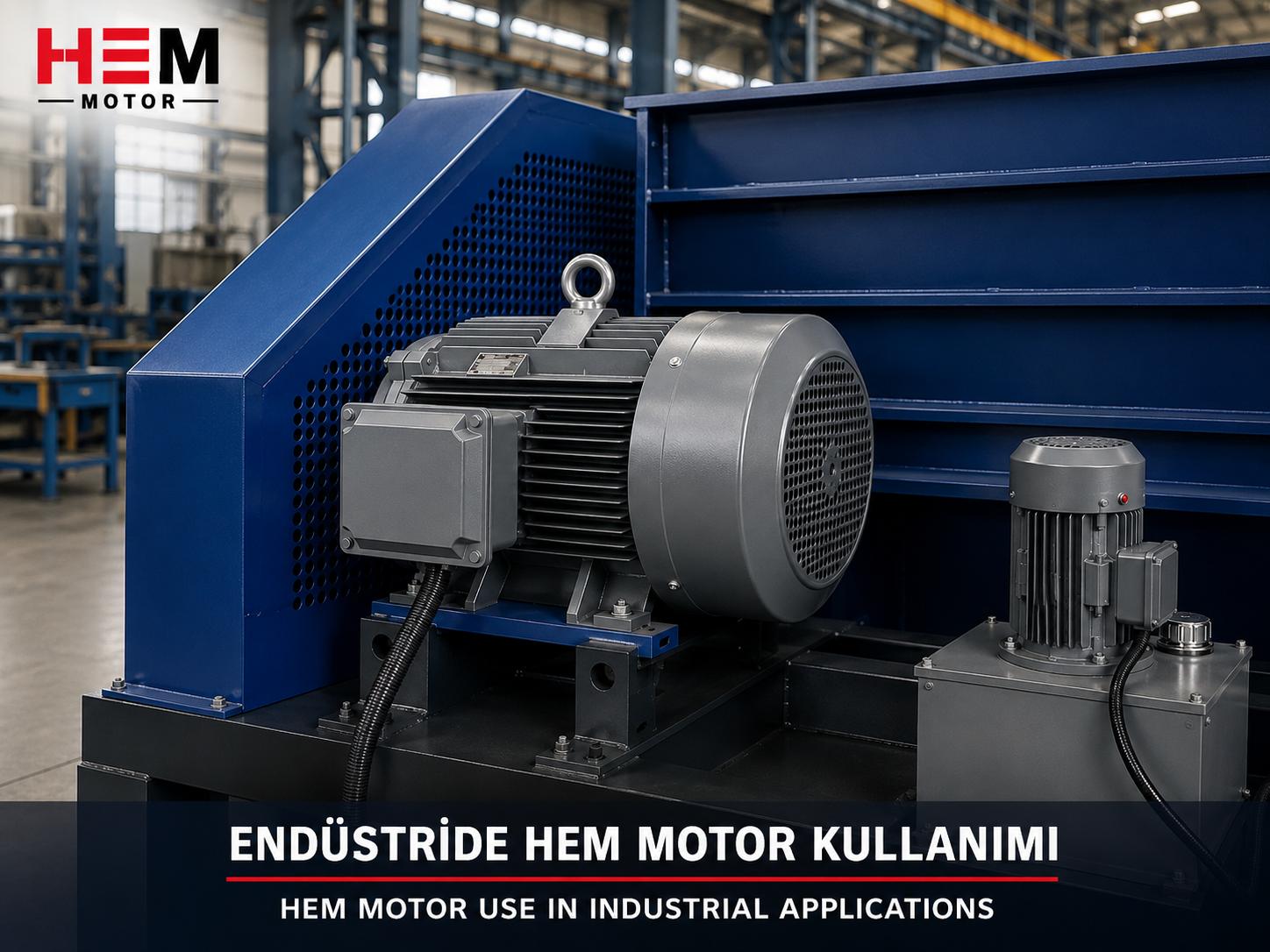
The heart of a conveying system is the drive motor that turns the belt. When the conveyor line stops, production stops with it; that is why selecting a conveyor belt electric motor is a decision that touches profit directly, both in terms of continuity and price-performance. As HEM Motor, we supply conveying system motors suited to geared drives, built for continuous operation and compatible with back-stop options, from stock with the manufacturer's advantage. This page covers the elements that set the price of a conveyor motor, demanding conditions such as inclined belts and sudden loads, and the fast supply process, all from a sales perspective.
In a conveyor drive the motor does not merely turn the belt; it also overcomes the weight of the material on it, friction and, where present, the incline. For this reason, in selecting a conveying system motor, the torque characteristic, starting behaviour and mechanical solutions that prevent reverse run are as important as rated power. The sections below are written in practical terms so you can quickly choose the right motor and get a quote.
Why Is Geared Drive Standard in a Conveyor Belt Motor?
Conveyor belts usually run at low speed but high torque. The rated speed of the motor (for example 1500 rpm) cannot be applied directly to the drum; a reducer sits in between, lowering the speed and raising the torque. That is why the motor-gearbox group is planned together in conveying systems. HEM Motor lets you source this combination from a single hand with B5/B14 flanged and B3 foot-mounted frame options suited to the reducer.
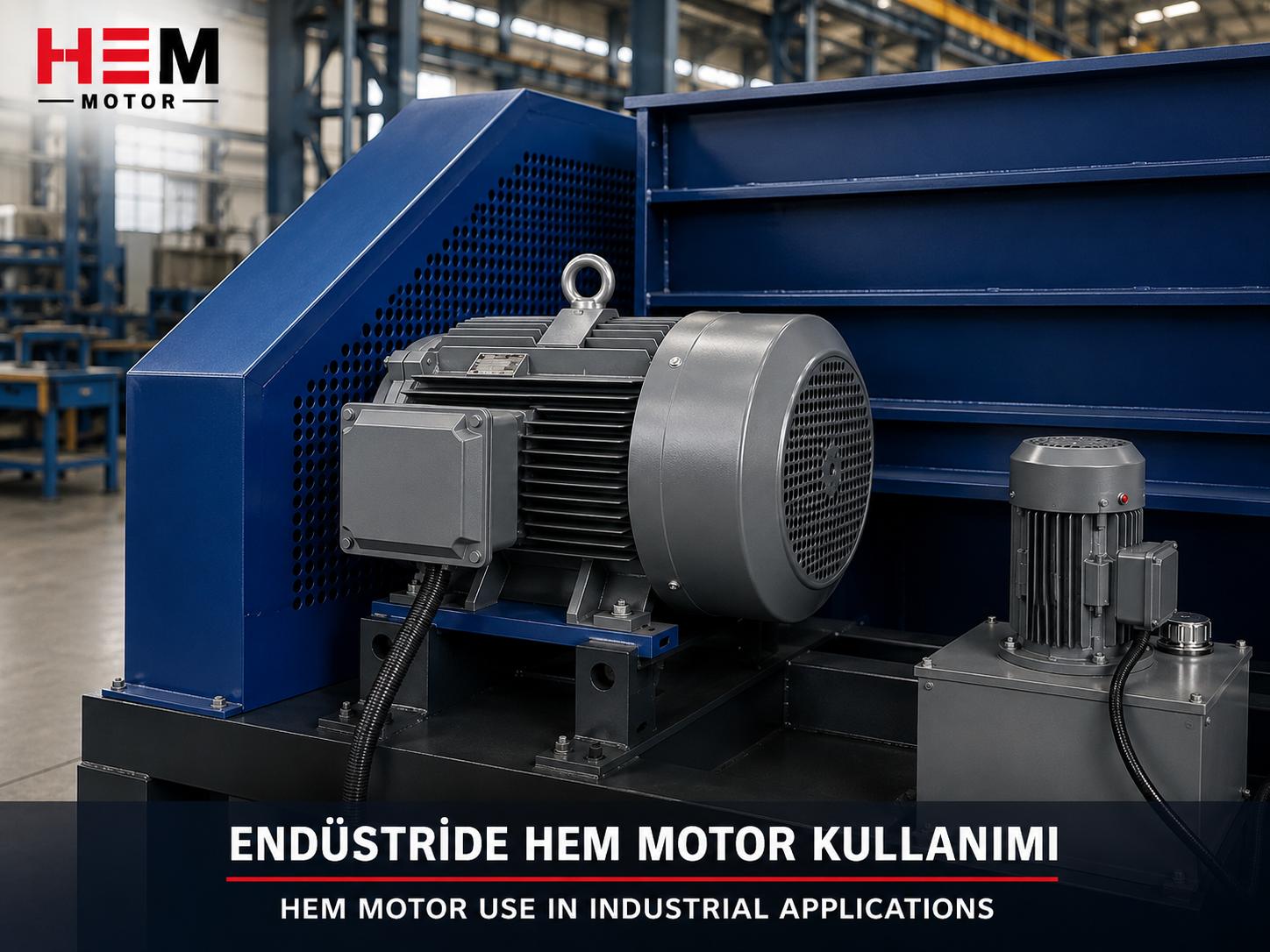
The reducer selection determines the output speed and therefore the belt speed. Because belt speed directly affects capacity and how the product behaves on the line, the motor-gearbox ratio must be calculated correctly from the start. For selecting a motor suited to a reducer, our electric motors for reducers range and our article on the gain in an efficient motor and gearbox combination are a good starting point.
Inclined Belts and the Need for a Back-Stop
On an inclined conveyor the danger appears at the moment of stopping: the material on the belt tries to slide back under gravity. This reverse run both spills the product and stresses the drive. That is why inclined conveying lines use a back-stop device or a brake motor. A brake motor locks the belt when power is cut, preventing reverse run; a back-stop allows rotation in one direction only. HEM Motor recommends a brake or back-stop compatible motor option during the quote, based on incline and load data.
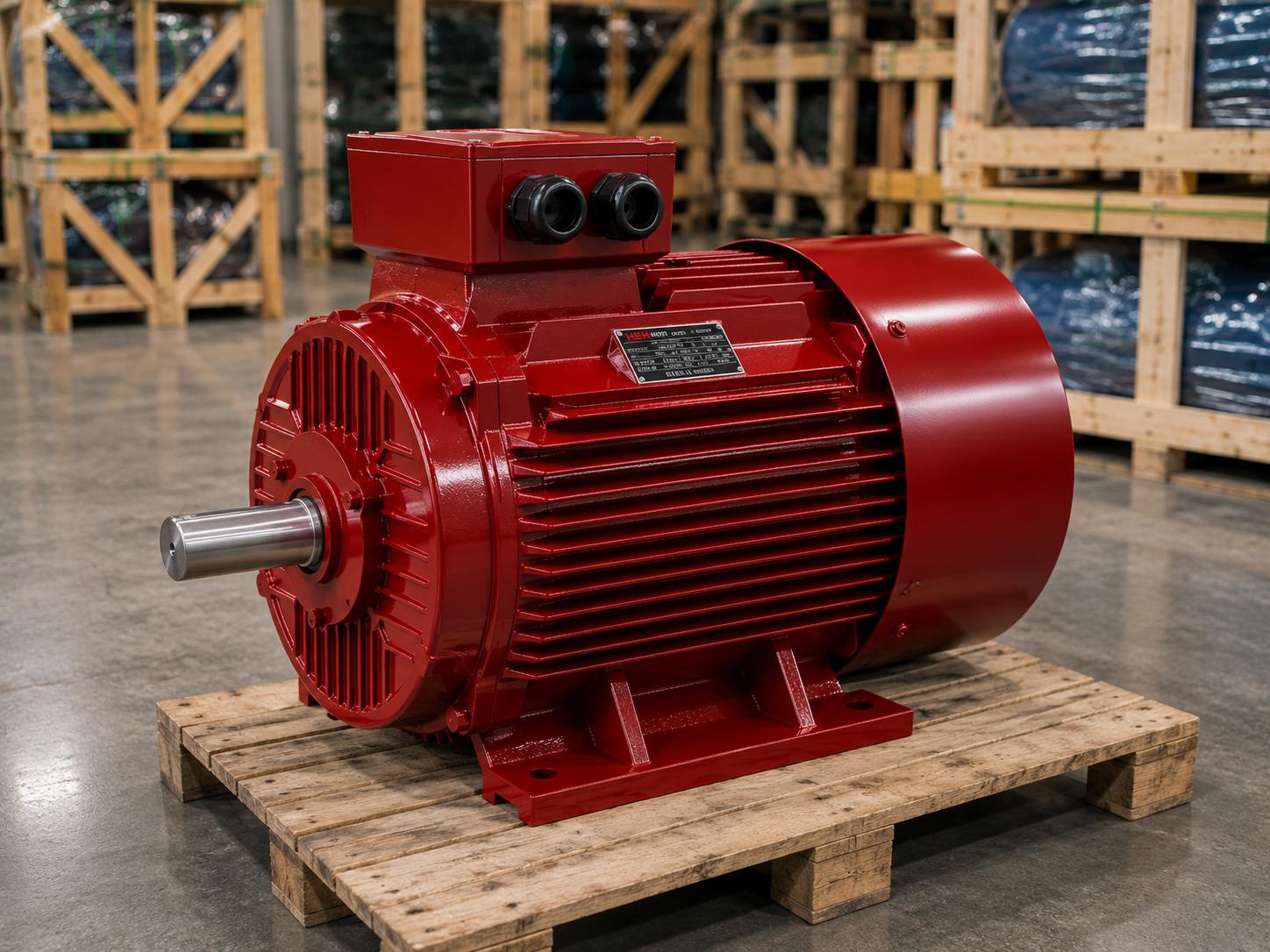
In inclined belt applications, the right power and the right brake choice mean not only safety but also uninterrupted production. For brake motors and conveyor/crane applications, our article on IE4 brake motor supply for conveyor and crane applications covers the selection criteria in detail.
Continuous Operation and Sudden Load: The Two Hardest States of a Conveyor Motor
Most conveying systems run without interruption throughout the shift, which means an S1 continuous duty regime and good cooling. In a continuously running motor the winding temperature must stay stable and the bearings must be long-lived. On the other hand, when the belt is suddenly loaded (for example material dropping from a crusher) the motor must also handle short-term load peaks. Together these two requirements demand a motor with a robust frame and the right service factor.
| Operating Condition | Required Motor Feature |
|---|---|
| Continuous (S1) operation | Good cooling, stable winding temperature, long-life bearings |
| Inclined belt | Brake motor or back-stop compatibility |
| Sudden load peak | Sufficient service factor and solid torque reserve |
| Dusty/outdoor site | IP55-IP66 protection, protected terminal box |
| Long-line drive | High starting torque, soft starting |
Factors That Determine Conveyor Motor Price
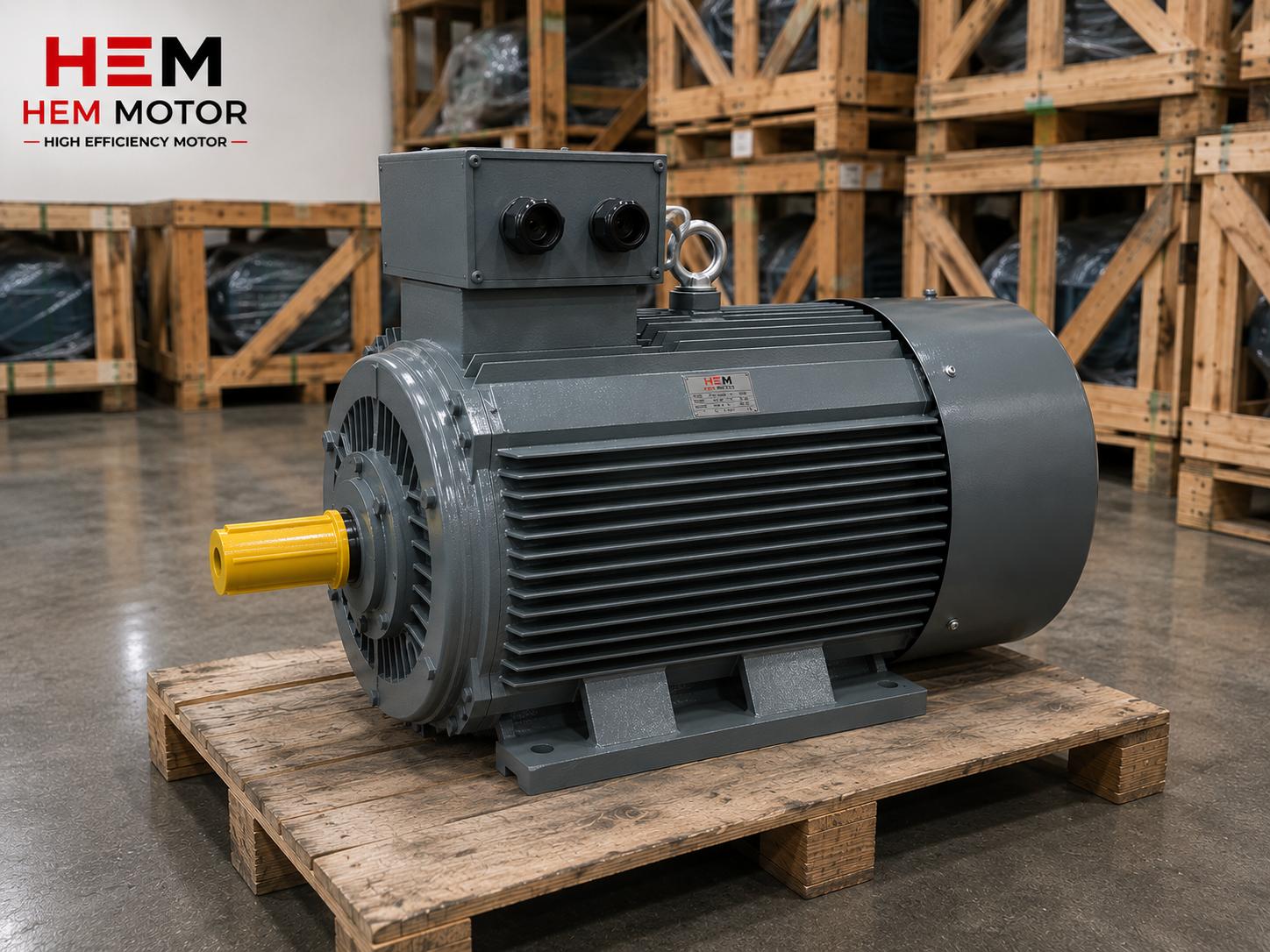
The price of a conveying system motor is shaped by the requirements of the application. Instead of a single number, the following factors are evaluated to find the right price-performance for your needs:
- Rated power and speed: As belt length, load and incline increase, the required power grows.
- Efficiency class (IE3/IE4): On a continuously running line, high efficiency significantly lowers energy cost.
- Mounting type (B3/B5/B35): A flange suited to the reducer eliminates extra adaptation cost.
- Brake / back-stop option: Required for safety on inclined lines and reflected in the price.
- IP protection class: Higher protection is chosen for dusty and outdoor sites.
- Stock availability: Supply from stock removes the cost of line downtime.
The best price is not the lowest number; it is the motor that fits your line best. With its manufacturer identity, HEM Motor simplifies the electric motor prices and fast quote process to offer you the right motor at the right price-performance.
Fast Sales From Stock and Emergency Replacement
When a conveyor motor fails, the most critical thing is time. By keeping the most sought-after power-speed combinations in stock, we provide fast delivery for urgent replacement needs. With your existing motor's nameplate data, frame and mounting dimensions, we supply a like-for-like replacement. For our product range, see our conveying systems electric motors and conveyor belt electric motors pages. To speed up the emergency replacement process, our article on the conveyor belt motor emergency replacement and like-for-like swap checklist is a practical guide; for long-line and port drives, see our article on port and terminal long-line belt conveyor motors.
Frequently Asked Questions
Can I connect the conveyor motor directly to the drum without a reducer?
Except for very short and light belts, usually no. Conveyors need low speed and high torque; this torque is obtained by lowering the motor's rated speed through a reducer. We determine the right motor-gearbox ratio during the quote based on the belt speed and load data you share.
On an inclined belt, should I choose a brake motor or a back-stop?
Both prevent reverse run but work differently. A brake motor locks the belt when power is cut; a back-stop allows rotation in one direction only. We recommend the suitable solution based on incline angle, belt load and stopping frequency. If you share the information, we determine the safest and most economical option together.
Is it worth buying an efficient motor for a continuously running conveyor?
Absolutely. On a line running throughout the shift, the energy saving of an IE3 or IE4 motor more than offsets the initial price difference over time. If you share your daily running time, we recommend the most suitable efficiency class in price-performance terms.
Can you find an exact match for my existing conveyor motor?
Yes. With the nameplate data (power, speed, frame, mounting type, shaft diameter) and connection dimensions, we supply a like-for-like replacement. Our wide product range and stock advantage provide fast delivery in urgent replacement.
What protection is needed for a conveyor on a dusty, open site?
On open, dusty sites IP55 is accepted as the lower limit; where heavy dust and rain are likely, IP65/IP66 protection is recommended. If you share your site conditions, we state the right protection class in the quote.
Supply the Right Motor for Your Conveying System Quickly
Flat or inclined belt, long line, pallet conveying or elevator drive; whatever conveying system you need a motor for, we bring together the right power, the right brake and the right price-performance. Share your belt length, load, incline and duty cycle, and let us prepare a fast quote that includes stock availability, lead time and price-performance options. For the full product range and HEM Motor electric motor prices, get in touch with us.