 English
 Türkçe

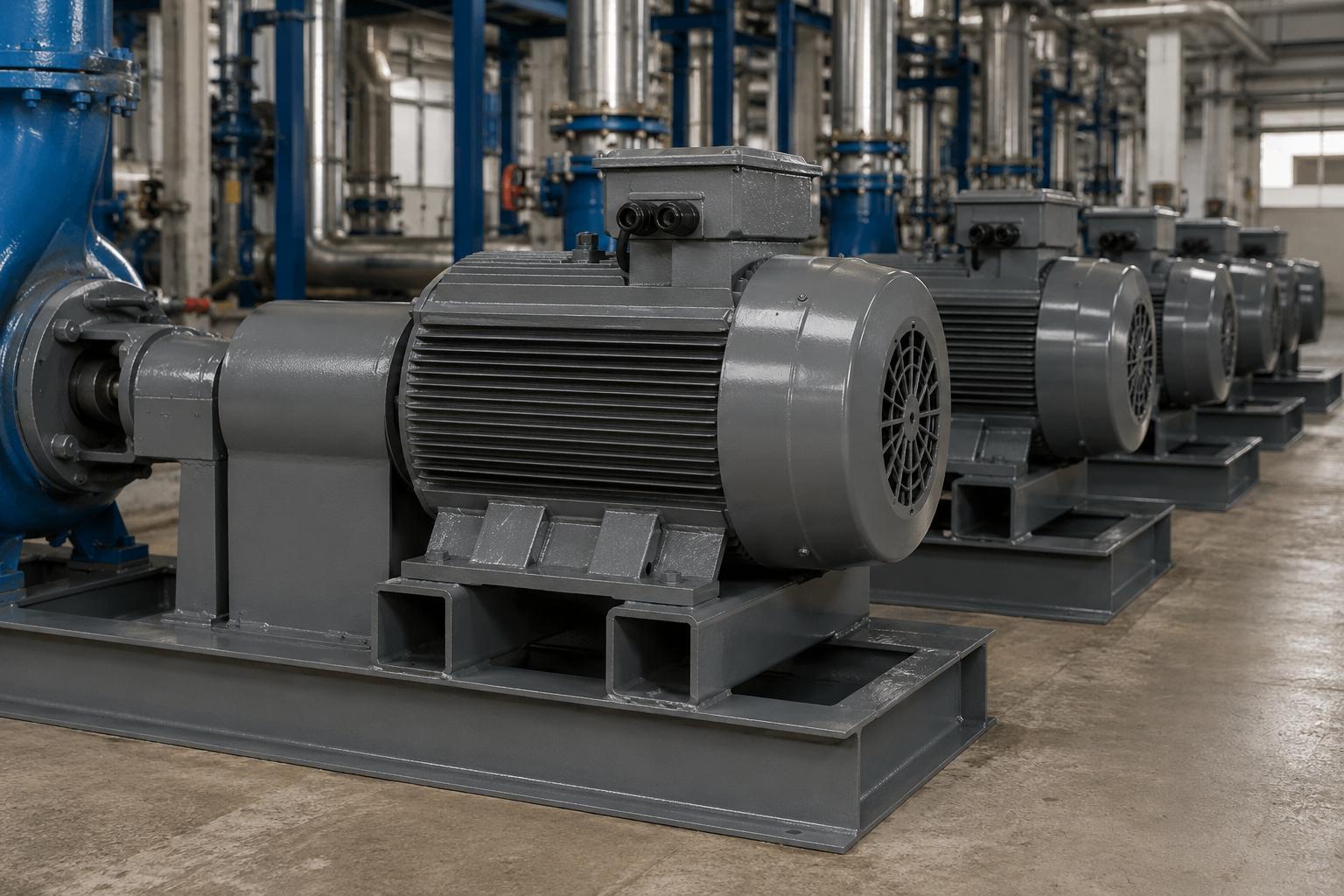
Bursa is one of the leading provinces forming the backbone of Turkish industry. With an extremely wide production range spanning from automotive sub-industry to textiles, from food to machine manufacturing and furniture, the city creates intense electric motor demand in every segment. This production diversity means that small-power machine-tool motors and high-power pump, fan and compressor motors are needed at the same time. Electric motor supply in Bursa is therefore not only product sales but a logistics and engineering service that requires delivering the right product at the right time and the right power.
When a motor fails on a production line or a new motor is needed for a capacity increase, the most critical factor is the lead time. A stopped line means a serious production loss every hour. For this reason, the issue Bursa industrialists value most is fast supply from stock and technically correct guidance. With a wide stock range, meeting the required power and efficiency class in a short time is the guarantee of production continuity.
In this article we address the electric motor needs of Bursa's industry on a sector basis, and explain the criteria to consider in correct motor selection along with current supply conditions. Our goal is to help businesses in Bursa procure the most suitable motor in the shortest time, both for new investments and renewal projects.
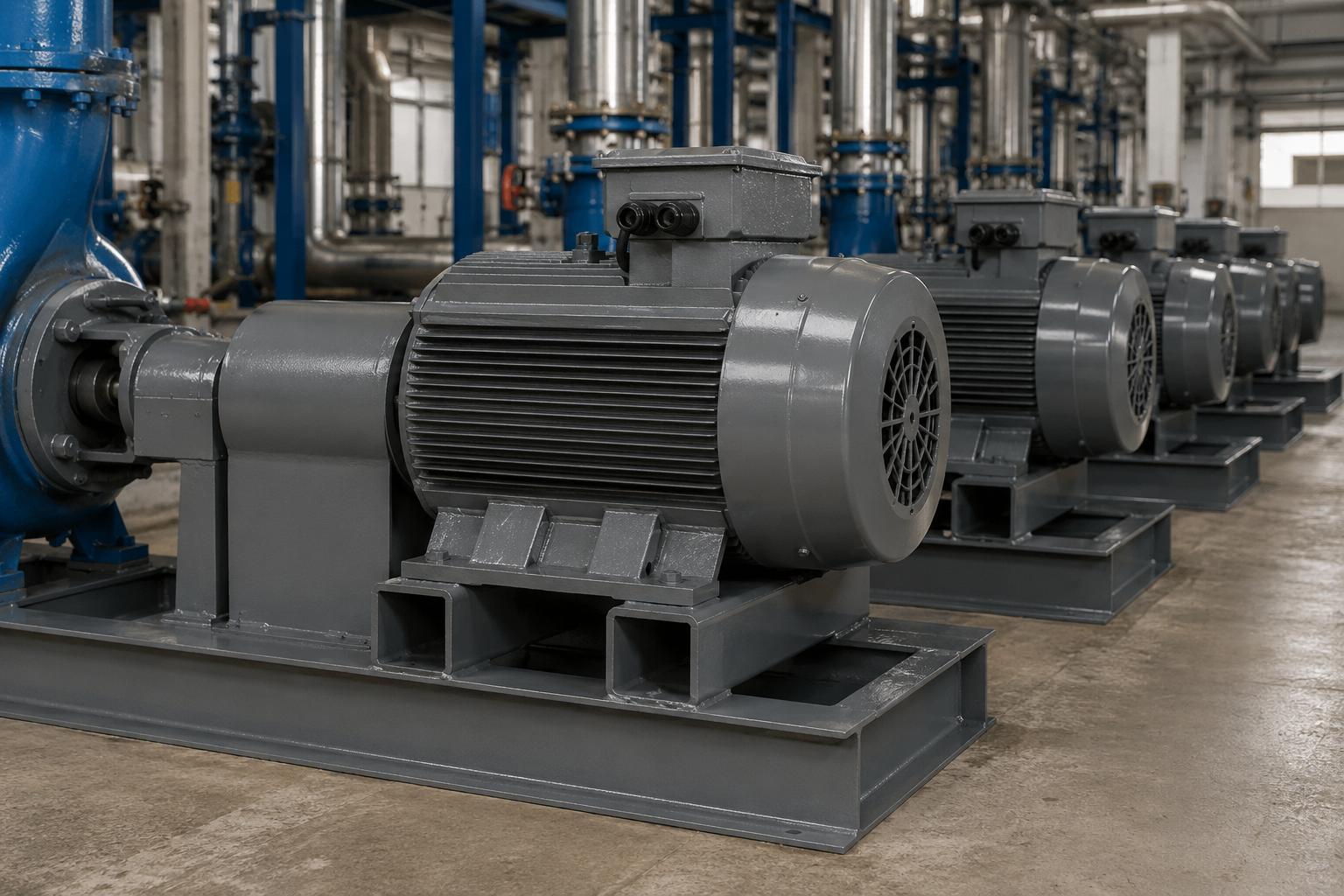
Sector-Based Motor Needs in Bursa Industry
Bursa's industrial profile directly shapes its motor demand. The automotive sub-industry requires precise, continuously running motors; the textile sector needs different speed and torque characteristics in spinning, weaving and dyeing lines; the food sector seeks hygienic and reliable motors. This diversity demonstrates the necessity not of a single motor type but of application-specific correct selection.
Automotive and Machine Manufacturing
In automotive sub-industry and machine manufacturing facilities, conveyors, hydraulic units, pumps and fans are heavily used. In these applications, continuous operation and low energy consumption stand out. A high-efficiency IE4 electric motor lowers energy cost in these continuously running lines and pays for itself in a short time. Correct pole count and speed selection are critical to capture the torque curve suited to the machine design.
Textile and Garment
In textiles, Bursa's traditional strength, the spinning, weaving, knitting and dyeing-finishing lines require different motor characteristics. Some applications need a motor working with a drive for speed control, while others require high reliability at constant speed. Correct efficient electric motor selection in these lines directly affects both product quality and energy efficiency.
Food, Furniture and Other Sectors
In food processing plants, mixers, conveyors and cooling fans; in furniture production, sanding, press and dust extraction systems run on motors. The common feature of these applications is that they demand reliable and durable motors for uninterrupted production. Cast iron framed motors with a wide thermal reserve provide a long life under these tough conditions.
Criteria to Consider in Correct Motor Selection
For a Bursa industrialist to select the correct motor, several basic criteria must be evaluated together. These criteria ensure both the initial investment and the long-term operating cost are correctly structured.
- Power (kW): The real power need of the driven load must be calculated correctly, and oversizing must be avoided.
- Pole count and speed: The speed the application requires (2, 4, 6 or 8 poles) must be determined.
- Efficiency class (IE): In continuously running applications, IE3 and IE4 classes stand out for energy savings.
- Mounting type: Foot (B3), flange (B5/B14) or combined mounting must be chosen according to the machine design.
- Protection class (IP): High IP protection is required in dusty or humid environments.
- Frame material: Under harsh conditions, a cast iron frame is more durable than aluminum.
When these criteria are determined correctly, the motor both fully matches the machine and operates at the point closest to its plate efficiency. A wrongly selected motor, whether oversized or undersized, leads to both energy loss and early failure.
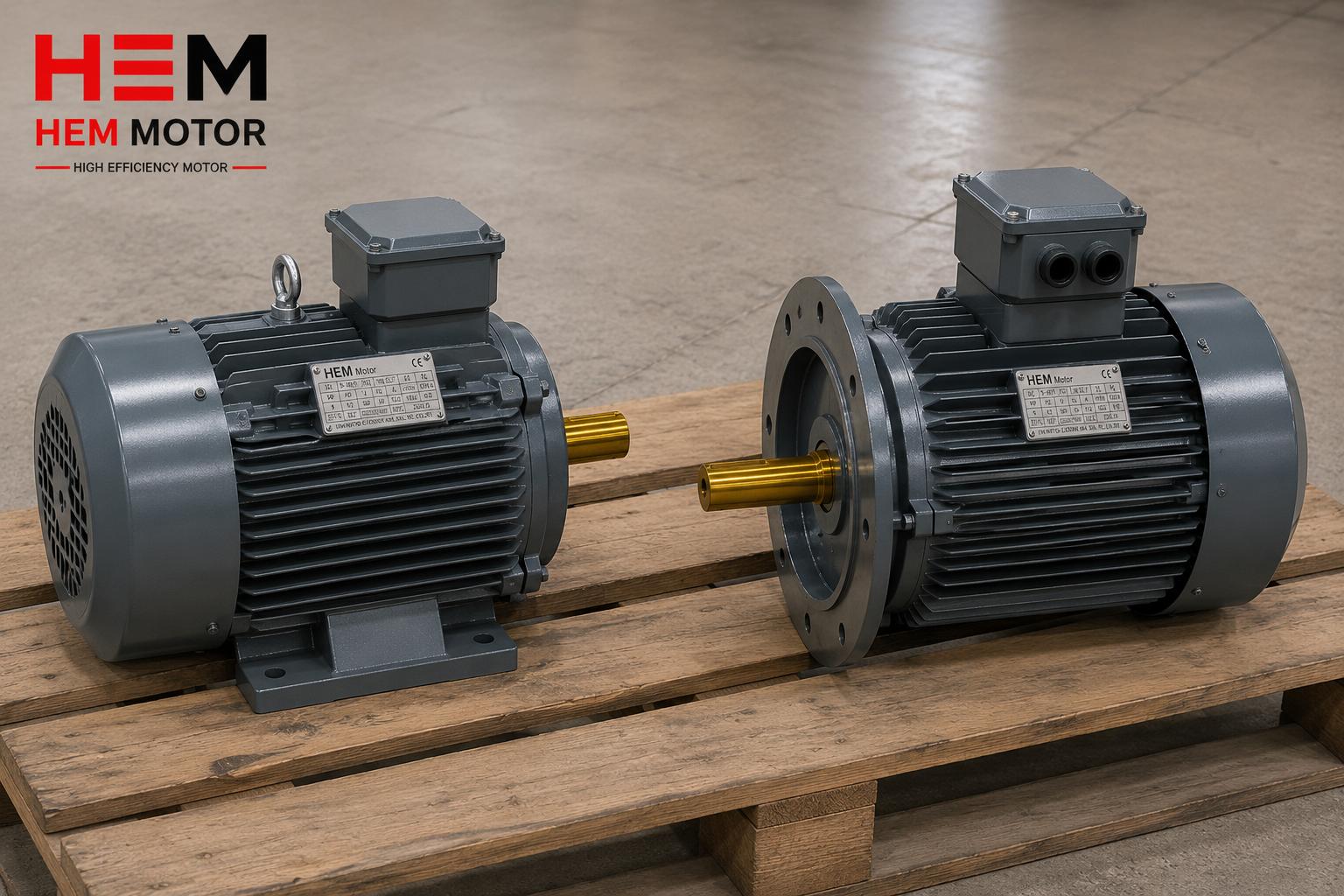
Fast Supply from Stock and Current Supply Conditions
In a city with such intense production as Bursa, a motor's lead time is at least as important as its technical specifications. A wide stock range means keeping the most demanded power, pole and efficiency class combinations ready. Thus, in an unexpected failure or an urgent capacity increase request, a long stoppage of the production line is prevented.
The efficient electric motor products in standard power ranges can usually be dispatched quickly from stock. In applications requiring special configuration, the technical team determines the most suitable solution and clarifies the supply process. Correct guidance prevents the purchase of the wrong product and the associated loss of time.
The Right Approach in Renewal Projects
For businesses wishing to renew an existing motor, the most correct approach is to evaluate the plate information of the old motor together with the real load in the application. In most cases, when an old IE1 or IE2 motor is replaced with a correctly sized IE4 electric motor, it provides significant energy savings. This replacement pays for itself in a short time, especially in continuously running applications.
Energy Efficiency and Payback Calculation in Bursa
In Bursa's industry, the electric motor makes up a very large portion of total energy consumption. The sum of installed motor power in a plant is the main determinant of that plant's electricity bill. For this reason, the efficiency class in motor selection is not just a technical preference but a decision that directly affects profitability. In a continuously running motor, a difference of a few efficiency points turns into a significant cost item over the year.
The payback calculation is quite simple. When the motor's annual operating hours, average load factor and unit energy price are known, the annual saving of a higher-efficiency motor can be calculated. Divided by the initial investment difference between the motors, this saving reveals the payback period. In plants running two or three shifts in Bursa, this period is often quite short; that is, the high-efficiency motor leaves a net gain over its life. Businesses that make this calculation correctly base the purchase decision not only on the label price but on the lifetime cost.
Reactive Energy and Power Factor
High-efficiency motors affect not only active energy consumption but also the power factor. A correctly sized motor operates with a better power factor, reducing the risk of a reactive energy penalty. For businesses in Bursa, this is a second saving item on the bill. An oversized motor, on the other hand, lowers both efficiency and power factor at low load, causing loss on both the active and reactive sides.
Technical Consultancy Approach for Bursa Industry
Selecting the correct motor is often not possible with a catalog review alone. The real load in the application, operating hours, environmental conditions and the machine design must be evaluated together. The technical consultancy approach offered to Bursa industrialists comes into play exactly at this point. When a business explains its need, it is recommended not just a product but the configuration most suitable for its application.
This approach prevents the purchase of the wrong product. An oversized motor leads to energy waste, while an undersized one leads to early failure. When the correct power, correct pole count and correct efficiency class are determined, the motor both fully matches the machine and runs with a long life. In the Bursa electric motor supply process, technical consultancy is therefore as valuable as the product itself. You can review our product groups via the IE4 electric motor page, benefit from our kW and HP power guide for power and speed selection, and reach all our services through the homepage.
Matching the Motor to the Machine
A successful motor selection in Bursa industry is not only about choosing the right power and efficiency class; it is also about matching the motor to the machine it drives. The mounting type, shaft dimensions, terminal box position and frame size must all align with the machine design. A motor that is electrically perfect but mechanically incompatible causes delays during installation and may require costly adaptation. For this reason, the existing motor's plate and mounting details should be documented before a replacement is ordered.
In addition, the operating profile of the machine matters. A motor that starts and stops frequently has different thermal demands than one that runs continuously at a steady load. Frequent starts heat the motor and stress the windings, so the duty cycle should be considered alongside the power rating. When the operating profile, mounting and electrical specifications are evaluated together, the selected efficient electric motor integrates smoothly, runs reliably and delivers the expected efficiency over its full service life. This holistic approach is what distinguishes a correct supply from a merely adequate one. In practice, the most reliable results in Bursa come when the buyer shares the real application data with the technical team early, rather than ordering by power rating alone. A short conversation about the driven machine, the duty cycle and the environment almost always prevents a mismatch that would otherwise surface only during commissioning, when correcting it is slowest and most expensive.
Frequently Asked Questions
How quickly can an electric motor be supplied in Bursa?
Motors in standard power, pole and efficiency class combinations can usually be dispatched quickly from stock. In a city with such intense production as Bursa, a short lead time is critical for production continuity. In applications requiring special configuration, the technical team determines the most suitable solution and clarifies the supply process.
Which efficiency class should I choose?
In continuously running applications, IE3 and especially IE4 class motors stand out for energy savings. The higher the motor's annual operating hours, the greater the saving from a higher efficiency class and the faster the initial investment difference is recovered. In applications that run little, the priority of the efficiency class decreases somewhat.
Is it sensible to renew my old motor?
If your existing motor is in a low efficiency class and runs continuously, replacing it with a correctly sized high-efficiency motor usually pays for itself in a short time. The correct renewal decision is made by evaluating the old motor's plate information and the real load in the application together. This replacement provides gains in both energy and power factor.