English
 Türkçe

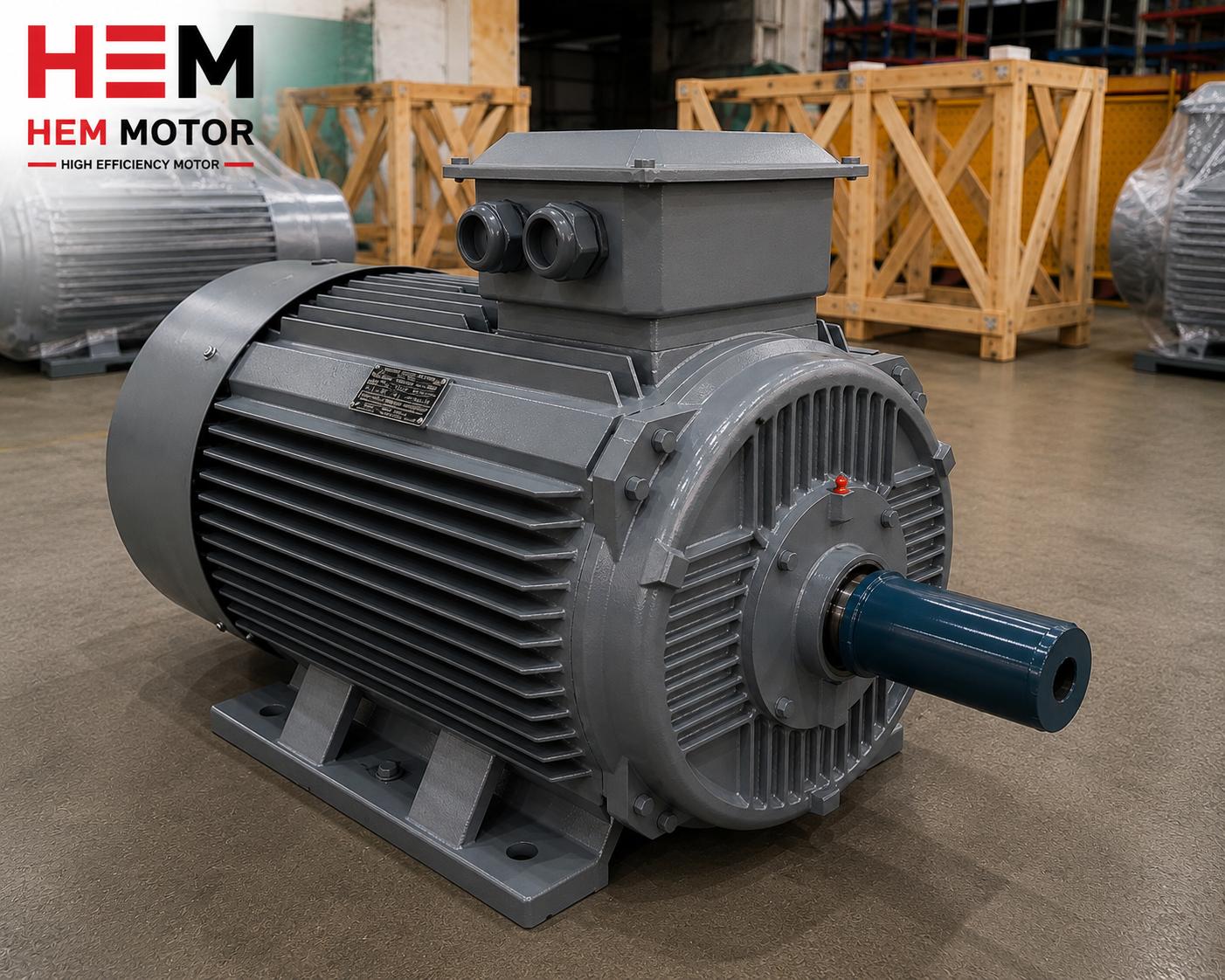

A textile facility is not a single machine but a complex production chain made up of dozens of different machines, from spinning to weaving, from knitting to the dyehouse and garment lines. Each link in this chain involves a different mechanical load, a different speed profile and a different environment. Therefore the selection of an electric motor for textile machinery cannot follow a "one motor fits all" logic; power, speed, mounting type and IP protection class must be determined separately according to each department's needs.
Motor selection in the textile sector is not merely a technical preference but a strategic decision that directly affects product quality and operating cost. A wrongly chosen speed leads to yarn breakage and faulty weaving; a low-efficiency motor leads to a high energy bill in continuous duty; and insufficient IP protection leads to early failure in humid, chemical environments such as the dyehouse. In this article we examine how to make the correct motor selection for spinning, weaving, dyeing-finishing and garment lines from a field perspective.
Our goal is to help you determine the most suitable motor for each department of your facility and to supply the most-used types quickly from stock. You can reach the product families from the homepage.
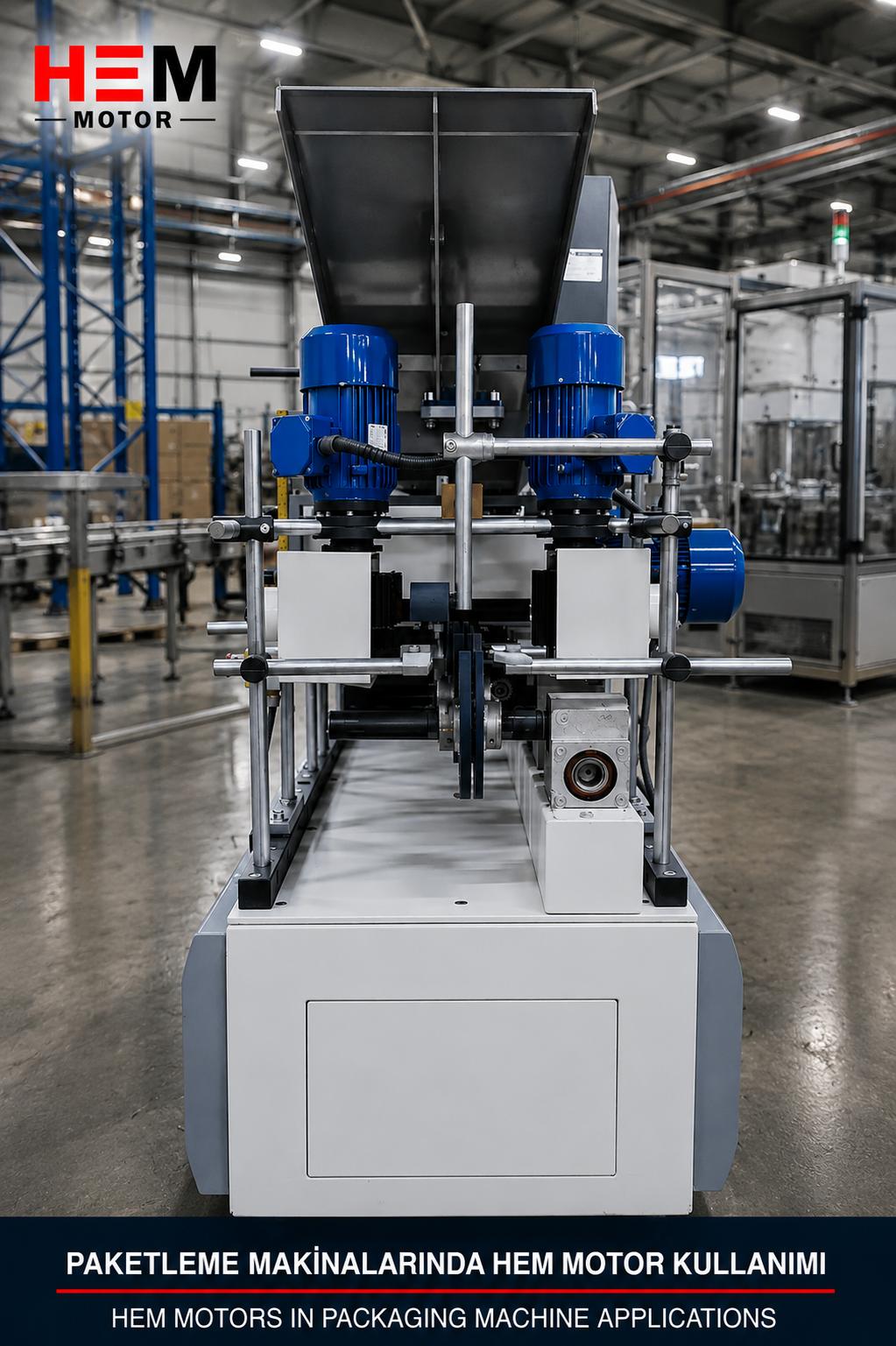
Motor Needs by Department in a Textile Facility
When we divide a textile factory into departments, we see how differently each department's motor requirements diverge. Spinning, weaving, knitting, dyeing-finishing and garment each require their own motor profile.
Spinning Department
In yarn production, ring spinning machines, open-end (rotor) machines and twisting machines require high and stable speed. Here speed stability directly determines yarn quality; sudden speed fluctuations cause yarn breakage and unevenness. For this reason variable-speed, high-efficiency motors are usually preferred in spinning. Since continuous operation is involved, an IE4 electric motor or, in drive-fed applications, the IE5 efficiency class quickly lowers energy cost.
Weaving and Knitting Department
Looms and knitting machines involve a variable load profile and frequent acceleration-deceleration cycles. Shedding, weft insertion and shuttle movements demand precise torque control from the motor. Here the correct speed and correct torque directly affect the weight and texture of the fabric. Usually 4-pole (1500 rpm) motors are reduced to the appropriate output speed with a gearbox or belt-pulley.
Dyeing-Finishing (Dyehouse) Department
The dyehouse is the department with the harshest environmental conditions in a textile facility. High humidity, water vapor, chemical fumes and temperature are a serious threat to motors. For this reason motors with a high IP protection class (at least IP55, preferably IP56/IP65) and suitable surface protection must be used in the dyehouse. Equipment such as rope dyeing, jet dyeing, stenter and drying drums require moisture- and corrosion-resistant motors.
Garment Department
The garment line includes sewing machines, cutting tables and ironing-press equipment. Here motors are usually of smaller power, but precise speed control and quiet operation come to the fore. Servo or drive-controlled motors improve sewing quality and operator comfort.
The Effect of Speed Selection on Product Quality
In textile machinery, speed is not just a velocity value but a fundamental parameter that determines product quality. On a spinning machine, too high a speed causes breakage and too low a speed causes efficiency loss. On a loom, speed determines the density and weight of the fabric. For this reason the motor speed must be matched exactly to the machine's process requirement.
The pole count determines the synchronous speed of the asynchronous motor: 2-pole ~3000 rpm, 4-pole ~1500 rpm, 6-pole ~1000 rpm. In most textile applications the output speed is adjusted with a gearbox or belt-pulley; however, in places requiring precise and variable speed, using a frequency drive is the most flexible solution. To examine the pole-speed relationship in more detail, see our pole selection article.
The Challenges of Continuous Operation in Textiles
Unlike most sectors, textile production requires an almost uninterrupted operating regime. This increases the importance of the S1 continuous duty class for motors. The S1 duty class means the motor can run continuously at its rated load until it reaches thermal equilibrium; for the 24-hour production in textiles this is a basic requirement. In continuous operation, the motor's thermal endurance, insulation class (usually F class) and cooling method are of great importance.
In addition, the textile environment is full of dust, lint and fiber particles. These particles can clog the motor's cooling fins and cause overheating. For this reason, especially in spinning and lint-producing departments, regular cleaning of motors and, if necessary, selecting a higher protection class is recommended. Non-ventilated (TENV) cooled frames can also be an alternative for very dusty environments; these frames eliminate the clogging risk and reduce maintenance needs.
Energy Efficiency and Operating Cost
Textiles is an energy-intensive sector, and motors make up a large part of total electricity consumption. Considering that the facility runs 24 hours a day, 6-7 days a week, even a small difference in efficiency class turns into a serious figure on the annual bill. In continuously running spinning and weaving motors, choosing an IE4 electric motor provides energy savings far above the motor cost over the years compared with an IE2 counterpart.
In applications requiring variable speed control, the IE5 synchronous reluctance motor and frequency drive combination offers high efficiency even at partial load, minimizing energy cost. The correct efficiency-class selection is a critical investment for both environmental sustainability and competitiveness.
Mounting Type and Mechanical Compatibility
Textile machines also vary in terms of the motor's mechanical connection. In some machines the motor is bolted to a chassis with foot (B3) mounting, while in others it is integrated into the machine body with flange (B5 or B14) mounting. The wrong mounting type causes the motor to physically not fit the machine or leads to vibration and alignment problems. For this reason, when choosing a spare motor, not only power and speed but also mounting type and shaft dimensions must match exactly.
Shaft diameter, foot hole spacing and flange dimensions are determined by IEC standards; this standardization allows motors from different manufacturers to be used interchangeably. When choosing an electric motor for textile machinery, correctly determining the frame size and mounting code of the machine's original motor is critical for trouble-free field replacement.
Points to Watch in Correct Motor Selection
- Determine the power, speed and mounting needs of each department separately.
- Choose a high IP protection class (IP55 and above) in humid environments such as the dyehouse.
- Prefer IE4 in continuously running machines and IE5 at variable speed.
- Match the speed selection exactly to the machine's process requirement.
- Create a spare motor plan for critical machines.
- Keep the most-used power and speed steps in stock.
- Determine the mounting type (B3 foot, B5/B14 flange) according to the machine.
Setting up a spare motor plan for critical machines is the most effective way to prevent unplanned stops in textile facilities. When a loom or dyeing machine motor fails, production loss is minimized if a spare motor is ready in stock. For this reason we shorten commissioning time by supplying the most-used motor types quickly from stock. You can review the efficient motor families on the IE4 motor product page.
Spare Motor Planning and Stock Management
In textile facilities production continuity is essential; a stopped machine can affect the whole line. For this reason keeping an exact spare for critical machine motors is a smart operating strategy. When planning spare motors, identifying the most-used power and speed steps, standardizing mounting types and making a stock agreement with the supplier stand out.
Standardization reduces the number of spare motors while increasing flexibility. For example, using motors of the same power and mounting type on different machines allows a single spare motor to rescue several machines. This approach lowers stock cost and provides fast intervention in case of failure. To clarify the correct power and speed selection, you can review our power and speed guide.
Drive Use and Flexibility
The use of frequency drives is becoming increasingly common in modern textile facilities. A drive adjusts the motor speed steplessly, providing process flexibility; the same machine can run at different yarn counts or with different fabric types. The drive also reduces mechanical shock by providing a soft start and offers energy savings. Especially in fan, pump and variable-load applications, drive use significantly lowers energy cost.
In drive-fed applications the motor must have reinforced (inverter duty) insulation and be selected in a suitable efficiency class. Since IE5 synchronous reluctance motors are already designed to run from a drive, they offer the highest efficiency in variable-speed textile applications. This combination is an ideal solution for both energy savings and precise process control.
The Importance of Working with the Right Supplier
In a complex, continuously running operation such as a textile facility, motor supply is not merely about purchasing a product; correct technical guidance, fast spare provision and long-term assurance are inseparable parts of this service. Determining the right power, speed, mounting type and IP protection class for each department, then optimizing these choices according to the facility's load profile, requires experience and engineering knowledge. With the most-used types kept in stock, we stand by you at the moment of need rather than the moment of failure.
Frequently Asked Questions
Can the same motor be used in every department of a textile facility?
No. The spinning, weaving, dyehouse and garment departments require different power, speed, mounting type and IP protection class. The dyehouse, with its humid and chemical environment, needs a high-IP-protected motor, while spinning requires stable and high speed. Each department's need must be determined separately.
Which efficiency class should be preferred in textile machinery?
In continuously running spinning and weaving machines, an IE4 electric motor provides serious energy savings over the years compared with an IE2 counterpart. In applications requiring variable speed control, the IE5 synchronous reluctance motor and frequency drive combination offers high efficiency even at partial load. The correct class should be chosen according to the facility's operating profile.
Why is high IP protection needed in dyehouse motors?
The dyehouse involves high humidity, water vapor, chemical fumes and temperature. These conditions lead to early winding and bearing failure in a standard motor. Motors with at least IP55, preferably IP56/IP65 protection and suitable surface protection provide long life in this harsh environment. We set up a spare motor plan for critical machines and supply the most-used types from stock.