 English
 Türkçe

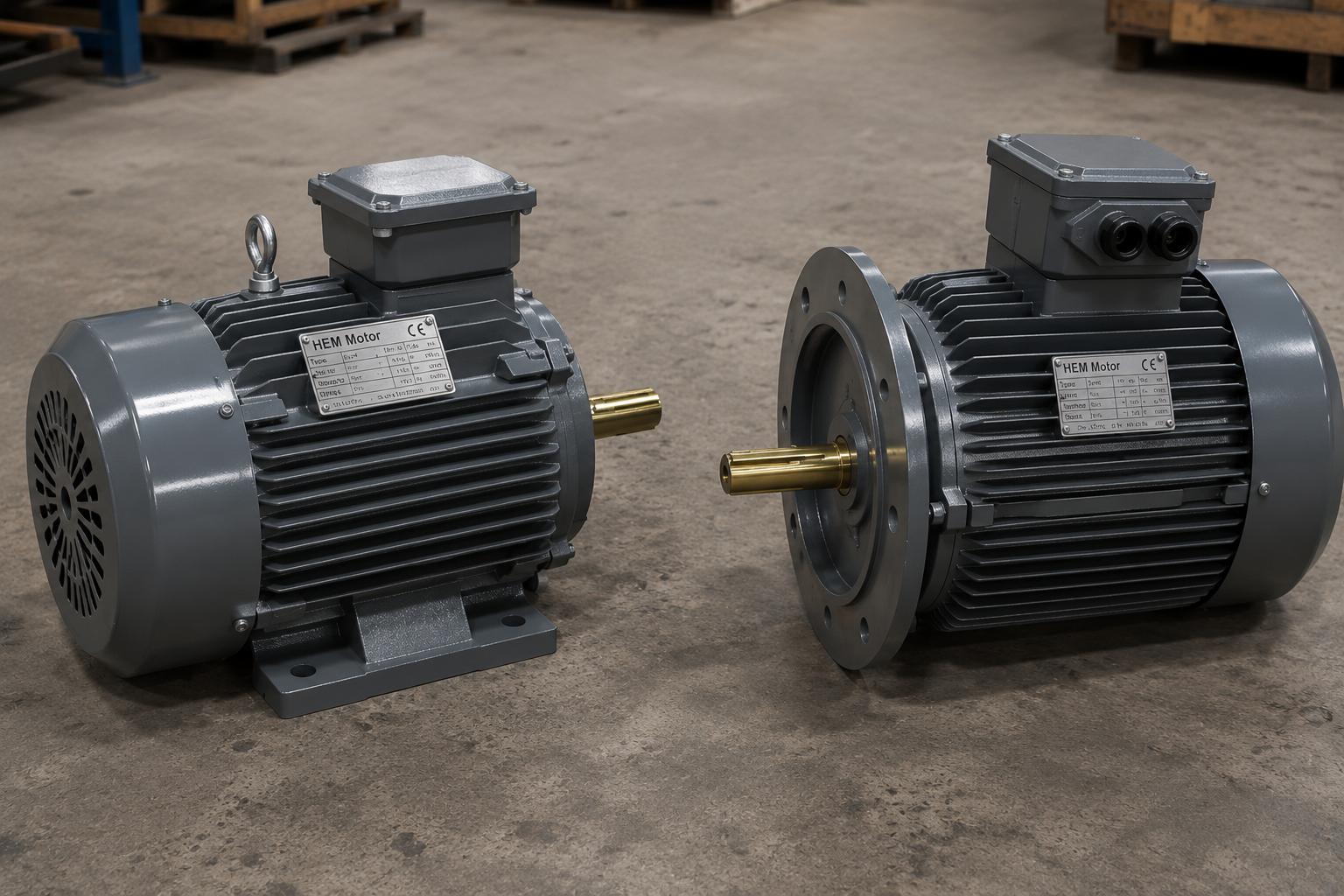
One of the power ratings you will encounter most often in any facility is the 5.5 kW electric motor. It is the backbone of pumps, fans, compressors, conveyors and countless machine drives. Because this rating sits in the sweet spot of fast stock availability and strong price-performance balance, it is the first choice for maintenance teams looking for a spare and for project engineers building new lines. Requesting a fast quote for a 5.5 kW motor price from a manufacturer that sells from stock both shortens delivery time and nails down the correct frame, pole and mounting type in a single step. Below we cover the pole options, frame sizes, efficiency classes and purchasing criteria for this rating, all with a stock-and-quote focus.
Pole and Speed Options for the 5.5 kW Motor
The first criterion that defines a motor's character is the number of poles. The same 5.5 kW output is offered at different speeds from 2 to 6 poles, each serving a different application family. A motor bought at the wrong speed will not match the machine no matter how high its quality, so clarifying the speed at the quotation stage is critical.
- 2 poles (around 3000 rpm): Ideal for high-speed centrifugal pumps, blowers and some compressors. Offers the most compact frame at this rating.
- 4 poles (around 1500 rpm): The most requested and most balanced speed. The vast majority of conveyors, geared drives, fans and general-purpose applications run at this speed.
- 6 poles (around 1000 rpm): Preferred for mixers, hoists and heavy-starting loads that need high torque at low speed.
In a sell-from-stock model, the fastest-supplied versions are usually the 4-pole and 2-pole models. If you are unsure of the speed, share the speed on your existing motor's nameplate or the output speed your machine requires and ask for a fast quote.
The Relationship Between 5.5 kW and Frame 132
The 4-pole version of 5.5 kW is mostly produced in the standard IEC range at frame 132. The frame number standardises every connection dimension from the foot holes to the shaft height. Thanks to this standardisation, removing a different motor and fitting a new frame-132 5.5 kW motor in its place is extremely easy in terms of mechanical fit. Because the shaft diameter, keyway and foot spacing are fixed to the IEC standard, these details speed up the supply process when you place a replacement order. The correct frame match is the surest way to avoid surprises during installation.
IE3 and IE4 Efficiency: Which Is Right for You?
Once power and speed are settled, the efficiency class is next. In a 5.5 kW motor that runs long hours in most facilities, the efficiency class feeds directly into the electricity bill. Regulations have raised the minimum efficiency class in this power band, so a modern purchase usually comes down to a choice between IE3 and IE4.
| Criterion | IE3 Premium Efficiency | IE4 Super Premium Efficiency |
|---|---|---|
| Typical application | General industry, standard run times | Long-hour, continuously running critical lines |
| Energy consumption trend | Low | Even lower |
| Initial investment trend | More economical | Slightly higher, faster payback |
| Stock availability | Very common | Common |
On a secondary drive that runs a few hours a day, an IE3 electric motor is often the smartest price-performance choice. For a pump or fan that turns non-stop across a shift, however, an IE4 electric motor pays back the efficiency gap quickly once you multiply it by the running hours. If you are not sure which suits your operating profile, share your daily run time and we will quote the most suitable class.
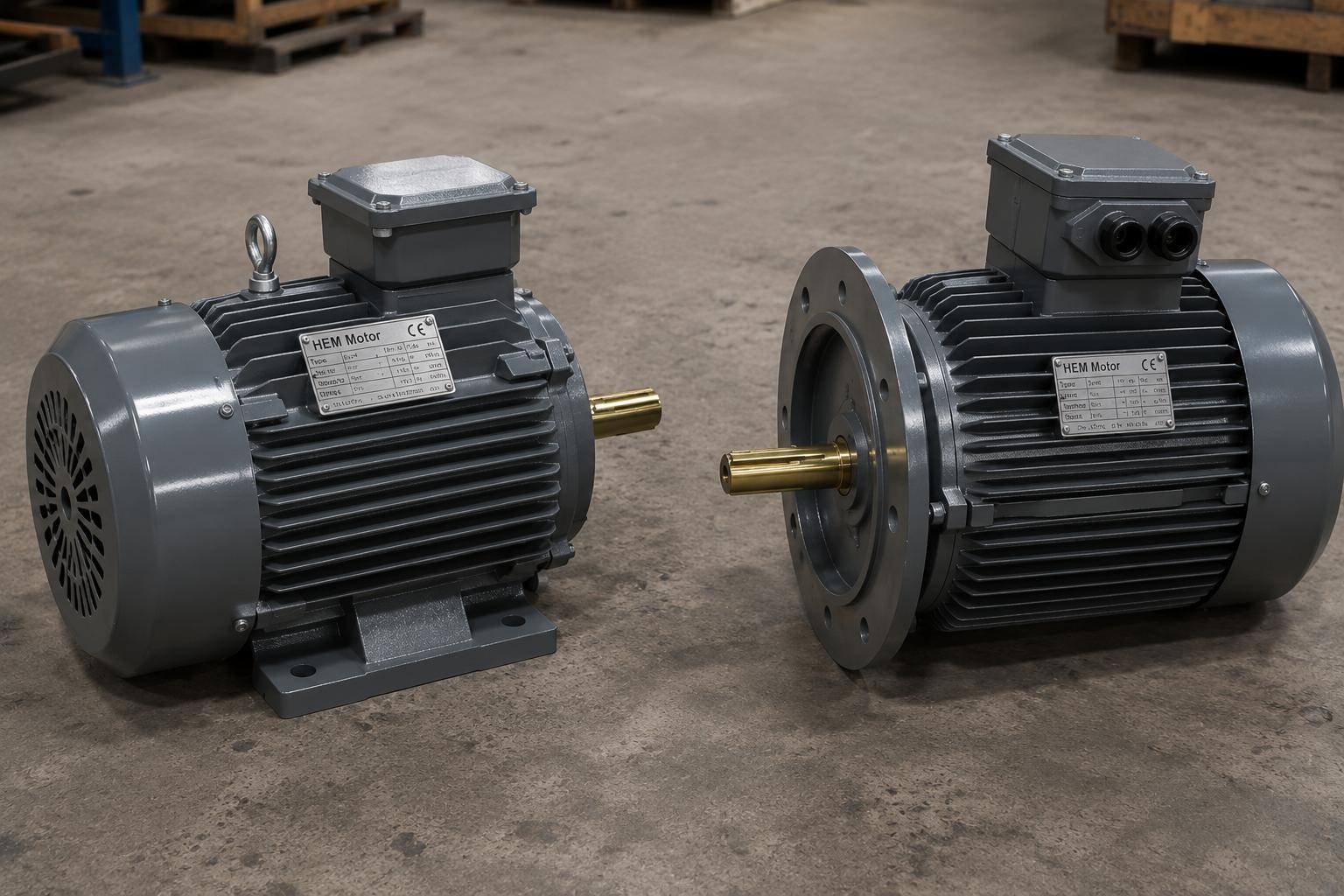
B3 Foot or B5 Flange? Choosing the Mounting Type
How the 5.5 kW motor connects to the machine is determined by the mounting type. There are two basic options, and choosing the right one means the motor fits your machine without any trouble.
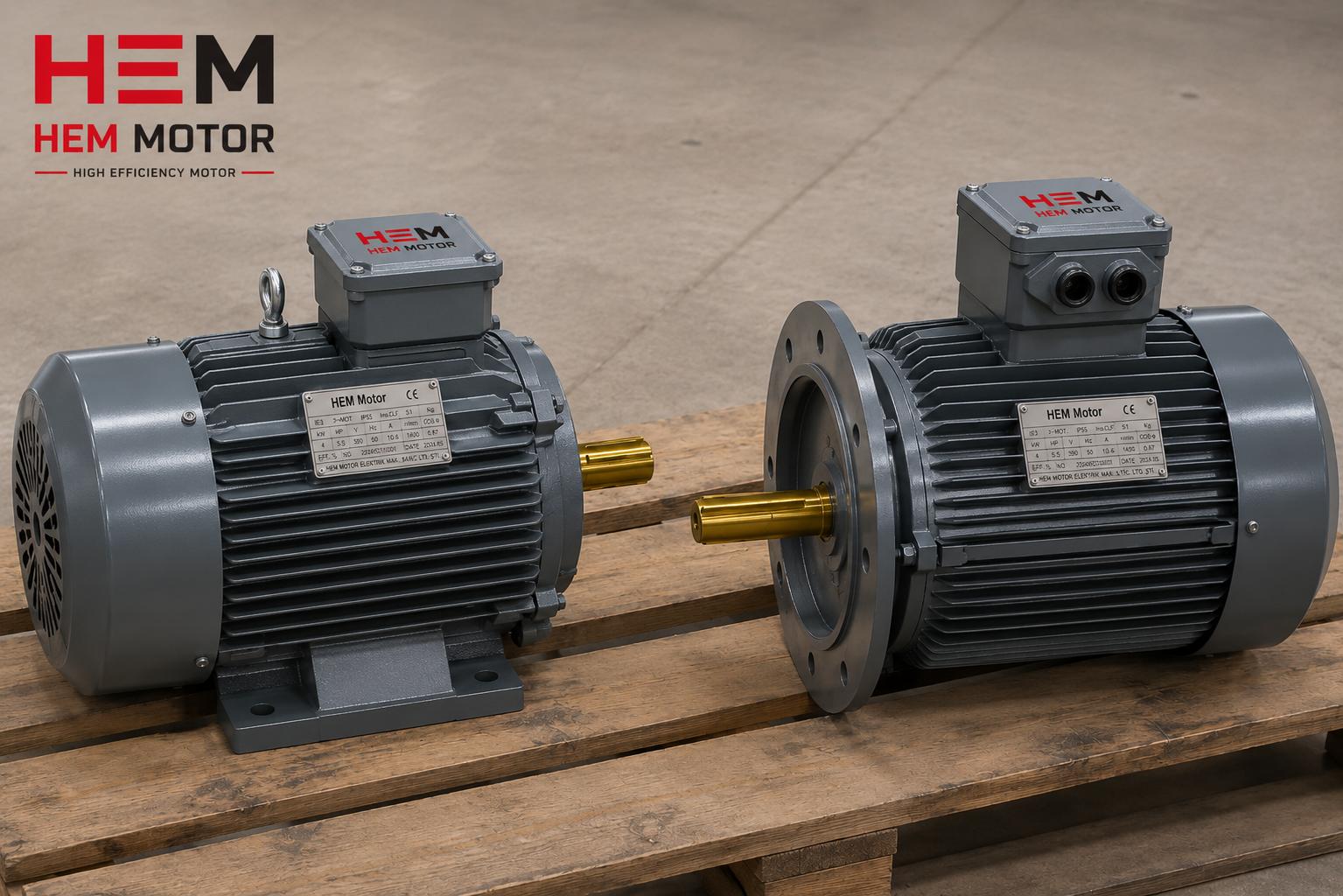
- B3 foot-mounted motor: Bolted to the floor or a base through its feet. Standard for conveyors, belt-pulley drives and free-standing machines.
- B5 flange-mounted motor: Bolted directly to the machine or gearbox through the flange on its front cover. Common in pump and gearbox assemblies.
- B35 (foot + flange): Includes both foot and flange; one stock code covers both mounting types and provides replacement flexibility.
If you want to simplify your stock management, the B35 universal frame is preferred because a single motor answers both foot and flange needs. Stating the mounting type correctly ensures the quote is precise on the first pass.
Why Buy from the Manufacturer and from Stock?
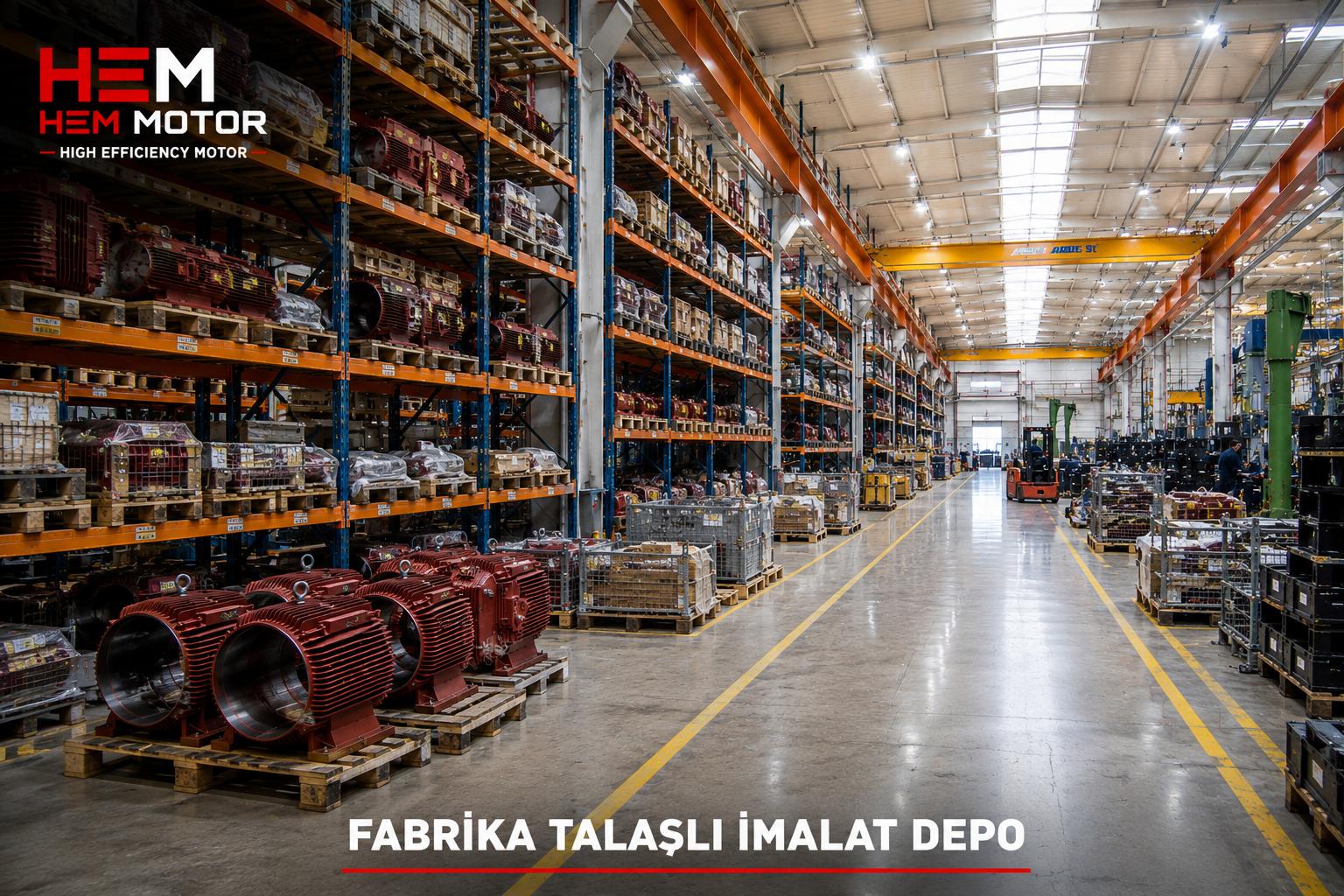
In the most-requested ratings such as 5.5 kW, stock depth is a supplier's greatest advantage. When you buy from an address with manufacturing and warehousing infrastructure, your chance of finding the spare motor that gets your line running again within hours of an unexpected failure is far higher. At HEM Motor, this is exactly why we keep the most in-demand power-speed combinations in stock: in an emergency we prioritise fast dispatch over waiting.
Another benefit of buying from the manufacturer is that technical support comes straight from the source. When you hesitate over frame, pole, mounting or efficiency class, we define the configuration that best fits your machine together with you. For bulk purchases and project-based requests, we offer flexible and competitive solutions on electric motor prices. For current pricing and stock status, request a fast quote through HEM Motor.
A Checklist for Choosing the Right 5.5 kW Motor
For a fast and error-free purchase, we recommend clarifying these items before ordering:
| Decision Item | Determined By |
|---|---|
| Pole / Speed | The output speed the machine requires |
| Frame Size | Existing motor nameplate or IEC standard (usually 132) |
| Mounting Type | Foot (B3), flange (B5) or combined (B35) |
| Efficiency Class | Daily run hours and energy priority |
| Terminal Box Orientation | Panel and cable entry side |
Once you share these five items, building a fast quote with a configuration that fits you exactly takes us only minutes. For wider power options you can review our power and speed options guide, and for efficient alternatives browse our high-efficiency electric motors category.
Where the 5.5 kW Motor Is Used Most
The reason this rating is so widespread is that it sits right in the middle of mid-scale drives. 5.5 kW is neither too much for small machines nor too little for heavy industry. The most common application areas are:
- Centrifugal and submersible pumps: In water transfer, booster sets and irrigation lines, 5.5 kW is the standard drive power for medium-flow pumps.
- Fans and exhausters: Widely used in ventilation, dust collection and flue exhaust systems.
- Conveyor and handling lines: Usually paired with a gearbox and commissioned on belt and chain conveyors.
- Compressors and hydraulic units: Preferred on small screw-compressor models and hydraulic power units.
- Machine building: Runs as the main drive on woodworking, plastics and packaging machines.
When you share your application with us, we define not just the power but also the most suitable pole, protection class and mounting type for that application. This way the motor you receive fits your machine on the first try. For tailored solutions across different sectors you can review our IE3 efficient electric motors category, and for pump and fan applications browse our pump electric motors page.
Protection Class and Operating Environment
When buying a 5.5 kW motor, the operating environment is a criterion that directly affects service life. Standard industrial motors are usually produced in IP55 protection class, protected against dust and water spray. However, wet, dusty or outdoor applications require higher protection.
- IP55: Standard industrial environment; sufficient for most enclosed facilities.
- IP65 / IP66: Preferred on lines with heavy dust and pressurised water washdown.
- Tropicalisation and anti-condensation: Provides winding protection against condensation in high-humidity environments.
The insulation class also determines the motor's thermal endurance; class F insulation is standard, while class H is preferred for high-temperature environments. When you state your ambient conditions, we recommend the right protection and insulation class for a long service life. These details lower the total cost of ownership beyond the initial investment, because a properly protected motor means fewer failures and a longer service life. To learn stock status and a suitable configuration, you can contact us through electric motor prices.
Frequently Asked Questions
Which frame is the 5.5 kW motor produced in?
The standard 4-pole 5.5 kW motor is mostly in frame 132. The 2-pole version may be in a more compact frame. If you are replacing an existing motor, stating the frame number on the nameplate guarantees replacement compatibility.
How quickly can I get a 5.5 kW motor from stock?
The most-requested 4- and 2-pole IE3/IE4 versions are usually ready in our stock and dispatched fast. For an exact delivery time, ask about stock status and request a fast quote.
Should I buy IE3 or IE4?
For applications running a few hours a day, IE3 stands out on price-performance. On continuously running pumps, fans and compressors, the IE4 efficiency gap pays for itself quickly. Share your run time and we will recommend the most suitable class.
How do I tell B3 from B5?
If the motor is fixed to the floor through its feet it is B3; if it is bolted to the machine through a front flange it is B5. The B35 universal frame, which fits both, is ideal for replacement flexibility.
What information do I need to give for a price quote?
Sharing the pole/speed, frame, mounting type and efficiency class is enough. With this information we provide a fast, precise quote on electric motor prices.
To source the right 5.5 kW motor from stock on the best terms, get in touch with us. Share your requirement and let the HEM Motor team deliver the motor that fits you exactly with a fast quote and fast dispatch. For our solutions in other power classes, you can also review our IE3 electric motors and IE4 electric motors pages.